

Adapting Homes for a Changing World
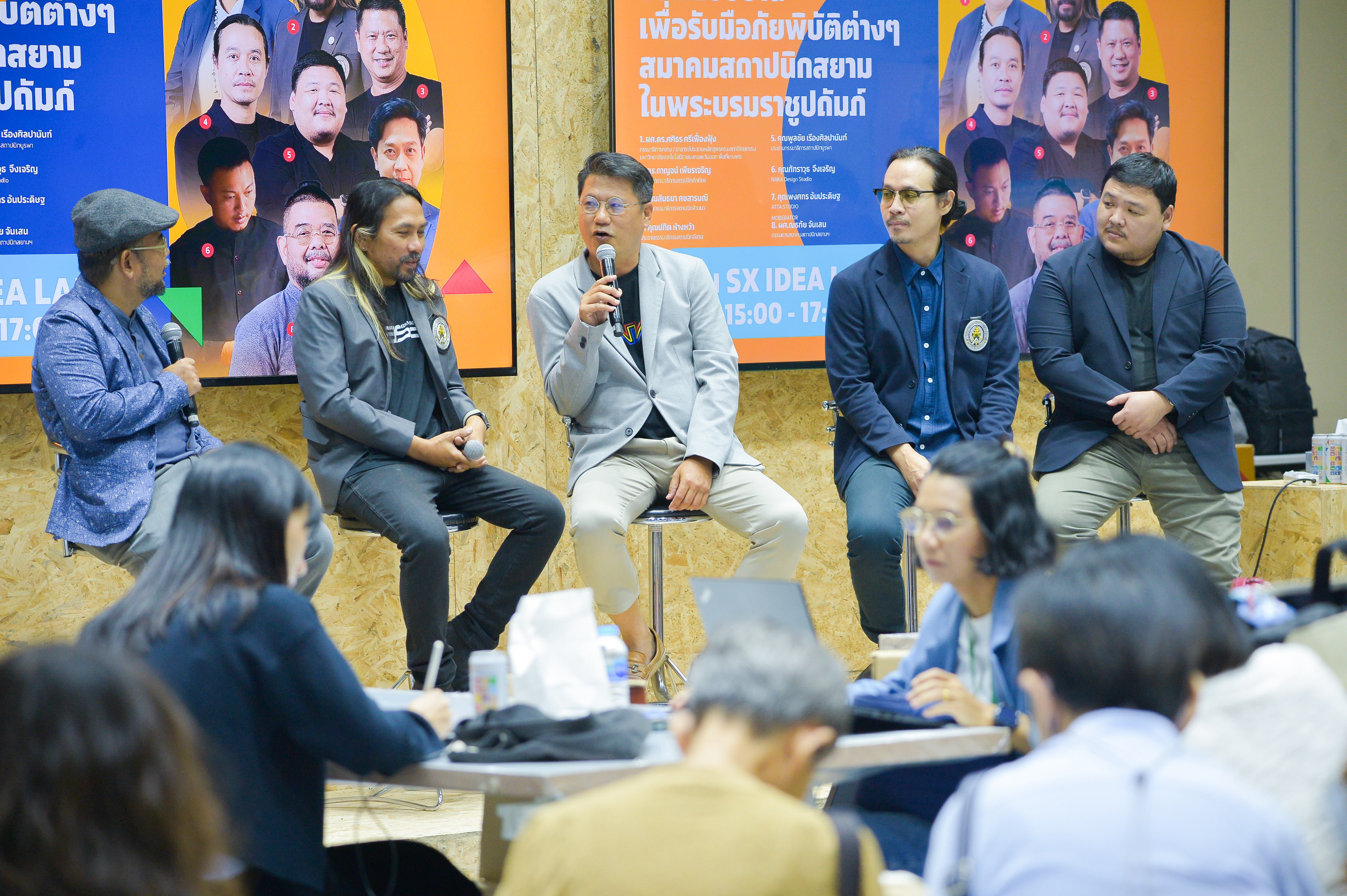
As climate change brings increasingly frequent and unpredictable natural disasters, architects and engineers are rethinking how homes can protect lives and livelihoods. At SX2025, the session “Designing Homes for Disaster Resilience” gathered leading Thai architects to share insights on adaptation through design. The discussion was moderated by Asst. Prof. Nathathai Jansai, Committee Member of the Association of Siamese Architects.
From North to South: Different Landscape, Different Challenges
In the first part of the discussion, representatives from the regional architect councils shared the natural disaster challenges most commonly faced in each part of the country. In the South, Dr. Karn Phiancharoen highlighted that heavy rainfall and recurring floods have become annual challenges. Architecture students are increasingly tasked with designing homes that are beautiful, functional, and resilient to local conditions.
In the North, Mr. Santhaya Kochasarnmanee stated that over the past 3–5 years, the northern region has increasingly faced recurring floods and landslides. A major cause has been deforestation, which has led to flash floods. Combined with the impacts of climate change, these problems have intensified, resulting in many urban areas experiencing frequent flooding. This has been made worse by a shift in housing styles—from traditional “elevated houses” to “concrete houses,” which are far less capable of coping with flash floods than in the past.
In the Northeast, Mr. Pakit Hangwa, noted that the challenges faced today are not very different from those in the North, as the area also has to deal with runoff from higher elevations. Although the Northeast was once perceived as a dry, drought-prone region, the major disaster it now confronts is “water”, which has become a defining and urgent issue for the region.
For Thailand’s Eastern and Central regions, the challenges are different—centered on designing for efficient energy management. Mr. Pulchai Ruengsilpanan explained that aside from the physical impacts of sea-level intrusion, the major issue for this region is “energy management.” Because the Central and Eastern regions are hubs of industry and densely populated urban areas, architects must design buildings that comply with energy regulations and align with clean-energy practices to support long-term sustainable development.
Importantly, a new and emerging challenge for the architectural profession is designing homes and buildings that can withstand risks associated with armed conflicts—a consideration that was previously unimaginable in the Thai context.
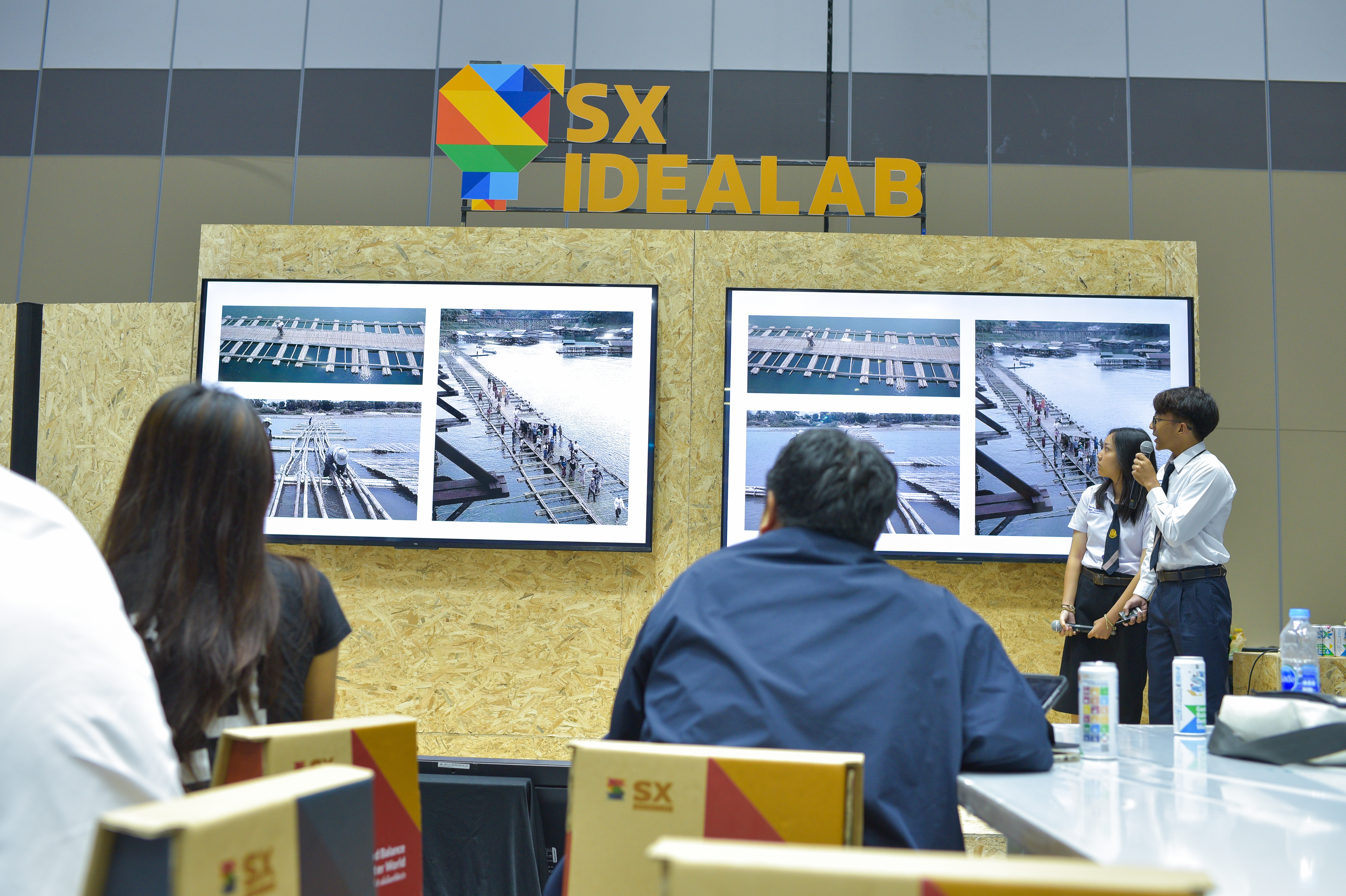
After hearing about the diverse challenges from representatives of professional architect groups, the forum also opened the floor to high-school and university students who won the disaster-resilient design competition. Under the theme of designing solutions for flooding in Paka Harung Subdistrict, the winning teams presented projects that reflected ideas of adaptation and creative, balanced coexistence with the environment.
Building on Local Wisdom, Creating Design Innovation for a Sustainable Future
The discussion concluded with insights from seasoned professionals in the design industry. It began with Mr. Pongsakorn Aunpradit from ATTA Studio, an expert in disaster-resilient design rooted in sustainability. Mr. Pongsakorn shared an overview of ATTA Studio’s philosophy, which emphasizes holistic design centered around five key factors: safety, air, water, energy, and food—essential components that form the foundation of sustainable living in the modern world. The firm therefore focuses on designing in harmony with local contexts and people’s lifestyles. Examples include restaurants built with wood and steel that feature wave-resistant structures and second-floor refuge spaces, as well as residences in Ao Nang designed to handle floods through water-retention systems and backup solar energy. He also spoke about the inspiration drawn from King Rama IX’s “New Theory of Agriculture,” a design approach that integrates sustainability with ecological coexistence and genuine food security.
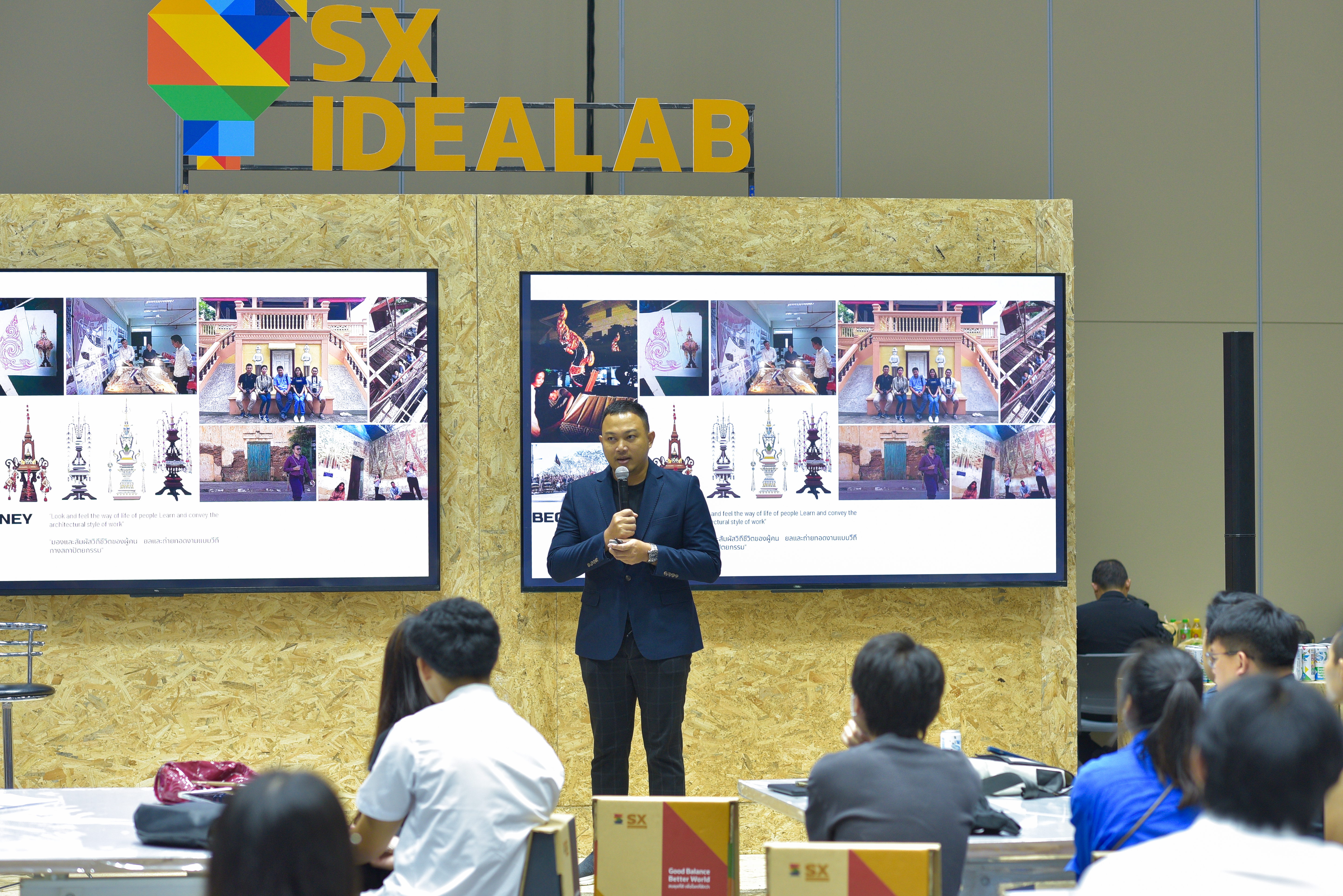
Mr. Phattharawut Juengcharoen of NAKA Design Studio in Nong Khai presented case studies based on real-world experience designing in the Northeast. His work is rooted in careful research into local people, their lifestyles, and their culture. He uses traditional Isan building wisdom as the core idea in his designs and develops it creatively to suit modern needs. Examples include research on wood that connects to sustainability ideas, and the design of a “sim” (chapel) that blends knowledge from the past and present, resulting in architecture that is sustainable both culturally and environmentally.
From the Northeast to the Central and Eastern regions, Asst. Prof. Dr. Sasitorn Srifuengfung (Ph.D.), Central Region Commissioner and faculty member at the Faculty of Architecture, Rajamangala University of Technology Tawanok (Bang Phra campus), presented research aimed at solving energy-use challenges—major issues in these regions. Her work includes designing prototype housing that relies primarily on solar energy, as well as developing prototypes that retrofit old university buildings into net-zero or low-energy structures.
Across these diverse perspectives from architects nationwide, one message becomes clear: design is not merely a tool for creating buildings—it is a force for adaptation, resilience, and restoring balance to life and the environment. In a world undergoing constant change, designing homes, buildings, and living spaces that can withstand natural disasters is no longer just about providing shelter; it is about building a sustainable future for people and the planet.