


Cheevamitr: Living Well, Leaving Well
How meaningful would it be if we could design a sustainable life journey for ourselves—from today until our very last chapter? This is the founding vision of Cheevamitr Social Enterprise Co., Ltd., established by Lady Chamnongsri Hanchanlash, to serve as a “companion” in planning for a quality end-of-life experience. Through knowledge sharing, safe spaces for dialogue, and personalized consultation, Cheevamitr helps individuals prepare—both body and mind—for illness, parting, and even organizing belongings before leaving.
At SUSTAINABILITY EXPO 2025, Cheevamitr opened a space to share knowledge, tools, and inspiration for everyone to plan for “living well” from today and prepare for a “peaceful departure” in the future. This was done through workshops in the SX IDEA LAB, including LIVING AND LEAVING NOTE: My Life Companion Journal for the Final Chapter, where participants planned their lives using a “life companion journal,” and DEATH CLEANING: Putting Life in Order Before Departure, which invited participants to reflect on life by organizing belongings, memories, and meaningful items to be passed on.
The first activity, LIVING AND LEAVING NOTE: My Life Journal for the Final Chapter, was held on October 3, 2025, led by Thanaporn Pojanakamthorn, Senior Executive Content Creation and Media Strategy, Cheevamitr Social Enterprise Co., Ltd. and Phisit Sriaakkapokin, Legal Officer, National Health Security Office (NHSO)

Thanaporn began by inviting participants to reflect on their own lives through an assessment across five dimensions: health, mind, relationships, assets, and finance. She then explained the broader context of end-of-life care, from understanding the “life curve” to exploring treatment options—particularly palliative care, which emphasizes the quality of life for both patients and their families. Importantly, palliative care can begin as soon as a diagnosis of a life-limiting illness is made, not only in the very final stage of life. The process includes patient assessment, conversations with families to understand the patient’s wishes, pain management such as the use of morphine at levels that allow the patient to remain conscious, advance health care planning, and continued psychological support for families after the loss.
Phisit explained that a living will, or an advance directive for end-of-life care, is a written statement that expresses an individual’s wishes regarding their medical treatment, either for themselves or on behalf of their parents, in advance. Without such a plan, when families are faced with real situations—such as parents in their final stage of illness—disputes often arise over whether to prolong life or not. According to Section 12 of the National Health Act B.E. 2550 (2007), every individual has the right to make a Living Will, declaring that they do not wish to receive medical interventions intended solely to prolong life in its final stage or to extend suffering from illness. A living will is, therefore, a proactive decision by the individual to ensure their children and family members can respect and follow their wishes without guilt. Importantly, it is not about ending life, but about exercising the right to choose the type of care one wishes to receive in their final days—under medical supervision—so as to depart peacefully and with reduced suffering.
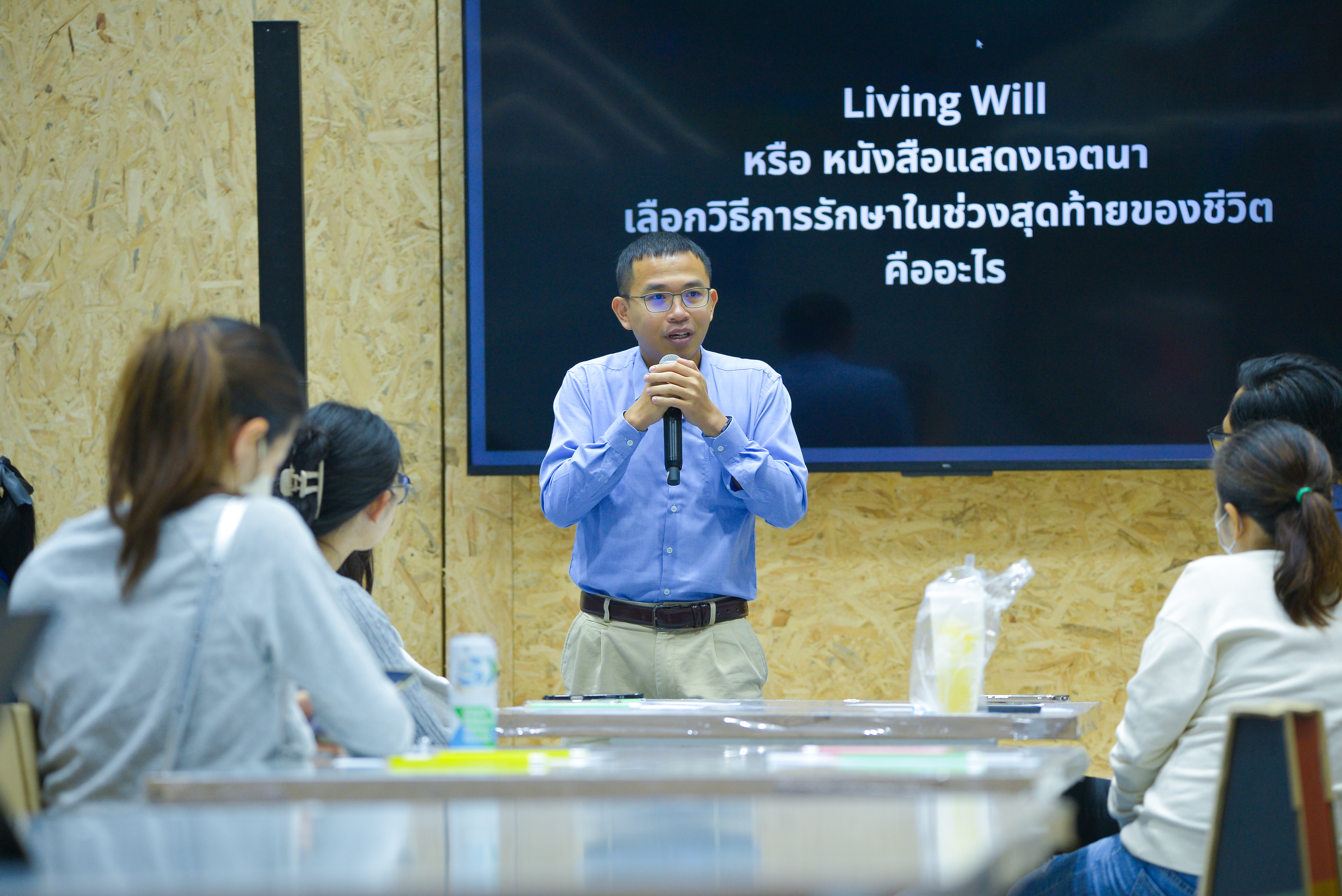
After that, participants were guided to write their own Life Companion Journal to reflect on and plan different aspects of life—particularly by drafting, in their own handwriting, an advance directive (Living will) stating their wish not to have life-prolonging treatment in their final days. The journal included many prompts for self-reflection, such as defining what “a good quality of life” means and clarifying what kind of end-of-life care they desire. Thanaporn emphasized that even after writing a Living Will, the most important step is to communicate those wishes clearly with the person who holds decision-making authority and with family members. This ensures mutual understanding and respect for one’s intentions on the day when they can no longer speak for themselves.

The second activity, DEATH CLEANING: Putting Life in Order Before Departure, was held on October 4, 2025, with speakers Khaisri Wisutthiphinet, , General Manager of Cheevamitr Social Enterprise, and Tathadanunun Sawetsrithawal, Spiritual Health Influencer and HR & OD Consultant and Empowerment Facilitator, who guided participants in learning and practicing how to organize their belongings.
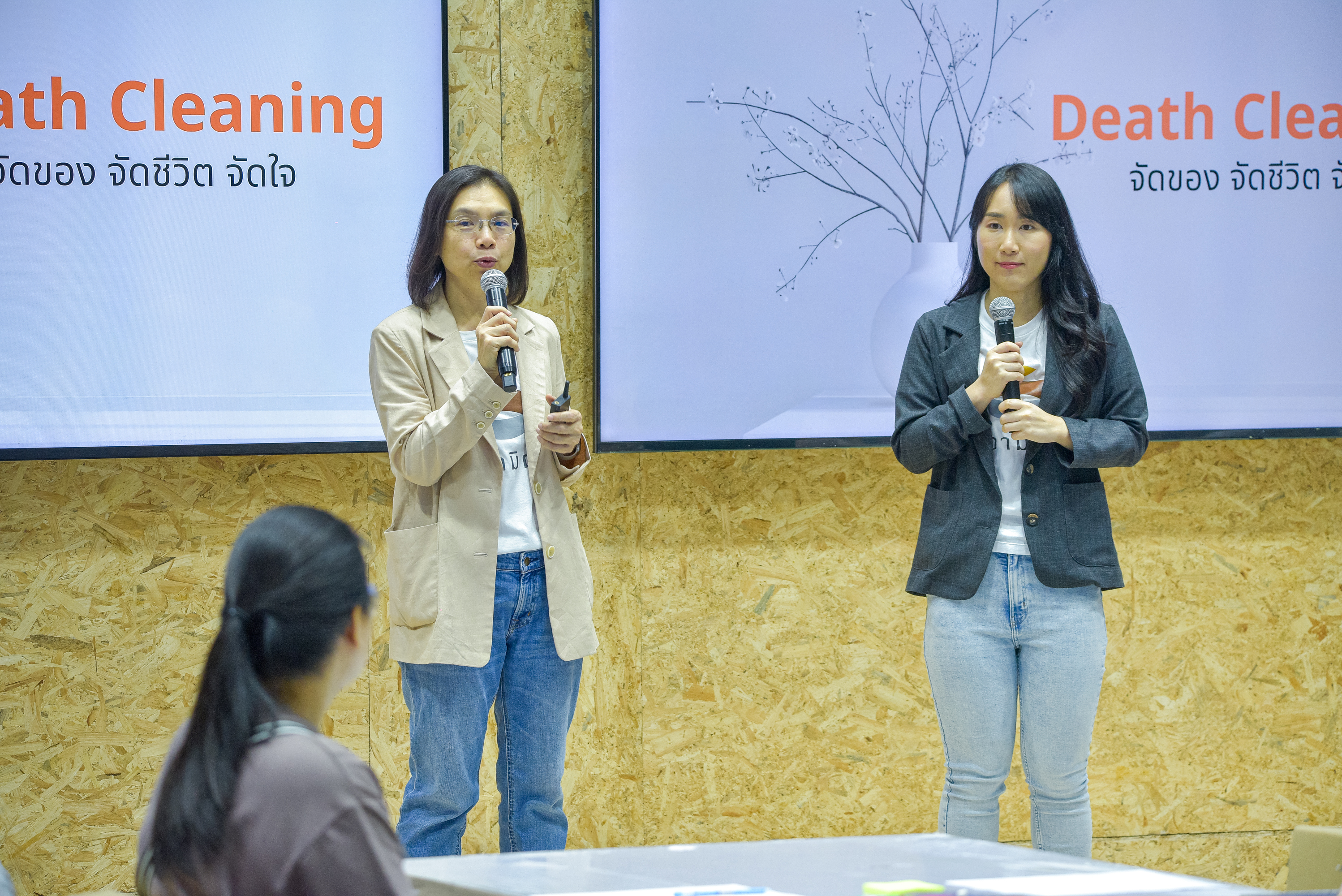
Before the workshop began, Khai Sri explained that Cheevamitr defines the concept of Death Cleaning as “organizing belongings, organizing life, and organizing the mind.” It is not only about preparing for the final days of life but also about understanding the true value of what we have and living in the present with meaning. One of its greatest benefits is expressing love and responsibility to those we care about by easing the burden of what they would otherwise have to manage. It also offers an opportunity to revisit cherished memories, put one’s life story in order, and practice letting go—not as a loss, but as a way to create space, both in the home and in the heart, for new things to come. Decluttering the home also helps declutter thoughts, emotions, and feelings, prompting reflection on what truly matters. Ultimately, it allows us to return to “living well” in the present, while passing forward something meaningful to the world we leave behind.
8 Tips for Death Cleaning
Tell your loved ones
- Invite family members to join in death cleaning. Use the process as an opportunity to open up conversations about life planning and even death, together.
- Practice letting go
- Start with items that carry no emotional attachment, such as trash or broken objects, to get used to the act of releasing.
- Sort into categories
- Organize belongings according to their use and space—such as kitchen items, bathroom essentials, or bedroom objects.
- Reflect on meaning
- Acknowledge the emotions that arise while sorting. Keep only the things that still carry genuine value and meaning in your life.
- Discard what should be discarded

Highly personal items that hold value only for you should be thrown away. If you still wish to keep them temporarily, place them in a box clearly labeled to “discard” or “destroy.”
Fill your home with joy
Display meaningful keepsakes or photos around the house to enjoy every day, or give them as gifts to loved ones.
Give every item a home
Use proper storage boxes or cabinets, and label them clearly to make organization easier for you and others.
Keep important items safe
Store vital documents—such as insurance papers, wills, and passwords—in a secure place, and make sure someone you trust knows where they are.
“Death Cleaning is a tangible way of life planning—not just an abstract idea. Organizing belongings requires self-reflection, revisiting memories, and examining our attachment to things. The conversations that happen at home during the process help us realize what truly holds value and meaning in our lives,” said Khaisri

Tathadanunun then guided participants through an activity called “Death Cleaning of the Heart”—a practice of releasing inner burdens. It began with exploring what unresolved stories, thoughts, or relationships might still linger in the heart. Participants were asked to freely write down their feelings to express and release what had been weighing on them. Then, they selected one story to “organize” in their hearts by writing a letter of gratitude toward it—acknowledging, appreciating, and letting it go. Finally, they tore up the paper as a symbolic act of release. The activity encouraged everyone to gently “thank” the past and, with a lighter and clearer heart, be ready to welcome new energy and perspectives into life again.
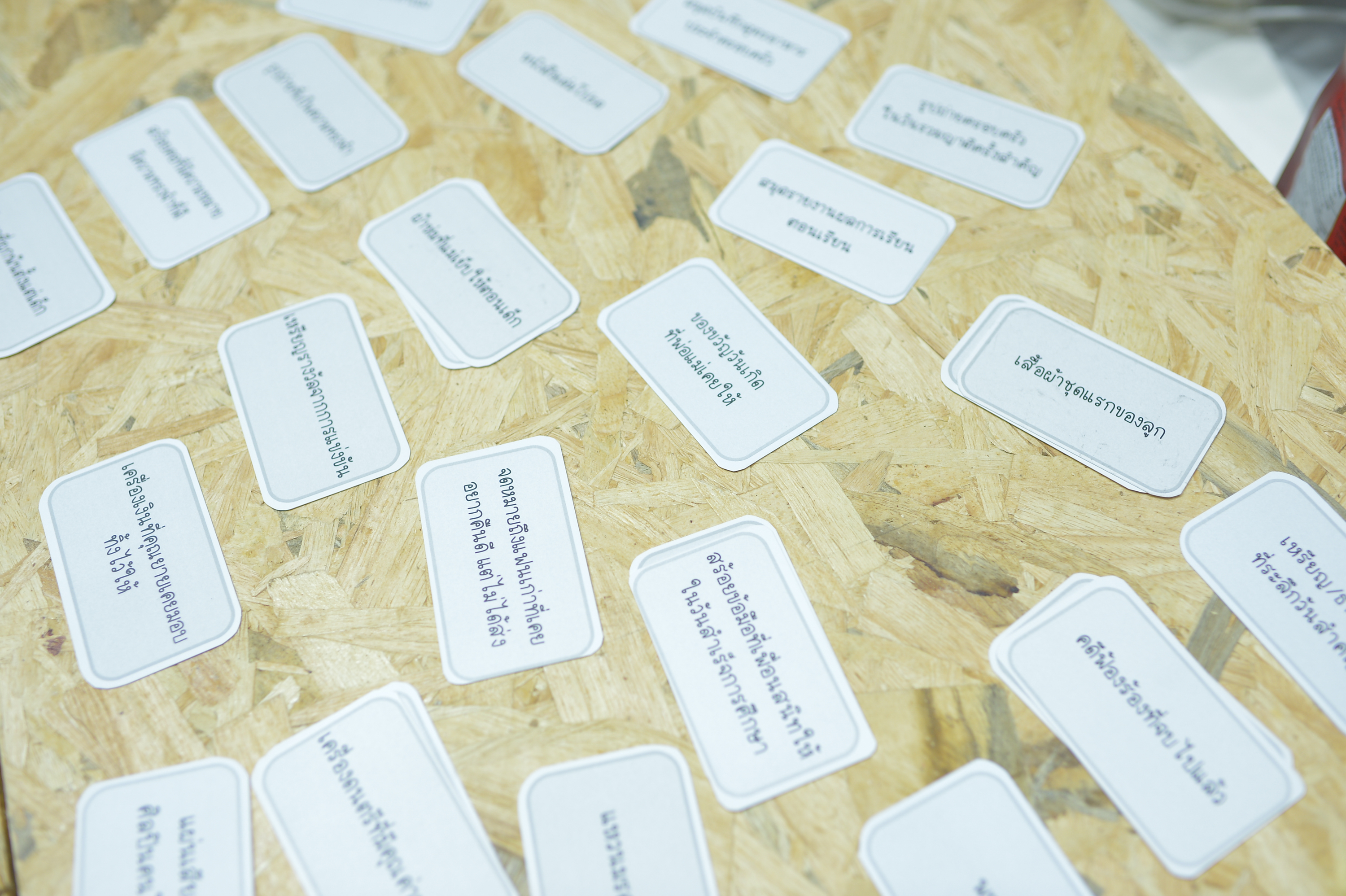
“Today, everyone reflected on why, deep down, they hold on to certain things or cannot let them go. What value does the heart attach to them? These unseen layers lie beneath the ‘tip of the iceberg’ in house cleaning. Organizing the home is, in fact, organizing the heart. Without understanding what’s inside, decluttering the outside can never truly be complete. Both inner and outer dimensions are deeply connected,” Tathadanunun concluded.