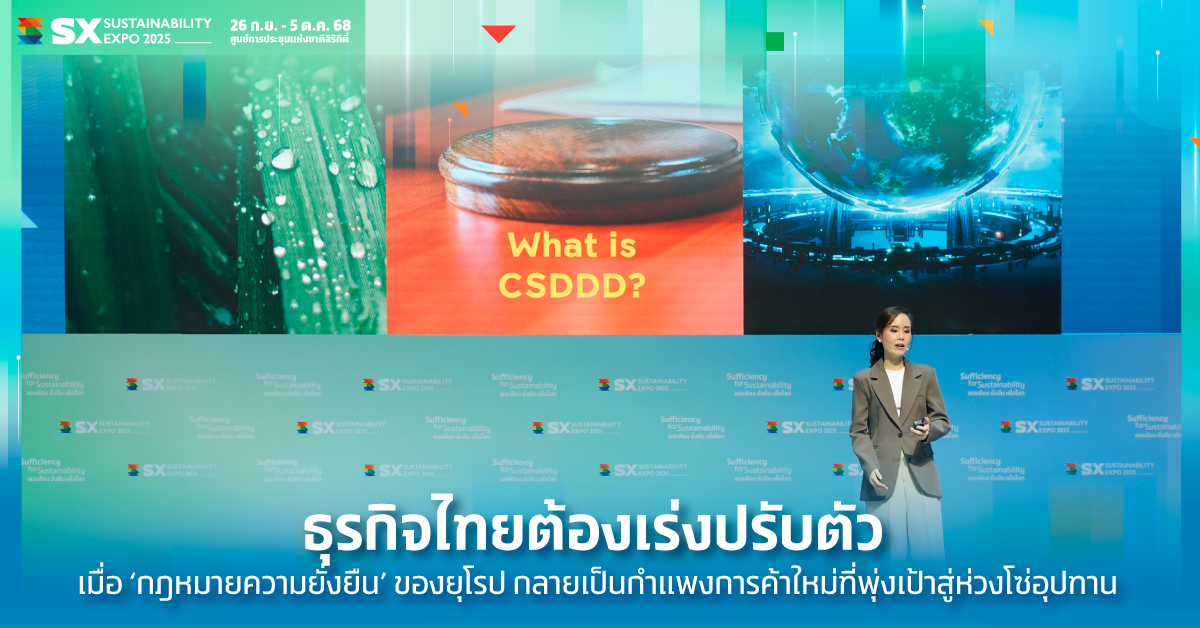


Thai Businesses Must Urgently Adapt as European ‘Sustainability Laws’ Form New Trade Barriers Targeting the Entire Supply Chain
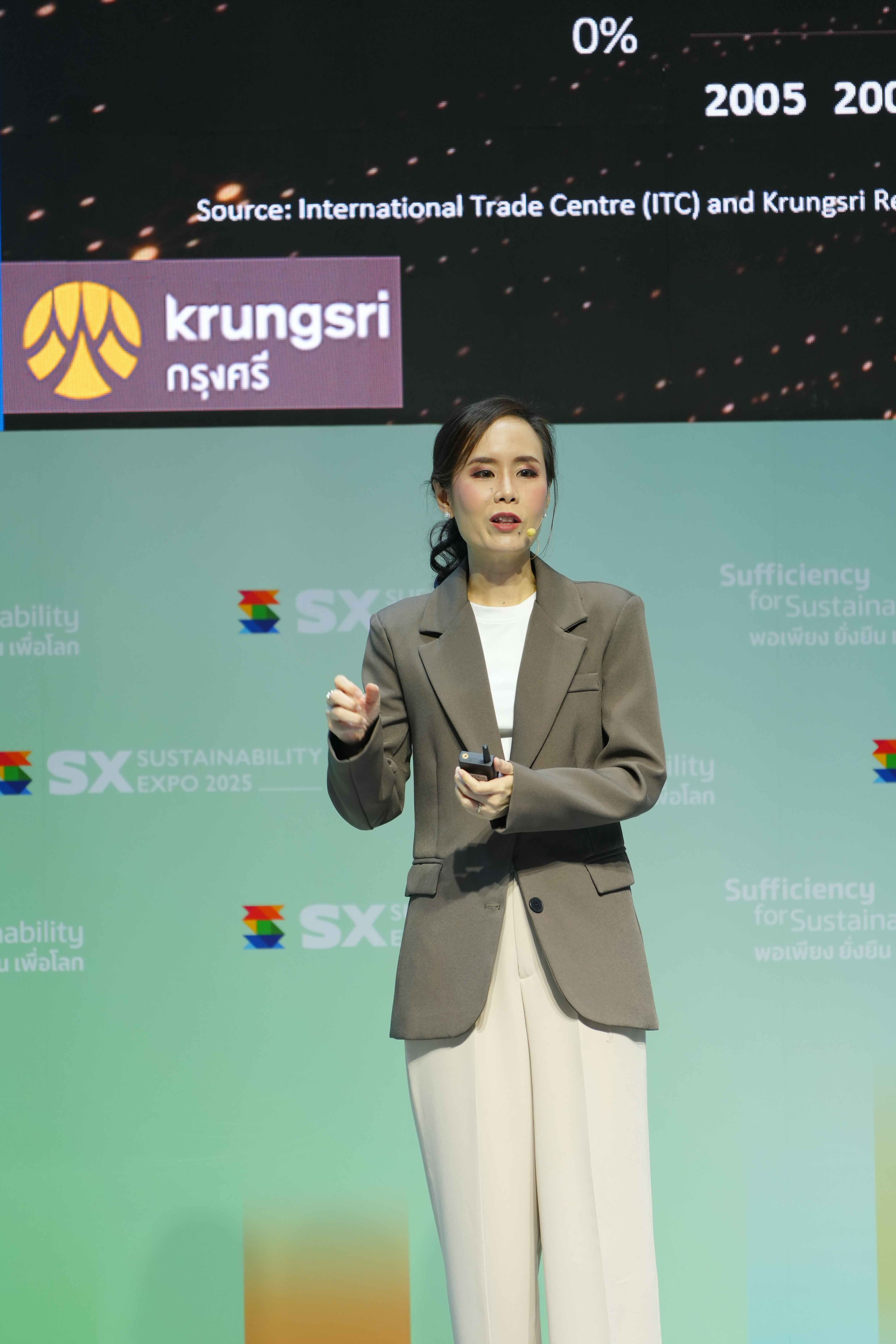
At the SUSTAINABILITY EXPO (SX2025), ASEAN's largest sustainability exposition, Dr. Pimnara Hirankasi, Head of Economic and Research at Bank of Ayudhya PCL, took to the SX TALK STAGE to address the pressing need for Thai businesses to adapt to external sustainability pressures. During the session titled "How Prepared Are Thai Businesses for Sustainability Laws Across the Entire Supply Chain?," she emphasized the urgent implications of the European Union's (EU) new regulations, particularly the Corporate Sustainability Due Diligence Directive (CSDDD).
This directive mandates that large European companies conduct thorough due diligence on environmental and human rights standards throughout their entire supply chains. It is rapidly becoming a significant non-tariff trade barrier, directly impacting Thai entrepreneurs connected to what is the nation's fourth-largest export market.
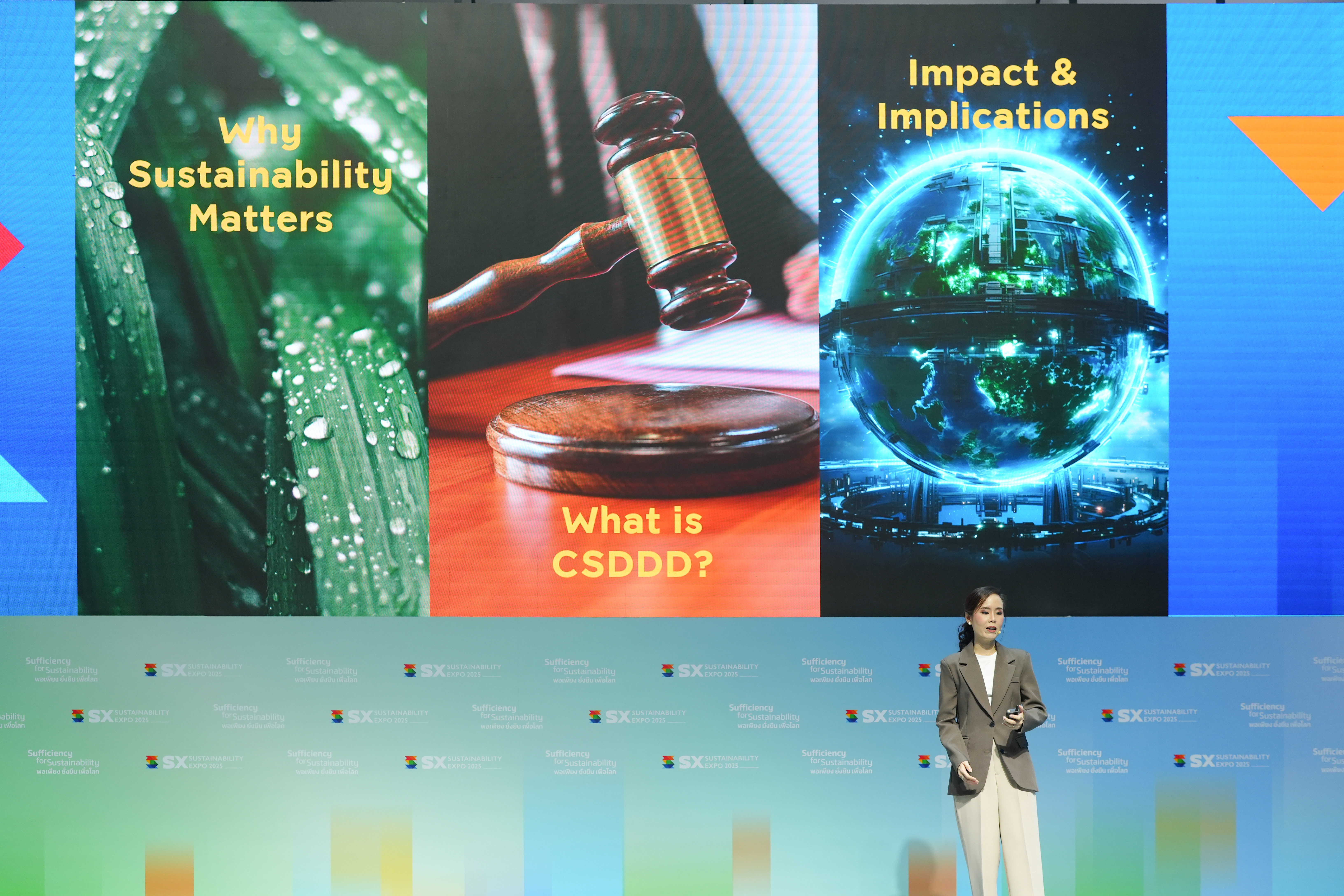
Dr. Pimnara noted that while sustainability is a global megatrend and Thailand has its own ambitious goals—Carbon Neutrality by 2050 and Net Zero within the following 15 years—the external pressures are intensifying. Despite domestic drivers like the Thailand Taxonomy (Phases 1 and 2), a pending Carbon Tax, and an in-progress Climate Change Act, the mandates from the EU are proving to be more forceful.
The EU's New 'Trade Wall': Sustainability Legislation
Thailand faces two primary categories of international sustainability measures:
-
Carbon Reduction Laws: Such as the Carbon Border Adjustment Mechanism (CBAM) for imported goods and the Carbon Offsetting and Reduction Scheme for International Aviation (CORSIA).
-
Supply Chain Laws: Including the EU Deforestation-Free Regulation (EUDR), which affects the rubber industry, and the latest CSDDD, which focuses on comprehensive supply chain audits.
A Deep Dive into CSDDD: Tracing Back to the Source
The CSDDD requires large European corporations to conduct rigorous due diligence in two key areas: environmental impact and human rights, covering their entire supply chain. This high level of scrutiny means these companies must achieve full transparency, knowing precisely whether their partners and suppliers are complying with established standards.
The scope of CSDDD affects three main groups:
-
Large EU-based Companies: With a global turnover exceeding €450 million and more than 1,000 employees (e.g., Volkswagen, Siemens, IKEA).
-
Foreign Companies Operating in the EU: With a turnover in the EU exceeding €450 million (e.g., Apple, Amazon, Toyota, Samsung, Microsoft). This includes Thai companies invested in the EU that meet this threshold.
-
Franchise Companies: With a global turnover over €80 million, of which at least €22.5 million is from franchise royalties (e.g., McDonald’s, Burger King).
The CSDDD is now in a transitional phase, with enforcement for the largest group of companies set to begin in 2026.
Upstream Audits Are Inescapable for Thai Businesses
Although most Thai companies are not directly subject to CSDDD, Dr. Pimnara stressed that they will face audits from their European trade partners. If a Thai business exports goods that end up on the shelves of a large EU supermarket or retailer, that Thai business will ultimately be required to report on its environmental and human rights practices. This upstream inspection will extend to all players within the supply chain.

Risks and Economic Impact for Thailand:
-
Increased Costs: Thai businesses will face higher operational costs to audit and upgrade their supply chains to meet the required standards.
-
Loss of Market Share: Failure to meet these criteria will result in an inability to sell products in the EU, leading to a significant loss of market share.
The EU market is critically important to Thailand, ranking as its 4th largest export market. Furthermore, Europe is the 3rd largest destination for Thai investment. The total economic exposure at risk from this legislation is estimated to be $50 billion USD, or over 1.6 trillion THB.
Industries Facing High Impact
Dr. Pimnara identified several industrial sectors with a high probability of being affected by the CSDDD:
-
High-Tech Goods and Automotive: As part of the global supply chain, these sectors must trace raw materials back to their source, ensuring that inputs like metal ores do not have a negative environmental impact.
-
Rubber: Faces environmental challenges related to deforestation in rubber plantations.
-
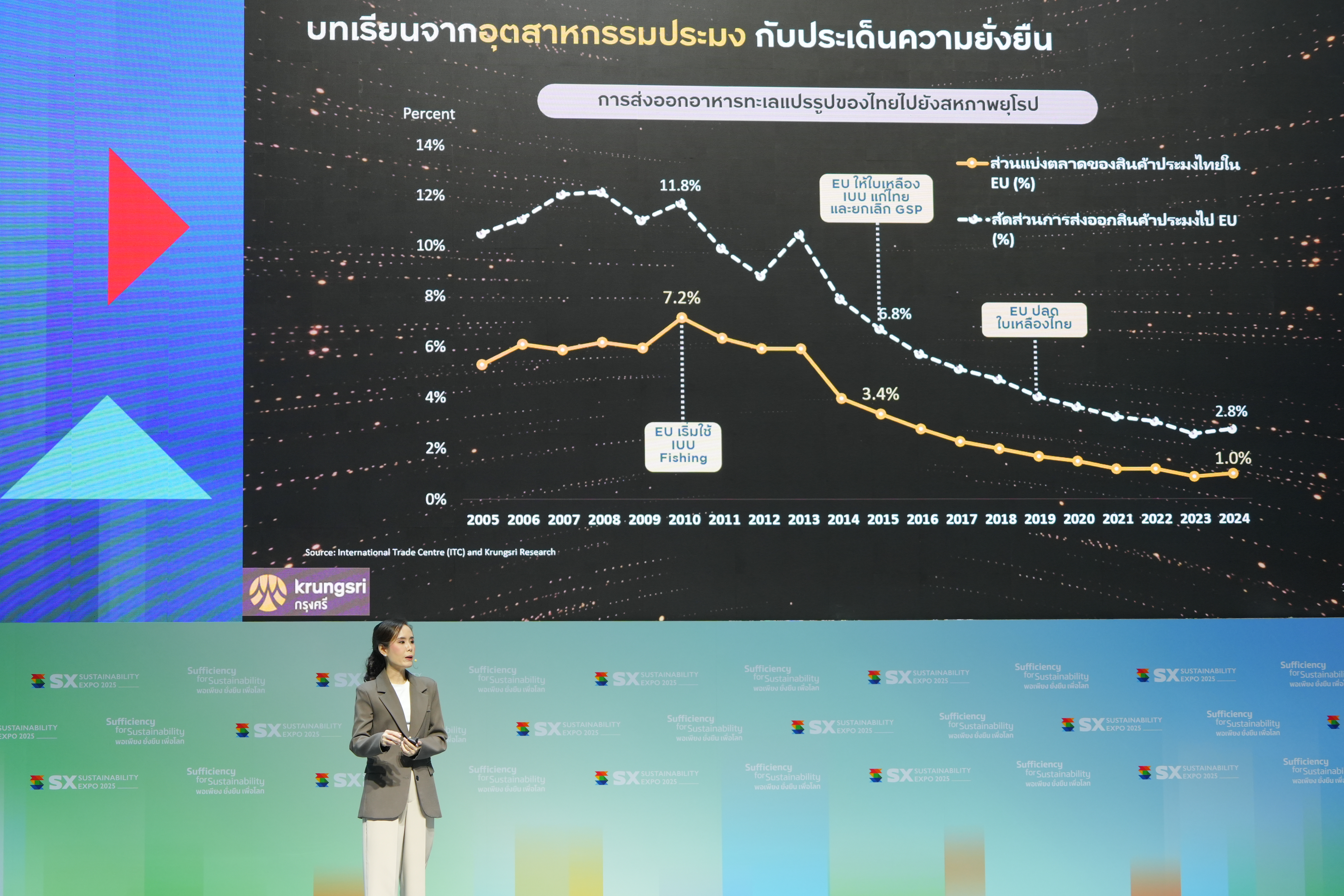
Food (especially Fisheries): The industry has already learned a hard lesson from the IUU (Illegal, Unreported, and Unregulated) fishing issue, which caused Thai seafood's market share in the EU to plummet from 7% to just 1%.
-
Textiles: As a labor-intensive industry, the main challenges will be related to labor standards and human rights violations, such as forced or child labor.
-
Gems and Jewelry: Similar to high-tech goods, the challenge lies in the upstream sourcing of raw materials from mining operations.
-
Retail: This service sector is responsible for auditing a wide variety of products across the entire supply chains of all its suppliers.
The 4C Framework for Turning Challenge into Opportunity
To navigate these challenges, Thai businesses are advised to adopt the 4C framework:
-
Collect: Gather data on your own operations and begin collecting data from partners throughout the supply chain.
-
Check: Audit the data to identify where environmental and human rights risks exist within the supply chain.
-
Change: Upon identifying risks, modify business practices to be more environmentally friendly and compliant with labor laws. This may involve finding new suppliers.
-
Capture: By achieving compliance, Thai businesses can unlock greater trade and investment opportunities, potentially capturing market share from competitors who fail to adapt.
Dr. Pimnara concluded by observing the shifting landscape of global trade: while the United States has used tariffs, Europe is using environmental regulations as a form of trade protectionism. Businesses that can successfully meet both environmental and human rights sustainability goals will be able to turn this challenge into an opportunity, expanding their reach not only in the EU but also in other markets that may adopt similar regulations in the future.