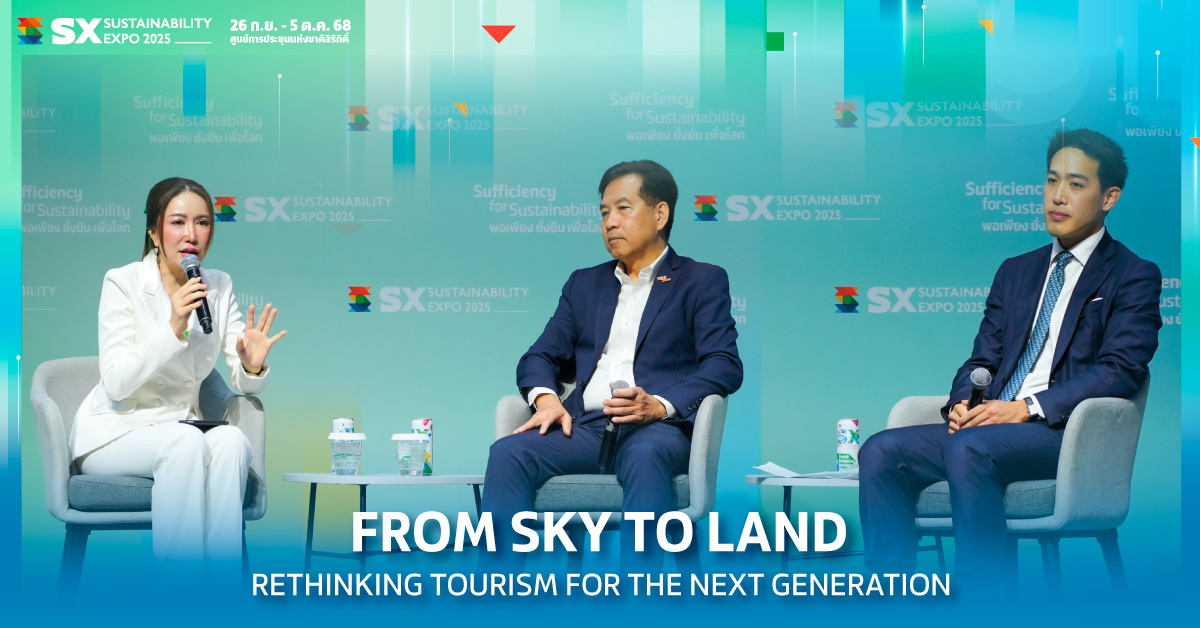
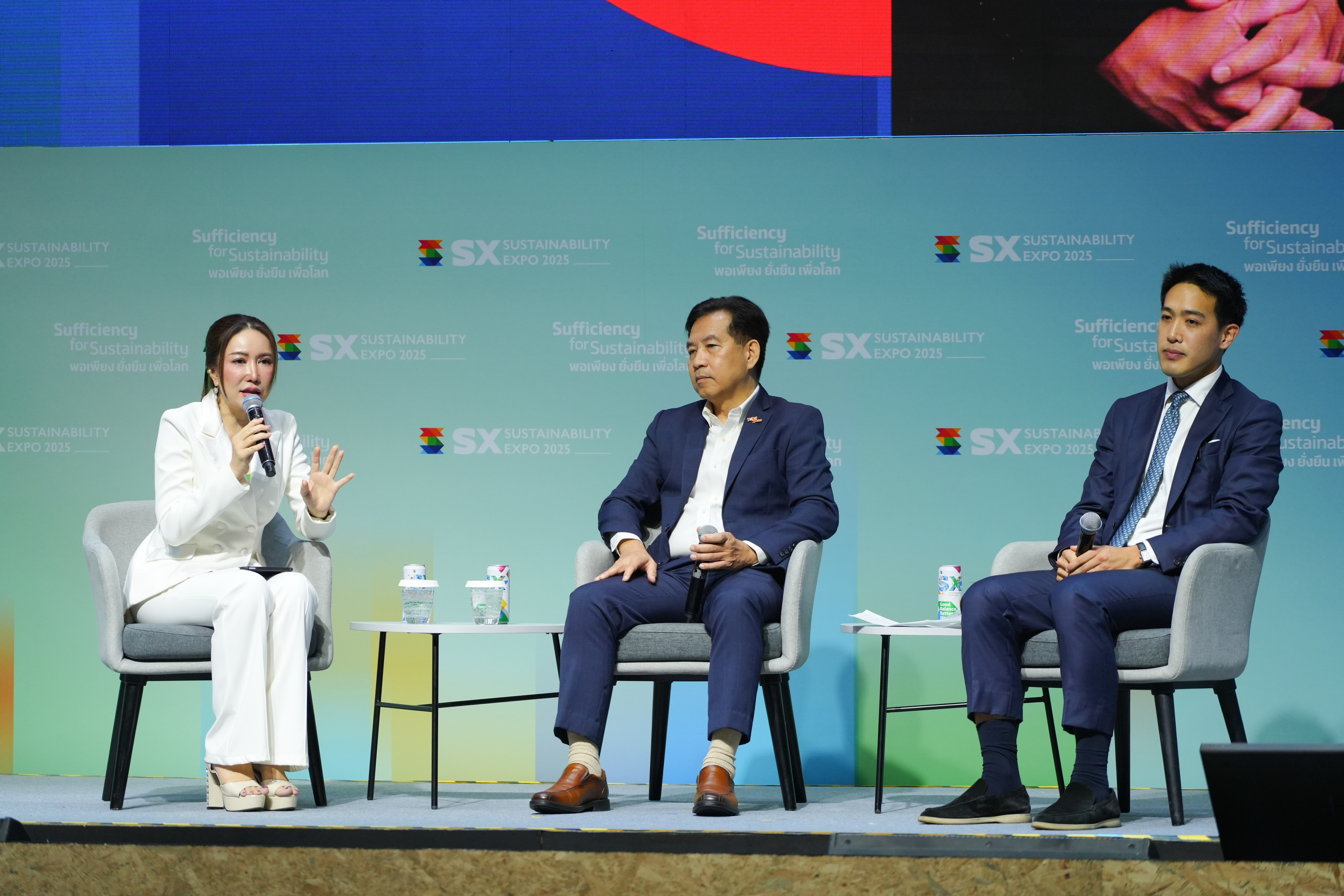
The tourism industry, a key driver of the global economy and the backbone of Thailand, is facing a significant sustainability challenge. At SUSTAINABILITY EXPO (SX2025), ASEAN's largest sustainability exposition, the SX TALK STAGE hosted a session titled "FROM SKY TO LAND: RETHINKING TOURISM FOR THE NEXT GENERATION." The discussion featured Mr. Woranate Laprabang, Chief Executive Officer of Vietjet Thailand, and Mr. Pasu Liptapanlop, Executive Director of Proud Group and Proud Real Estate Public Company Limited, who gathered to reaffirm their shared commitment to creating responsible and sustainable tourism.
When Flying is No Longer Just About "Time and Price"
Mr. Woranate Laprabang, CEO of Vietjet Thailand, revealed the aviation industry's decisive shift towards reducing its environmental impact. Although the aviation sector accounts for only about 2.5% of global carbon emissions, it is one of the most active sectors in carbon management, sharing a goal with the ICAO to achieve Net Zero by 2050.
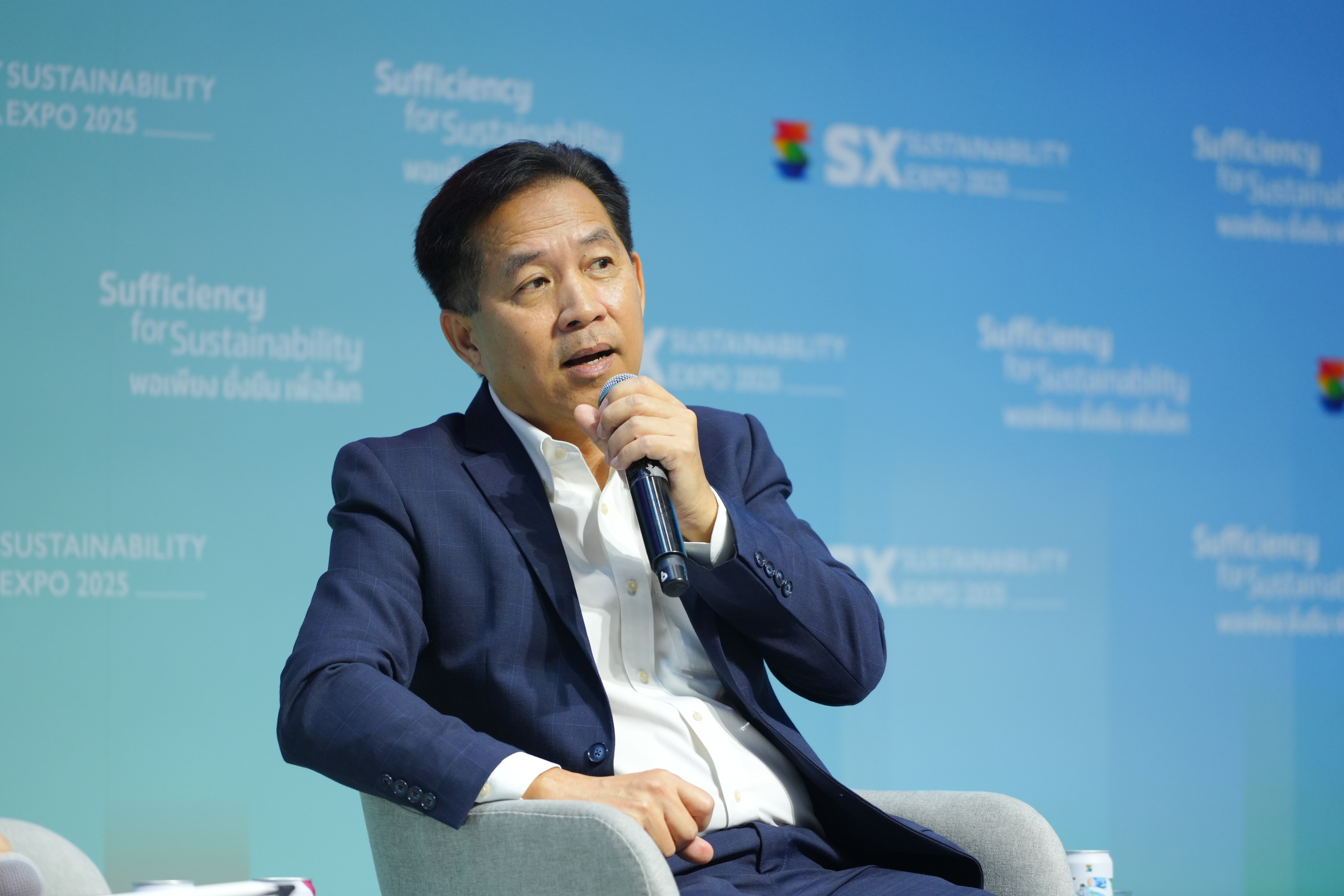
Vietjet Thailand, a Thai-national airline (majority Thai-owned and registered in Thailand) and the second-largest player in the domestic market, has implemented several proactive strategies:
-
Investment in Carbon-Reduction Technology: Vietjet Thailand plans a major investment of approximately 8 to 10 billion THB over the next four years to replace its entire fleet of older Airbus A320 aircraft with the new Boeing 737 D8. This new-generation aircraft utilizes new technology that will reduce fuel consumption and carbon emissions by approximately 15%.
-
Use of Sustainable Aviation Fuel (SAF): The airline is pioneering the use of Sustainable Aviation Fuel (SAF), which reduces life-cycle carbon emissions by up to 75% compared to conventional fossil fuels. A pilot flight from Bangkok to Da Nang was launched last year, with plans to expand to "Green Routes," such as Bangkok-Phu Quoc in Q4 of this year and Bangkok-Da Nang in Q1 of next year. The target is to utilize 1% SAF by 2026 and 70% by 2050.
-
Green Operation: The organization has replaced inflight materials, such as spoons and forks, with all-wood products, and all packaging is now recyclable paper. It aims to reduce single-use plastic consumption to just 5% by the end of 2026. This also includes initiating an onboard recycling program, which will utilize color-coded waste bags (black and green) on flights starting next year.
-
Fly Green Fund Project: Established in 2020, this fund raises capital for social and environmental enterprises. Initiatives include collaborations with the Seub Nakhasathien Foundation and the Chaipattana Foundation to plant 100,000 mangrove trees annually, aiming for 500,000 trees within five years. Mangrove forests are capable of sequestering nearly twice the carbon of typical forests.

Mr. Woranate emphasized that the greatest challenge is how to fully engage their 7-8 million annual passengers in the organization's ESG activities. He also called on the government to consider supporting the private sector, as the cost of green materials and products (like paper packaging) remains approximately twice as high as conventional alternatives.
From the Skies to Sustainable Destinations on Land
On the ground, Mr. Pasu Liptapanlop, Executive Director of Proud Group and Proud Real Estate Public Company Limited, which develops real estate and creates "destinations," addressed the importance of managing the impact left by tourists. On average, a tourist generates nearly 2 kilograms of waste per person per day—a significant problem that must be managed, as seen in competing destinations like Bali (waste and congestion issues).
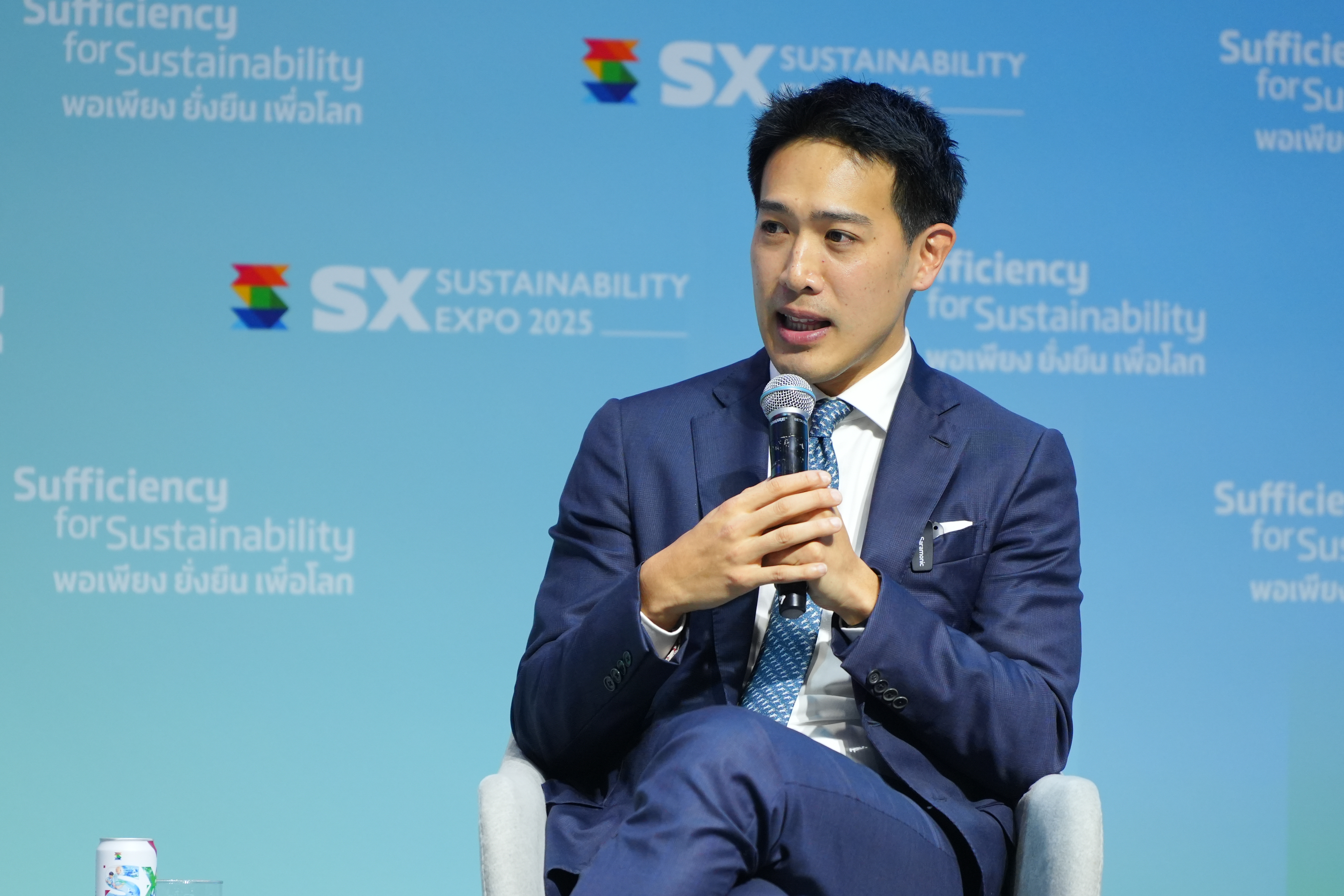
Proud has implemented initiatives under its core "Project Pineapple" concept, an ESG project aligned with the 17 UN SDGs, with a special focus on waste:
-
Zero Waste Organic Management: Proud invested in technology from Japan to process all organic waste generated in its 5-star hotels into high-quality organic fertilizer. It currently manages about 80% of its organic waste (with a 100% Net Zero target). This fertilizer is then shared with the community in Phuket to support farmers in switching to organic fertilizer. It is also used in Contract Farming to supply ingredients back to the hotel's restaurants, creating a value-added ecosystem.
-
Green Building Standards: Nearly all of Proud's projects adhere to global green building standards, such as LEED Gold or EDGE. These standards help conserve energy through design, efficient cooling/heating systems, and the use of solar panels. Adhering to these standards also facilitates access to Green Financing, a significant business incentive that lowers the company's financial costs.
-
People and Community Development (Social/Soft Power): A project of great pride is the Restart Center, operated by its affiliate company (Priate PCL). This initiative provides opportunities for well-behaved inmates nearing release (e.g., at Nonthaburi Prison) to receive vocational training in skills such as arboriculture (tree care and cutting) or painting (in collaboration with TOA), enabling them to secure employment and break the cycle of recidivism.
Mr. Pasu noted that over 73% of Gen Z and Millennial tourists demand transparent and sustainable tourism, and nearly 90% are willing to pay more for destinations that genuinely prioritize sustainability. Therefore, sincerity in ESG is an essential business strategy, not just CSR.
The Future of Collaboration: "All Sustainability" Tourism
Both executives agreed that collaboration between businesses practicing sustainability can amplify positive social impact. This involves connecting the entire travel chain, from flying with an airline that uses SAF and reduces plastic (Vietjet Thailand) to staying at an eco-friendly destination (Proud). This could eventually lead to special price packages that promote genuine green tourism.
Mr. Pasu concluded by reminding the audience that the easiest and most immediate way to contribute to sustainability is by separating waste into 3 types (recyclable, wet, and general waste). This action not as only reduces one's carbon footprint but also helps support the income of recyclable waste collectors.
This discussion served as a powerful reminder that the future of tourism is not just about doing business; it is about the shared responsibility to care for our world.