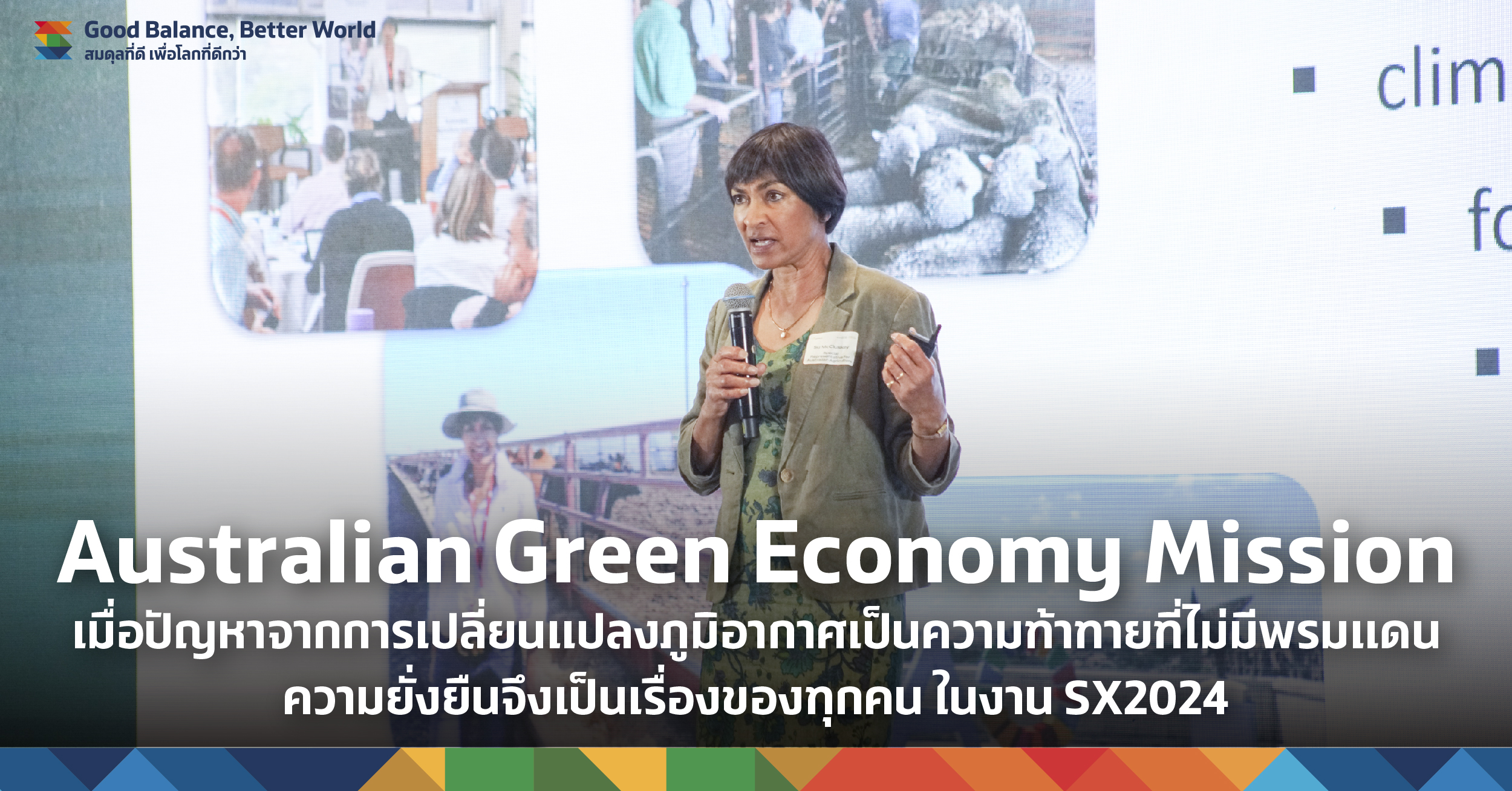
“It takes time—and we all know the planet doesn’t have much of it left to make real change.”
This was how Dr. Angela Macdonald, Australian Ambassador to Thailand, framed the urgency of global sustainability efforts. She emphasized why Australia has committed itself to numerous initiatives across sustainability, including policies in trade, investment, and beyond.
“We all have to collaborate. These challenges know no borders. It doesn’t matter where you are in the world—technology, innovation, practices, and policies must work together to make our cities better, safer, more environmentally friendly, and sustainable—for the benefit of everyone.”
At the Sustainability Expo 2024 (SX2024), the Australian Embassy in Thailand organized the “Australian Green Economy Mission”, highlighting the country's commitment to building green economies and fostering partnerships between Australia’s sustainable businesses, research institutions, and Thai enterprises.
Shared Challenges, Shared Opportunities
“Thailand shares many of the same climate-related challenges faced by other countries in the region—rising sea levels, increased flooding, and more severe droughts,” said Sue McCluskey, Australia's Special Representative for Agriculture, during a panel discussion. “However, Thailand also has tremendous potential, particularly in green technologies. In agri-tech, for example, there are real opportunities for innovation and leapfrogging.”
Sue underscored that sustainability in agriculture requires a flexible, results-focused approach. “There is no one-size-fits-all method. Policies, processes, and tools need to be adaptable to diverse conditions. What's essential is that we stay focused on outcomes.”
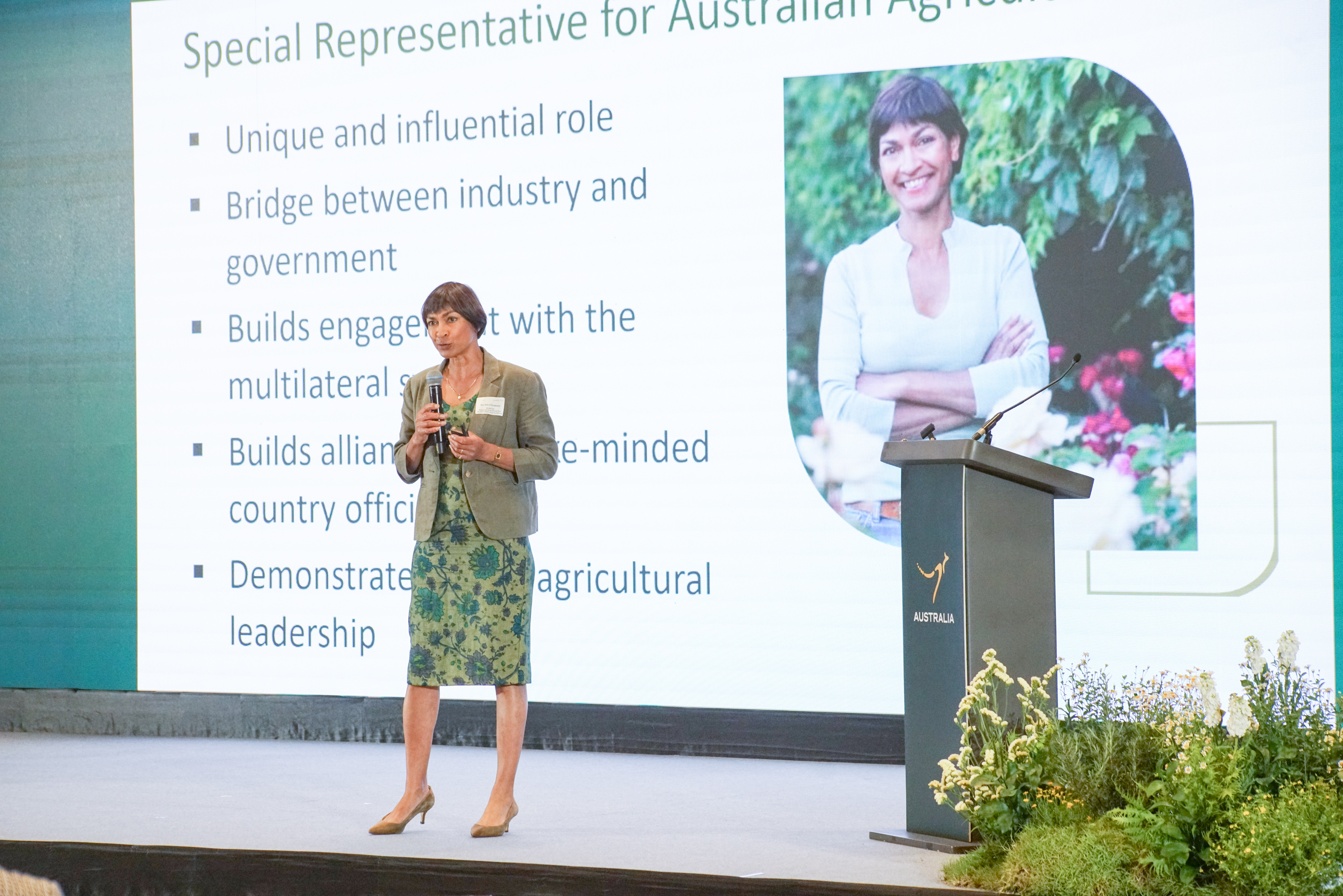
Australia–Thailand: Aligned Values in Agriculture
Sue emphasized the importance of Australia and Thailand working together, as both nations share common goals in agriculture. “We both value producing nutritious, high-quality food, ensuring food security, and addressing the impacts of climate change. And we both have strong commitments to open trade and vibrant markets.”
She further highlighted the importance of communication. “It's not just about collaboration between governments or businesses—it's also about communicating with consumers so they understand what’s being done, and why it matters.”
Southeast Asia Engagement and the Mekong Partnership
Australia has long supported sustainable agriculture across Southeast Asia, including in countries like Bangladesh. Through its programs, Australia has introduced alternative crops to smallholder farmers, promoting sustainable agriculture while also improving access to food, education, and healthcare—particularly for women and children.
In late 2020, the Australian government launched the Mekong–Australia Partnership (MAP) to advance sustainability and bolster agricultural value chains across the Mekong subregion and Southeast Asia. This initiative targets challenges like climate change, water security, and the transition to clean energy. Importantly, MAP focuses on every stage of the agricultural process—from cultivation and processing to transportation and distribution—creating added value at each step and improving supply chain resilience.
Deepening the Commitment
This commitment was reaffirmed in March 2024, during the ASEAN–Australia Special Summit, when Australia pledged an additional USD 220 million over five years. The funding aims to address environmental sustainability, mitigate climate change, and accelerate the region’s transition to clean energy—particularly within the Mekong basin.
Follow SX updates and events on the Sustainability Expo Facebook Page or add Line ID: @sxofficial Get ready for SX2025, returning grander than ever from September 26 to October 5, 2025, at the Queen Sirikit National Convention Center (QSNCC)