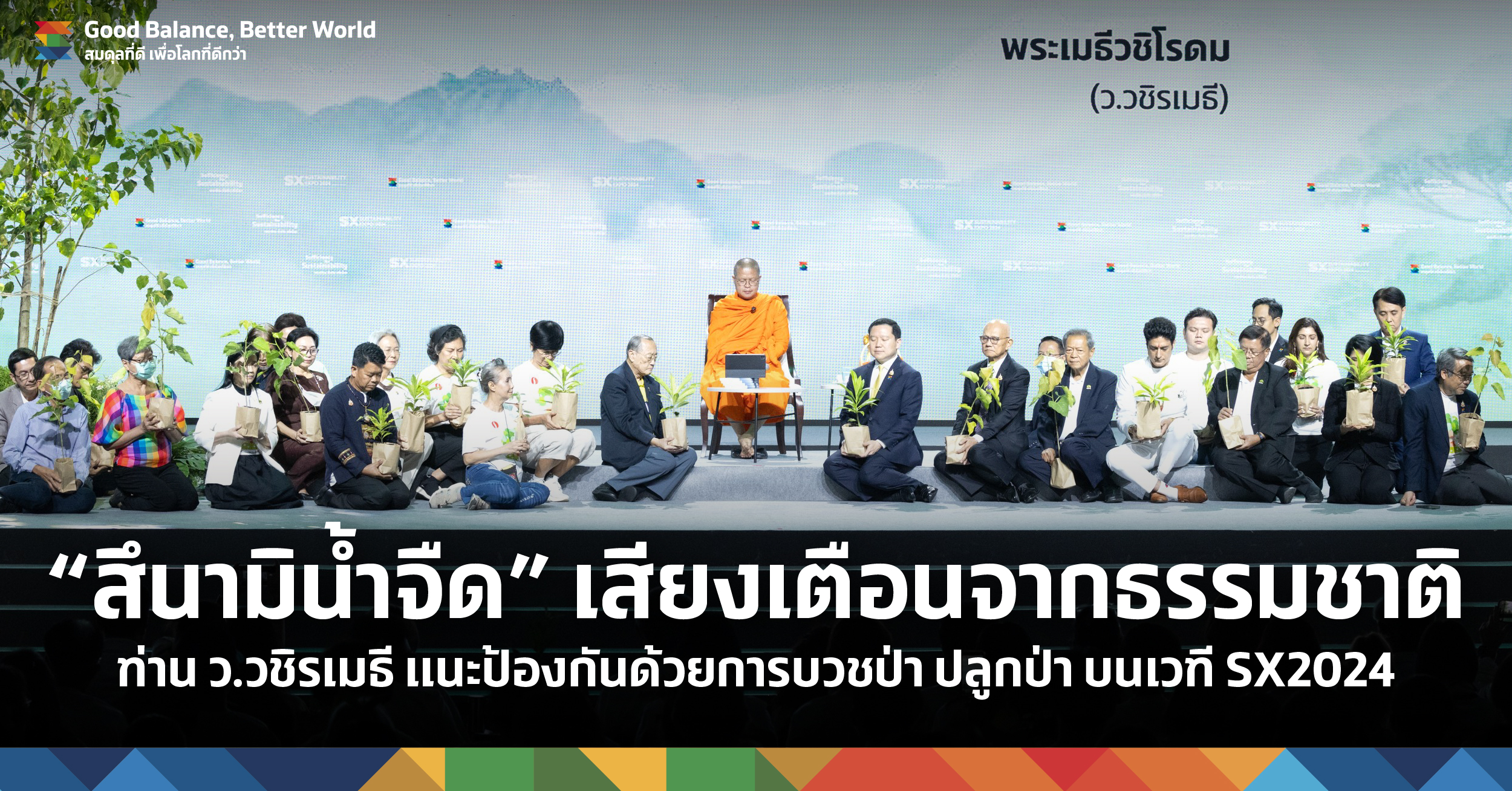
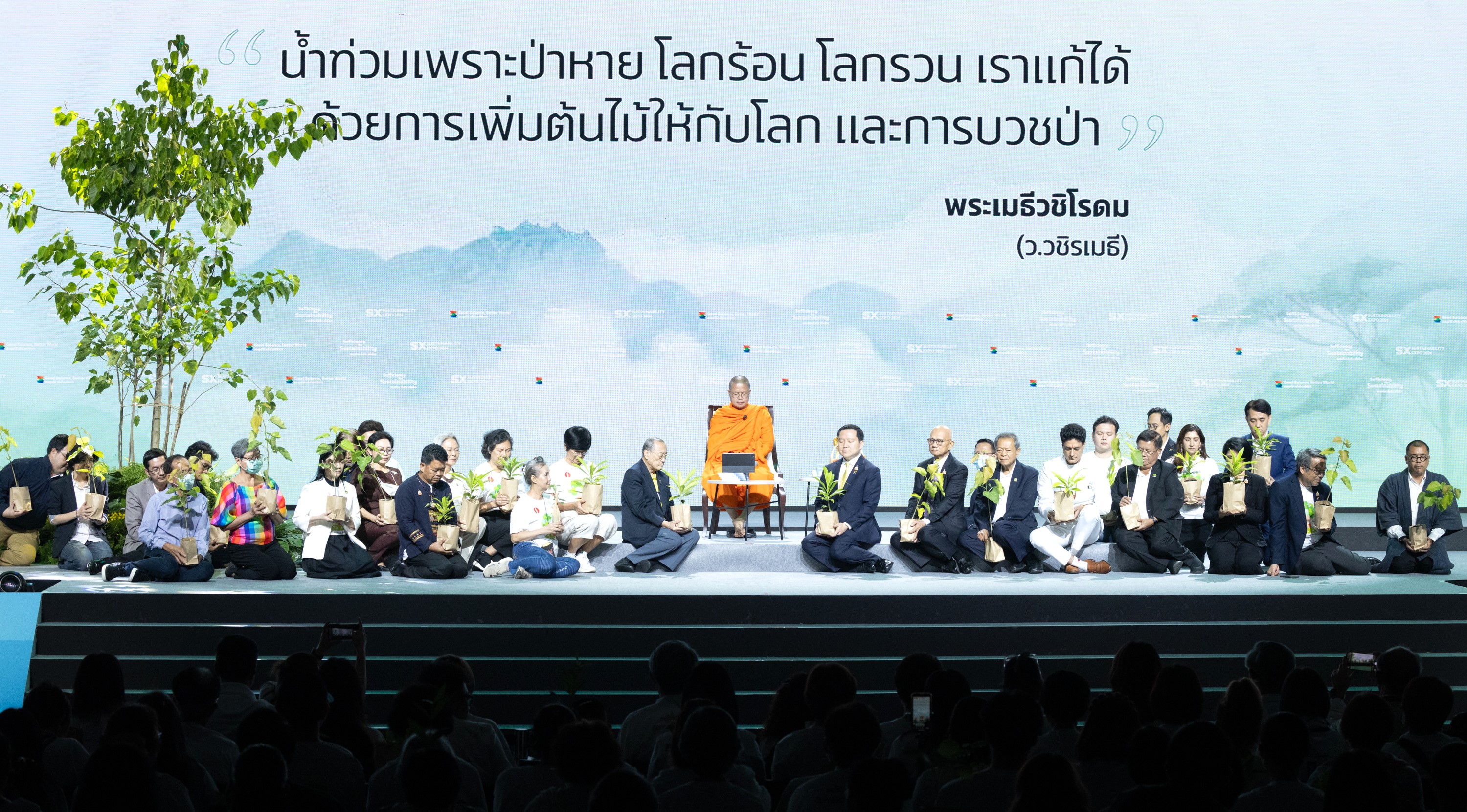
“The Freshwater Tsunami” — a term coined by Phra Medhivajirodom, or V. Vajiramedhi, the renowned Buddhist monk and teacher — was used to describe the devastating floods that struck Chiang Rai and other regions in 2024. He traced the root cause to what he calls “Lobphiwat”, a wordplay on “globalization” and “greed” (lobha in Pali/Sanskrit). To mitigate and resolve the environmental crisis, he urged that change must begin within, by adopting the Buddhist way of life: consuming mindfully, living simply, and embracing the spiritual practices of forest ordination and reforestation to counter long-term impacts.
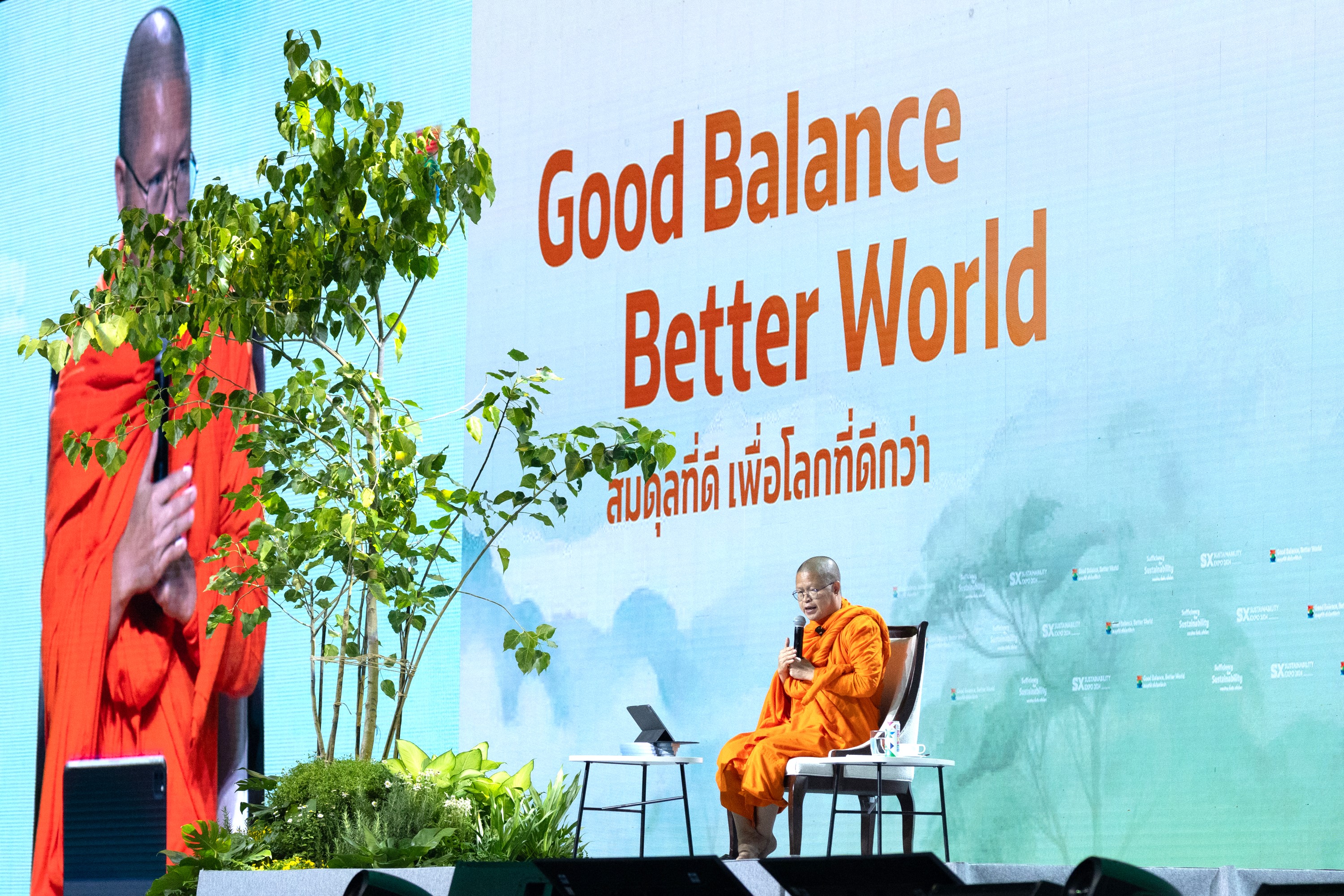
V. Vajiramedhi shared his perspective on addressing global environmental crises from a Buddhist lens during a major keynote at Sustainability Expo 2024 (SX2024) — ASEAN’s largest sustainability gathering, where thought leaders from across the region convened to inspire action and cooperation for sustainable living and development, grounded in the Sufficiency Economy Philosophy.
He illustrated his message by referring to the severe flooding in northern Thailand, which many locals described as the worst in Chiang Rai’s memory. The first major cause, he explained, is deforestation — the scale and timing of which remain unknown, but whose effects are clearly visible today. While forested hills may still appear lush from the ground, aerial views from helicopters reveal barren mountaintops and deforested cores. When storms hit, nothing stops the deluge of water rushing downhill.
The second factor is monoculture farming, particularly corn cultivation. At the end of the harvest season, farmers often burn the remnants. This scorches the topsoil, making it hydrophobic and unable to absorb rainwater. As a result, rainwater rushes across the surface, eroding the land. According to the monk, only 30% of the floodwaters this year were actual water — the remaining 70% was silt and mud, which settled into thick sludge once the waters receded.
According to Lanna traditions, ancient wisdom warned of three taboos — known as “khid” — that would bring floods and natural disasters:
-
Ran Phanom – the destruction of mountains and forests
-
Thom Samut – the encroachment upon rivers and waterways
-
Blocking natural water flow – such as with unplanned urban expansion
V. Vajiramedhi lamented that modern society has forgotten this ancestral knowledge. “The ancients lived in harmony with nature. They knew what was a friend and what was a threat. Today, we exploit the Earth relentlessly — digging up land and sky to indulge ourselves — until nature cannot restore itself fast enough.”
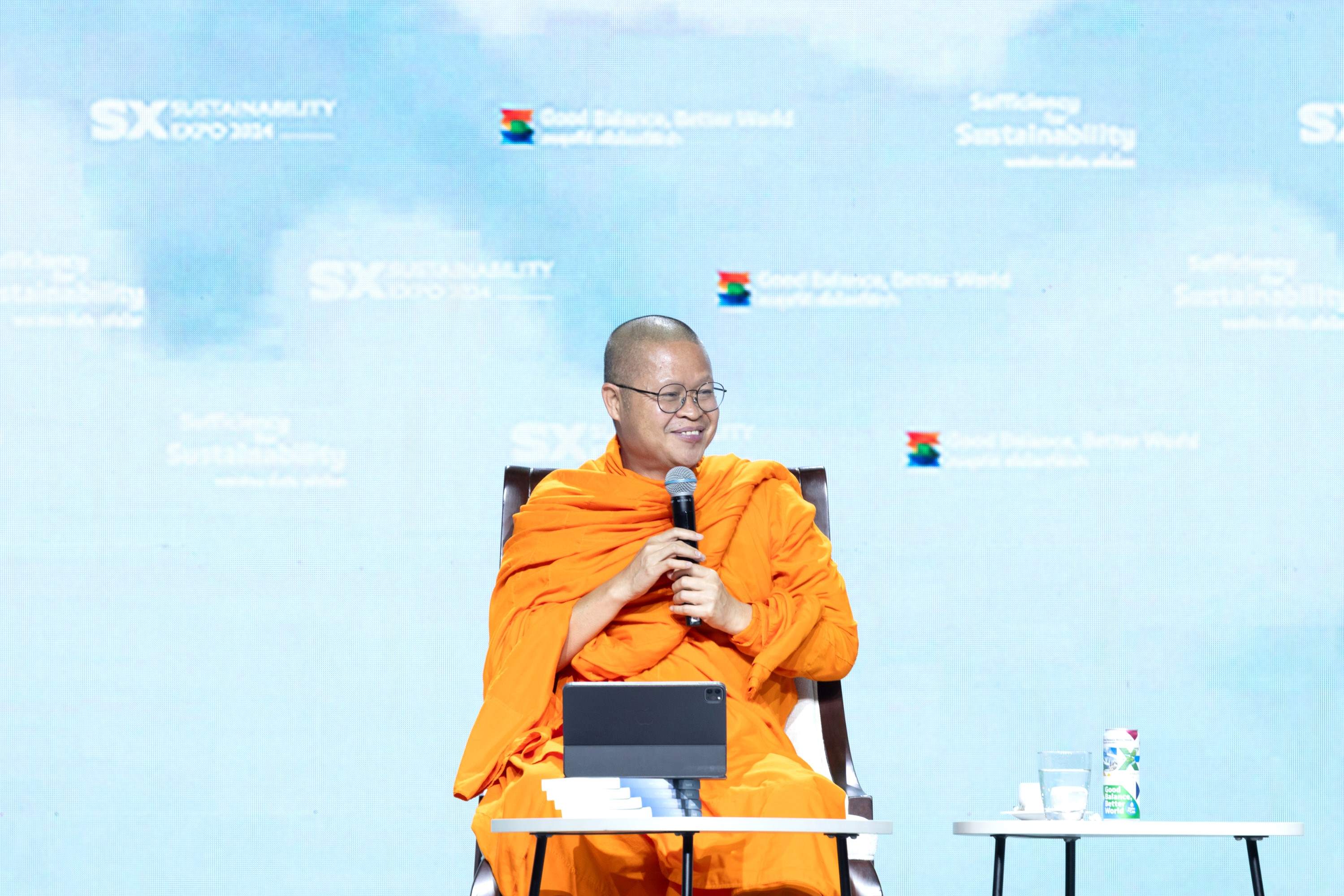
This disconnection, he said, fuels the climate crisis — from rising heat to droughts and floods. Lakes that once brimmed year-round now lie dry. If we truly believed in samsara — the Buddhist cycle of birth and rebirth — we might care more about the future. He recalled a moment when the Dalai Lama once told a journalist that he believed in reincarnation and worried about what kind of world he would be reborn into. “If we teach about samsara, it may help us awaken. It might save the planet.”
The monk also pointed out that the 227 rules of monastic discipline (Vinaya) emphasize moderation and ecological balance. Monks are forbidden from destroying green plants or even pulling out grass, lest they break their precepts. “The Buddha said that nature has enough to sustain all people — if we stop exploiting it. Harming nature is an act of ingratitude.”
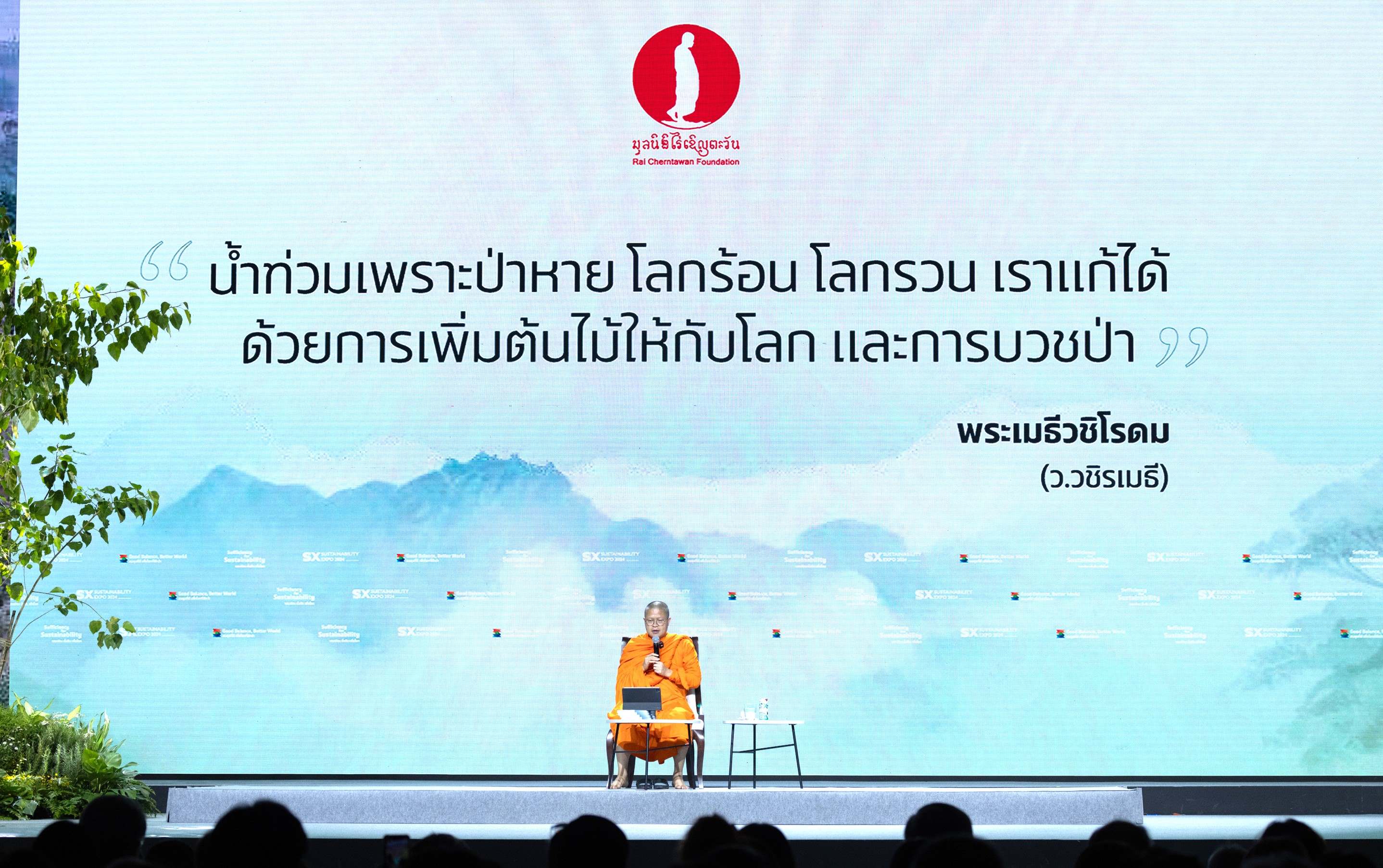
He cautioned against focusing solely on reactive measures. “When floods hit, we rush in to help. But once the waters recede, we move on — without addressing the root cause.” For true and lasting change, we must plant trees, he insisted.
However, reforestation using hardwood trees takes many years. During this time, existing trees may still be cut down. That’s why V. Vajiramedhi advocates a spiritual approach: forest ordination. Wrapping a saffron robe around a tree symbolically ordains it as sacred — transforming the area into a sanctuary where no tree may be felled or animal harmed.
“I once wondered, ‘How can I — just one person — teach enough Dhamma to bring real change?’ When I asked my teacher, he replied: ‘Go sleep with a mosquito.’ Because one mosquito can make humans take action — buy nets, invent sprays, install screens. If a mosquito can change human behavior, surely a human can change the world.”
“But first, we must awaken. Without awakening, the consequences will be grave,” he concluded.
Follow SX updates and events on the Sustainability Expo Facebook Page or add Line ID: @sxofficial Get ready for SX2025, returning grander than ever from September 26 to October 5, 2025, at the Queen Sirikit National Convention Center (QSNCC)