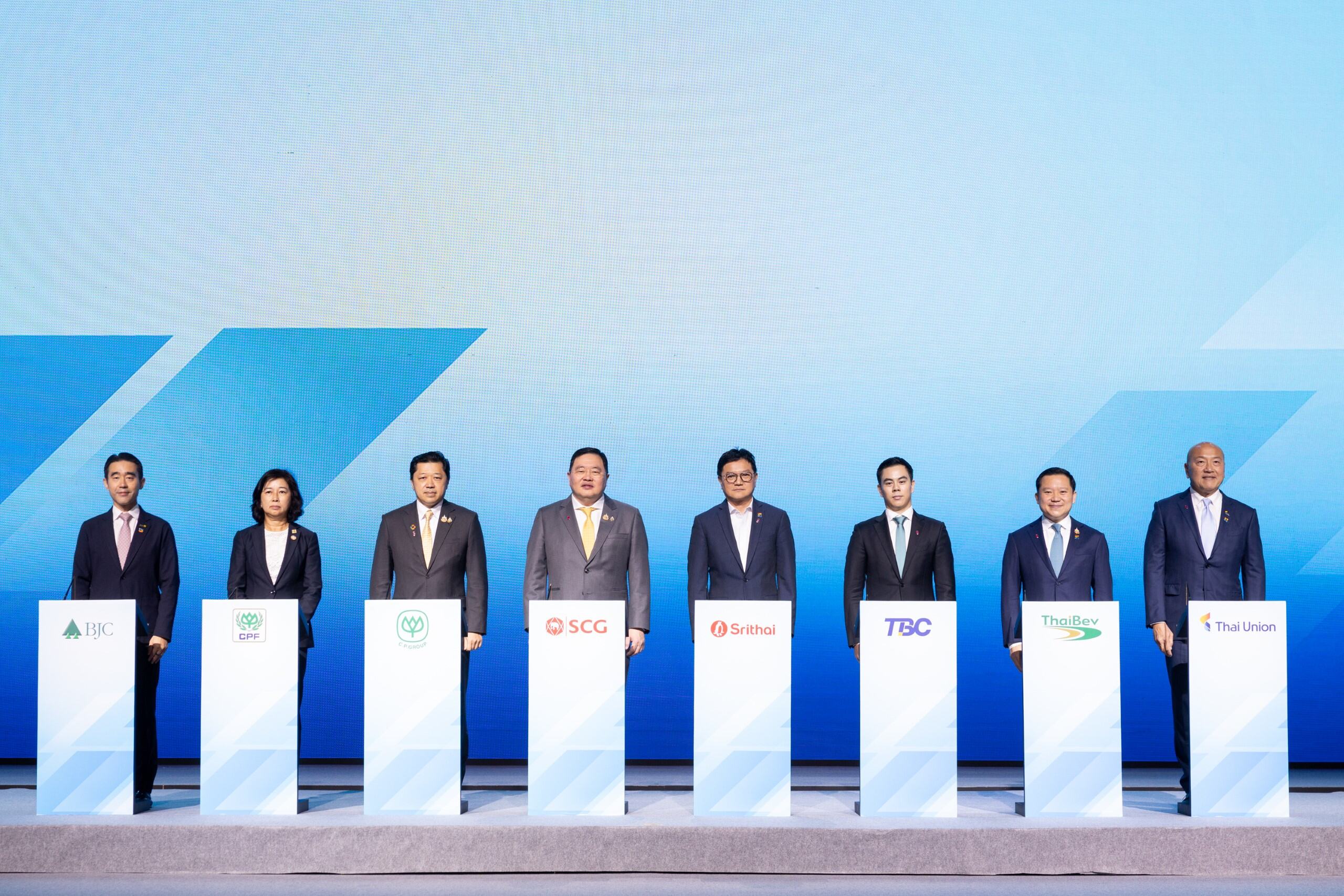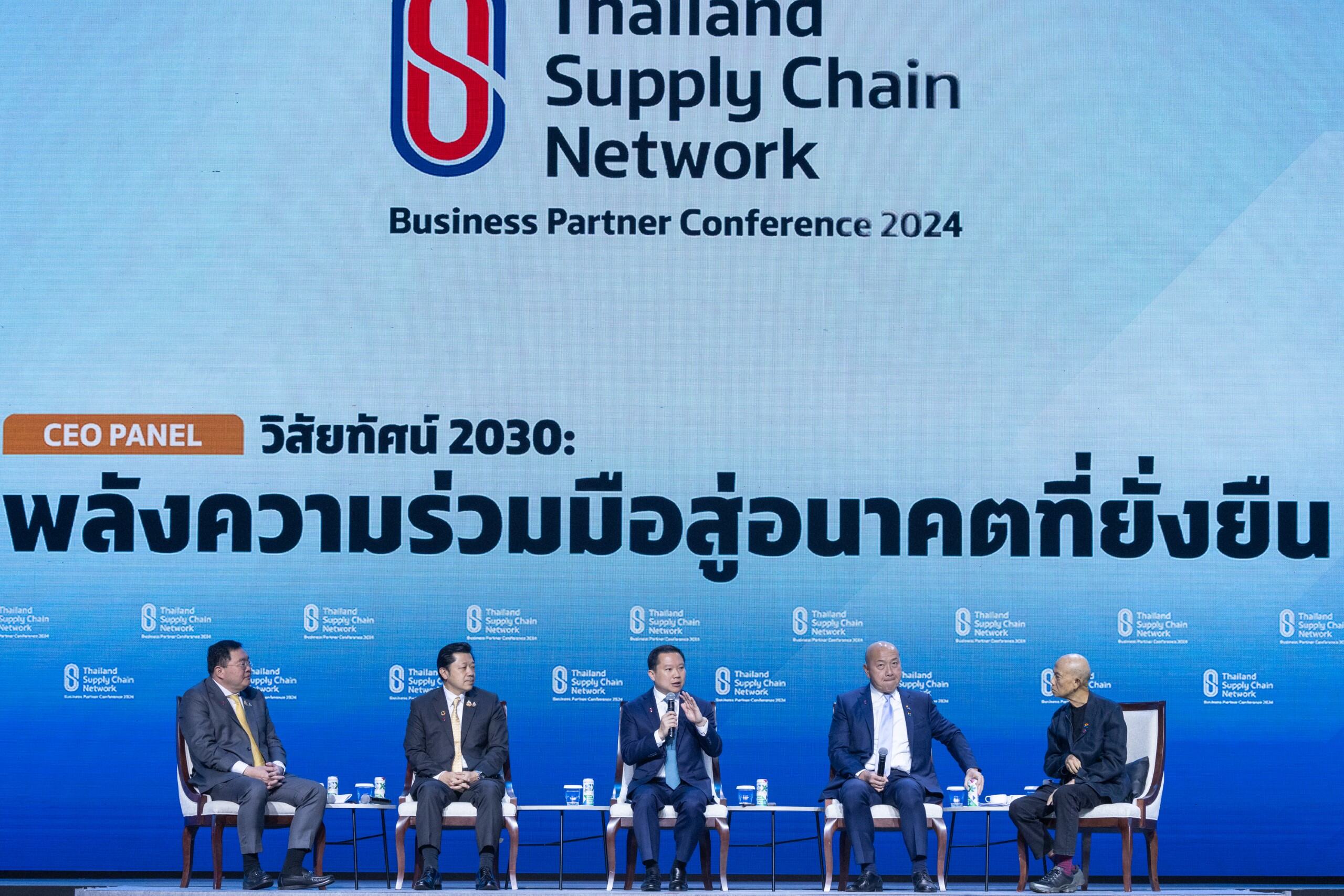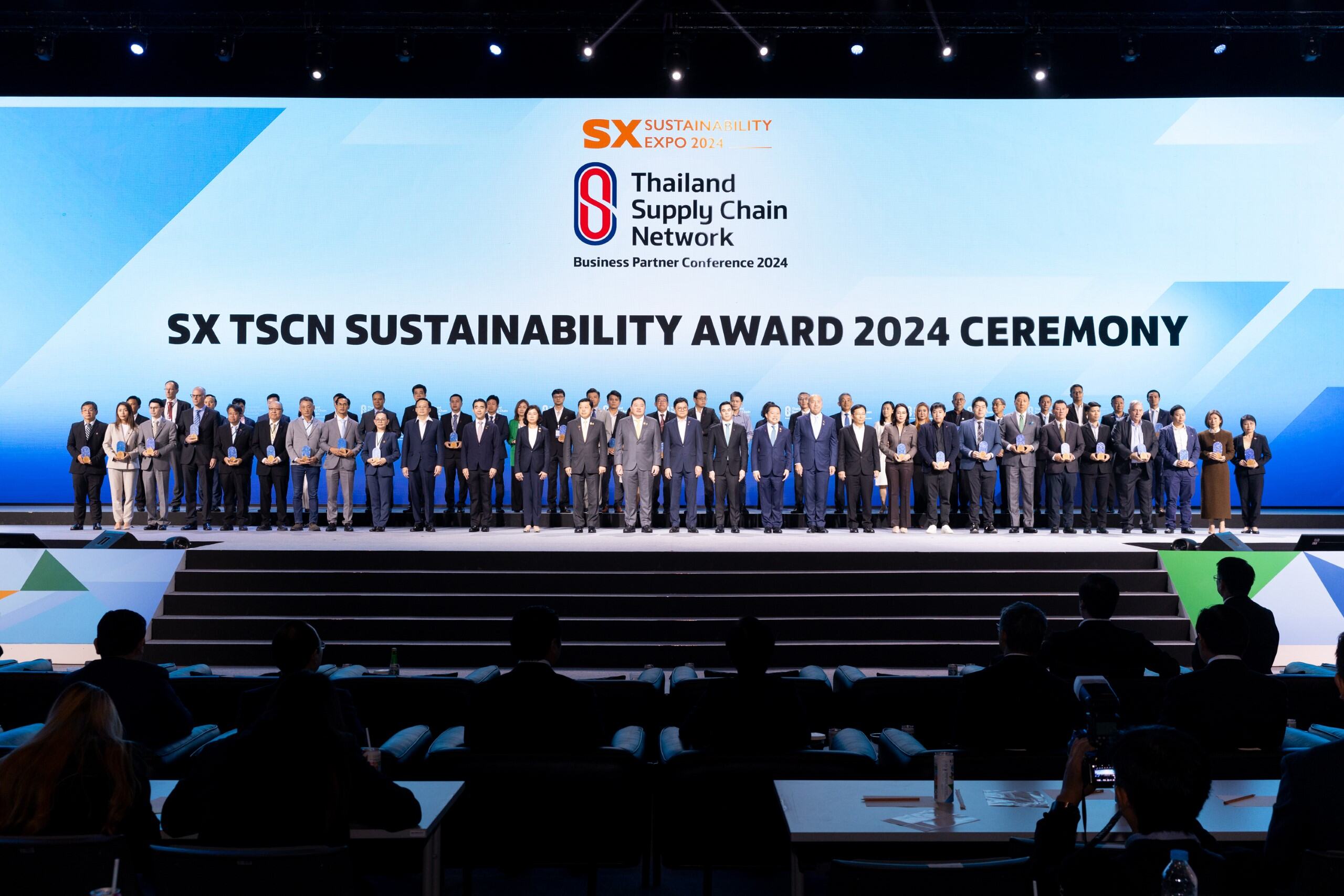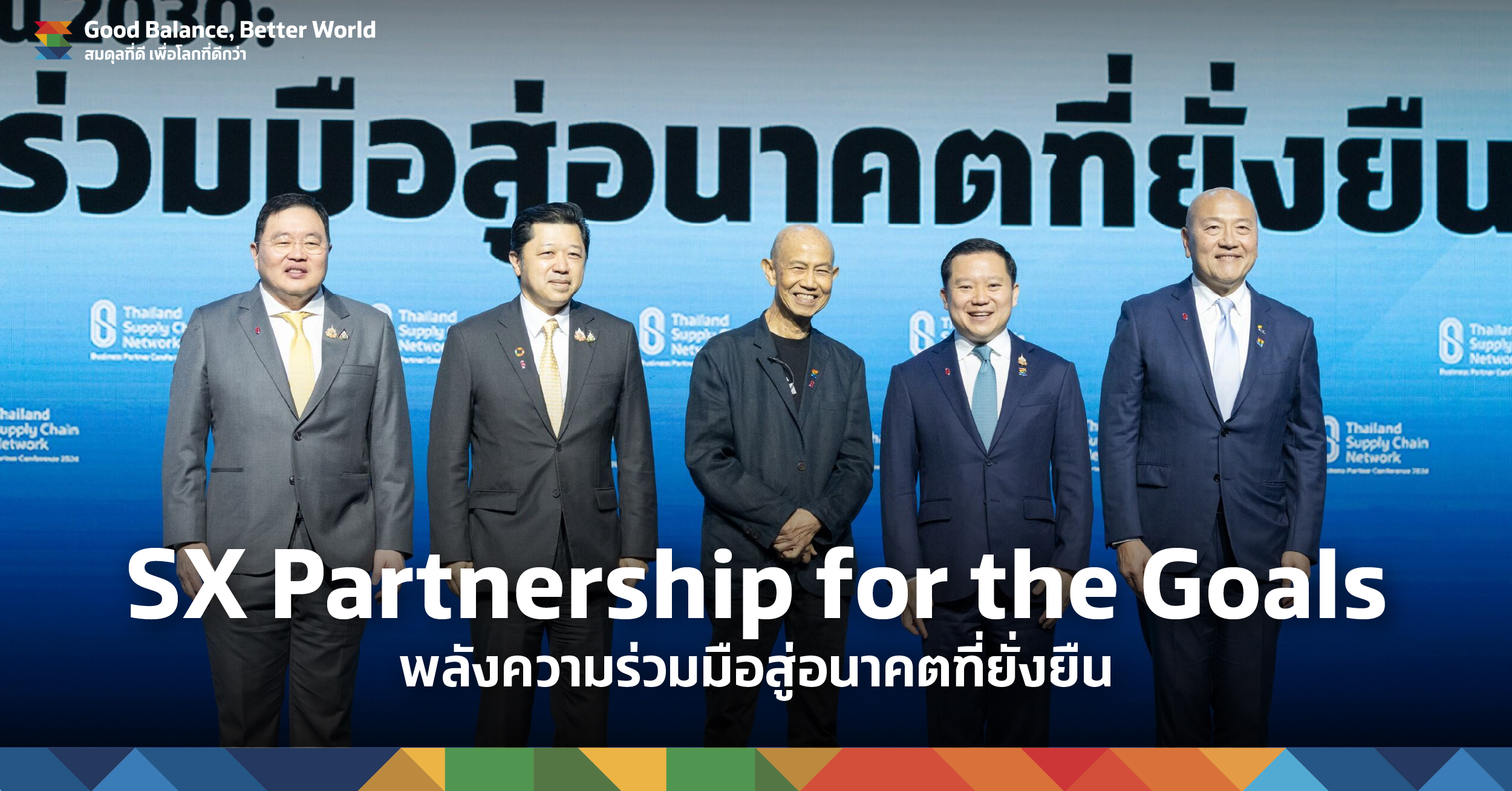
At the CEO Panel of Sustainability Expo 2024, visionary leaders from Thailand’s top corporations gathered under the theme “Vision 2030: SX Partnership for the Goals,” as part of the TSCN Business Partner Conference 2024. This high-level dialogue featured four influential CEOs:
-
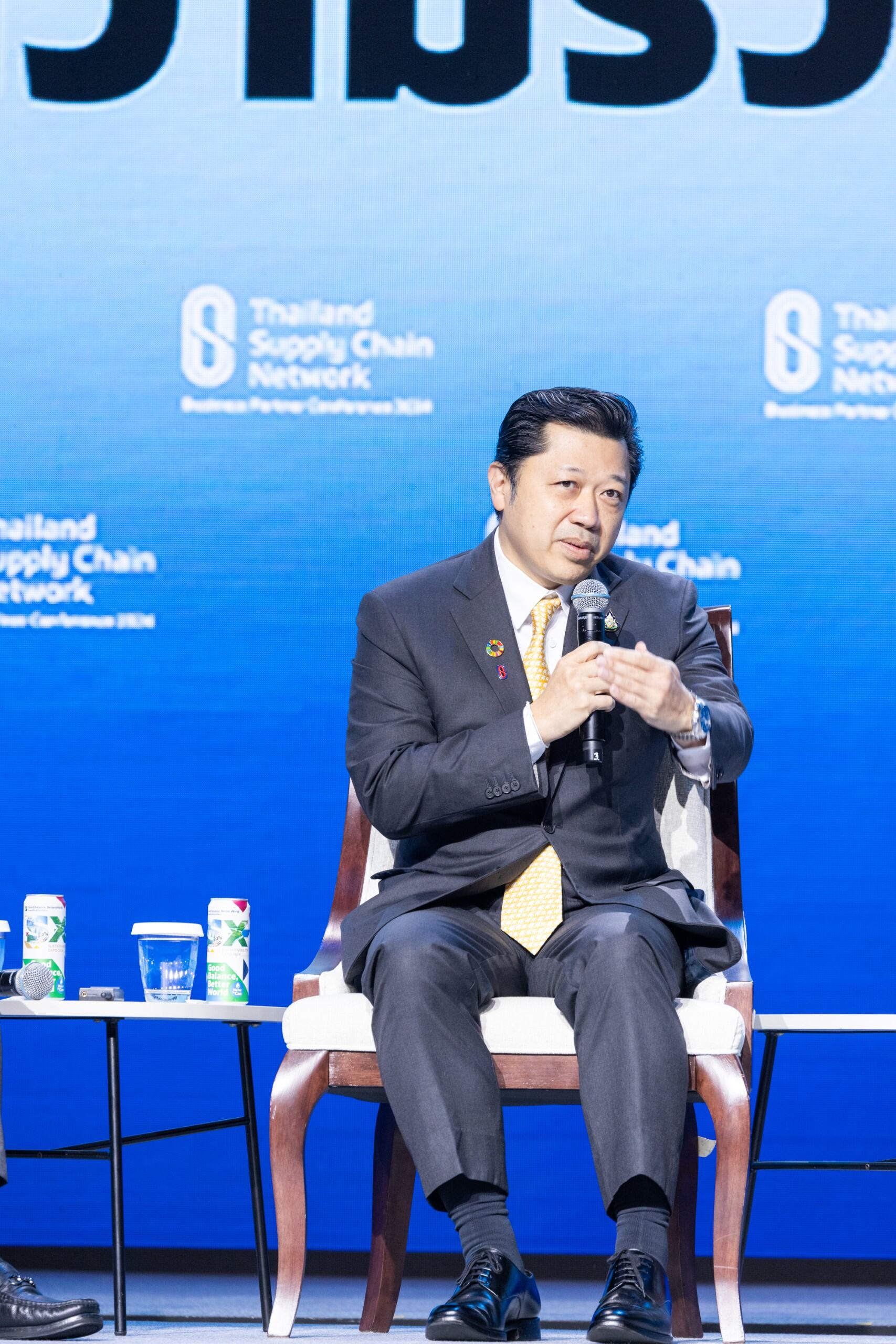
Mr. Suphachai Chearavanont, Chief Executive Officer, Charoen Pokphand Group
-
Mr. Thamasak Sethaudom, President & CEO, SCG
-
Mr. Thapana Sirivadhanabhakdi, CEO, Thai Beverage Public Company Limited
-
Mr. Thiraphong Chansiri, CEO, Thai Union Group Public Company Limited
Moderated by renowned journalist Mr. Suthichai Yoon, the session spotlighted collaborative strategies to drive sustainability in Thailand and beyond.
Suphachai Chearavanont: Urgency of Collaboration toward the SDGs
Mr. Suphachai began by addressing the UN Global Compact, which comprises 17 Sustainable Development Goals (SDGs) and approximately 140 indicators. As of 2022, progress toward achieving the 2030 targets was only 12%, and is still estimated to be under 20% today. With just six years remaining, he stressed the need for intensified efforts.
CP Group’s sustainability strategy is aligned with both the UN Global Compact and the Sufficiency Economy Philosophy. The company’s focus is on three key areas:
-
Reducing carbon emissions
-
Minimizing waste, particularly food waste
-
Cultivating social consciousness through education
Since 2012, CP Group has successfully lowered carbon emissions despite increasing production output, from 6.42 million tons to 5.8 million tons annually. This achievement is rooted in:
-
Adoption of renewable energy, particularly solar
-
Enhancing energy efficiency per revenue unit
-
Decreasing overall energy consumption
-
Using biogas, biomass, and engaging in reforestation
He emphasized that shared missions and collective awareness are essential, as no single entity can achieve sustainability alone
Climate Crisis: A Shared Responsibility
The global benchmark for sustainability is to keep global temperature rise below 1.5°C. Yet, experts agree we've already surpassed this threshold and are on track to exceed 2°C. Current global policies are insufficient to prevent a rise beyond 3°C.
At the World Economic Forum earlier this year, the top three concerns were geopolitics, AI, and nuclear energy. The consensus was clear: without alternative clean energy solutions such as hydrogen and nuclear, the world will not meet the net-zero by 2050 target. However, current policy regulations hinder the development of nuclear energy, primarily due to post-WWII geopolitical restrictions. Public resistance and lack of technological access further compound the issue. Policy reform is imperative.
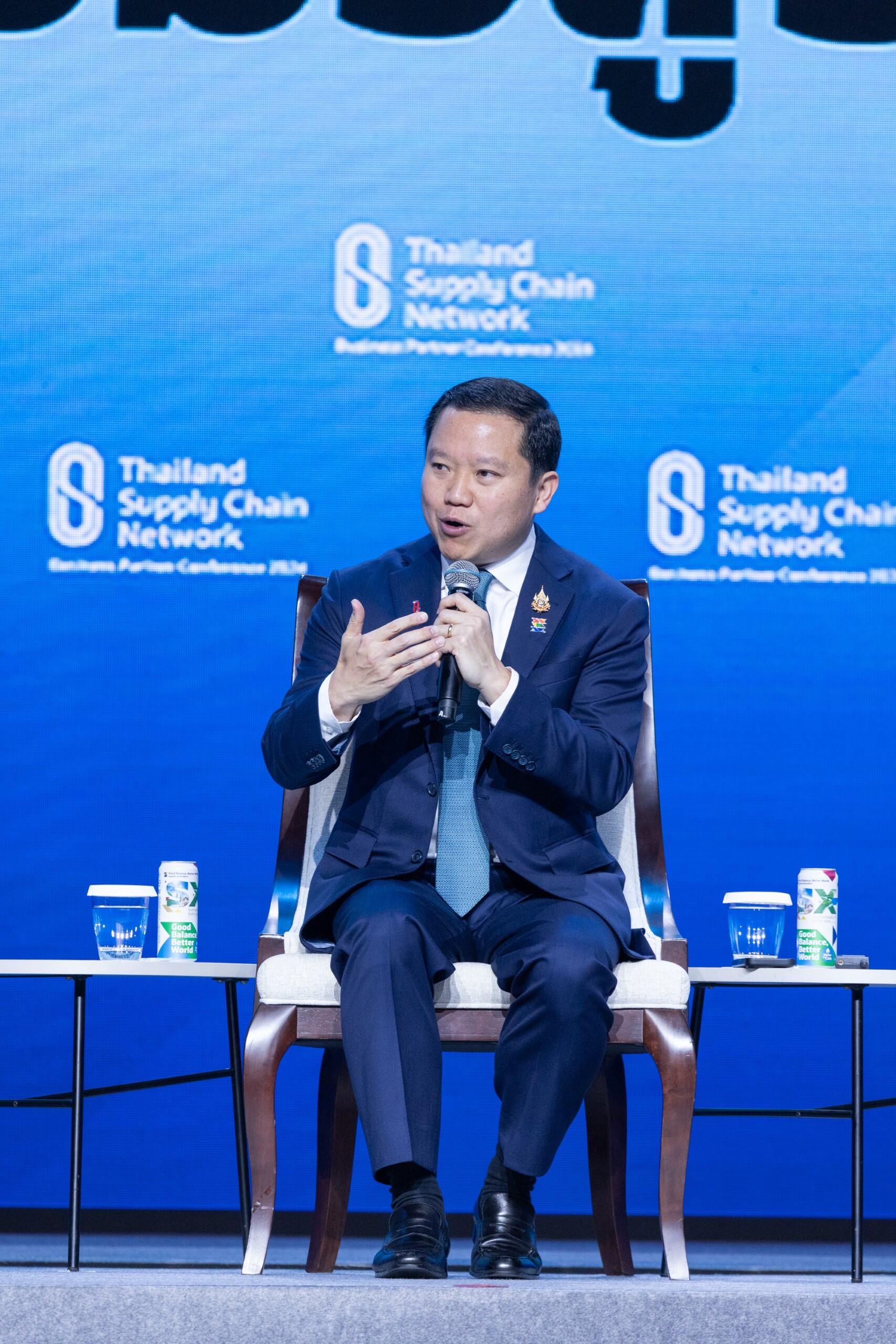
Thapana Sirivadhanabhakdi: From Sufficiency to Sustainability
Mr. Thapana noted the significance of shared intent among all stakeholders to pursue sustainability. Regardless of company size, everyone contributes to the ecosystem. Through the Thailand Supply Chain Network (TSCN), businesses, including SMEs and suppliers, are encouraged to commit to sustainable practices.
He emphasized that vendors who prioritize sustainability gain a competitive edge. The business community must reflect reality to the government, which must in turn connect across ministries for integrated action.
The 2024 SX theme, “Sufficiency for Sustainability,” draws from the royal guidance of His Majesty King Maha Vajiralongkorn Phra Vajiraklaochaoyuhua, who advocates for conservation, continuation, and enhancement for the well-being of all Thai people. This aligns with the Sufficiency Economy Philosophy, built on moderation, reasonableness, and resilience, with ethics and knowledge as foundational pillars.
The 6Ps framework—Planet, People, Prosperity, Partnership, Peace, and Purpose—is central. Climate-induced disasters now threaten food security in equatorial zones, where Thailand plays a major role in global food supply. Cross-sector collaboration is thus urgent.
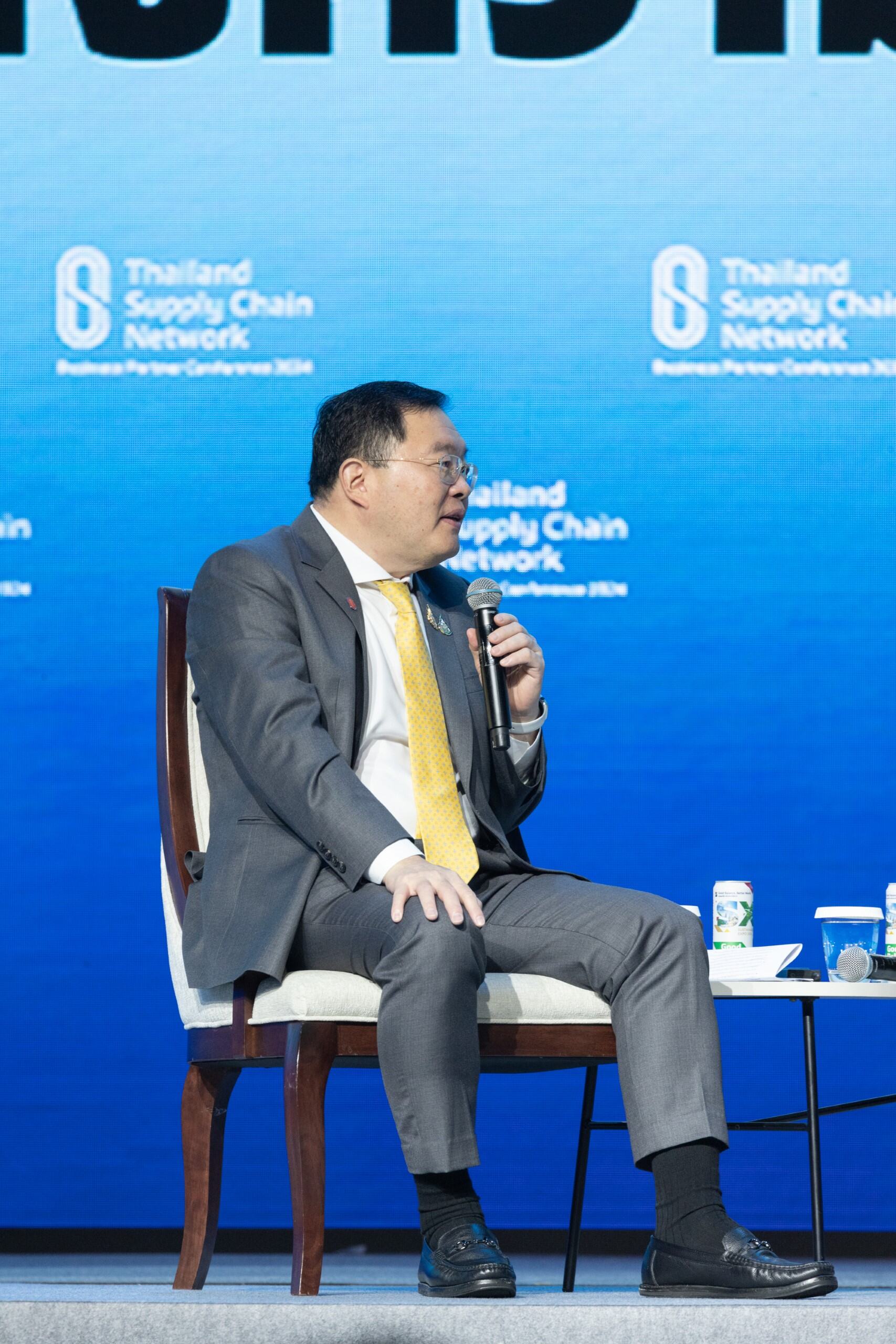
Thamasak Sethaudom: Transforming Industry through Low Carbon Innovation
Mr. Thamasak highlighted that reducing greenhouse gas emissions in line with the Paris Agreement must go hand in hand with boosting industrial competitiveness.
SCG is piloting a low-carbon model city in Saraburi, aiming to scale this to a net-zero city model. The company has transformed its cement production: in 2023, 70% of cement sold in Thailand was low-carbon; this will increase to 80% in 2024 and 100% in 2025.
Thailand is a global frontrunner, being the first country to report at COP that its cement industry is transitioning to low carbon. However, progress in the circular economy remains insufficient. Thailand lacks a national recycling roadmap and widespread public waste-sorting behavior, making recycling costly.
He called for:
-
A national recycling master plan
-
Stronger public awareness campaigns
-
A clean energy transition plan
-
Expansion of solar power capacity in Saraburi (currently under 10% of its 100,000-MW potential)
Critical barriers include outdated regulations, especially third-party grid access, and lack of energy storage systems. SCG annually evaluates its carbon reduction and competitiveness strategies, pursuing both with equal rigor.
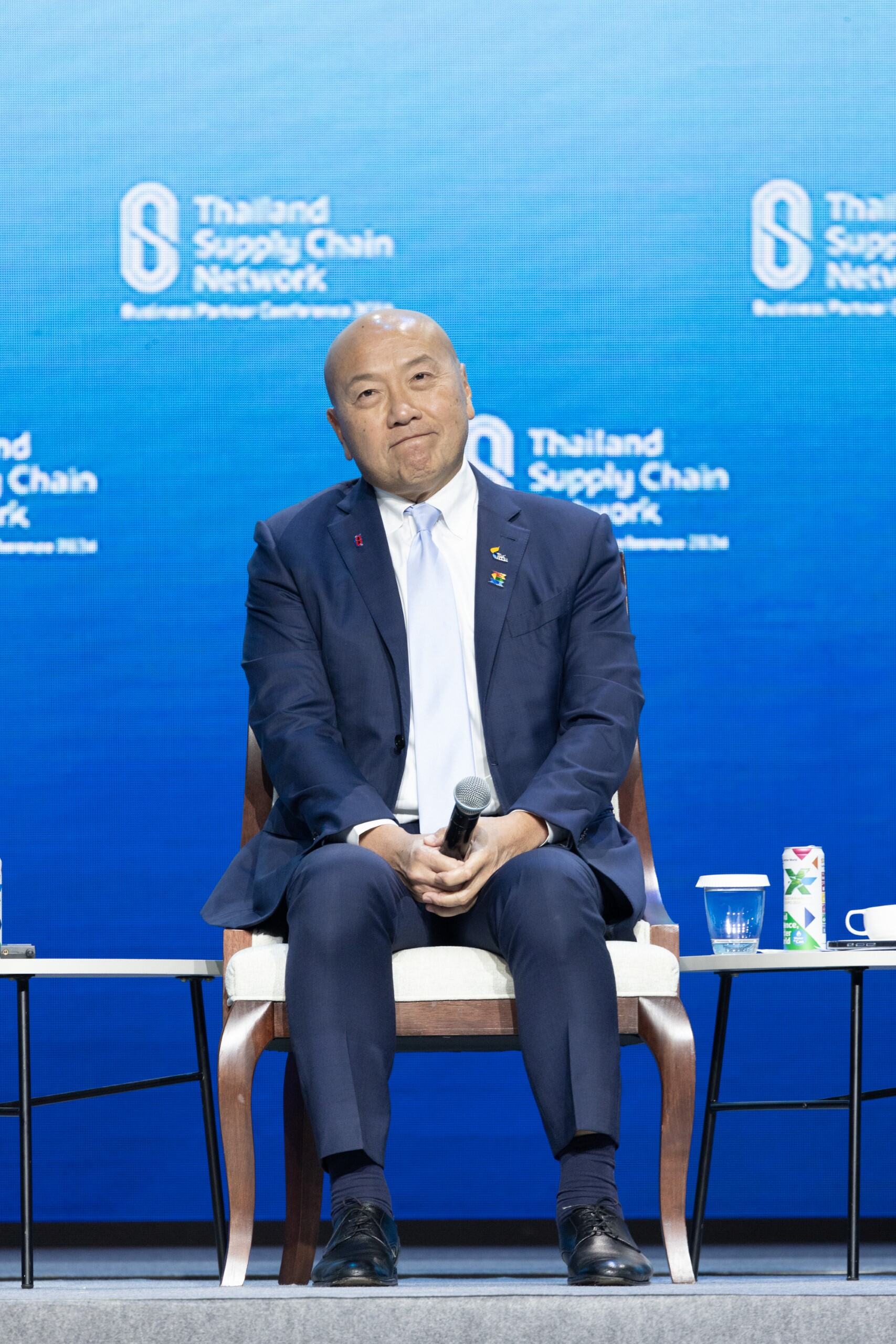
Thiraphong Chansiri: A Blueprint for Sustainable Seafood
Mr. Thiraphong of Thai Union explained that for their seafood business, sustainability is a matter of survival. Since Thailand’s 2014 crisis involving illegal fishing and labor violations, Thai Union has spent the last decade reforming its practices around four pillars:
-
Ethical labor in fisheries
-
Partnership with government to ensure legal, regulated fishing
-
Responsible procurement
-
Responsible production
Thai Union aims to achieve net-zero emissions by 2050, in alignment with its global clients' expectations. Originally focused on wild-caught seafood, the company now includes aquaculture and even soy-based animal feed that avoids deforestation. Their low-carbon shrimp project assists farmers in adopting climate-smart practices.
Thai Union also works with financial institutions to fund solar panel installations for suppliers, lowering both emissions and energy costs. Five of its key factories are already zero-discharge, with no wastewater released, and the company is targeting zero landfill waste. All these actions contribute not only to sustainability but to cost efficiency in an energy-intensive industry.
The Key Takeaway: Partnership is the Heart of Sustainability
The CEO panel concluded with a shared insight: partnership is the cornerstone of sustainable progress. This includes:
-
Big businesses partnering with SMEs and supply chains
-
Communities collaborating across sectors
-
Government aligning with private sector, academia, NGOs, and citizens
Only through multi-stakeholder collaboration can Thailand reach its sustainability goals and contribute meaningfully to the global agenda.
Follow SX updates and events on the Sustainability Expo Facebook Page or add Line ID: @sxofficial Get ready for SX2025, returning grander than ever from September 26 to October 5, 2025, at the Queen Sirikit National Convention Center (QSNCC)
Gallery