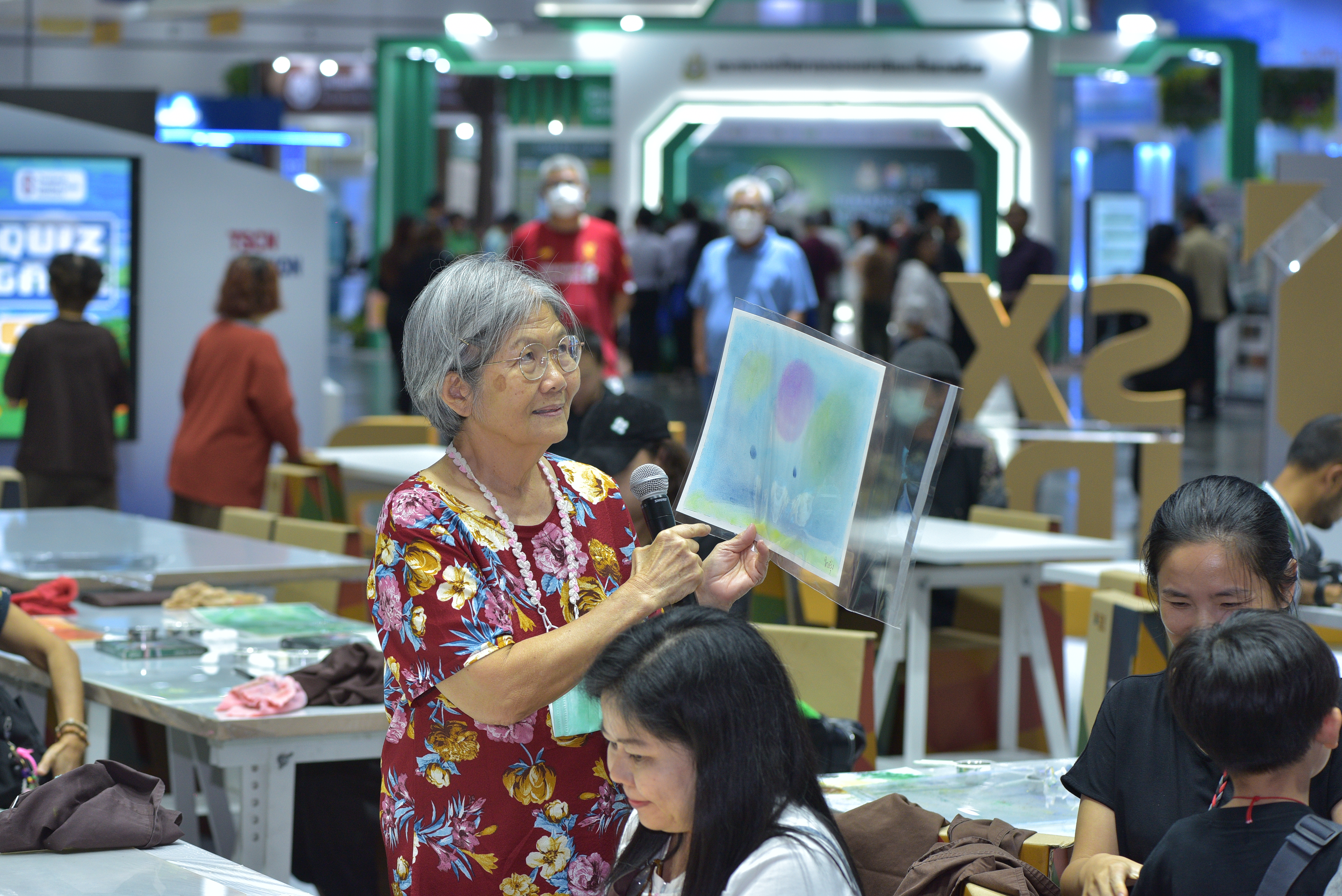
Cheevamitr Social Enterprise Co., Ltd. joined hands with The Solitude to host the workshop “Art as a Life Companion” at SX Sustainability 2025, with the aim of nurturing knowledge and life-planning perspectives that support living—and departing—well. A highlight of the booth was an Art Therapy workshop, inviting participants to quite literally “play with color” as a pathway to inner restoration.
The activity was honored by the presence of Ms. Kaisri Wisutti Thipnate, General Manager of Cheevamitr, together with the principal facilitator Ms. Wichapa Meethongklang (Teacher Eve)—an art therapist and ICF-certified PCC-level coach. Alongside Coach Alex, she co-created a blended coaching and art therapy approach designed to help people release fatigue and emotional burdens. The two also run a shared studio in Chiang Dao under the name The Solitude, focusing on work with the inner self and guiding people toward joy and the quiet beauty of life.
Anthroposophical Art Therapy: When Color Becomes Medicine
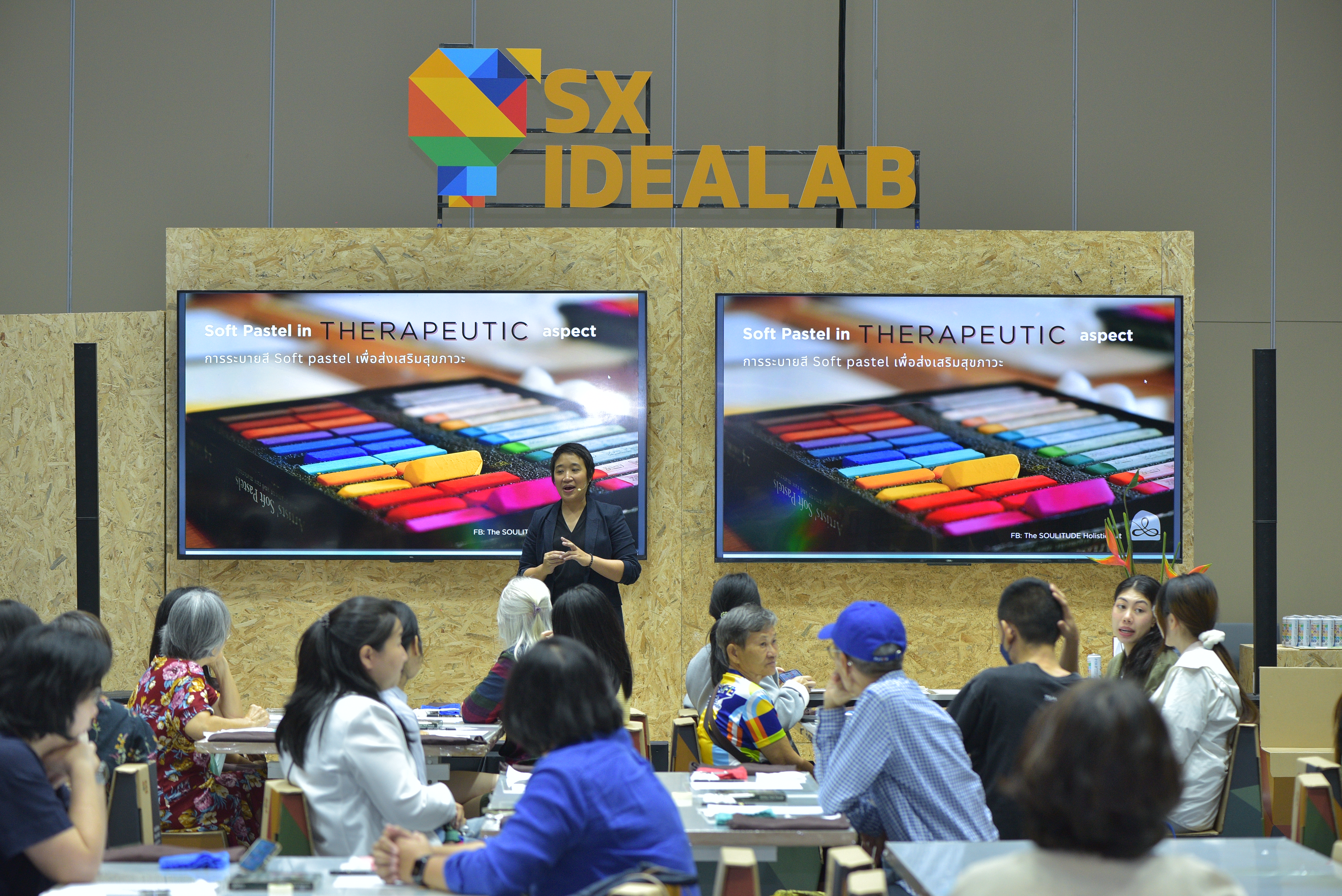
Teacher Eve explained that the art therapy practiced in this workshop is rooted in Anthroposophy, a holistic philosophy of human nature and health that dates back over a century. Founded by Rudolf Steiner, a physician and philosopher, this approach emphasizes balance across four integral dimensions: the physical body, life energy, emotional life, and the core self (the “I”). Art, in its many forms, is used as a tool to restore harmony among these elements.
What sets this workshop apart is its focus on the process rather than the outcome—placing no importance on whether the final artwork is “beautiful” by conventional standards. Teacher Eve highlighted a key principle of the practice: “Color is the medicine. Color heals.” The use of color draws on Goethe’s color theory, which distinguishes warm and cool tones and their direct relationship to human emotions.
Finding Calm Through Landscape and Soft Pastels
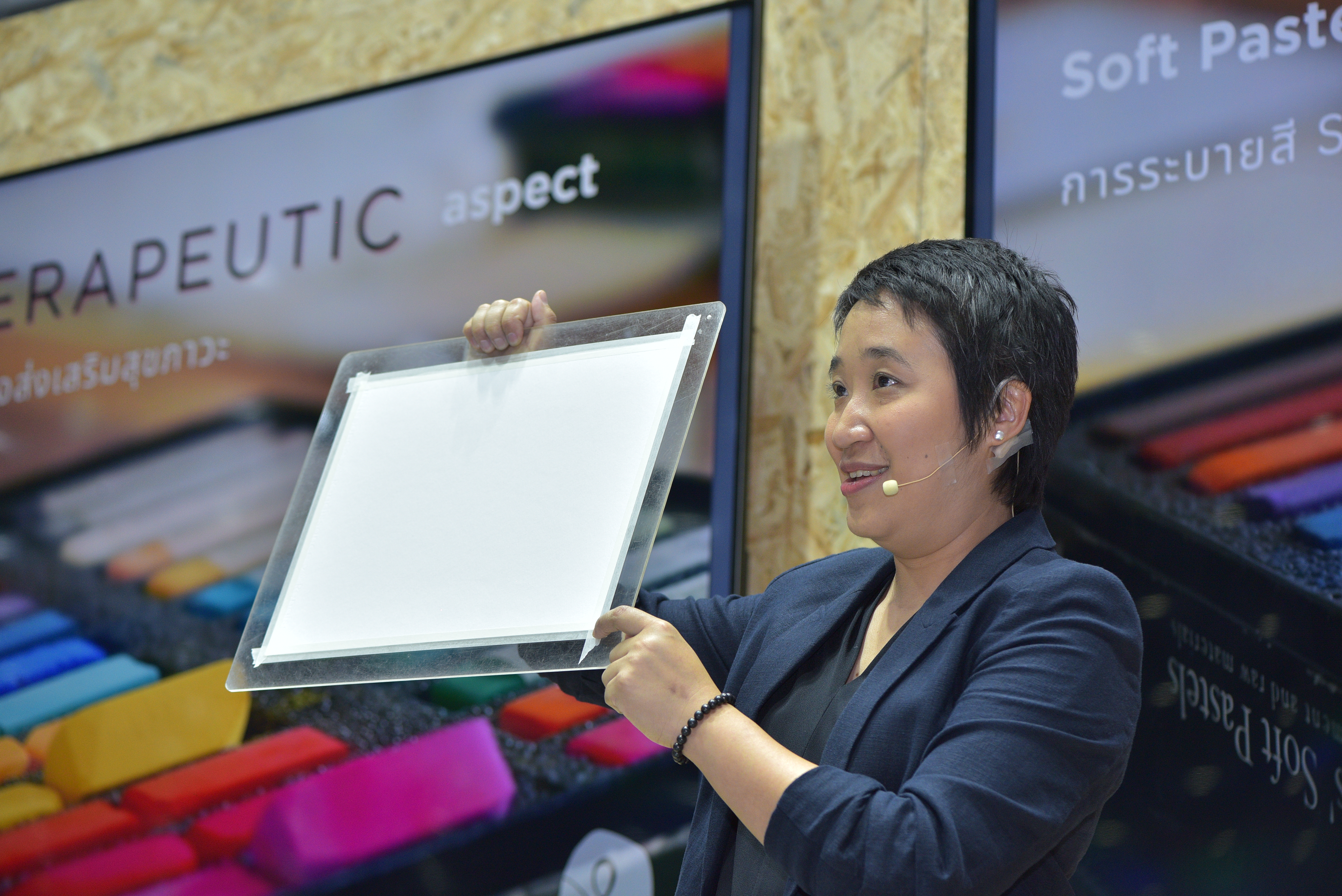
Participants worked with soft pastels, a medium associated with gentleness and the “element of air.” Unlike traditional drawing, this practice does not begin with defined forms such as houses, people, or trees. Instead, participants were encouraged to engage intuitively with color—choosing warm or cool tones that resonated with their inner feelings—and gradually allowing these sensations to evolve into landscape imagery.
Coach Alex emphasized the quiet power of this kind of artistic engagement, noting:
“At the very least, participants experience a genuine pause—a moment of rest that isn’t sleep and isn’t travel.”
Many participants shared deeply personal reflections. Some chose warm tones inspired by the joy of watching a sunrise over the sea, while others gravitated toward cool tones that led them to a sense of nighttime calm or lush, shaded scenery. Landscape painting, in this context, was seen as a way of expanding the inner gaze—guiding the mind beyond the confines of today’s “narrow screens” toward something broader and more spacious.
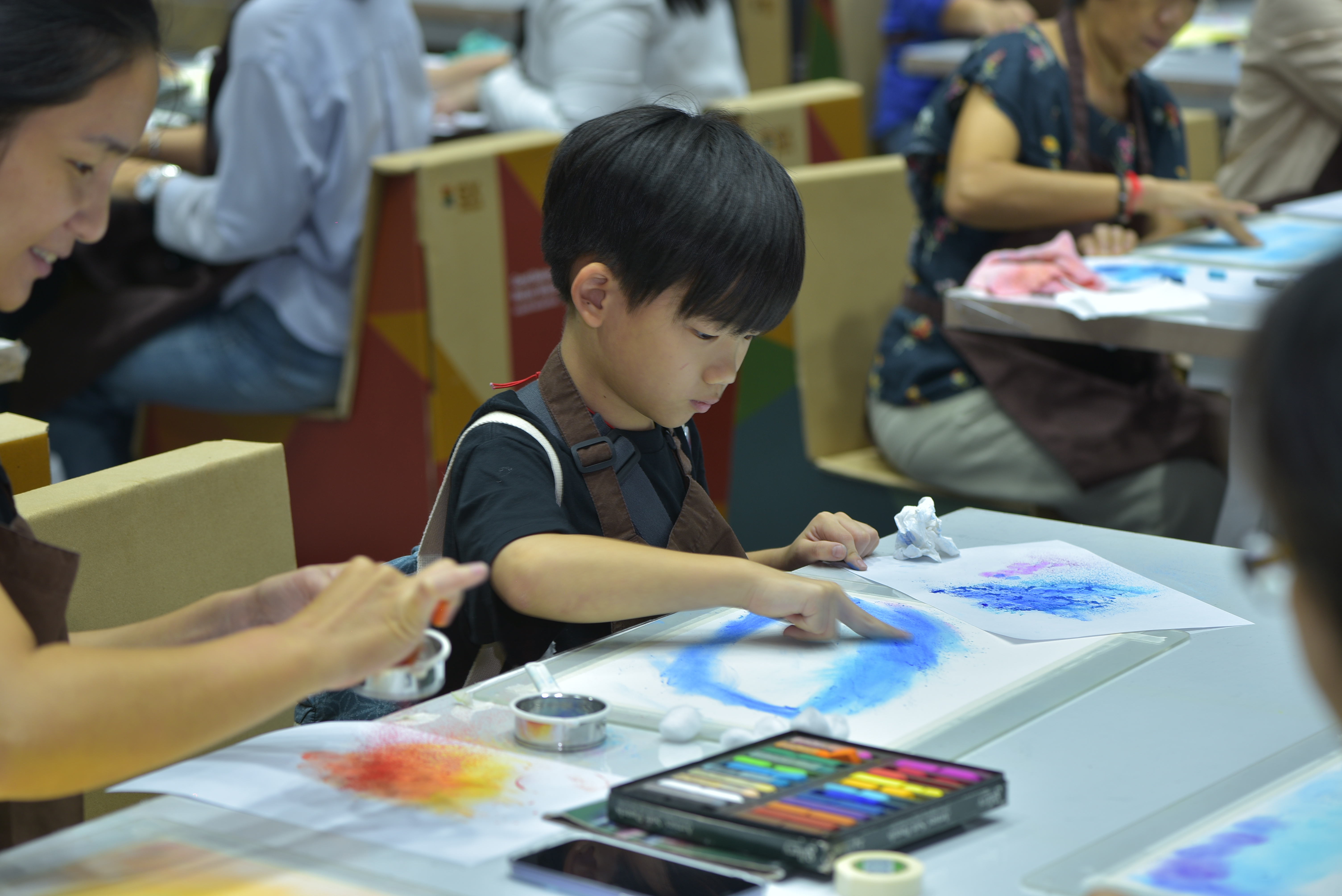
At the end of the session, participants named their artworks with titles reflecting their inner journeys, such as “The Deepest Feeling Within,” “Our Life Waves,” and “The Rabbit Returns Home.” These titles affirmed art therapy’s ability to connect with inner states and gently awaken beautiful memories from the past.
Teacher Eve concluded,
“If the image that arises in the mind is vivid and clear, that in itself is a success in therapeutic terms.”
She expressed the hope that art might help people rediscover the ability to look up at the sky—and see its beauty once more.