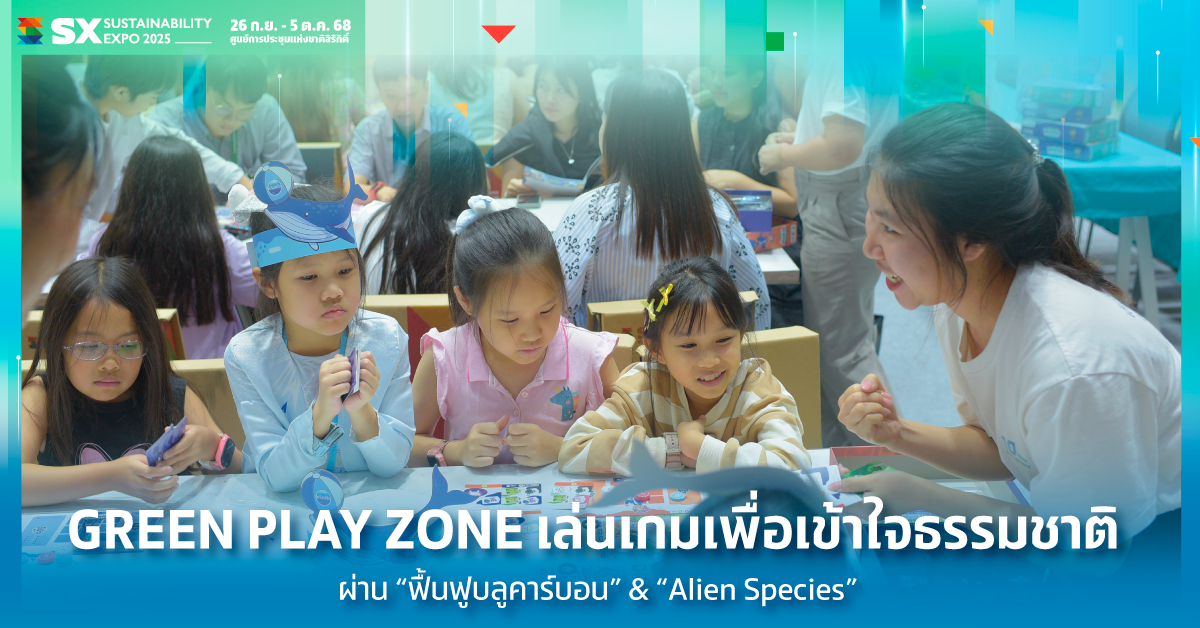
Today, the world is facing increasingly complex environmental challenges—from the degradation of coastal ecosystems, which are critical sources of blue carbon, to the silent threat of invasive alien species that cause massive damage to biodiversity and can even spill over into the economy.
To raise awareness and foster understanding of these pressing issues, the Green Play Zone at SUSTAINABILITY EXPO 2025 (SX2025) invited participants to engage in playful, hands-on learning through two board games: “Blue Carbon Restoration” and “Alien Species.”
The activity took place at the SX IDEA LAB on October 1, 2025, from 18:00–19:00, led by Perus Saranurak, Lead Learning Designer and Founder of Wizards of Learning. The session encouraged participants to appreciate the value of coastal and mangrove ecosystems and recognize the impacts of invasive species. It drew strong interest from students, parents, and others passionate about sustainability.
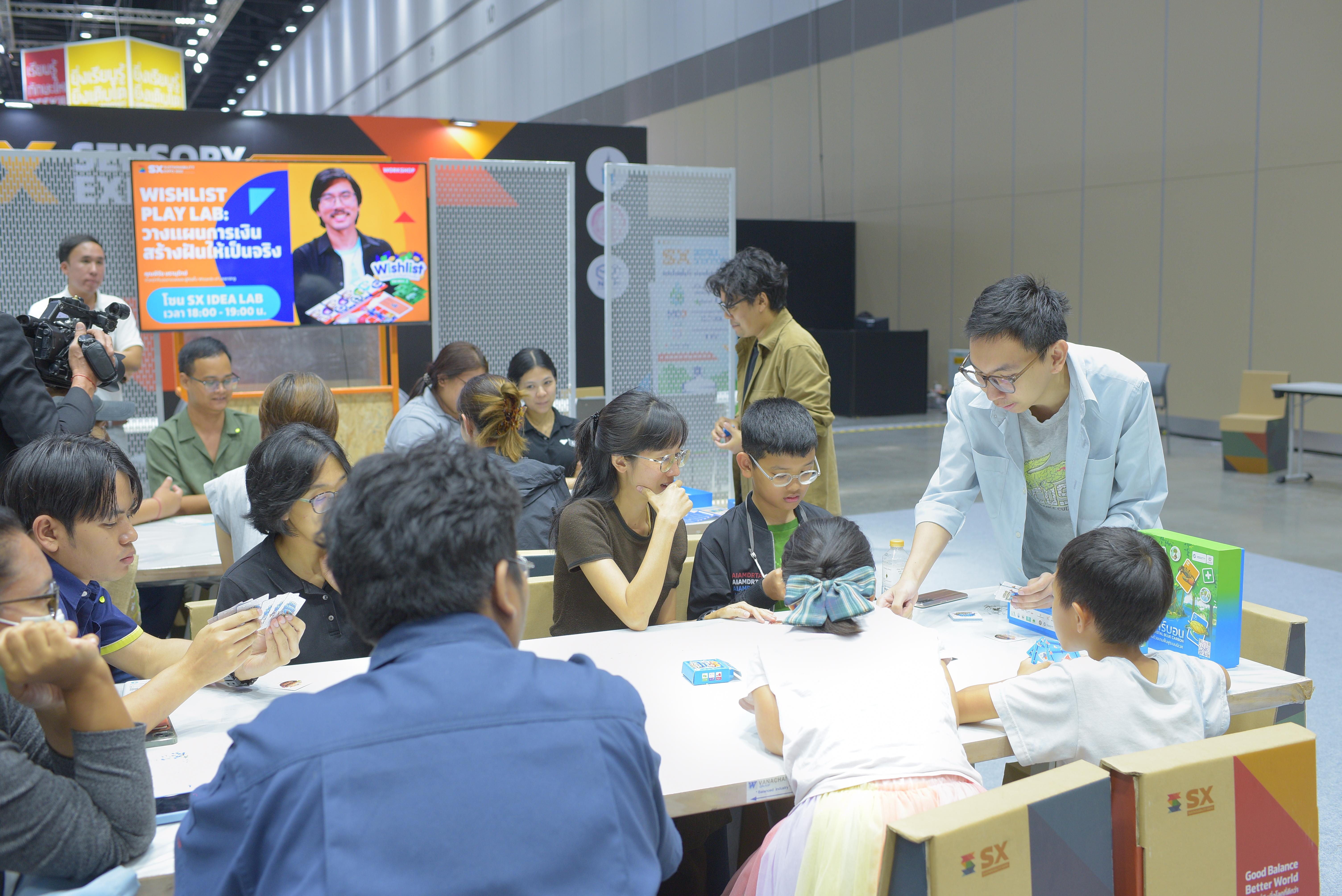
In the activity, participants were divided into two groups of board game players:
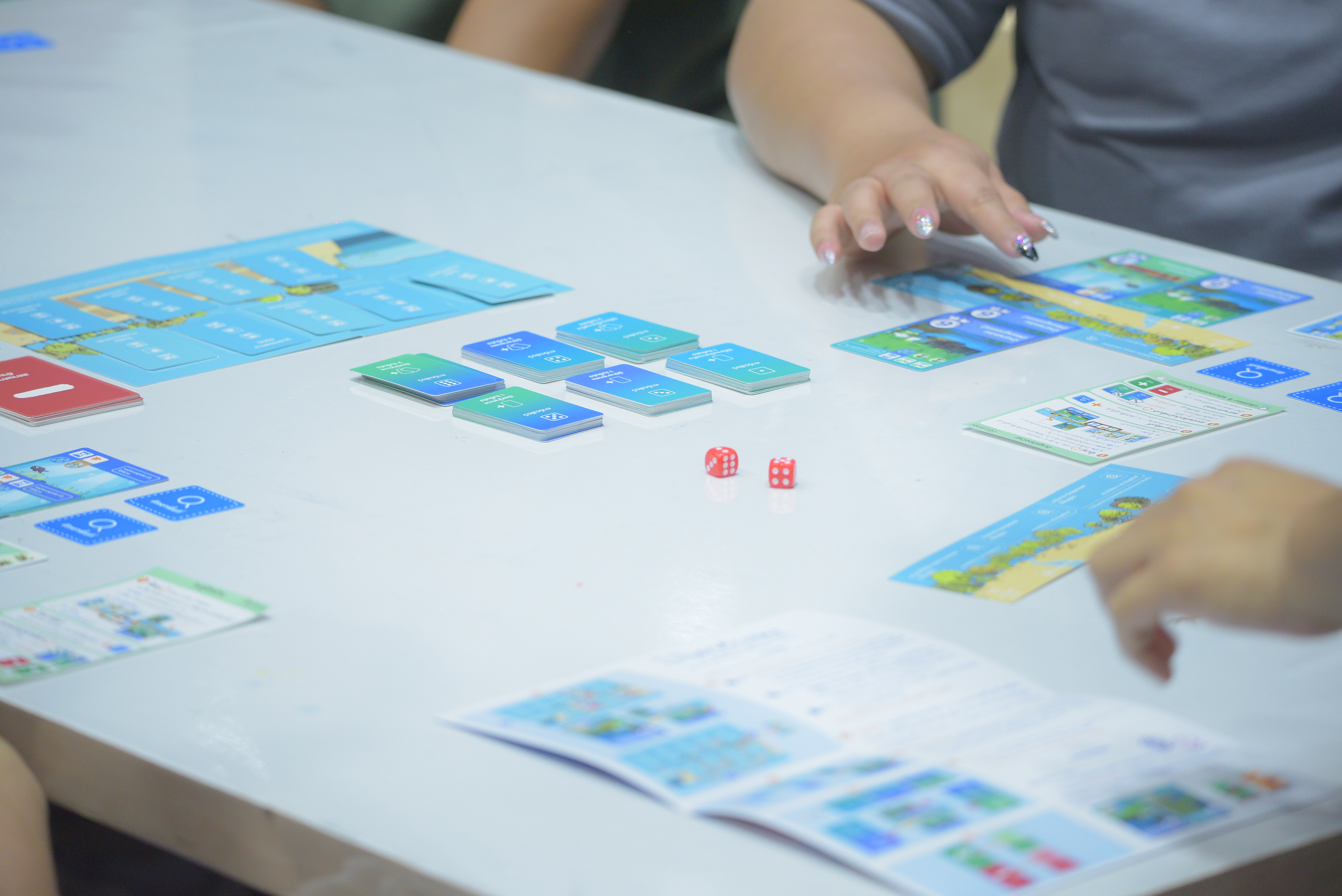
1. Blue Carbon Restoration
In this game, participants used cards to plan the restoration of coastal ecosystems—ranging from mangroves and seagrass beds to aquatic habitats—while navigating obstacles such as natural disasters including tsunamis and unsustainable resource use. These challenges could lower players’ restoration scores.
Beyond gameplay, the board game highlighted the real-world difficulties of environmental protection. It also incorporated knowledge about biodiversity and carbon credits, enabling players to learn why coastal ecosystems are crucial as sources of blue carbon.
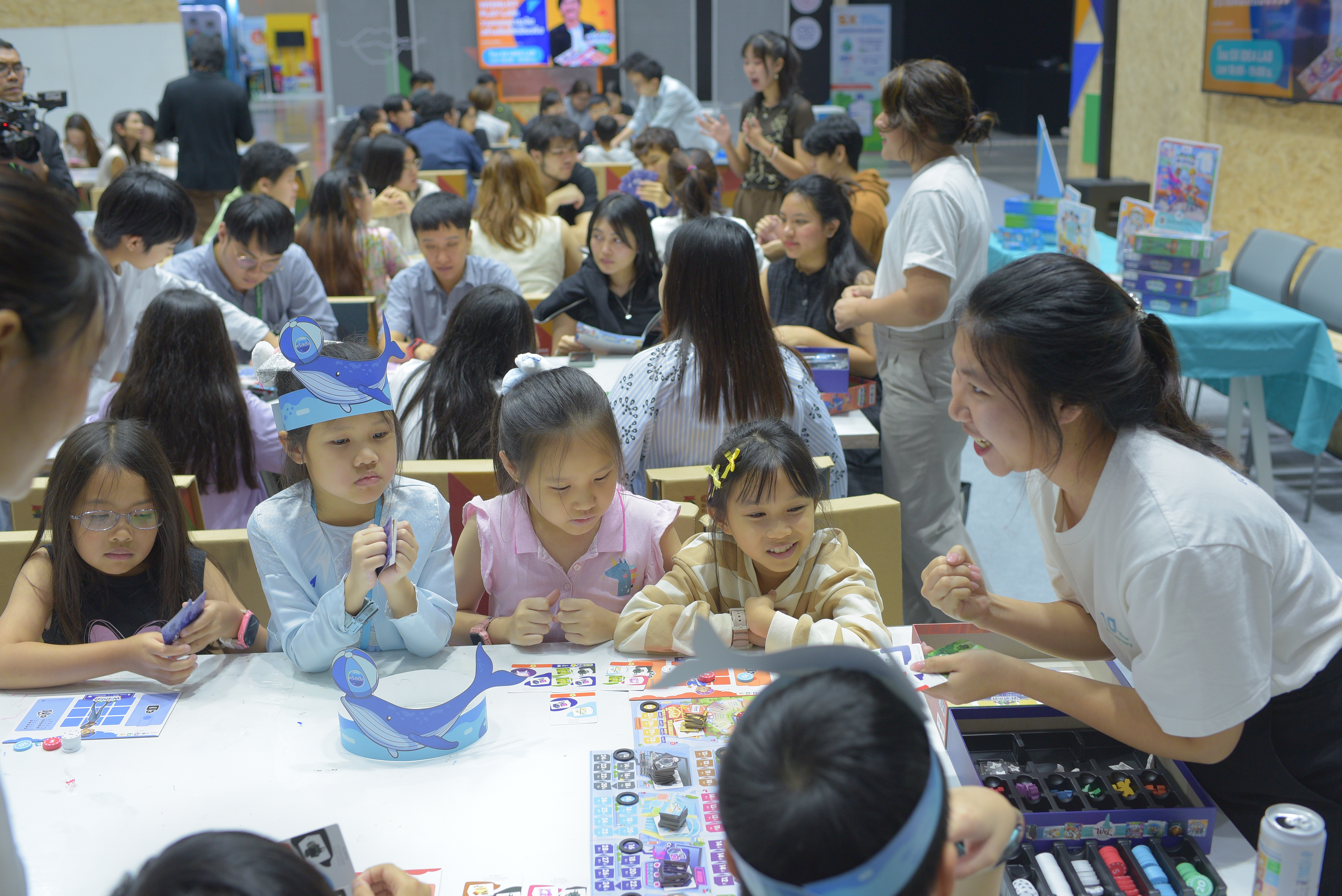
2. Alien Species: The Threat of Invasives
In the “Alien Species” board game, participants took on the role of fish farmers trying to protect their ponds from invasive species. The game simulated how non-native species, such as the blackchin tilapia, spread rapidly in new environments. The excitement came from drawing cards that could either boost players’ scores or reduce them through unexpected setbacks.
The game illustrated the wide-ranging and severe impacts of biological invasions on biodiversity and local ecosystems. Invasive species disrupt balance by predation and competition for resources, with ripple effects that can escalate to economic and national levels. Through the simulation, participants clearly understood why tackling invasive species requires continuous and serious management.
“Sometimes we see caring for the Earth as a duty or a burden. But in truth, it’s simple and never exhausting if we begin by loving nature and the environment first. By truly experiencing and understanding it—whether walking through mangroves, seeing the trees, the shrimp, and crabs, or even just playing a board game—we can cultivate that love. And once we love nature, the act of caring for it will follow naturally, without having to see it as an obligation.” Perus Saranurak said.
The Blue Carbon Restoration and Alien Species games showed participants that board games can serve as a medium to simplify complex environmental issues, making them easier to understand. Both children and adults could see the value and challenges of ecosystem restoration firsthand. More importantly, the experience sparked a sense of personal involvement in caring for nature, reinforcing that environmental conservation is not just a duty but something we must all do wholeheartedly.