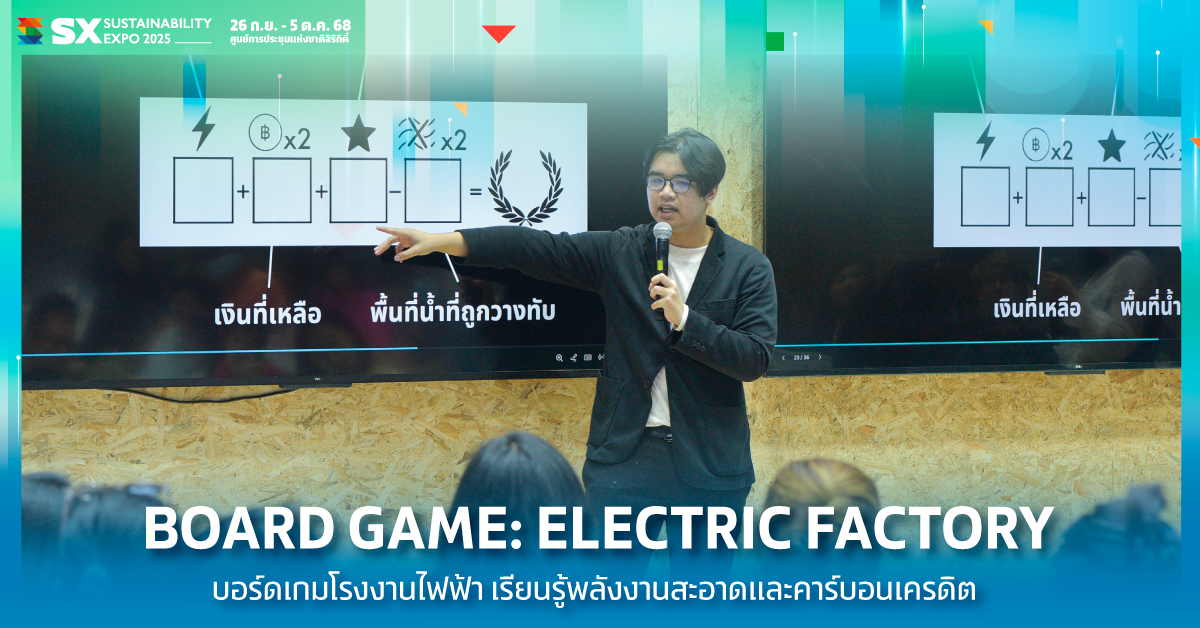
In the real world, balancing economic growth with environmental responsibility often feels costly and complex. The “Electric Factory – Clean Energy” board game activity, held in the SX IDEA LAB zone during Sustainability Expo 2025 (SX2025) on September 28, 2025, offered participants a fun and thought-provoking way to explore this balance. Players took on the role of power plant owners deciding whether to invest in low-cost, high-carbon fossil fuels or in cleaner, more sustainable energy sources with higher upfront costs but long-term benefits.
Facilitated by Sutthida Choosompop, Kornwan Kaewpradit, and Nawaphon Buason, youth facilitators from Bangkok University’s “Youth in Charge” program, the session guided players through an understanding of climate change, greenhouse gases, and how businesses can adapt through mechanisms like carbon credits.
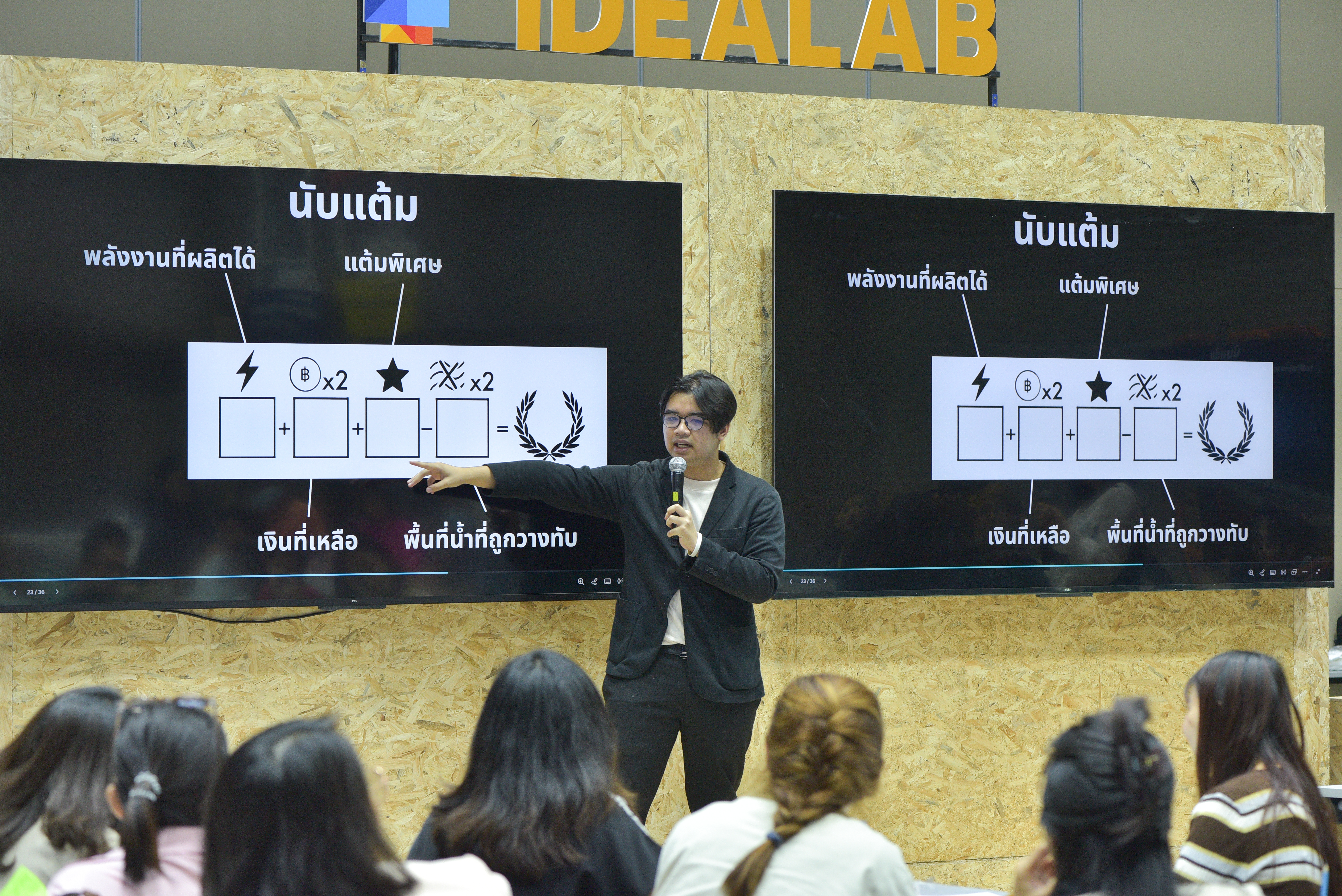
For instance, the Carbon Credit Model used in the game helps explain the concept:
The law allows factories to emit up to 80 tons of carbon per year.
Factory A emits 100 tons, while Factory B absorbs 50 tons through reforestation.
Factory A must therefore buy 20 carbon credits from Factory B to stay within legal limits.
This mechanism incentivizes companies to invest in carbon-absorbing projects—such as community forests or clean energy.

The board game simulates the role of entrepreneurs who must decide where to build factories on a map featuring plains, forests, rivers, and mountains. In each round, various situations challenge players to think strategically—whether to invest in low-cost fossil fuel plants that emit high carbon levels, or to opt for clean energy alternatives that require higher investment but offer greater long-term sustainability. If a factory produces excessive carbon emissions, players must also figure out how to solve the problem.
“The game makes you realize that every business choice carries an environmental cost,” said Nawaphon Buason. “Fossil fuels seem cheaper, but when carbon credit costs are factored in, clean energy becomes the smarter, more sustainable path.”

Beyond entertainment and teamwork, this board game encouraged deeper awareness—especially among youth—that every energy decision has hidden costs, whether financial or environmental. The real win lies not just in the game, but in how participants carry these lessons into their daily lives—making conscious choices that contribute to a more sustainable world for all.