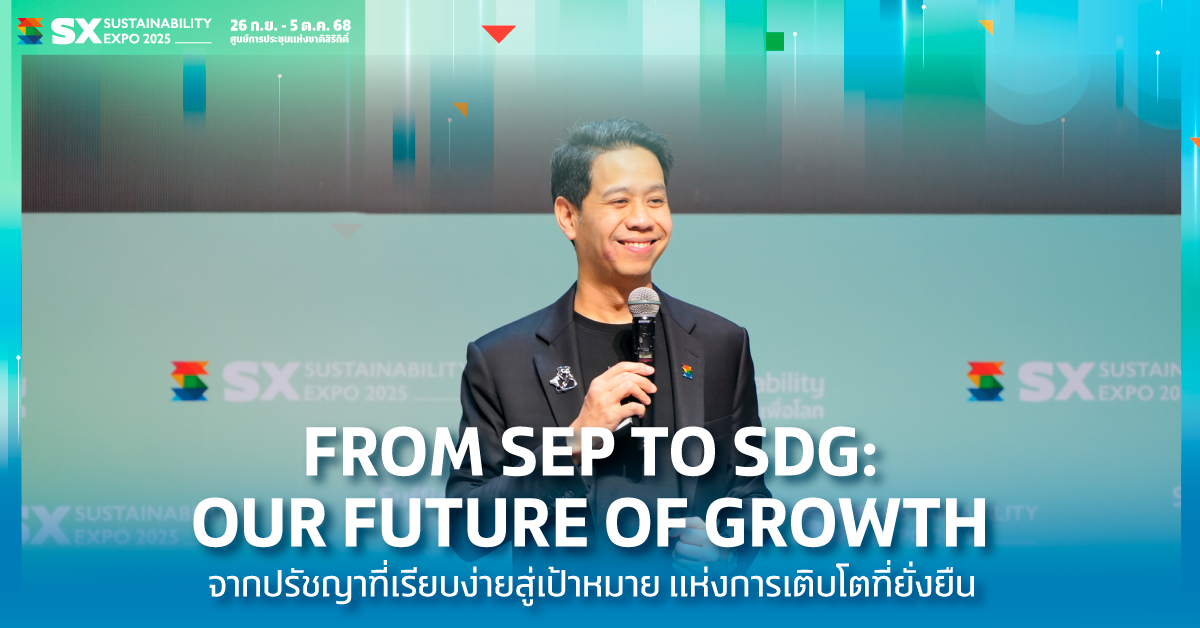
One of the highlights of the SX TALK STAGE at SUSTAINABILITY EXPO 2025 was a thought-provoking session led by Piyachart (Arm) Isarabhakdee, Co-Executive Director of SX and Fellow of the World Economic Forum’s Global Future Council. He posed a crucial question to the audience:
“How can the Sufficiency Economy Philosophy (SEP) guide us toward sustainable growth?”
Piyachart began by asking whether, under a capitalist system that drives the global economy, we are truly using resources wisely, distributing benefits fairly, and building enough resilience to withstand future crises. These questions highlight that economic growth is not just numbers on a chart—it is the foundation that sustains our daily lives, education, work, and family well-being.
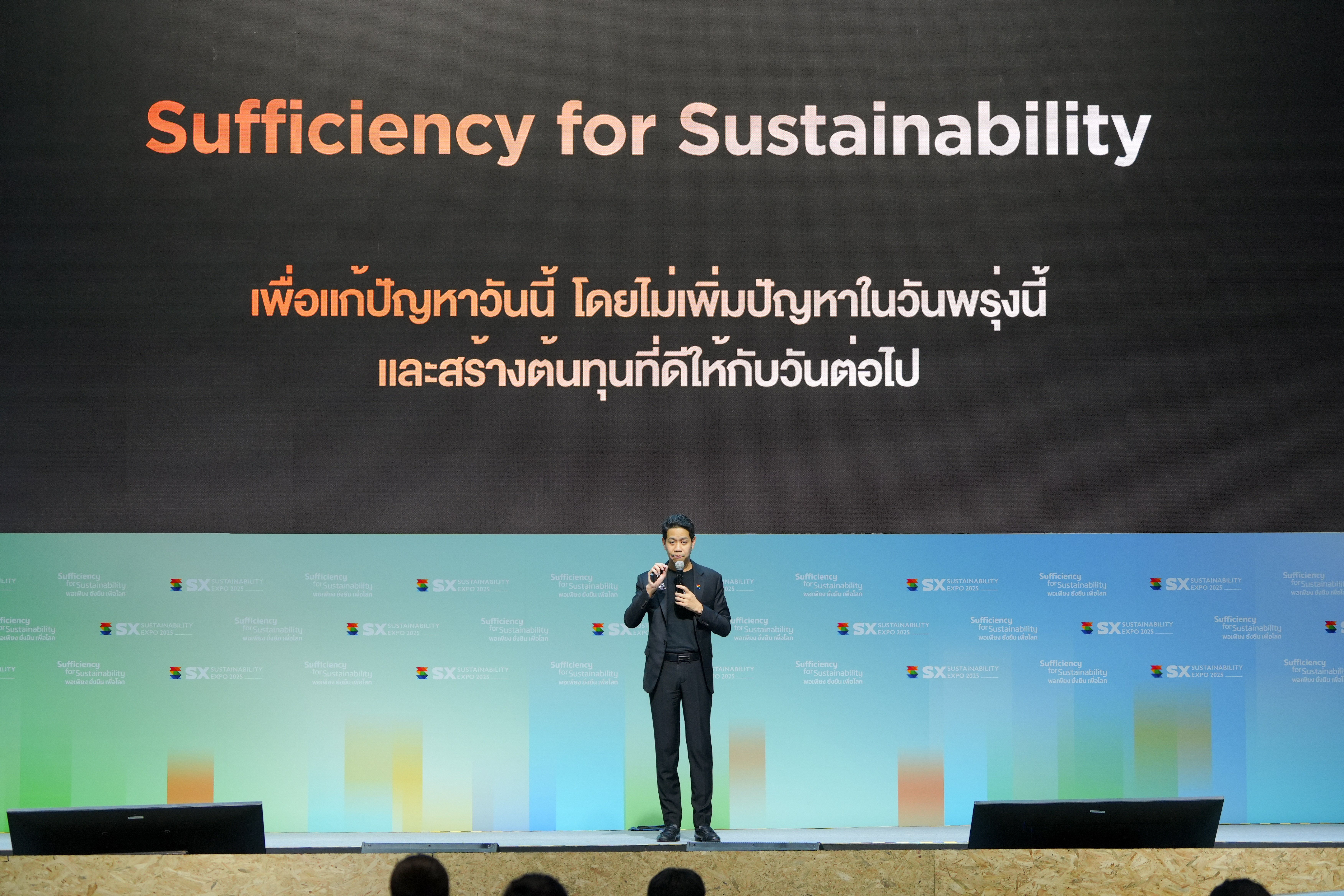
Yet, capitalism’s fixation on wealth has left behind deep scars. Inequality is stark: 1% of the world’s population controls 50% of global wealth. Growth, in all forms, remains tied to money—whether education, healthcare, or elder care. Worse still, today’s growth often comes at the expense of future generations, borrowing tomorrow’s resources for today’s convenience.
World leaders now agree that this model no longer works—a system designed for the 20th century is no longer a fit for the 21st. This recognition gave rise to the Sustainable Development Goals (SDGs)—a global compass for adaptation and change. But as Piyachart stressed, goals alone are not enough. What we need are ways to make them real—and those ways already exist in the Sufficiency Economy Philosophy (SEP), gifted by King Rama IX of Thailand decades ago.
He emphasized that today’s global problems stem from overconsumption—using far more than we need without asking, “How much is enough?” Social media fuels endless comparison, driving people to consume based on emotion rather than reason. Simple questions like “Why am I buying this?” or “Will I actually use it?” can ground us in moderation.
The COVID-19 pandemic further proved that businesses without resilience collapse, while those with foresight, adaptability, and ethical practices endure. Moderation, reasonableness, self-immunity, knowledge, and virtue—principles at the heart of SEP—remain timeless tools for sustainable survival.
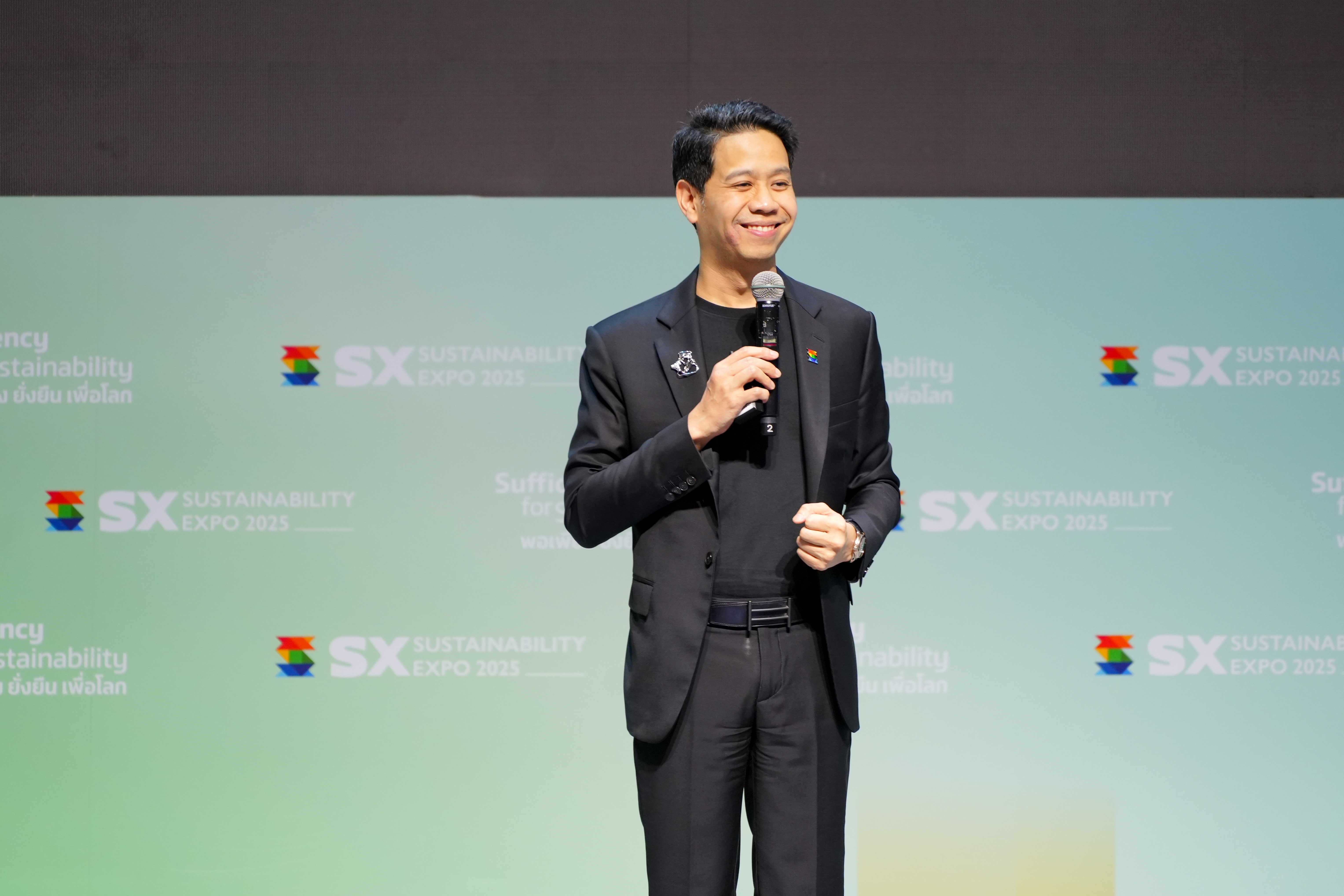
This year, SX has been designed as a “Living Platform” for SEP, showcasing practical applications and expanding its relevance to the business sector. By fostering SX New Champions—businesses that grow not just for profit but also to solve social and environmental problems—SEP is evolving into a form of Soft Power that commands global attention.
In closing, Piyachart left the audience with a powerful message:
“What we do today must not create burdens for tomorrow, but instead add positive capital for the future. Sufficiency for Sustainability is not just the theme of SX—it is the path forward for a stable and sustainable world.”