
In a world where business can no longer be separated from social and environmental responsibility, the TV program "Win Win WAR Thailand" was created to identify and support entrepreneurs who aim to grow their businesses while caring for society and the environment. For the past seven years, the program has shared the stories of entrepreneurs dedicated to creating positive change, inspiring others to see that growth and sustainability can truly go hand in hand.
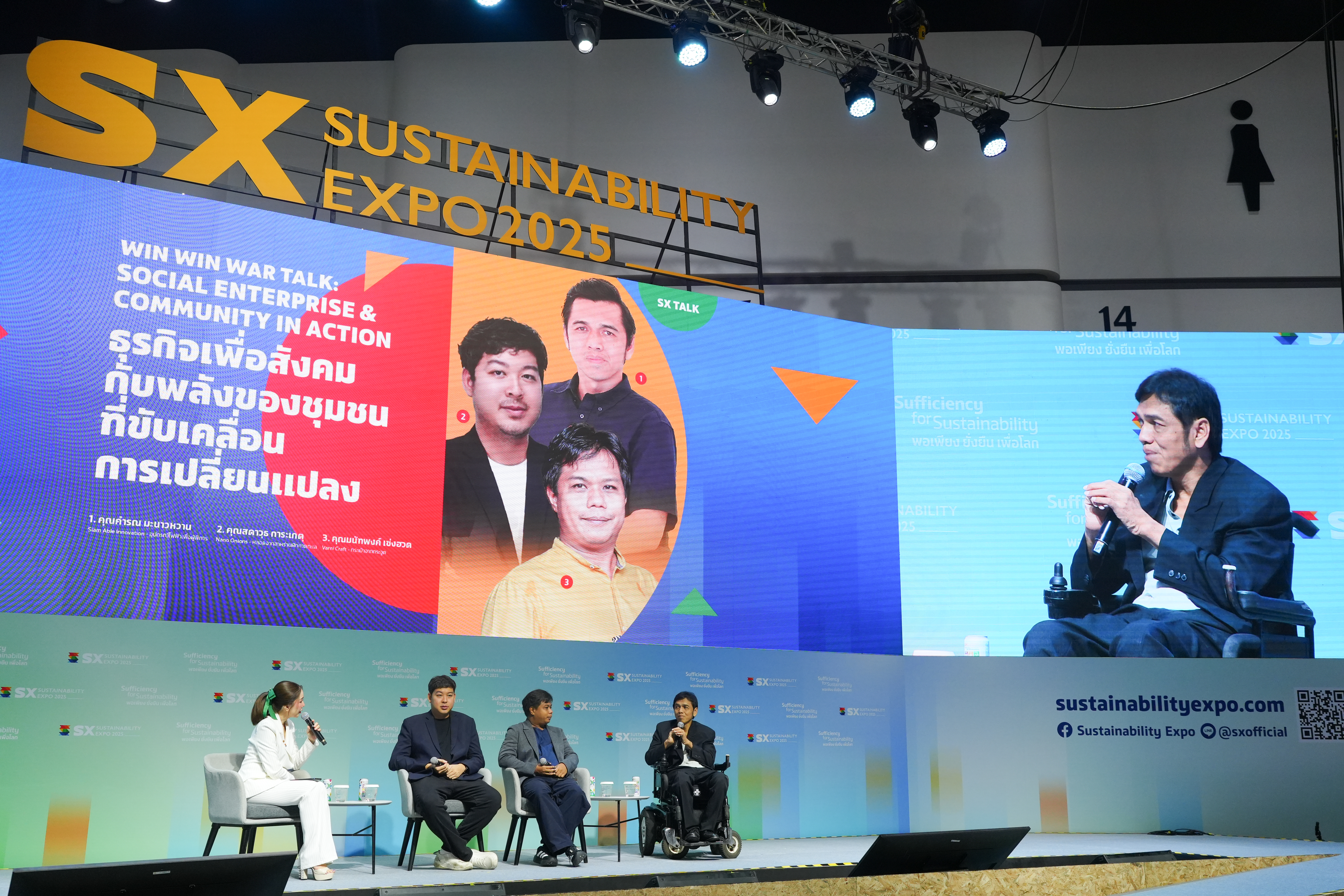
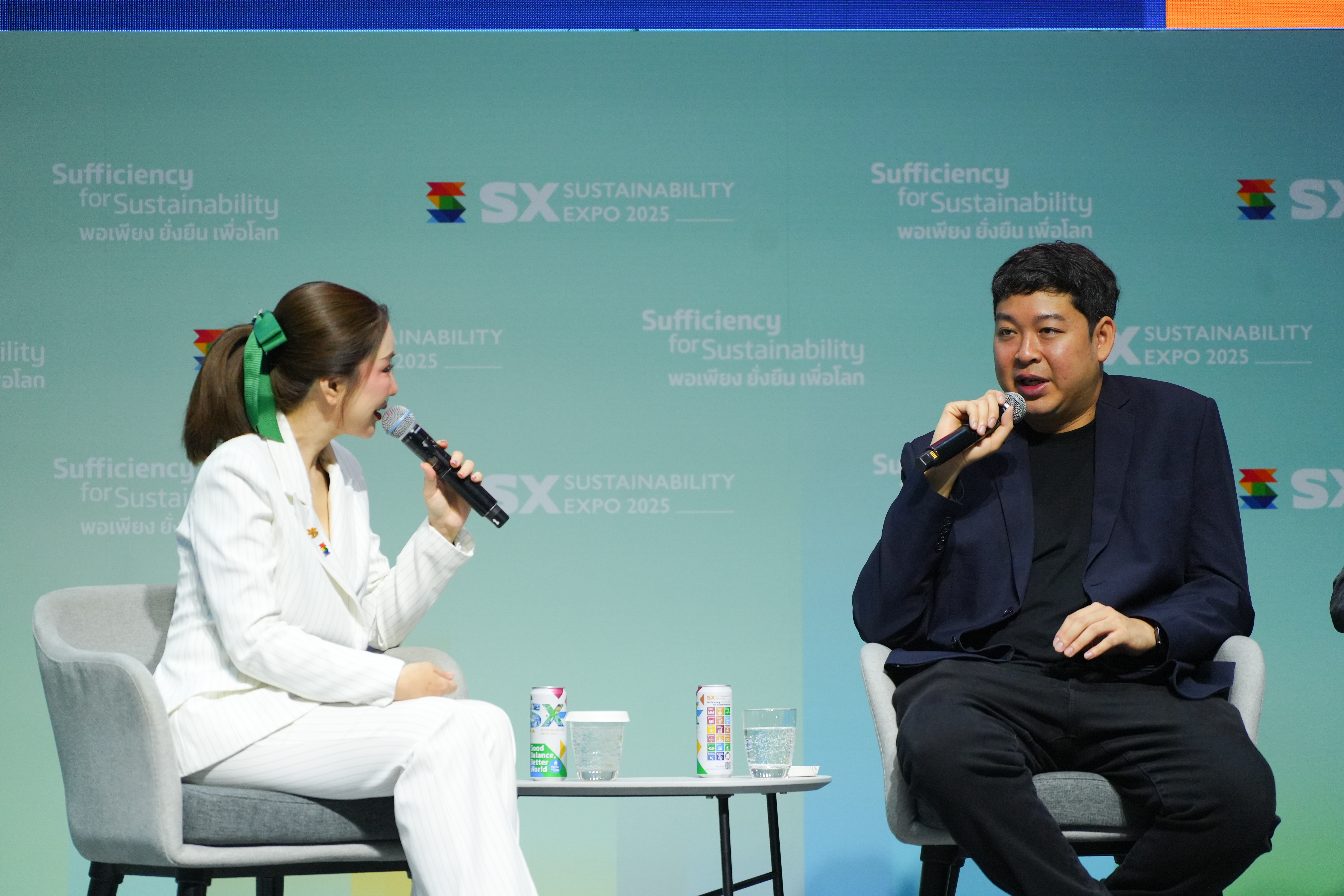
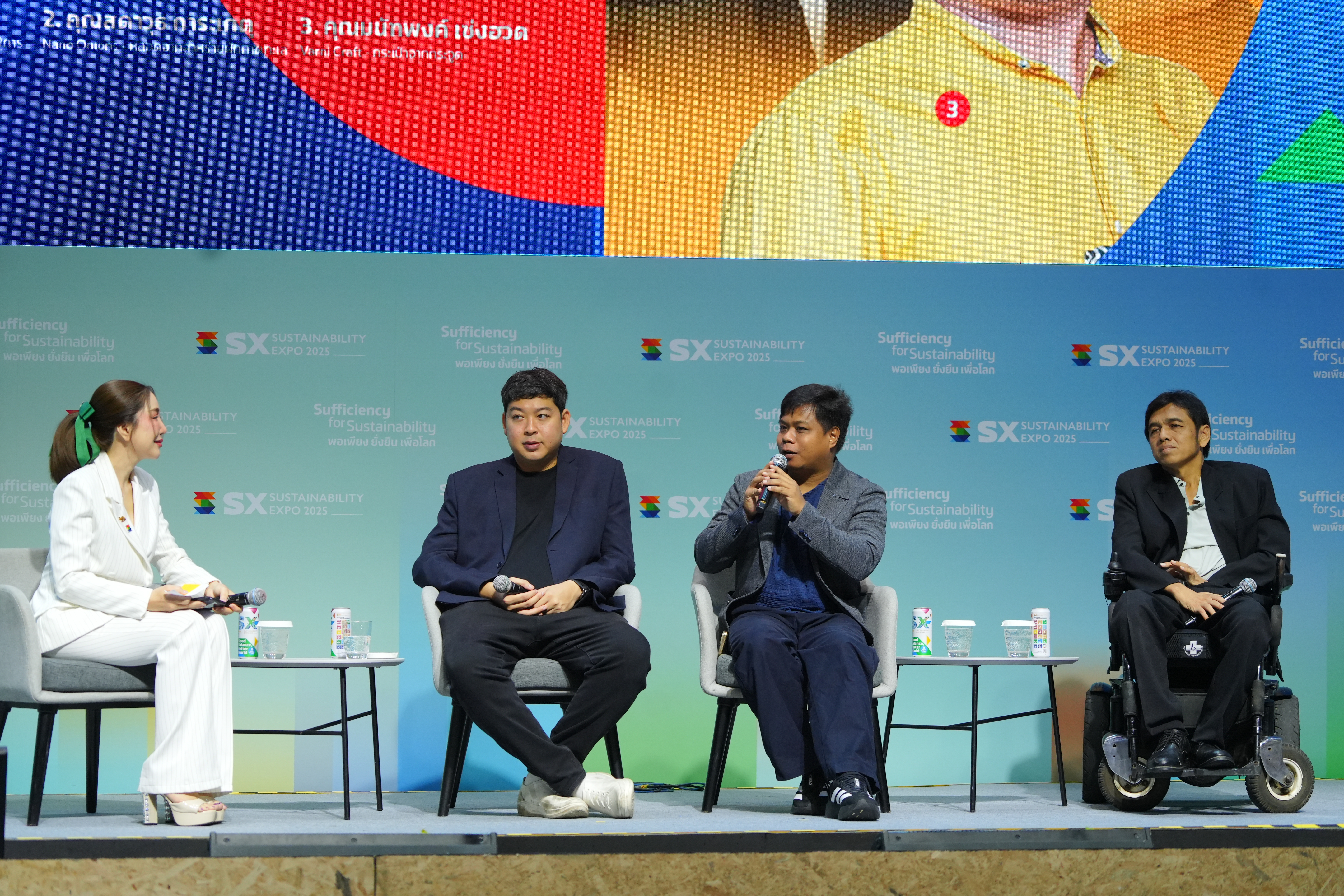
On the SX TALK STAGE at SUSTAINABILITY EXPO, three contestants from Win Win WAR Thailand shared their journeys, commitments, and visions under the topic “WIN WIN WAR TALK: SOCIAL ENTERPRISE & COMMUNITY IN ACTION.”
Nano Algaeon: Innovation from the Sea, Turning the Plastic Waste Crisis Around
Sadawut Karaked, founder of Nano Algaeon, believes the environmental crisis is a local issue that everyone can help solve. This belief led him to produce drinking straws from seaweed to reduce single-use plastic waste. "Plastic is durable and ideal for reuse, but consider this: Thailand uses over 35 billion plastic straws annually, each taking over 200 years to decompose. If no one develops new materials to replace them, we will face environmental problems forever. Nano Algaeon is creating a material to replace single-use plastics, doing our part to help."
Mr. Sadawut revealed that seaweed holds immense potential, as it can triple its biomass in a short period using only seawater. Not only is it low-cost compared to other crops, but it also acts as a carbon sink.
To ensure a sustainable supply of raw materials, Nano Algaeon works with a Community Enterprise in Laem Sing District, Chanthaburi, to create a model farm, empowering locals to manage it sustainably. "When starting a new business, I choose to work with communities because we don't have to invest everything ourselves; we can build upon the resources they already have. This model also makes it easier to receive government support, both in advisory and financial terms. It's a true collaboration where all parties benefit."
He also shared the challenges of his venture: “Doing something new is always difficult. With communities, the main challenge is communicating the business process in a way they understand. We have to adapt our communication style. We also face challenges across the supply chain. Our seaweed is the raw material, which must be processed into pellets, and then into straws or other products. With a new material like this, we have to prove to factories that it won't damage their expensive machinery. These are the challenges we solve every day.”
From Marsh Weeds to a Kinnari Award: Varni Craft's Sustainable Revival of Local Wisdom
Nattapong Senghuad of Varni Craft shared his struggle to resurrect the krajood (sedge) handicraft, an ancestral occupation on the brink of disappearing. As a design instructor, he saw the hidden value in his community's craftsmanship, especially his mother's krajood mat weaving. "Krajood handicrafts were sold cheaply; sometimes a full day's work earned only a hundred baht. I wanted to build a brand and create higher-quality, contemporary products while educating the market about what krajood is."
Varni Craft went beyond design, providing business training to the community, including basic accounting, to show them that krajood could generate real income. This success spread by word-of-mouth, growing the group from just 6-7 members to providing sustainable income for over 150 households today. More importantly, Varni Craft has created environmental sustainability by encouraging the community to cultivate krajood instead of harvesting it from wild marshes, allowing them to sell or process it into higher-value products and establishing it as a local cash crop.
"Making krajood is our heritage; it's our pride. For 13 years, we faced the question, 'Krajood is a cheap material, why sell it at a high price?' But my mother always insisted that we must stand by our identity," Mr. Nattapong said. With this commitment, Varni Craft now produces not only bags but also furniture and decor for spas and resorts. They have also opened a learning center with a homestay for outsiders to experience the community's way of life. Recently, the Varni Krajood Handicraft Community Enterprise won a Kinnari Award (Thailand Tourism Award 2025) for excellence in community-based tourism, a testament to their success in elevating local wisdom to national prominence.
Siam Able Innovation
Siam Able Innovation: Turning a Life-Altering Crisis into Inspiration to Improve Quality of Life for People with Disabilities
The story of Kamron Manawan, founder of Siam Able Innovation, is powerful proof of how a personal crisis can become a driving force for profound social change. His business, which produces electric assistive devices for people with disabilities, began after an accident left him disabled. He realized that existing equipment was often ill-suited to users' physical needs and did not empower them to live independently outside their homes.
Using his engineering background, Mr. Kamron spent two years developing an electric wheelchair designed for users with muscle weakness who couldn't operate standard wheelchairs. He then brought in local technicians and other people with disabilities to establish a factory to repair and manufacture these devices. Today, Siam Able Innovation also produces electric patient lifts, electric beds, and medical-grade batteries. This success was supported by organizations such as DIPROM, Win Win WAR Thailand, Bumrungrad International Hospital, and the Expressway Authority of Thailand, who provided guidance on systemizing operations for efficiency.
"Making devices for people with disabilities benefits us first; we overcome our own disabilities and get to live a normal life. When other disabled people see this, they want that life too. So they buy our products and train with us, because we are both a factory and a training center," Mr. Kamron explained. He emphasized that he cannot stop, as this is a critical issue for the disabled community and for a nation moving towards an aging society. Siam Able Innovation is now planning to expand to international markets and is developing future innovations, such as an AI-controlled prefabricated house for the disabled and elderly to reduce the burden on caregivers.
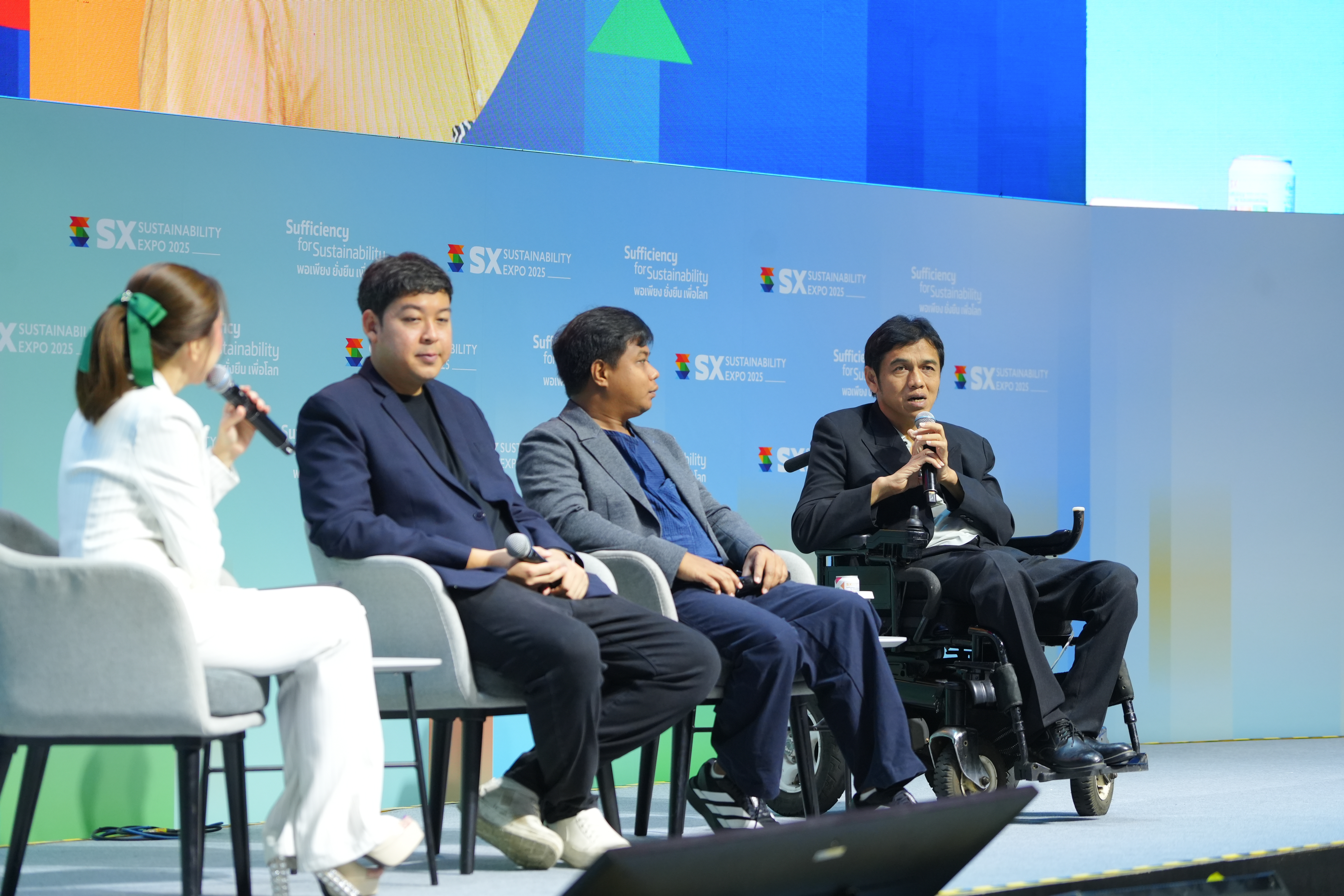
The stories of these three entrepreneurs from the Win Win WAR Thailand stage are clear proof that "social enterprise" is not just an alternative but a sustainable path forward for Thai society. When business ambition is combined with genuine care for the community and the environment, it becomes a true force for change, allowing everyone to move forward in a Win-Win scenario.