Small Voices in a Big World: When Sustainability Careers Are More Than Just a Trend
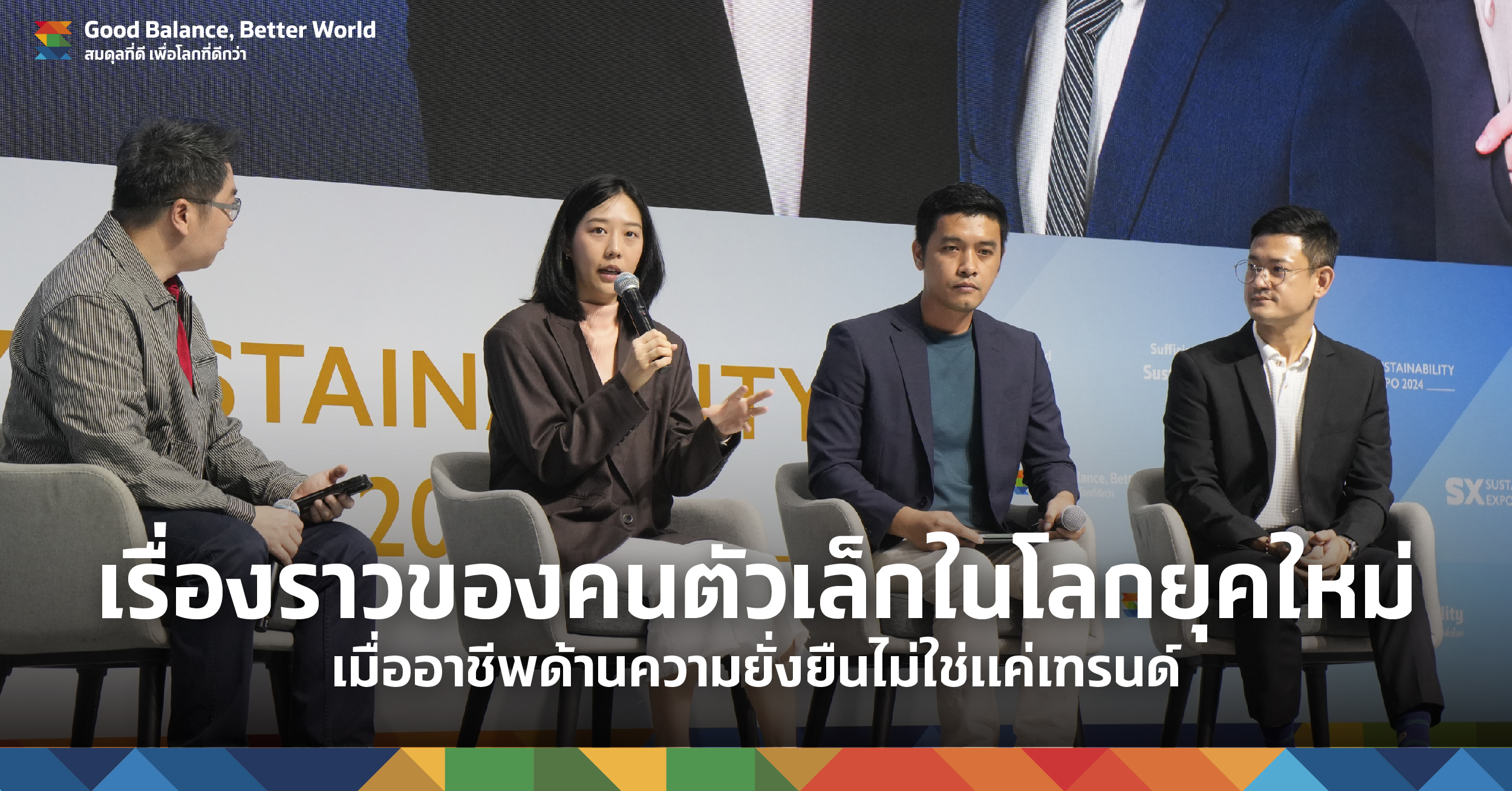
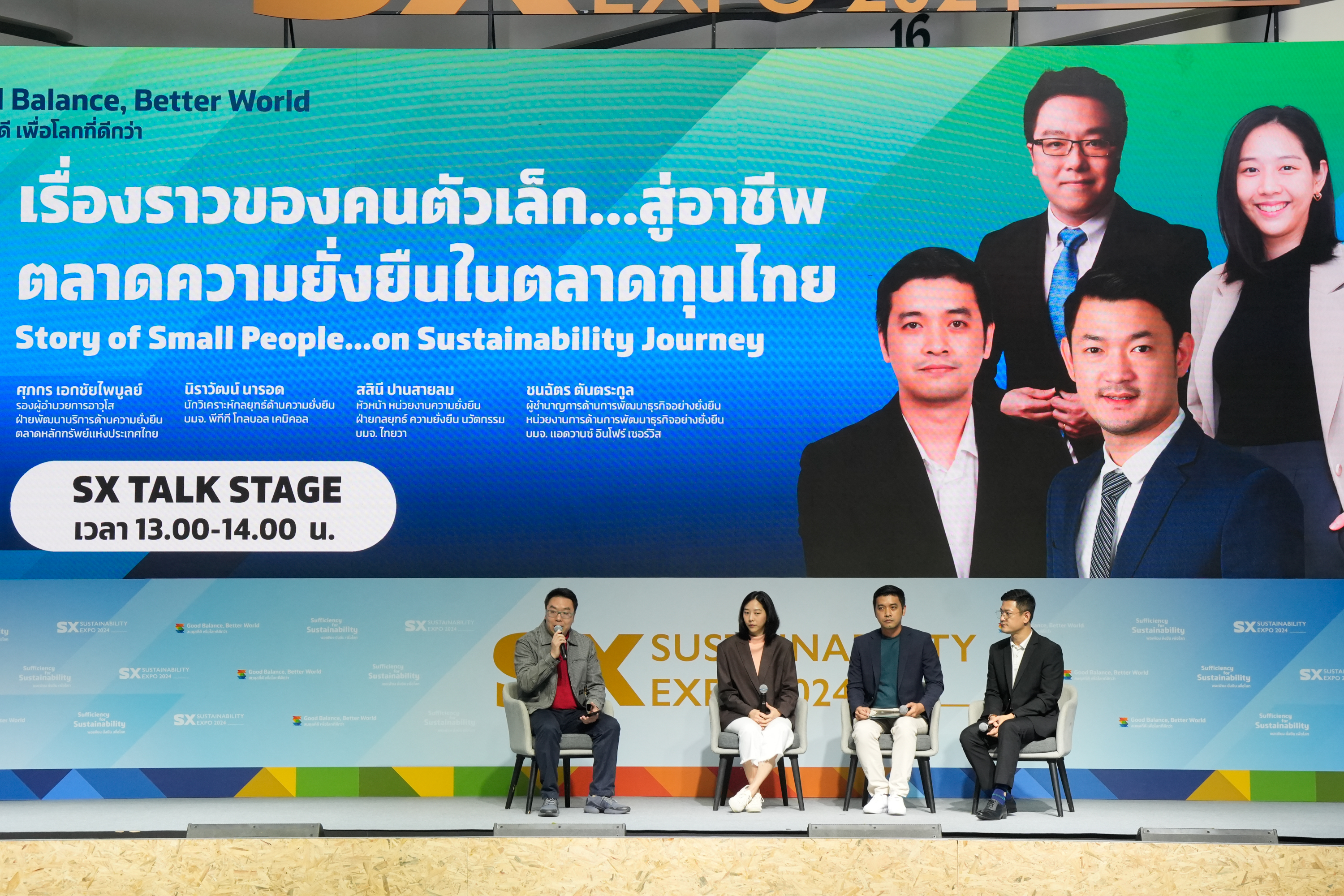
As the global movement toward sustainable business practices gains momentum, sustainability-related careers are growing rapidly in importance. Yet in Thailand's capital markets, a talent shortage remains. At SUSTAINABILITY EXPO 2024 (SX2024), held on September 28, 2024 at Queen Sirikit National Convention Center, a special panel discussion titled "Small Voices, Big Impact: Careers in Sustainability and Thailand's Capital Market" was hosted at the Talk Stage.
The panel featured Mr. Nirawat Narod, Sustainability Strategy Analyst at PTT Global Chemical Public Company Limited, Ms. Sasinie Parnsailom, Head of Sustainability, Strategy & Innovation at Thai Wah Public Company Limited, and Mr. Chonchat Tantrakoon, Sustainable Business Development Specialist at Advanced Info Service Public Company Limited (AIS). The session was moderated by Mr. Supakorn Ekkachaiphaiboon, Senior Assistant Director of Sustainable Development Services at the Stock Exchange of Thailand (SET).
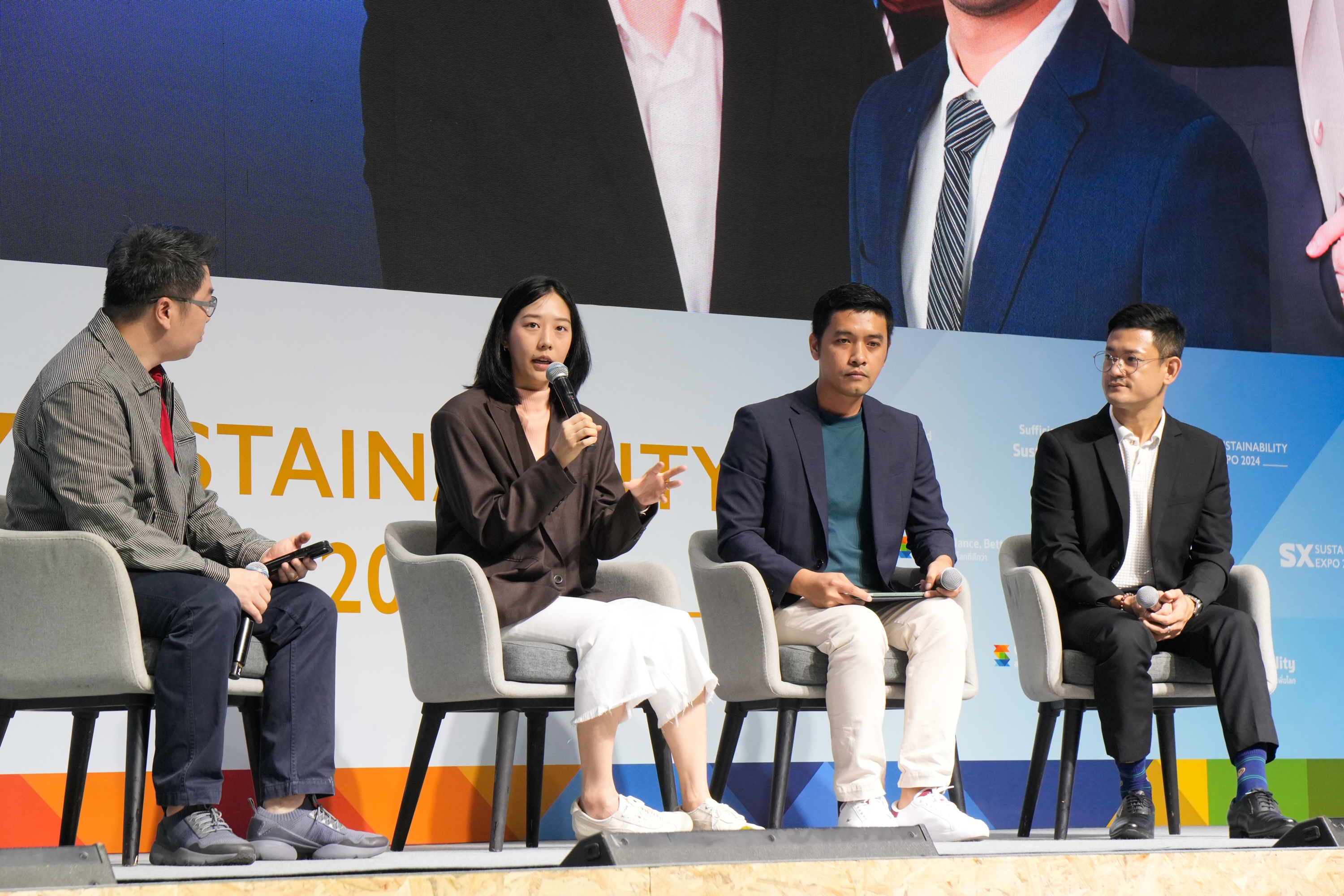
Ms. Sasinie began by sharing her childhood passion for environmental science, which led her to pursue a degree in chemistry. Her first job at a cosmetics company may not have directly aligned with her environmental interests, but it opened the door to sustainability. She later studied Bioeconomy, which deepened her understanding of how every business decision creates ripple effects across social and environmental systems.
She emphasized two essential skill sets for sustainability careers: hard skills, such as knowledge of sustainability frameworks, and soft skills, such as communication and collaboration. “Sustainability can’t be done alone,” she said. “It requires cooperation from both internal and external stakeholders.” At Thai Wah, for instance, the sustainability team works closely with agricultural extension teams to ensure that sustainability goals are communicated effectively to farmers. It’s a shared learning process that builds meaningful partnerships.
Ms. Sasinie believes that demand for sustainability professionals will continue to rise, both due to evolving international regulations and the pressure for companies to adapt. Even without a specialized degree, aspiring professionals can begin by exploring open-access platforms like SET Academy or the UN SDGs to build foundational knowledge.
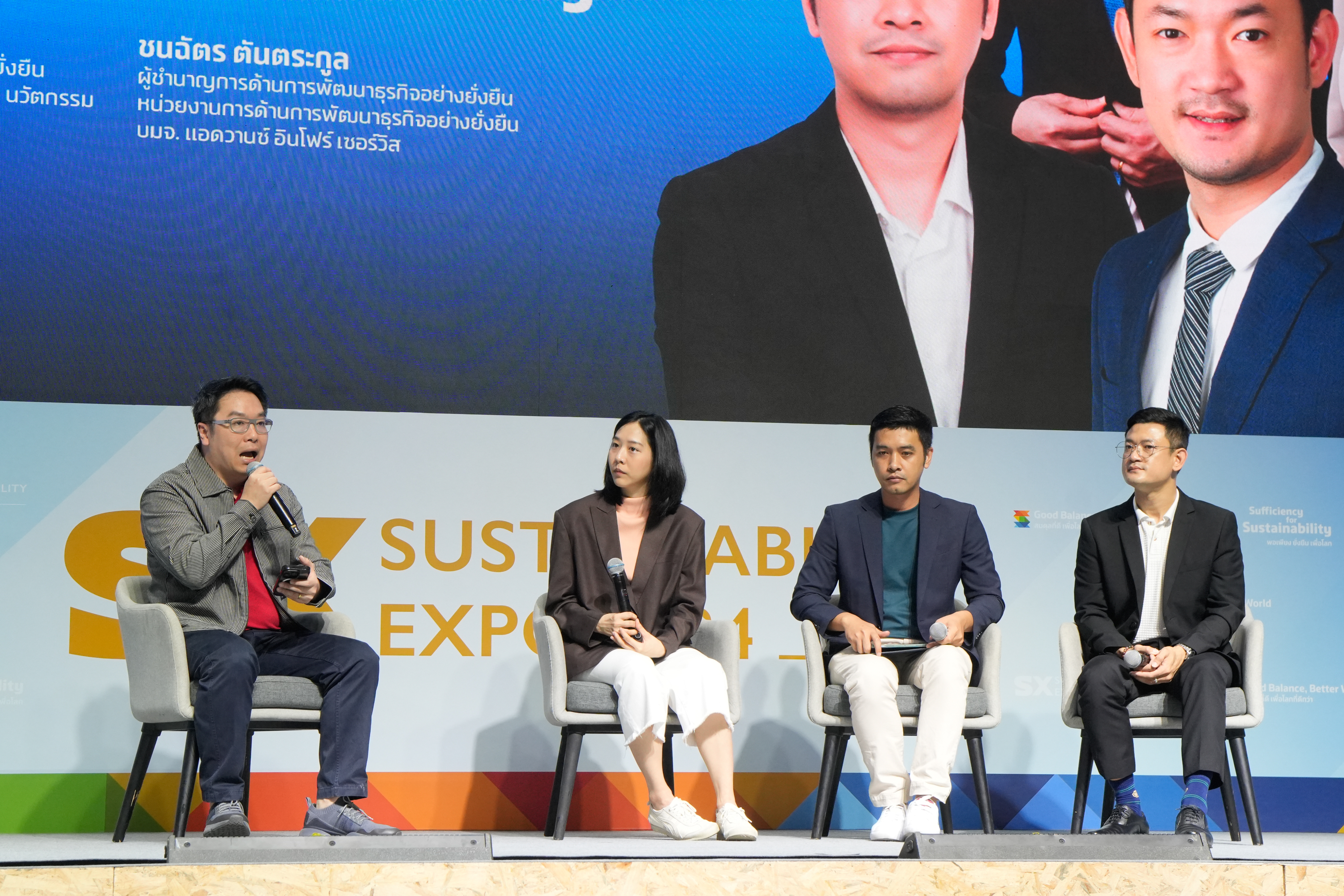
Mr. Chonchat, who holds a degree in marine science, spent a decade as an environmental consultant assessing social and environmental impacts for oil and fuel companies. His work at PTT Exploration and Production Public Company Limited was a turning point, showing him how sustainability could address the growing public concern about fossil fuels.
He pointed to two key skills: adaptability to sustainability-related challenges and opportunities, and continuous learning — the ability to gather and apply new knowledge. “Whatever your field, integrating sustainability into your work processes increases both effectiveness and relevance,” he said.
Sustainability work, he added, is not just about environmental protection — it’s about community resilience and long-term business viability. One example he cited was the “Thai People Without E-Waste” campaign, which encourages customers and partners to responsibly dispose of old mobile phones and other electronic waste. He urged young professionals to adopt an ESG lens when viewing problems and opportunities: “It’s a mindset that helps you grow and stay resilient in this field.”
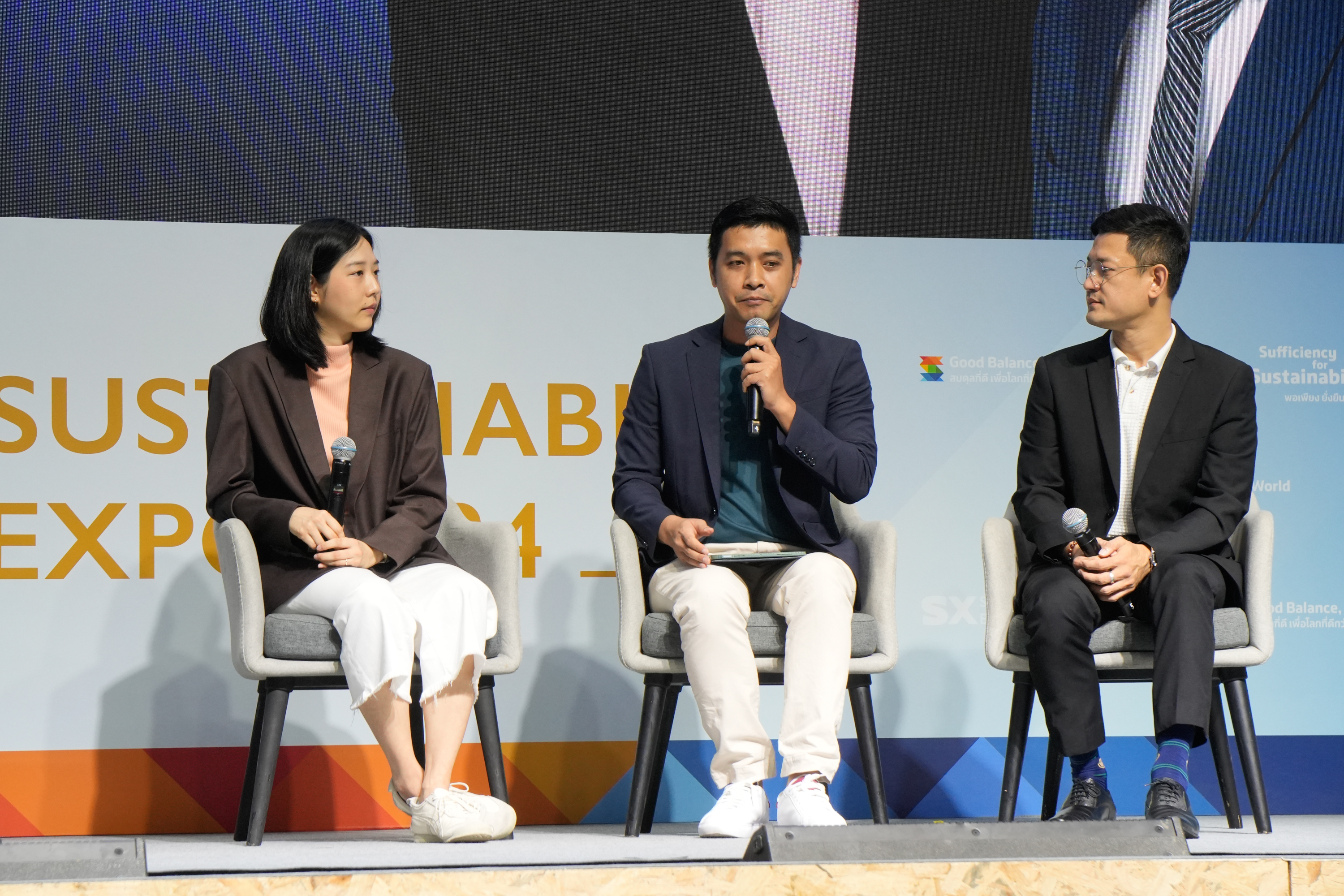
Mr. Nirawat took a less direct route to sustainability. He earned a bachelor’s degree in Forestry and a master’s degree in Veterinary Science from Kasetsart University, eventually entering the sustainability field via corporate social responsibility (CSR) work.
He outlined three main career paths in the field:
-
Sustainability Strategy – for those who excel in critical thinking, research, and long-term planning.
-
Sustainability Reporting & Benchmarking – requiring a strong understanding of reporting standards and industry benchmarks.
-
Frontline Practitioners – individuals who may not hold "sustainability" titles but play crucial roles in implementation.
What all these paths have in common, he emphasized, is the need for strong human skills — the ability to collaborate and build trust across organizational boundaries.
“Sustainability is no longer optional,” Mr. Nirawat concluded. “It will be a key indicator of which businesses survive in the future.” He noted that the demand for sustainability professionals continues to rise globally, and that even influencers and freelancers have a role to play in shaping public values around environmentally responsible products.