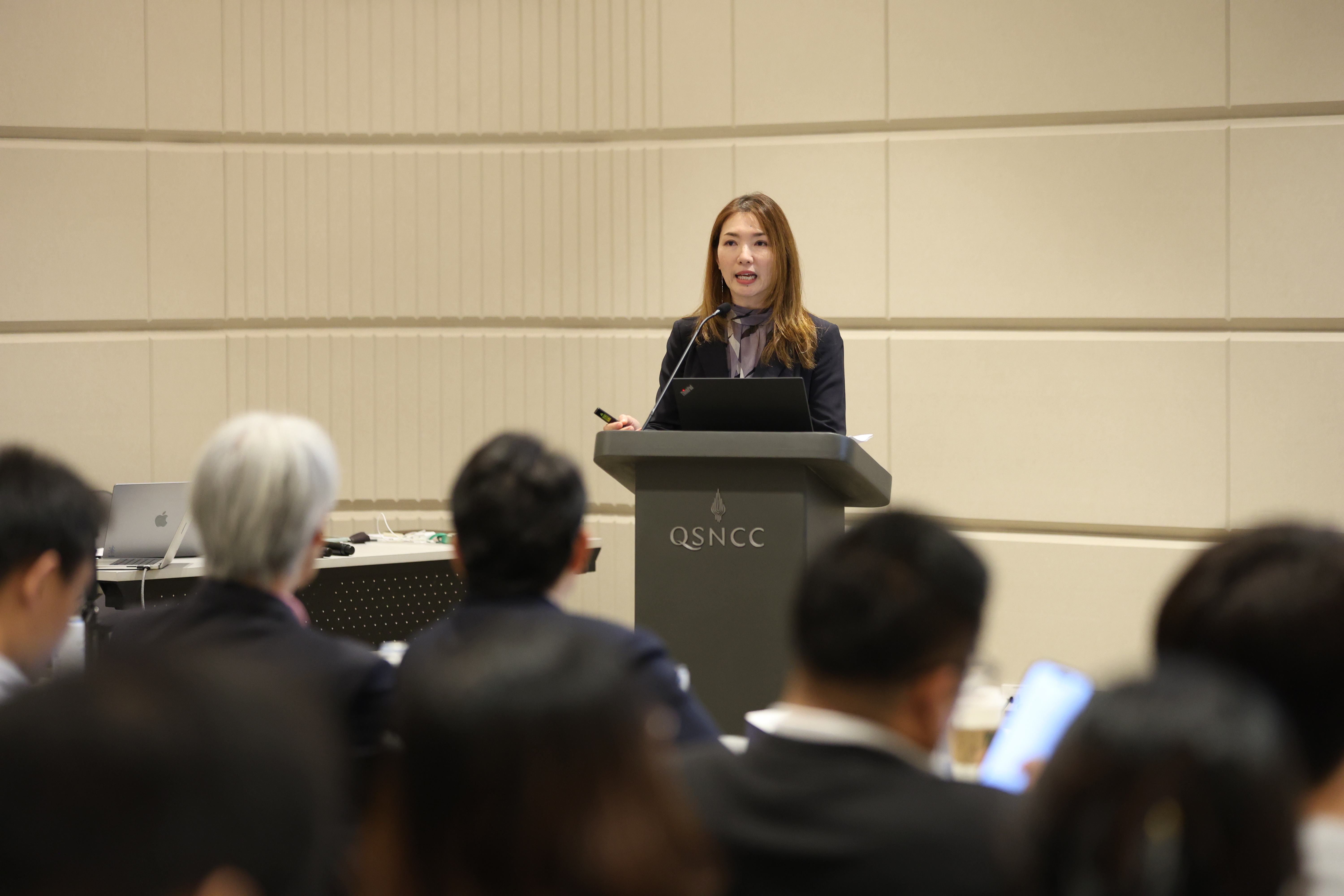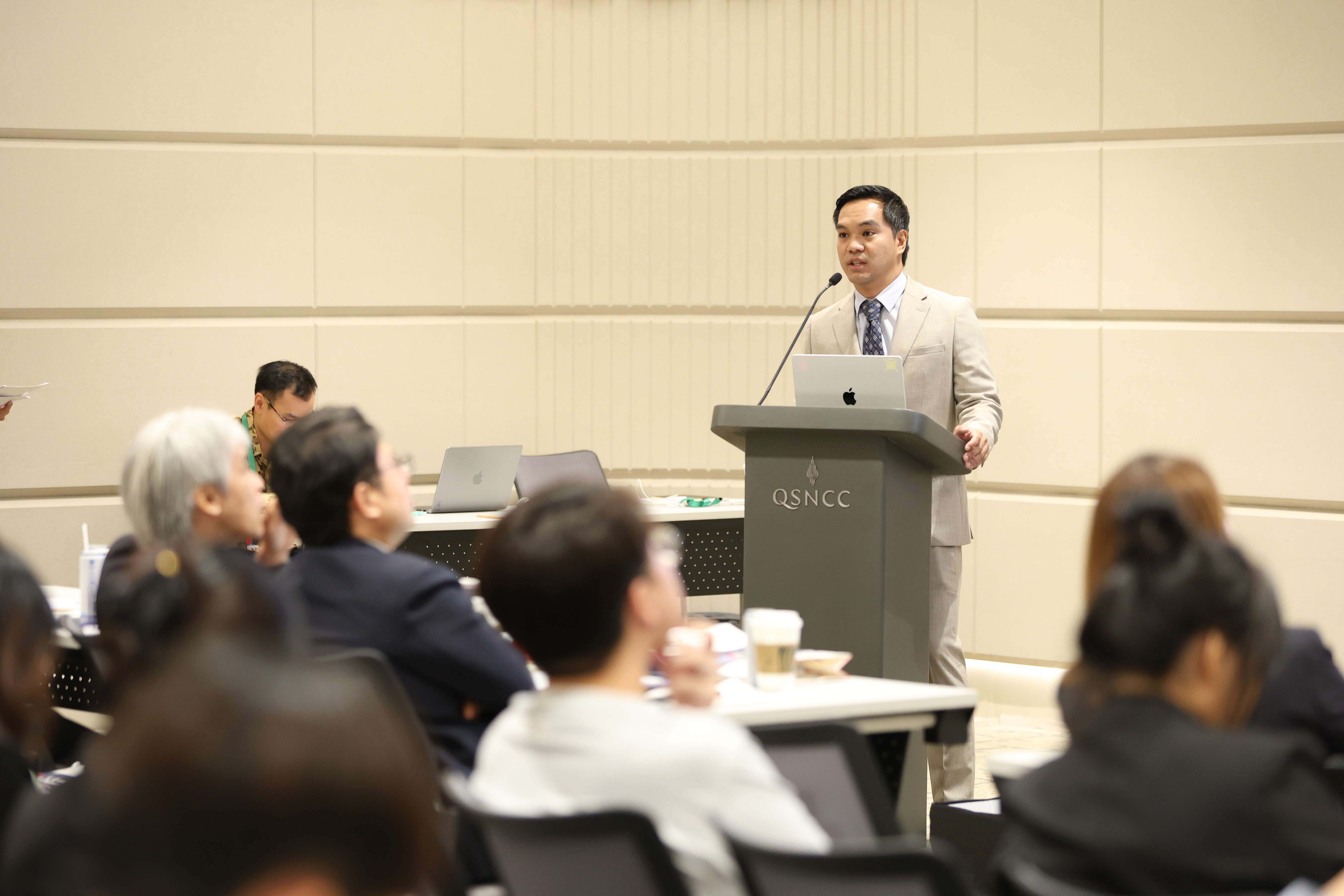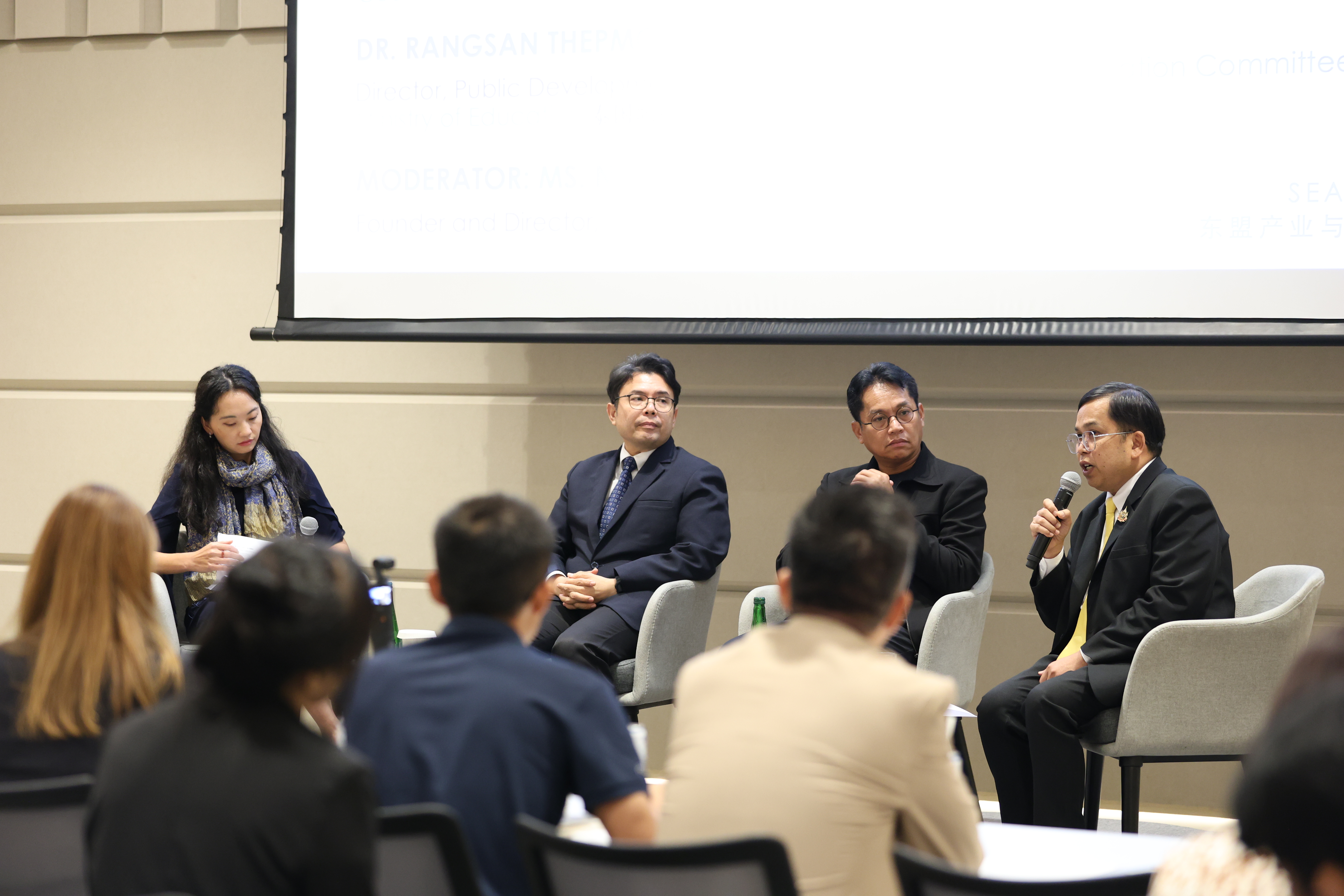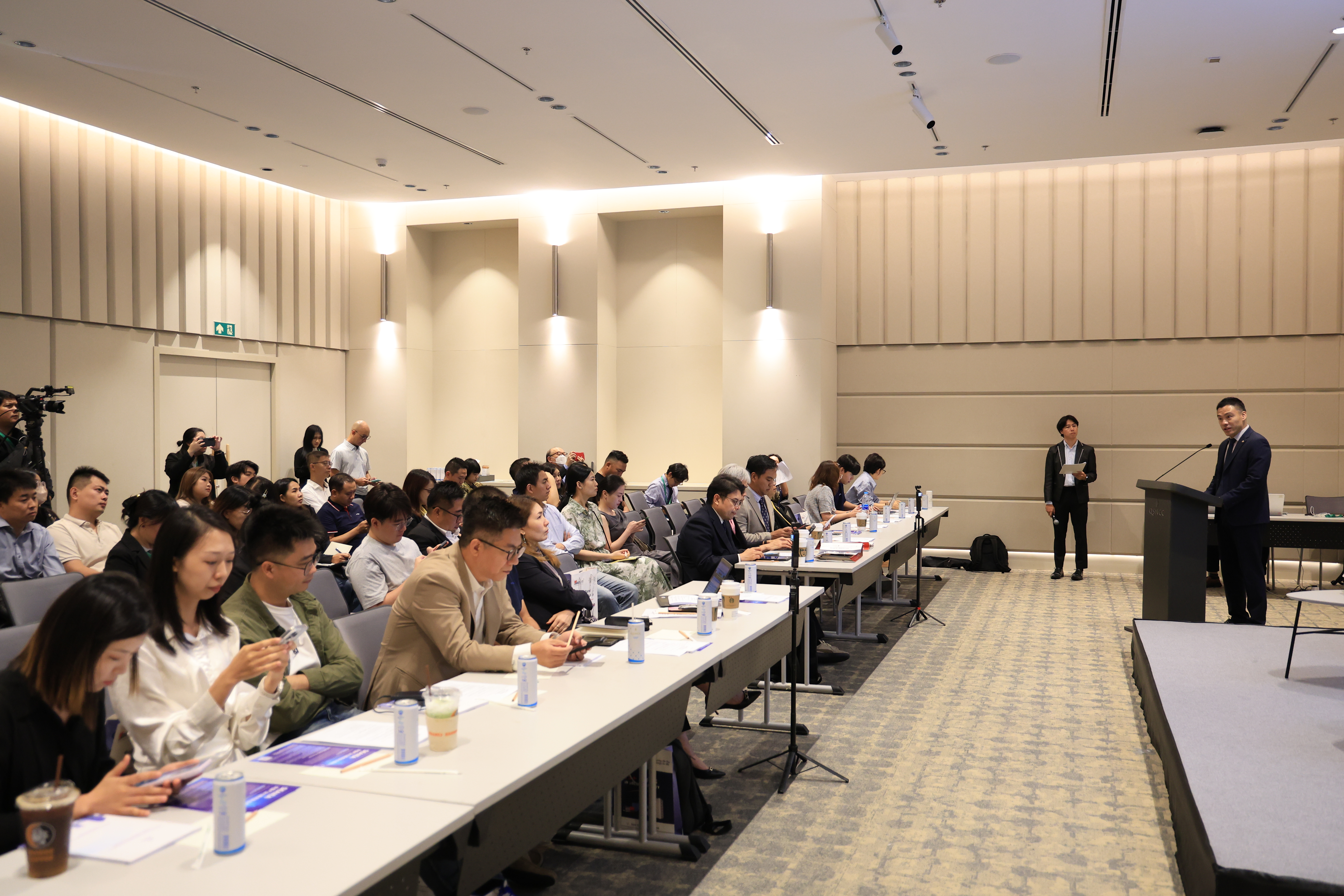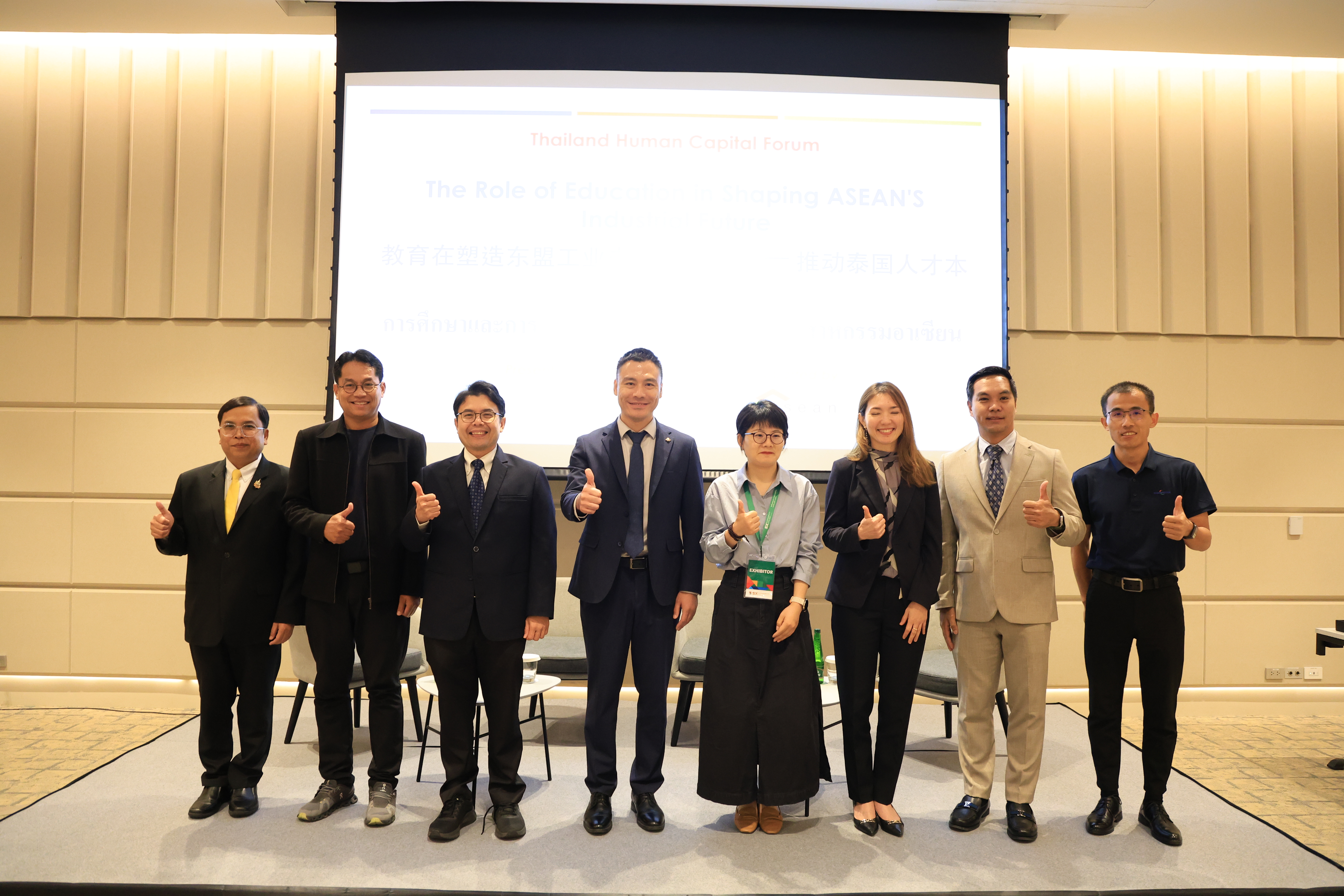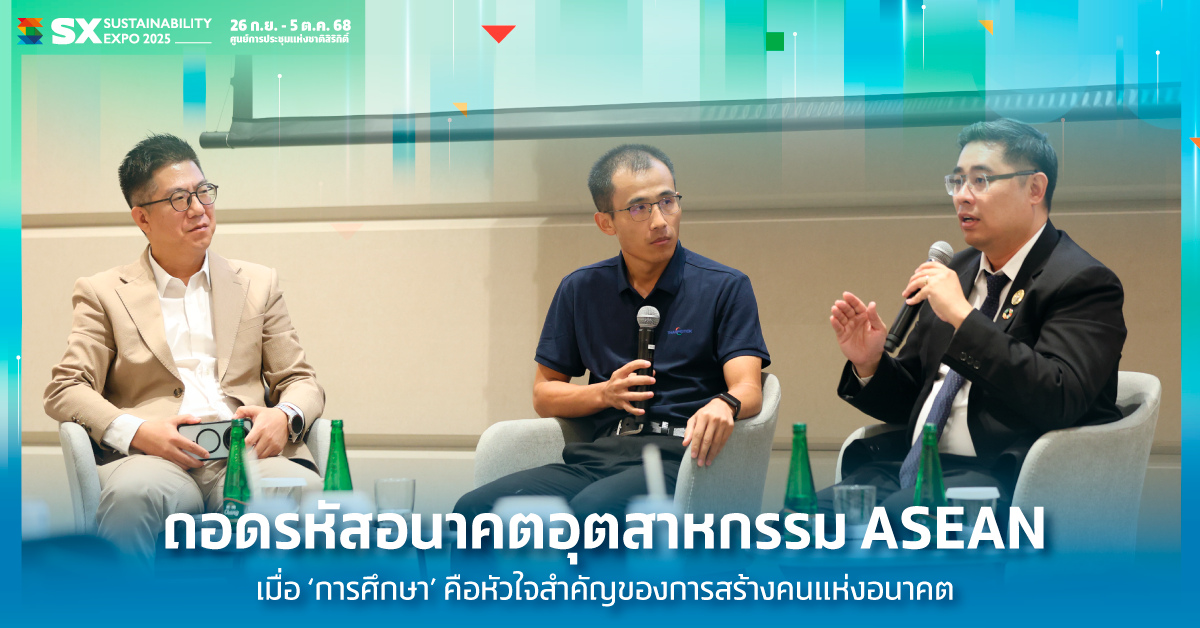
Amidst a wave of industrial change driven by artificial intelligence, new energy industries, and the opening of international trade, the critical question echoing in business and policy circles today is not just 'What will we build?' but 'Who will we build?' to handle the future that is arriving. This was the major challenge collaboratively tackled and answered at the intensive seminar, “The Role of Education in Shaping ASEAN’s Industrial Future.”
This seminar, held on Monday, September 29, 2025 (2568 B.E.), at SUSTAINABILITY EXPO (SX2025), ASEAN's largest sustainability exposition, became a pivotal meeting point for representatives from Thai and international businesses, the public sector, and educational institutions. They shared a common goal: to propel and create a workforce prepared for a sustainable future.
The Challenge: When 'Opportunity' Comes with a Skills 'Gap'
The discussion opened compellingly with Ms. Fu Yuxin, President of the Southeast Asia International Education Association (SEA IEA), who pointed out that Sino-Thai relations are entering a new era. High-tech companies, especially in new energy and smart manufacturing, are increasingly choosing Thailand as their Southeast Asian hub. While this brings investment and technology, it also creates an "urgent demand for talented local personnel."
This point was directly reinforced by the private sector. Mr. Xiao Zhangbo from Tharmotek Thailand admitted, "Our challenge is that there is not enough highly knowledgeable and experienced labor. We must therefore accelerate and find ways to collaborate to build a large-scale workforce of this kind for our future." This aligns with Ms. Li Yan from Beijing E-Town, which is preparing to invest in biotechnology, integrated electric vehicle development, and robotics. She hoped the event would help "deepen the commercial understanding between us and ASEAN nations, toward the global market."
Thailand Ready for Investment, Touts 'Education' to Meet New Industrial Demands
As the host, Ms. Anin Mekh-suksai, Director of the Foreign Investment Promotion Division (BOI), showcased Thailand's readiness. She highlighted investment promotion measures and benefits, coupled with educational and workforce development policies aimed at feeding modern target industries, including advanced electronics, clean energy, and digital. She stated clearly, "Thailand is ready to be a long-term and sustainable investment destination for all investors."
This vision also includes the clean energy transition. Mr. Siamnat Panatsorn from the Electric Vehicle Association of Thailand (EVAT) keenly linked the future of green transport to education, stating: “Education today = green mobility tomorrow.”
The Solution is 'Integration': Reform Curricula, Build Networks, Develop Teachers
The heart of the seminar focused on strategic reform, with all sectors agreeing that human resource development is the most stable and sustainable investment.
Assoc. Prof. Dr. Thanet Thanitteerapan, Dean of the Faculty of Industrial Education, KMUTT (King Mongkut's University of Technology Thonburi), proposed a compelling policy innovation: "Supporting university students to have jobs before they graduate is the most stable and sustainable innovation for human resource development." Meanwhile, Prof. Dr. Surin Khomfoi, Vice President of NXPO (Office of National Higher Education Science Research and Innovation Policy Council), noted that building the future cannot be done alone but requires a "network for sustainable development," because good education not only changes lives but can also change the future of the nation and the world.
Furthermore, Dr. Rangsan Thepmondol from the Office of the Vocational Education Commission emphasized the critical foundation: "What must be done is to develop the potential of teachers to ensure they have sufficient quality." This was echoed by Dr. Thanyawat Somchaitweeporn, who reinforced that knowledge must come from application, because "knowledge is not born in the classroom, but from practical work."
The Conclusion for Sustainable Success
The seminar's conclusion painted a clear picture of the future: for Thailand to become a Green Hub or a leader in future technology, it requires integrated cooperation. As Mr. Chao Chaijiamvijit from the Thai Chamber of Commerce powerfully concluded, "If companies, the government, and universities can collaborate to build personnel, it will be considered a great and sustainable success." This is the key milestone that will define the direction of ASEAN's industrial future for the next decade.
Gallery