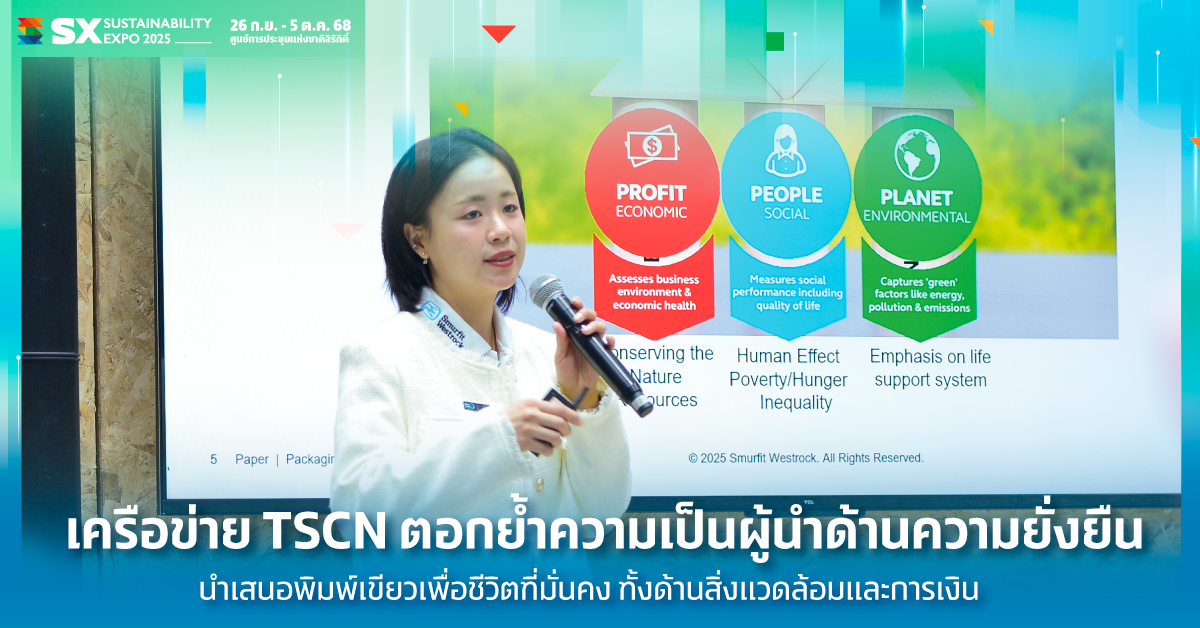
Amidst global challenges, including an intensifying "boiling" environmental crisis and economic volatility, building sustainable security has become a core mission that the business sector cannot ignore. The Thailand Supply Chain Network (TSCN), a coalition of leading organizations committed to sustainability, hosted a significant session at SUSTAINABILITY EXPO (SX2025), ASEAN's largest sustainability exposition. Through discussions and workshops held on the main SX TALK STAGE and at the SX IDEA LAB, the network presented tangible pathways—from revolutionary eco-friendly packaging and mindful resource management to financial planning for a 100-year lifespan.
Innovative Paper Packaging: A Sustainable Alternative Surpassing Plastic
Two TSCN members, Starprint Public Company Limited and SMS (Yes Bio), jointly held workshops and seminars to disseminate knowledge on sustainable packaging.
In the "Starprint Innovation Paper Packaging" session, Mr. Kritin Leelakrisadakorn, Head of the Innovation Department at Starprint Public Company Limited, provided deep insights into paper packaging innovations. Starprint has been a leader in paper packaging for over 40 years. Mr. Kritin classified packaging into five types: Primary, Secondary, Transportation, Eco-friendly, and Smart Packaging. He pointed out that because current waste disposal issues are difficult to solve, the company focuses on developing packaging that is naturally biodegradable to help mitigate environmental problems.
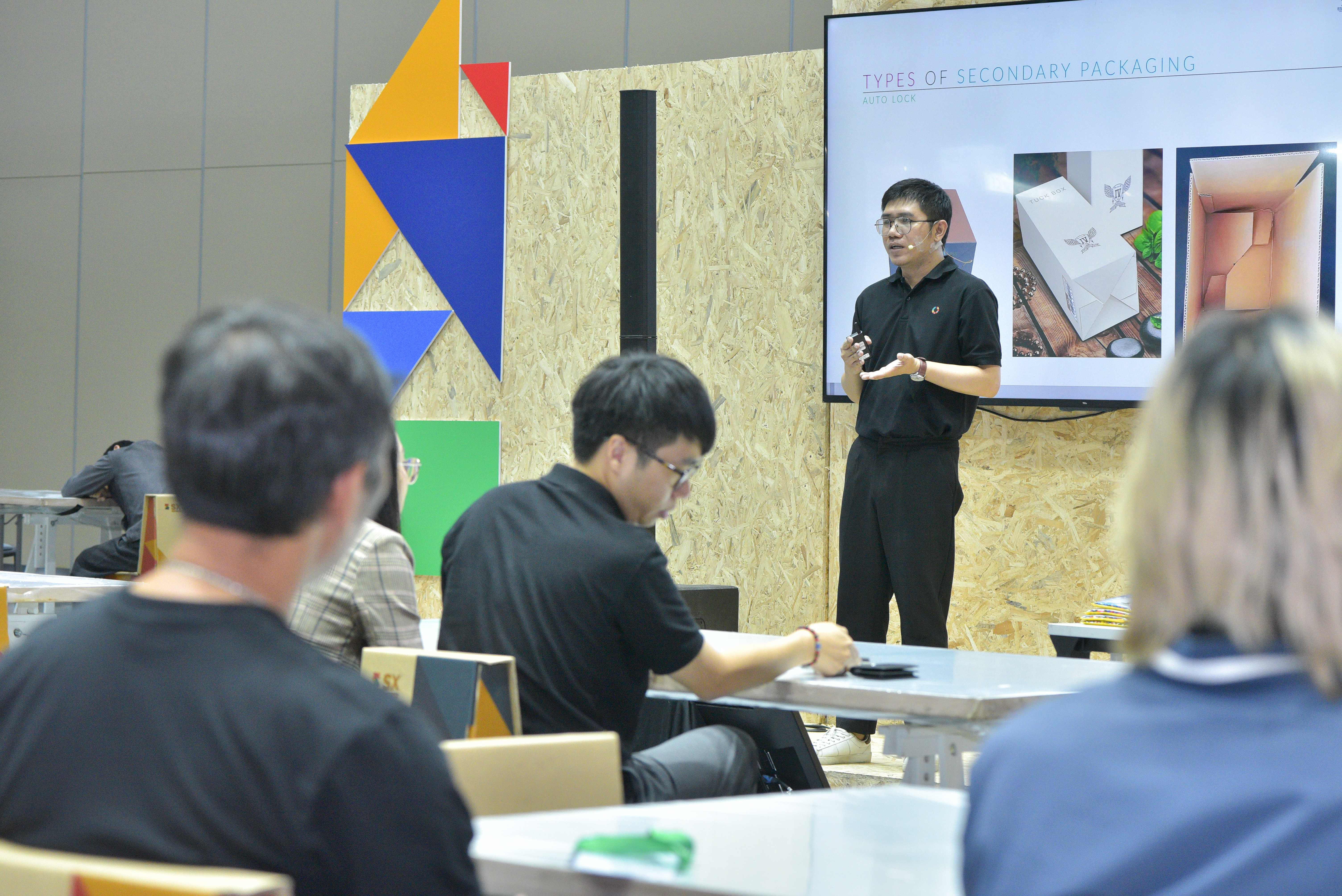
 Starprint's notable innovations include Eco-friendly Packaging and Smart Packaging, which can use technology like barcodes for product tracking or even scanning to check the ripeness level of fruit. Furthermore, designs emphasize Universal Design for all, such as a Macadamia box with Braille for the visually impaired, a function for immediate shell disposal, and an easy-to-tear, glue-free box for seniors.
Meanwhile, in the session "Starting from Nature, Returning to Nature: Green Products from YES BIO," speakers from SMS (a modified tapioca starch producer)—including Mr. Athipat Saikaew (Regional Sales Manager), Mr. Pattara Tripanyasart (Sales Manager), and Mr. Nuch Chayabutra (Researcher)—presented a solution to the problem of Single-Use Plastic. This waste is voluminous, yet only about 9% is recycled.
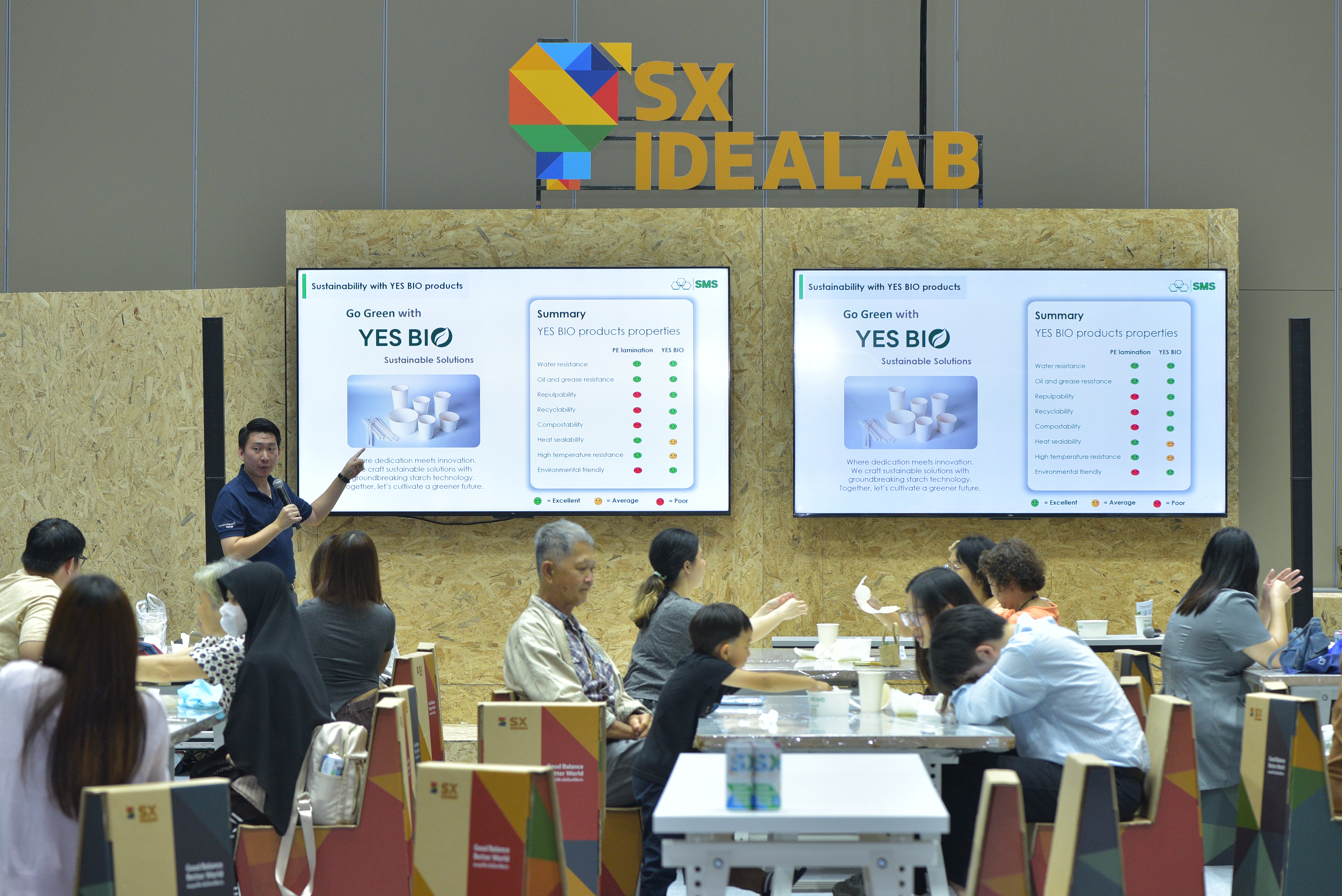
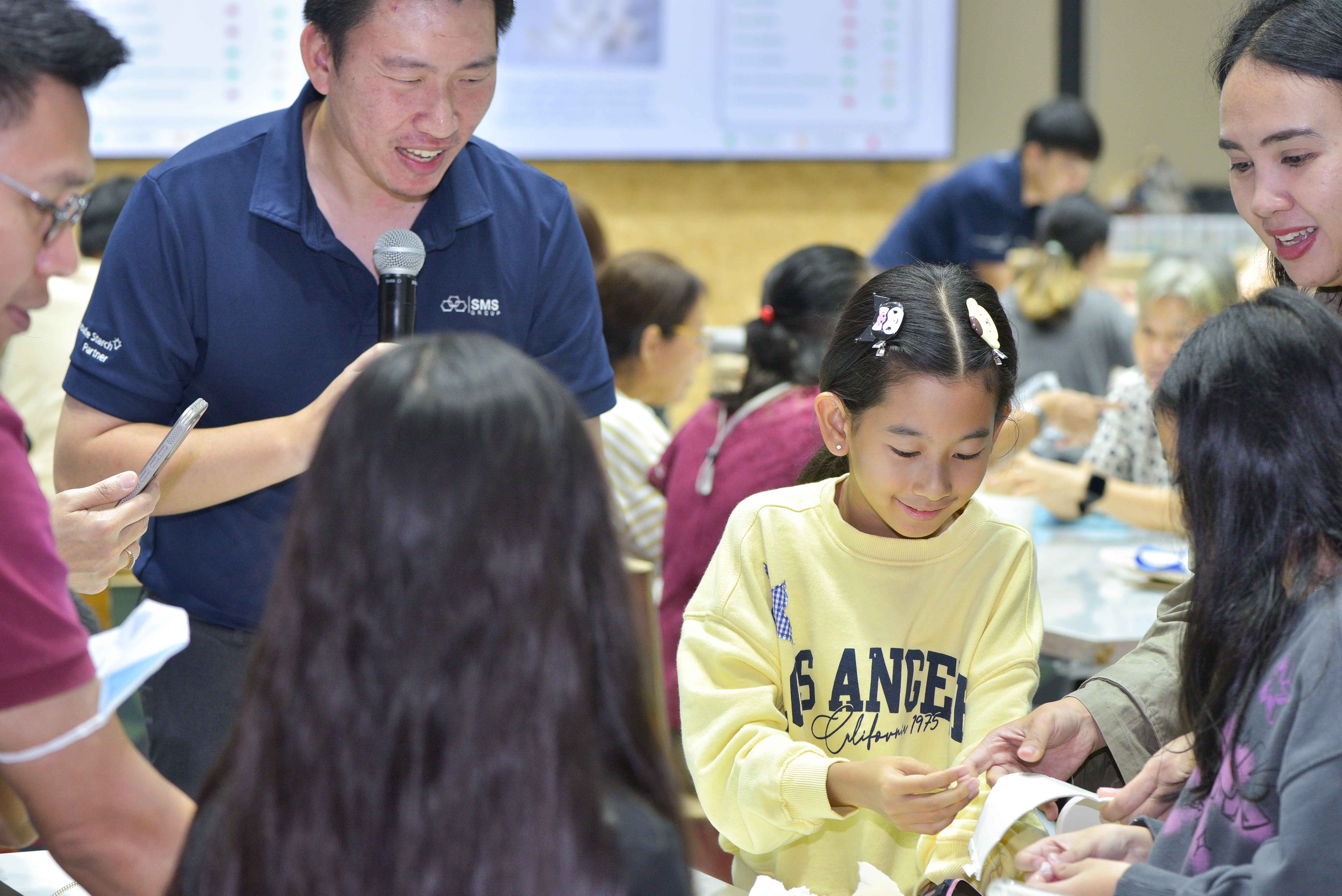
Yes Bio is an innovative coating developed from tapioca starch, used to replace the plastic film (PE Laminate) in paper products like paper cups. The use of Yes Bio is crucial as it provides water and oil resistance equivalent to plastic, but more importantly, it is 100% repulpable and biodegrades within 60 days. This helps prevent the creation of microplastics upon decomposition. It also contains no PFOA/PFAS, or "forever chemicals," which are heat-resistant, difficult to break down, and cause severe health impacts on the human kidney, hormonal, and immune systems.
From Innovation to Behavior: REUSE for Sustainability
Beyond developing new products, the TSCN network also prioritizes the management of existing resources.
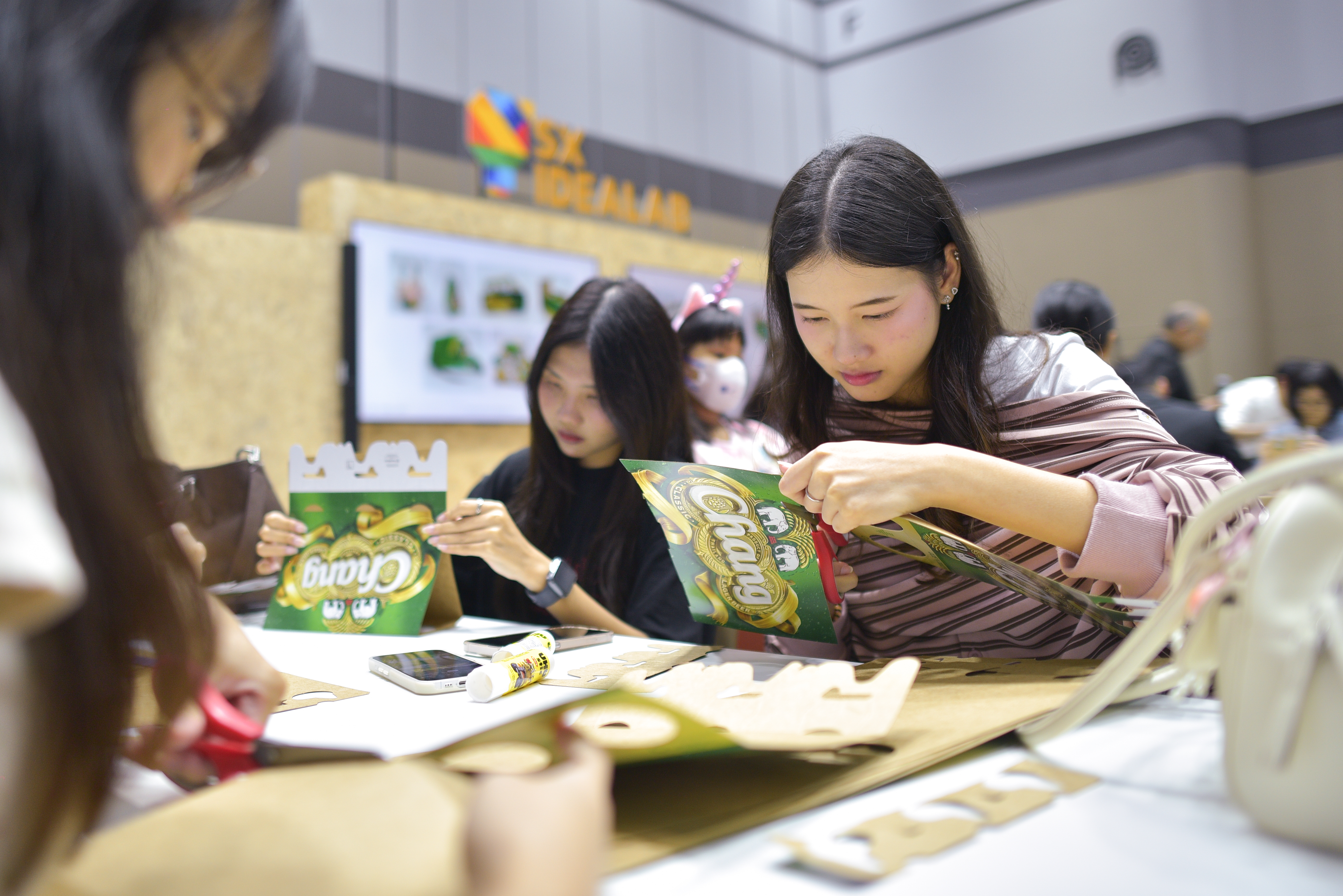
WestRock (Thailand) Co., Ltd., a producer and distributor of packaging products, shared ideas in the workshop "REUSE Packaging for Sustainability." This workshop aimed to make participants aware of the importance of environmental conservation and to learn that using resources mindfully is "a small step everyone can take every day."
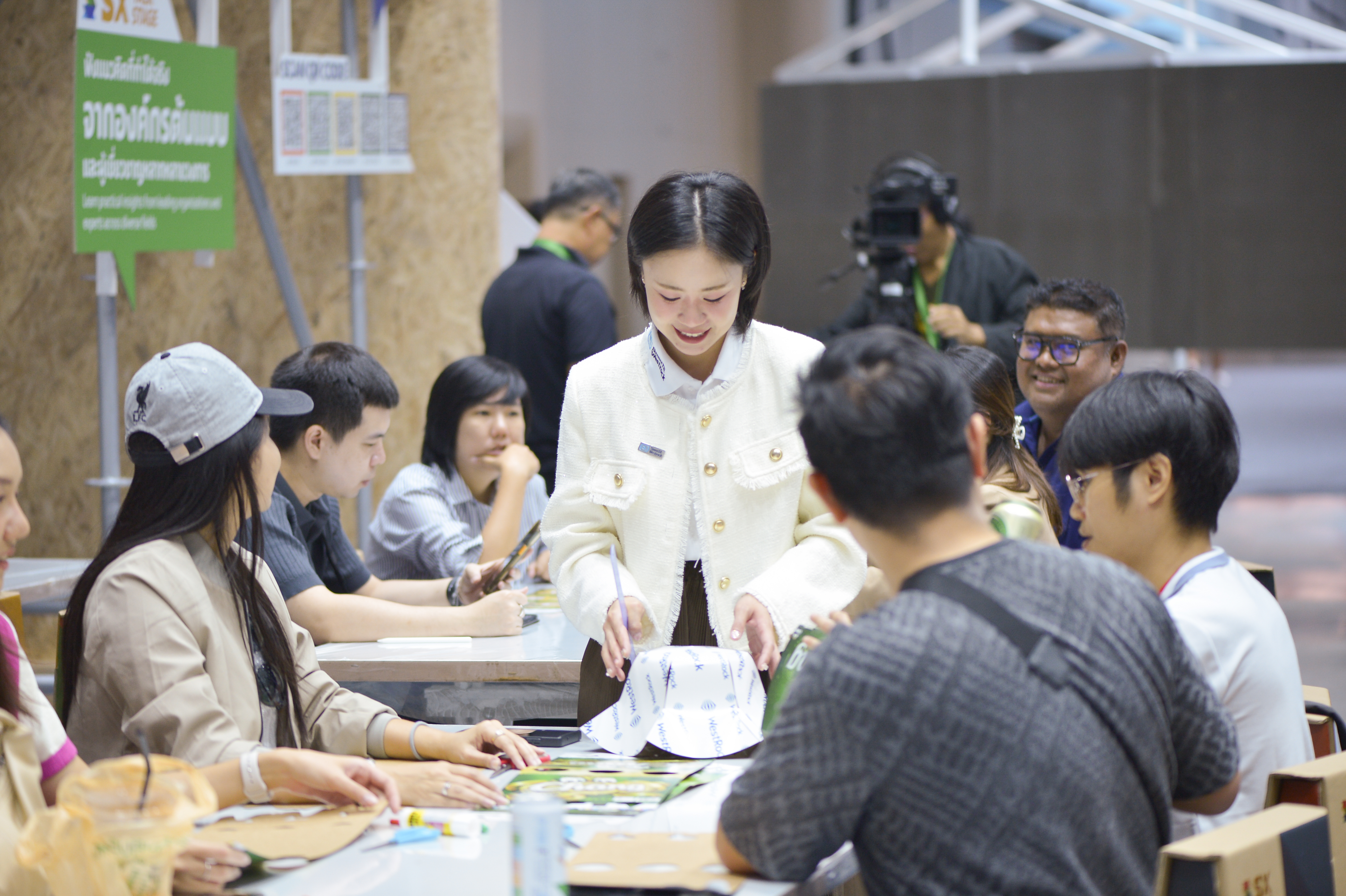
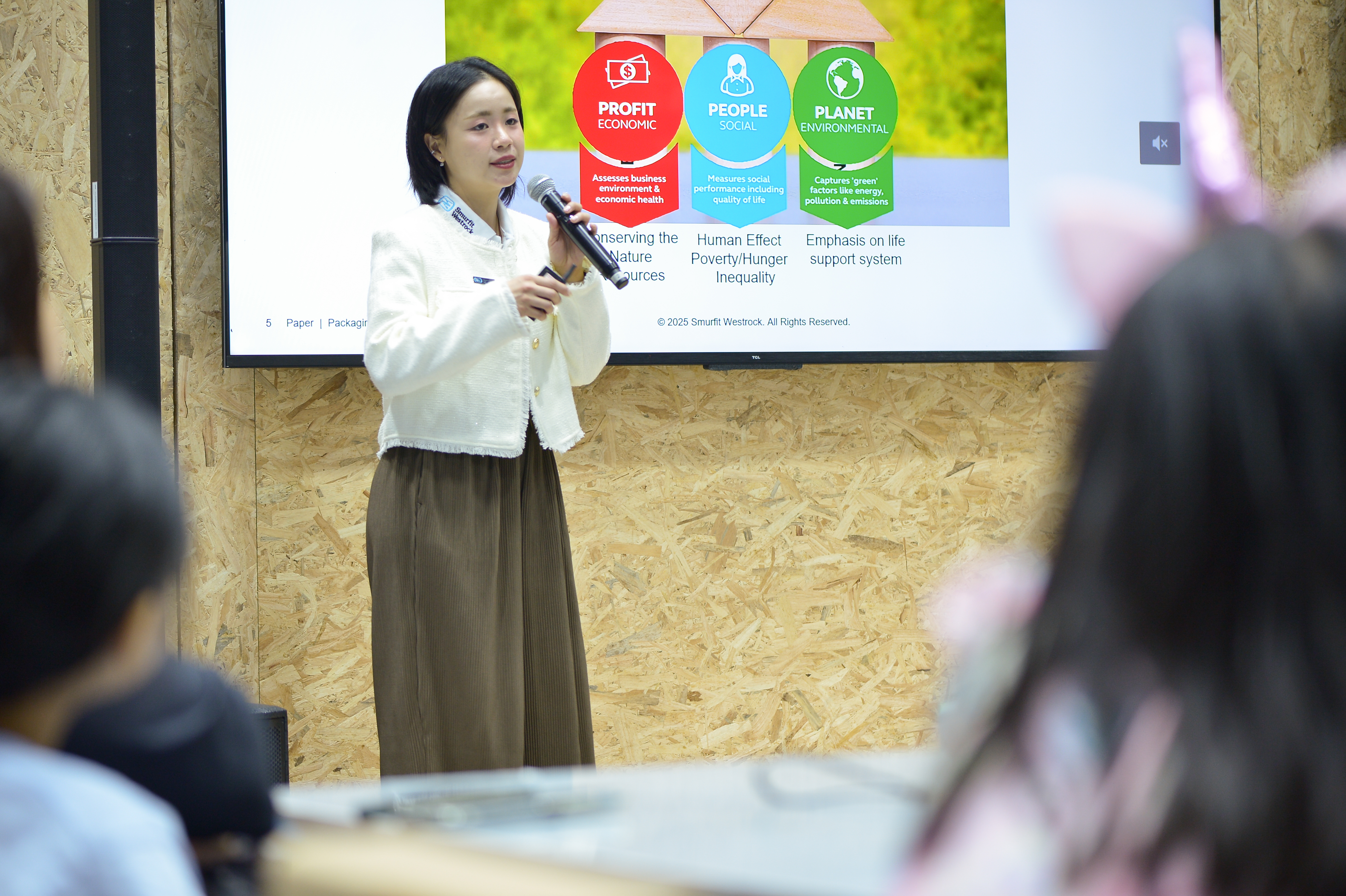
WestRock focuses on sustainable development under three main keywords: Planet, People and Community, and Impact. The workshop reinforced that resource stewardship can begin with ourselves through waste separation, reuse, or transforming used materials into new items.
Ms. Benyapa Lertleelakitcha from WestRock (Thailand) Co., Ltd. provided an interesting perspective: "A sustainable world is created by Gen S (Gen Sustainability). With sustainable hearts, people must adapt and collaborate to care for resources, to grow together. Anyone can be Gen S if we all work together to protect our resources." We can all create change through simple actions like waste sorting and using reusable products to reduce new production, which releases more carbon. Ms. Benyapa also emphasized that the environmental situation is now an urgent problem requiring everyone's collective care.
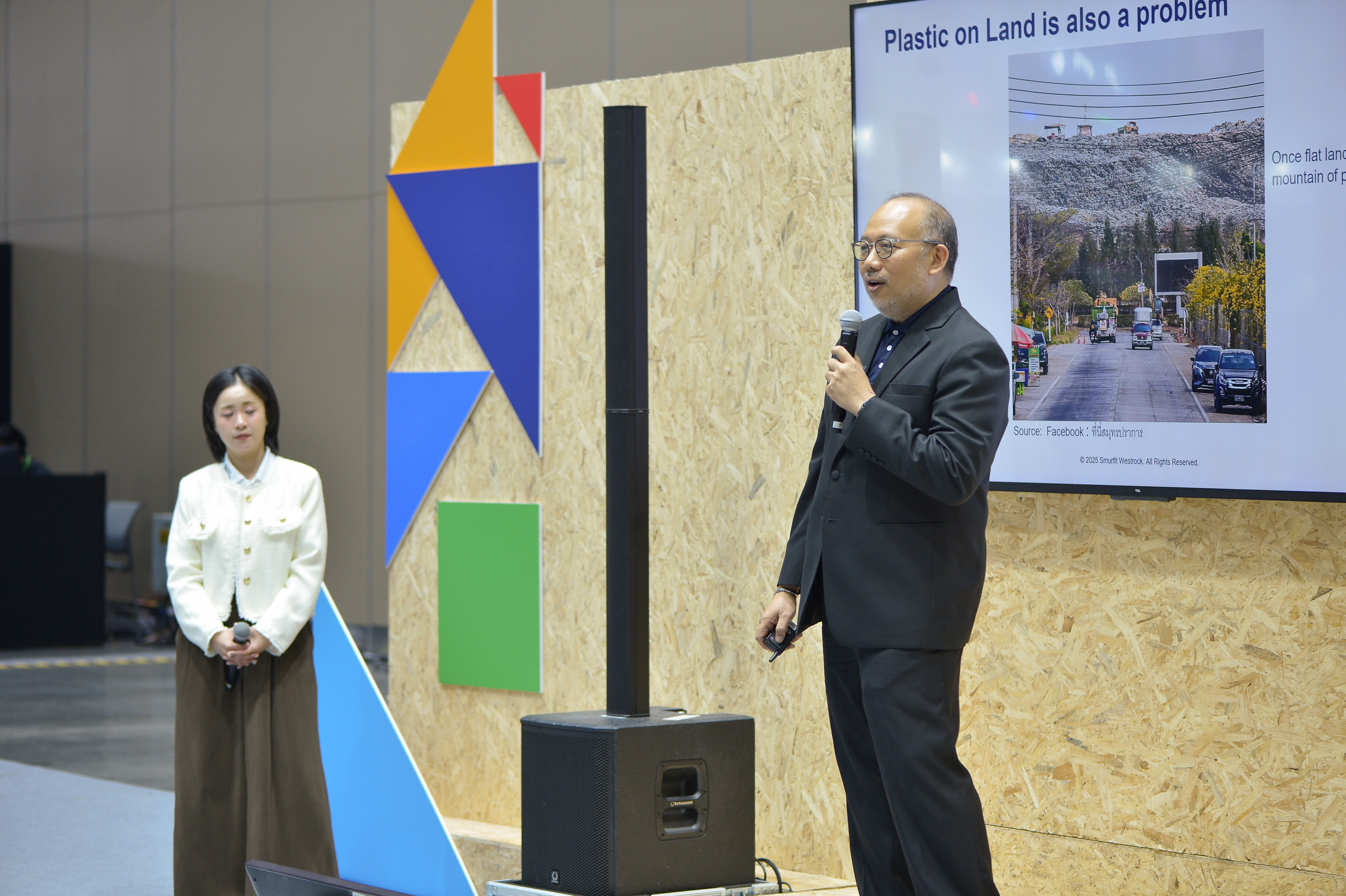
Mr. Sakporn Mathayomchan, Country Manager of WestRock (Thailand) Co., Ltd., revealed global waste figures, stating that a vast amount of waste is managed by traditional methods like landfill and incineration, with only 2 percent being properly recycled. This means we must extract large amounts of natural resources to produce new goods. Mr. Sakporn thus stressed the importance of bringing various types of waste into the recycling process to produce raw materials for new products. "The key to our journey to sustainability is realizing our resources are limited, thinking carefully about how we use them, and collaborating to care for them, passing them on for future generations to use."
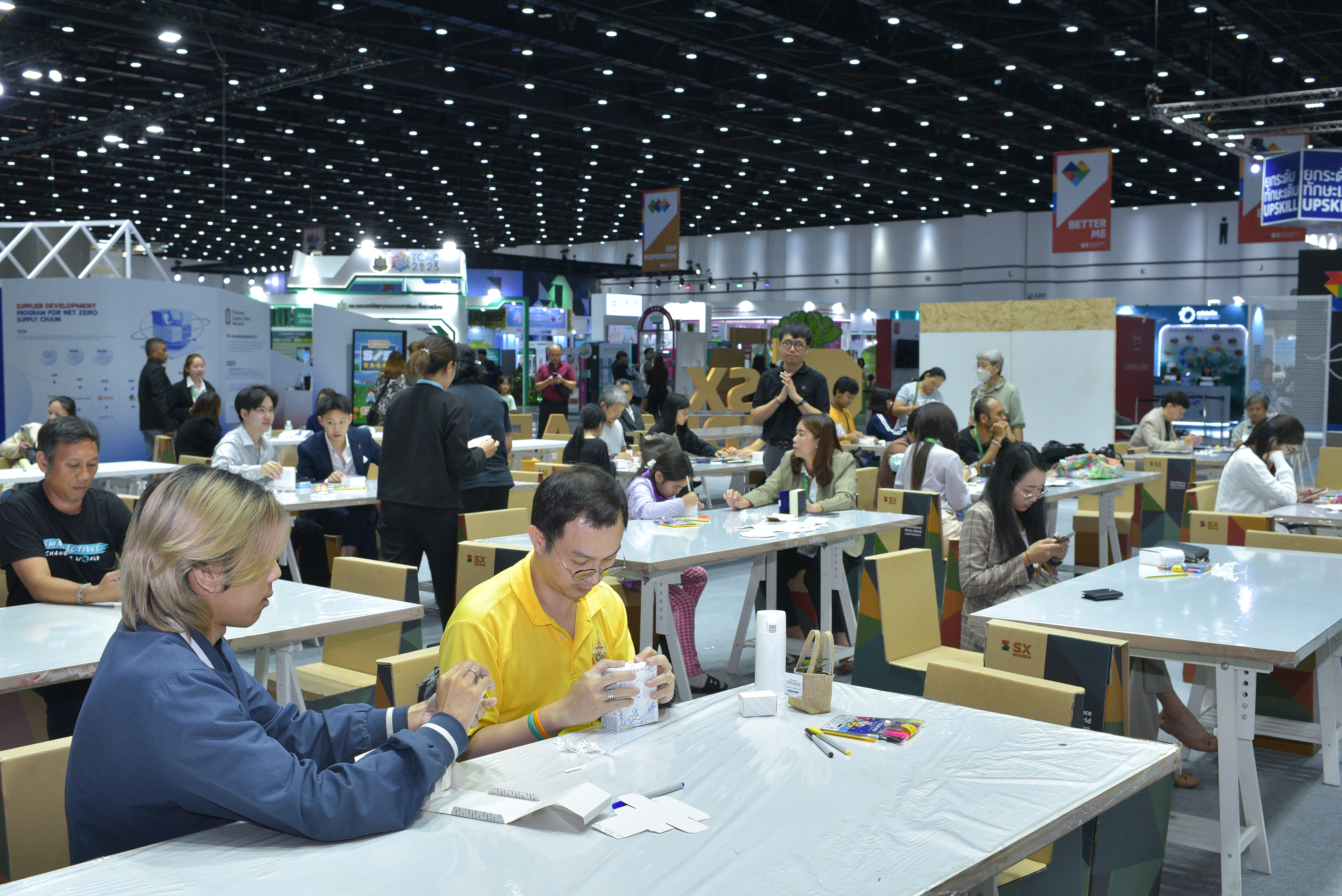
This workshop taught Reuse and Recycle concepts by giving new value and life to items that may seem useless, such as paper packaging. Participants crafted these materials into useful items based on their own imagination, such as hats, cooling cup holders, phone stands, and baskets. The workshop saw diverse participation across age groups, including children with their families and groups of friends, all enjoying the creative process. It served as another activity allowing everyone to spend quality time together while applying the concepts of reuse and recycling to other aspects of their daily lives.

Manage Money Wisely for a Long and Secure Life
In the dimension of personal sustainability, Dr. Kawin Poopoksakul, Director of Investment Products at Land & Houses Bank, presented a discussion on "Manage Money Wisely for a Sustainable Life." He emphasized the necessity of financial planning to cope with longer lifespans, predicting that children born in 2024 may have an average life expectancy of 100 years.
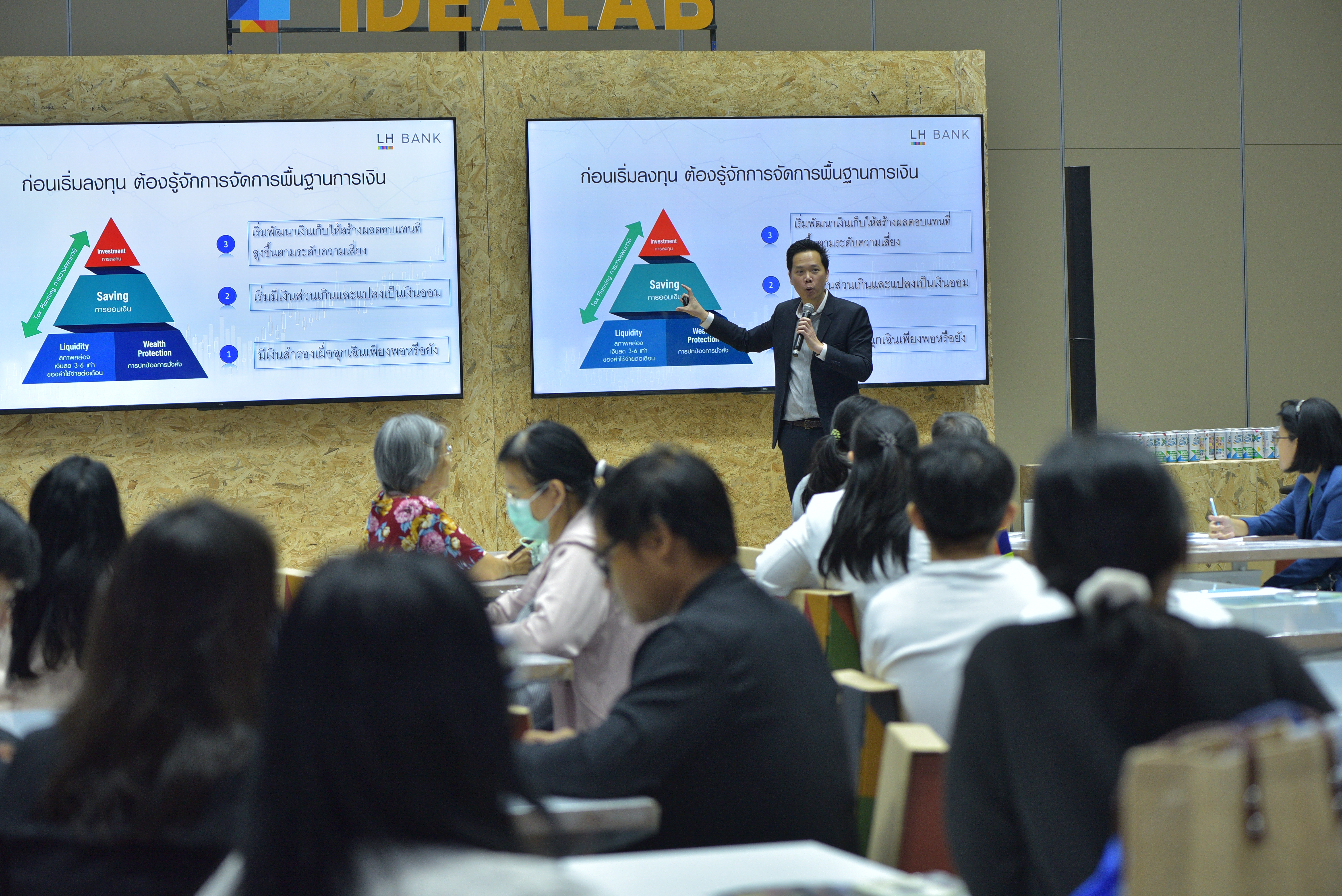
Dr. Kawin stated that 90% of Thais today cannot survive retirement, and simply saving money without the help of interest is difficult. Therefore, having a strong financial foundation is paramount, comparing it to a standard triangle that must start with a solid base:
-
Liquidity and Protection (The Base): One should have at least 2 years' worth of expenses in emergency cash (not just 3-6 months as in the past) to weather economic crises, along with health insurance due to rising medical costs.
-
Investment (The Peak): Only begin investing after the base is secure.
For investment strategy, Dr. Kawin stressed that investing is "Discipline," not "Skill." He recommended the DCA (Dollar-Cost Averaging) strategy, or buying consistently, which yields better average returns than trying to time the market. For new investors, the focus should be on diversifying investments into Index Funds or large indices like the SET 50 or S&P 500 to mitigate risk.
Furthermore, to prevent running out of money before the end of one's life (Diminishing Return), it is essential to create "Streaming Income." This is done by investing in assets with monthly/quarterly dividends (like high-dividend stocks or funds), allowing the financial market to pay a "salary" during retirement while the principal remains intact.
The discussions and workshops by TSCN members at this event thus reaffirmed the commitment of Thai businesses to drive sustainability concepts, from the micro-level of everyday products to strategic planning for long-term financial security.