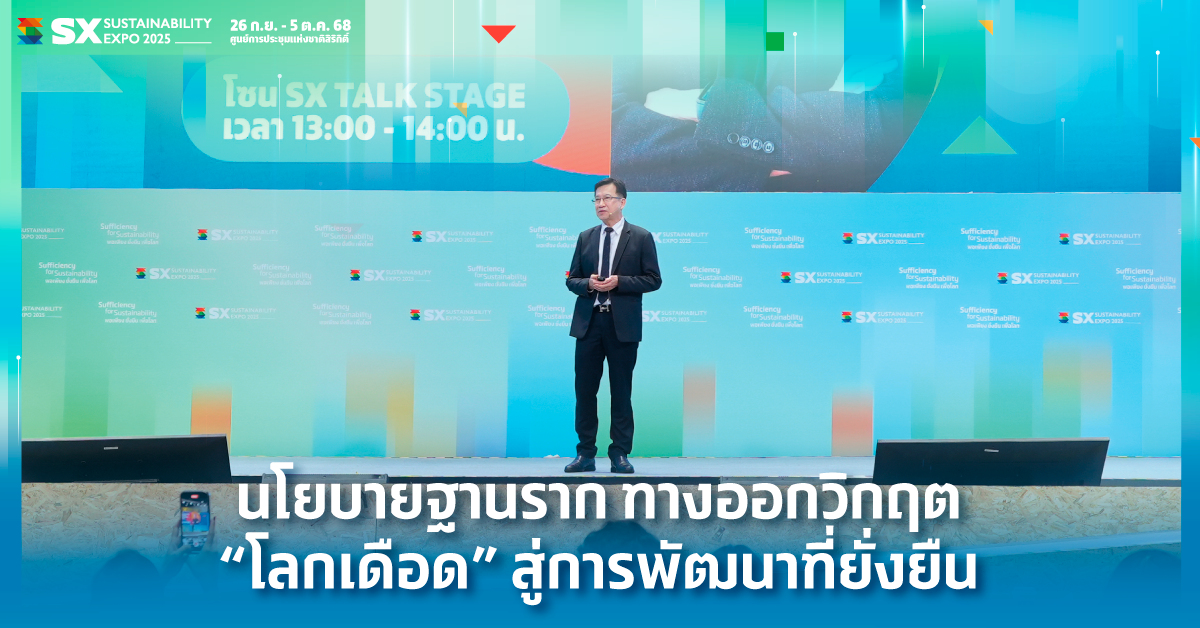
In an era where the world is not just "heating" but entering "Global Boiling," and facing complex, interconnected crises (Poly-crisis)—be it economic fragility, rising inequality, or severe disasters—the key question is: Who truly controls the nation's development trajectory? If policy continues to flow "Top-down," under the influence of capital groups, how can communities—the owners of resources and those directly affected—survive sustainably?
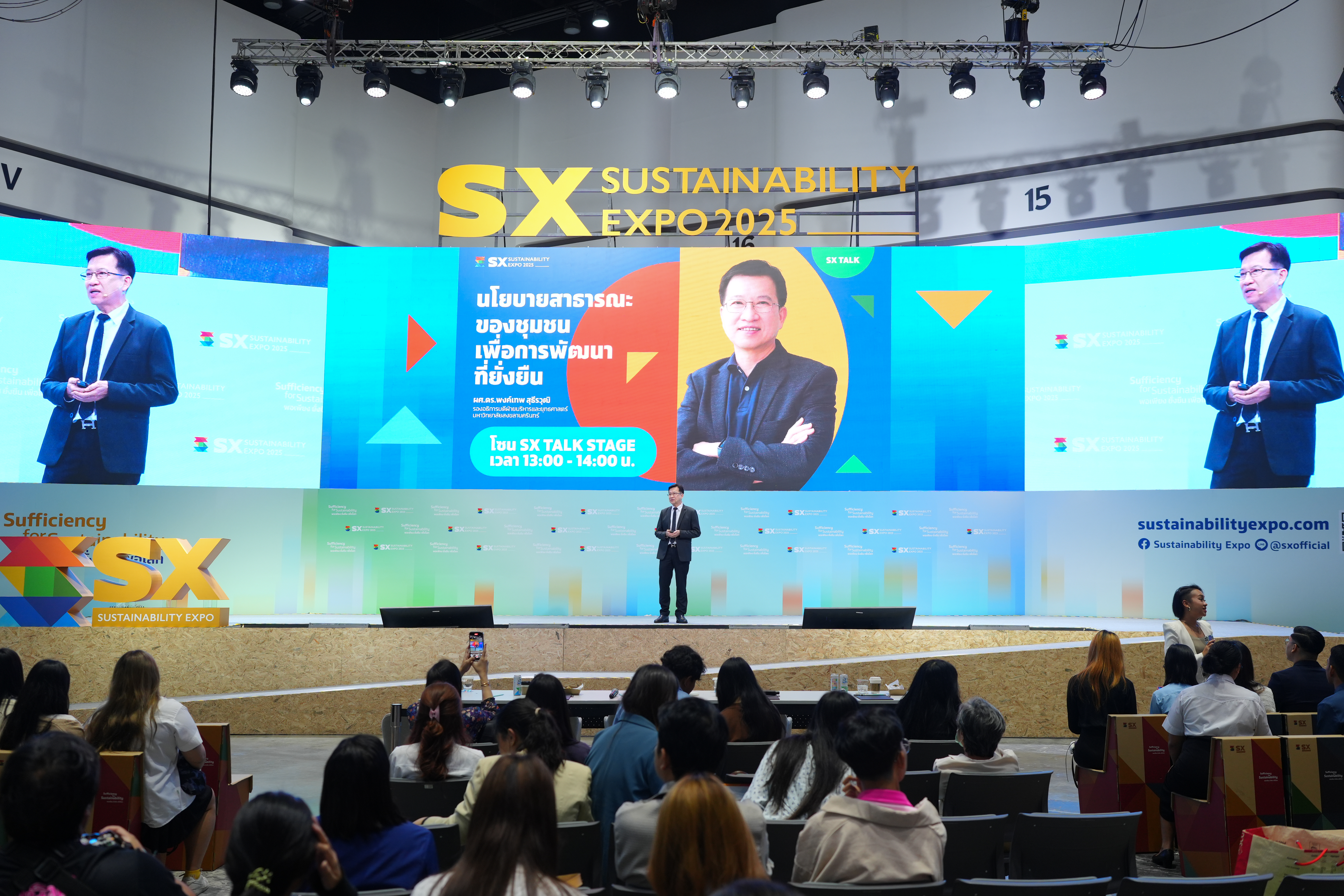
A critical discussion on the SX TALK STAGE, part of SUSTAINABILITY EXPO (SX2025), ASEAN's largest sustainability exposition, titled "Community-Based Public Policy for Sustainable Development," was honored by Assistant Professor Dr. Pongthep Sutheravut, Vice President for Administration and Strategy at Prince of Songkla University (PSU). He shared concepts and experiences in creating channels for grassroots policy-making.
A Crisis Within a Crisis: When the Nation's Structure is Weak
Asst. Prof. Dr. Pongthep Sutheravut began by highlighting the structural crisis Thailand faces, which impacts sustainability in three main dimensions: the economy, society, and natural resources/environment.
The economy remains highly fragile, with communities struggling to access markets and capital. Social inequality continues to rise, with the top 20% of the population holding over 80% of the nation's assets and land. Furthermore, critical structural problems include rampant corruption , outdated laws and regulations, and a lack of the rule of law.
These problems are challenged by global changes, whether it be technological advancements in AI, the aging society, or global geopolitical volatility. Thailand's weak structure leaves it lacking the capacity to cope.
Dismantling "Top-Down" Policies That Serve Capital Groups
The speaker analyzed that the state's current policy-making mechanism is often a top-down process. For the most part, policies are pushed by large capital groups that control political parties, meaning the resulting benefits prioritize capitalist interests over those of the public.
"Although everyone believes policies are issued to solve problems for communities and the people, in reality, many policy proposals are dictated by the political and capital sectors."
Creating Channels for the Public to "Rise Up and Manage Themselves"
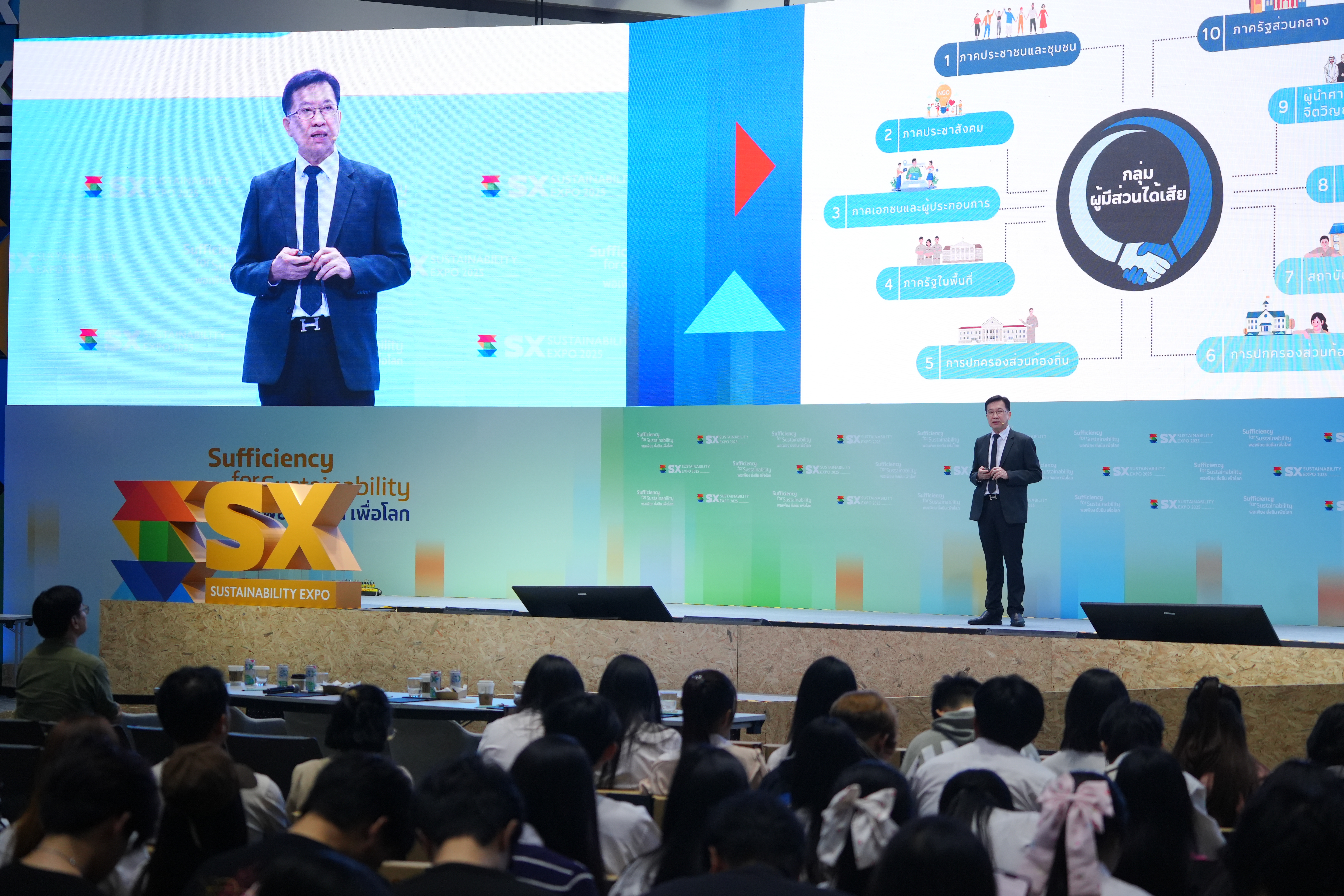
To create development that is truly sustainable and aligned with the local context, Asst. Prof. Dr. Pongthep proposed that there must be a public policy process driven by collaboration and participation from all sectors (Bottom-up).
One key successful example is the use of channels under the National Health Act, B.E. 2550 (2007), which mandates the creation of Health Charters (ธรรมนูญสุขภาพ) and the Health Assembly (สมัชชาสุขภาพ). This framework expands the definition of "health" beyond just illness to cover comprehensive "well-being" (สุขภาวะ), including economic, social, and environmental aspects. The Health Assembly process brings representatives from all sectors to debate, develop policy proposals agreed upon by all parties, and submit them to the Cabinet (ครม.) for implementation.
Other mechanisms also reflect this grassroots power:
-
Area-Based Mobilization (The South): Prince of Songkla University (PSU) has spearheaded a process to "create well-being in the South" (สร้างสุขภาคใต้), focusing on 4 areas of security (food, human, resources, health), and has added "economy" to align with the area's genuine needs.
-
The Role of ThaiHealth (สสส.): The Thai Health Promotion Foundation (สสส.) works with local communities to push policy proposals derived from on-the-ground operations. This includes driving critical issues such as controlling the e-cigarette epidemic, managing road safety (where Thailand has one of the world's highest accident rates), creating a food system for well-being, and empowering communities to care for psychiatric patients and manage the environment.
-
The SEA Chana Case Study (Songkhla-Pattani): To resolve the conflict over the push for the "Advanced Future Industrial Model City" project (in Chana District), which locals opposed, the NESDC (สภาพัฒน์ฯ - Office of the National Economic and Social Development Council) partnered with PSU. They used the Strategic Environmental Assessment (SEA) tool, inviting all sectors to over 200 forums to define a shared vision. The result was a new development direction: a "Southern economic hub based on resources and cultural diversity," not rejecting the economy, but demanding a sustainable one.
Deciding with "the Human Heart"
Asst. Prof. Dr. Pongthep emphasized a crucial principle for policy-making born from this participatory process:
"Even if academic studies show that an industrial estate is financially worthwhile, if that industrial estate causes hardship or suffering for any single group or community, it should not be done."
Therefore, the academic work used by Prince of Songkla University is not judged by academic evidence alone; rather, that academic evidence is used to "make decisions with a human heart." This, he stated, is the key to achieving true social sustainability and human security.
The speaker concluded by stating that the public policy process should not be limited to being only a state duty. It requires integration and cooperation among all sectors of society to define policies that aim for the sustainable development of Thailand.