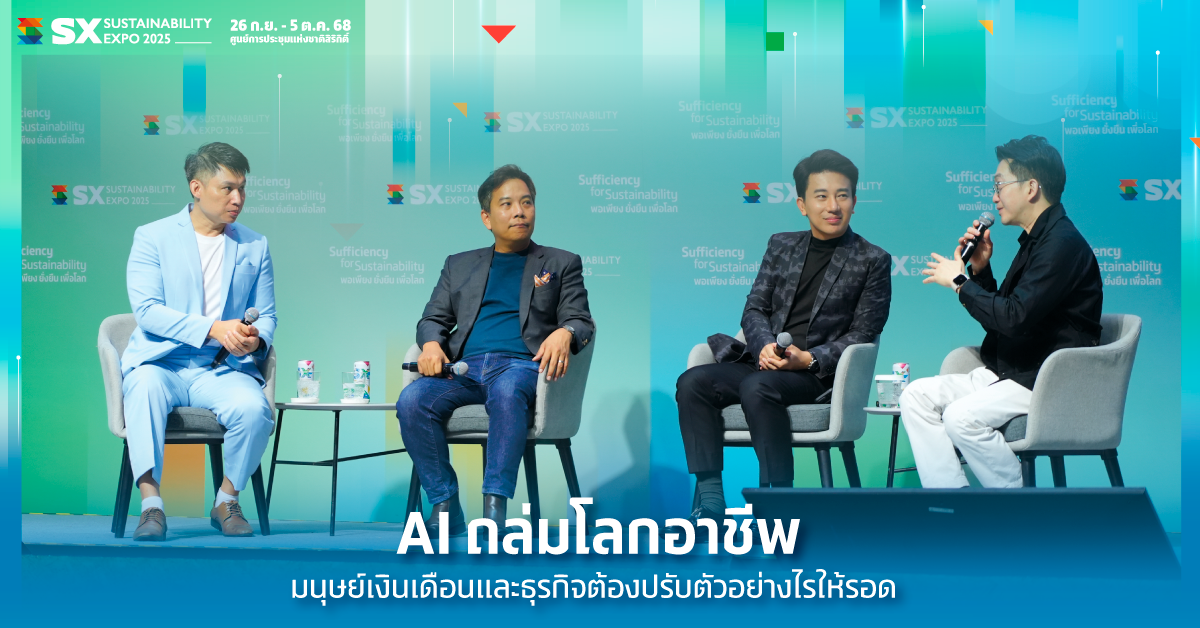
When robots begin serving food and chatbots replace entire sales departments... the most terrifying question for today's workforce is not "Will AI replace us?" but rather, "If we don't start learning and adapting today, how much longer will we have a place in the organization?"
This was the critical issue intensely debated on the SX TALK STAGE, part of the SUSTAINABILITY EXPO (SX2025), ASEAN's largest sustainability exposition. The session was held under the topic "AI READY ERA: AI Changes the World. How Brands, Businesses, and Salaried Workers Must Adapt to Survive."
The discussion was honored by leading experts from various industries, moderated by Mr. Pattramate Rammancey (Brand Strategist and Marketing Coach, owner of the 'Jakkawan Nai Kratik' page). Esteemed panelists included Ms. Vanatsara Vongsamut (CEO of Tamaya), Mr. Choson Thatawakorn (CEO of Ausara Surface & Textile), and Mr. Sarun Koongbunpot (HR Leader from a leading financial institution).

The Harsh Reality: 58% Who Have Not Adapted Are Facing the Disruptive Wave
Insights from the HR and strategist perspectives highlighted the urgency of adaptation. Mr. Sarun Koongbunpot revealed a global trend: 42% of large organizations worldwide (with over 10,000 employees) have already begun to seriously adopt AI. Research predicts this proportion will surge to 74% by 2027. This means the 58% of employees who have not yet accepted or adapted to AI are in a position that requires serious reconsideration.
This situation is not a distant threat; it is rapidly replacing repetitive and pattern-based jobs. Ms. Vanatsara Vongsamut, an entrepreneur who transitioned her business from "Intelligent Strategies" (running ad campaigns) to full automation, gave a striking example: a single AI chatbot system can replace 4-5 employees who answer repetitive questions. In some cases, such as a business managing 3,000 SKUs, a single AI system can answer questions and perform better than 50 salespersons, leading to actual layoffs of an entire department.
Mr. Sarun Koongbunpot also warned that, in the worst-case scenario, 6-7% of Job Families will completely disappear by 2026 due to AI replacement. The groups at highest risk are those in repetitive roles, administrative functions, single-function jobs, and those who lack "Side Skills" and refuse to learn or adapt.
Humans Must Become the "Controllers" and "Conductors" of the AI Era
However, all speakers agreed that AI is not the enemy, but rather the "New Wrench" (ประแจยุคใหม่) or "tool" that we must learn to use correctly.
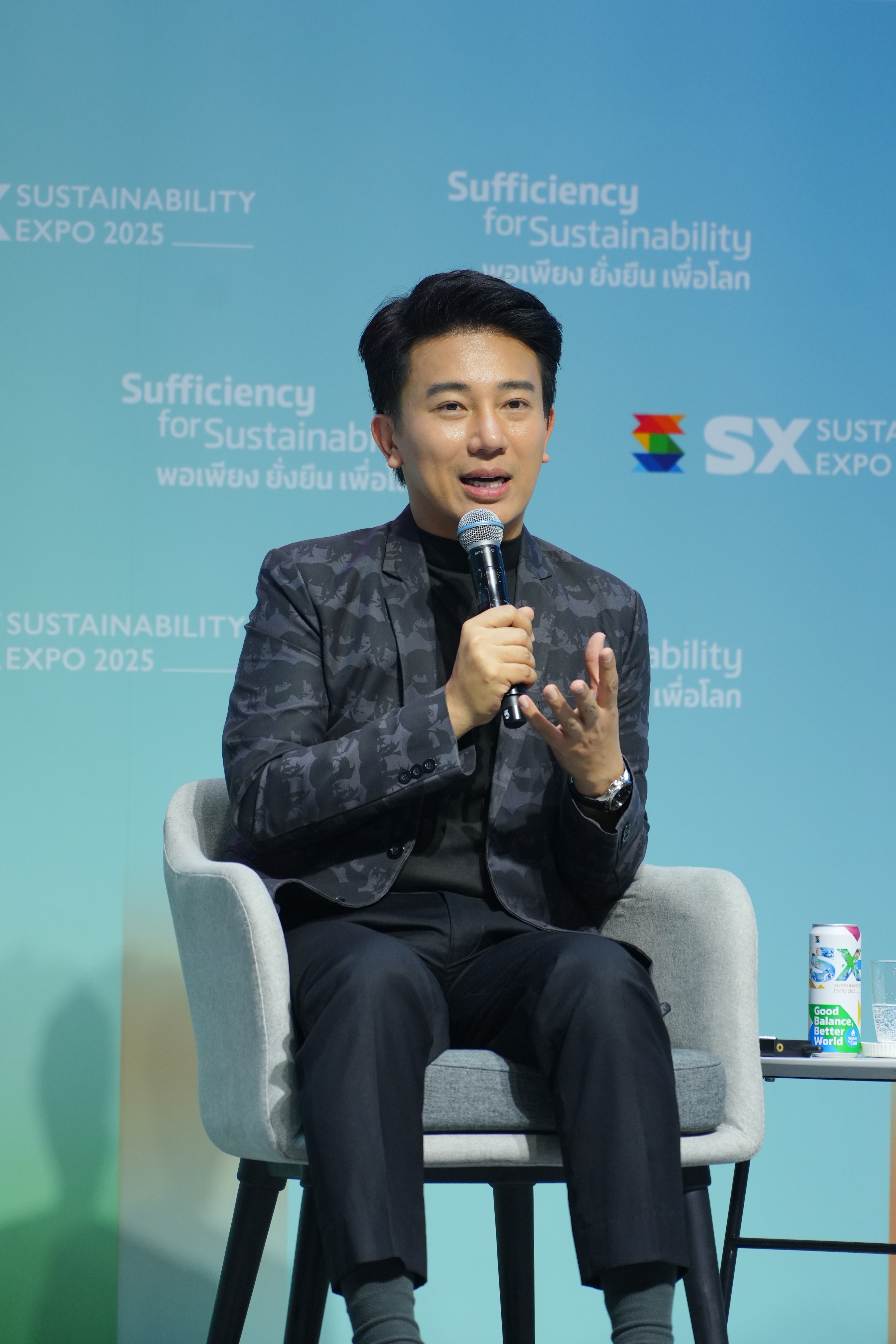
Ms. Vanatsara Vongsamut emphasized the shift in the worker's role from "The Doer" to "The Controller." Employees must use their creativity and imagination to control the AI to be as skilled as themselves. She compared it to shifting from being a musician to being the "Conductor" of an orchestra. The most crucial skills in this era are Adaptability and the pursuit of new knowledge.
For organizations, Ms. Vanatsara dreams of the company becoming a "Shadow Human" (องค์กรกลายเป็น Shadow Human) that can still generate revenue even without its founder, where employees are responsible for extracting Logic and serving as architects who control the various AIs.
The Three Pillars of Survival: Intention, Imagination, and Imperfection
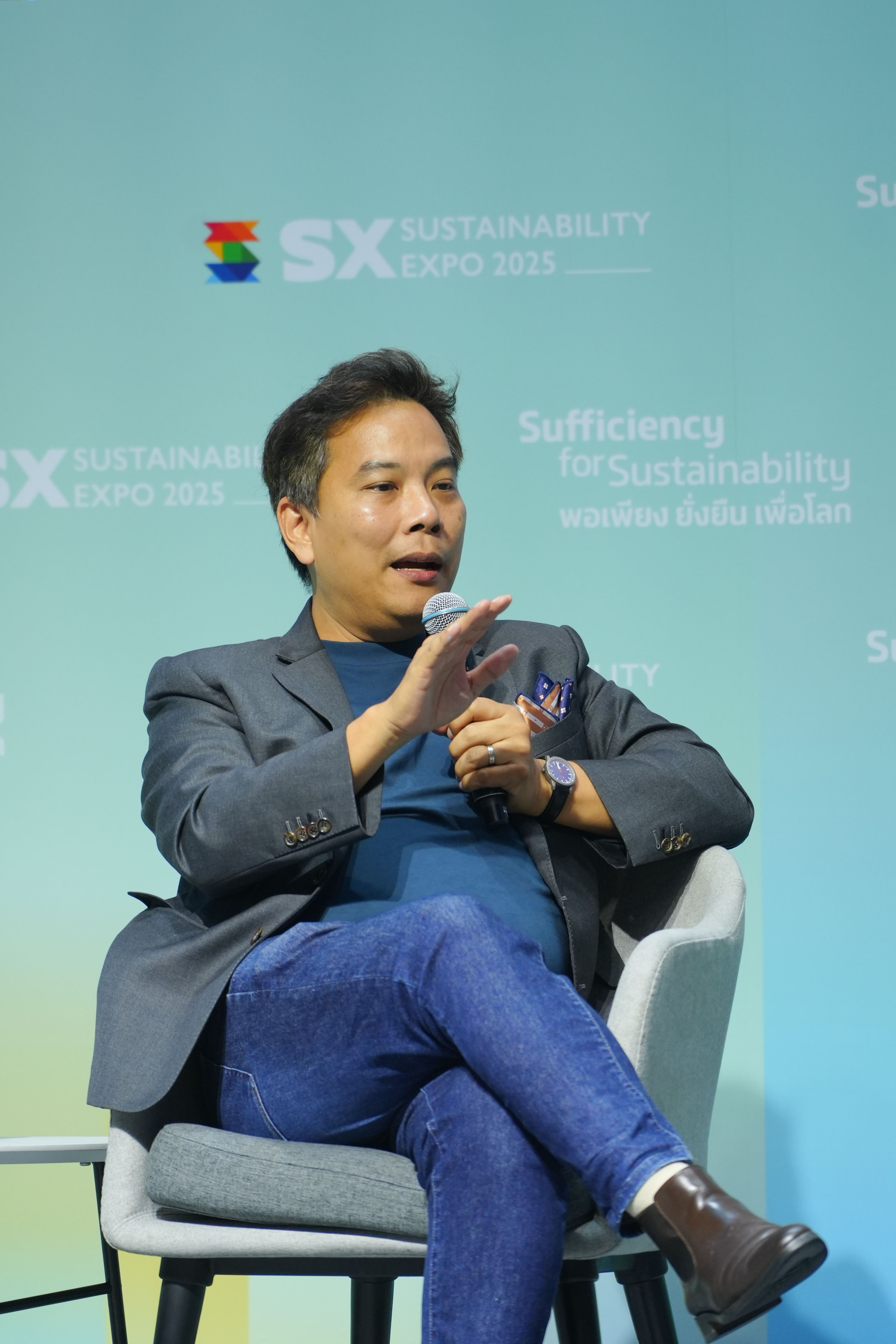
In creative fields like that of Mr. Choson Thatawakorn, AI actually increases GDP because it allows people to take on "Matrix Job Descriptions" (working across multiple roles). But the core element that allows humans to survive and stand apart from machines is the "brain" or "discretion" (ดุลยพินิจ) that AI lacks.
Mr. Choson proposed a 3-point "toolbox" for survival—qualities that AI cannot truly replicate:
-
Intention (เจตจำนง): AI can create millions of high-quality works but lacks the intention to deliver or close a sale.
-
Imagination (จินตนาการ): Humans possess the ability to "Leap Calculate"—to think unbound by historical Big Data or to create images that have never existed, which computers cannot do.
-
Intentional Imperfection (ความไม่สมบูรณ์แบบโดยเจตนา): The deliberate infusion of humanity into work. AI-generated work often has a standardized "Perfection" that lacks an emotional dimension.
Adaptation Begins with Leaders: Opening New Doors for Employees
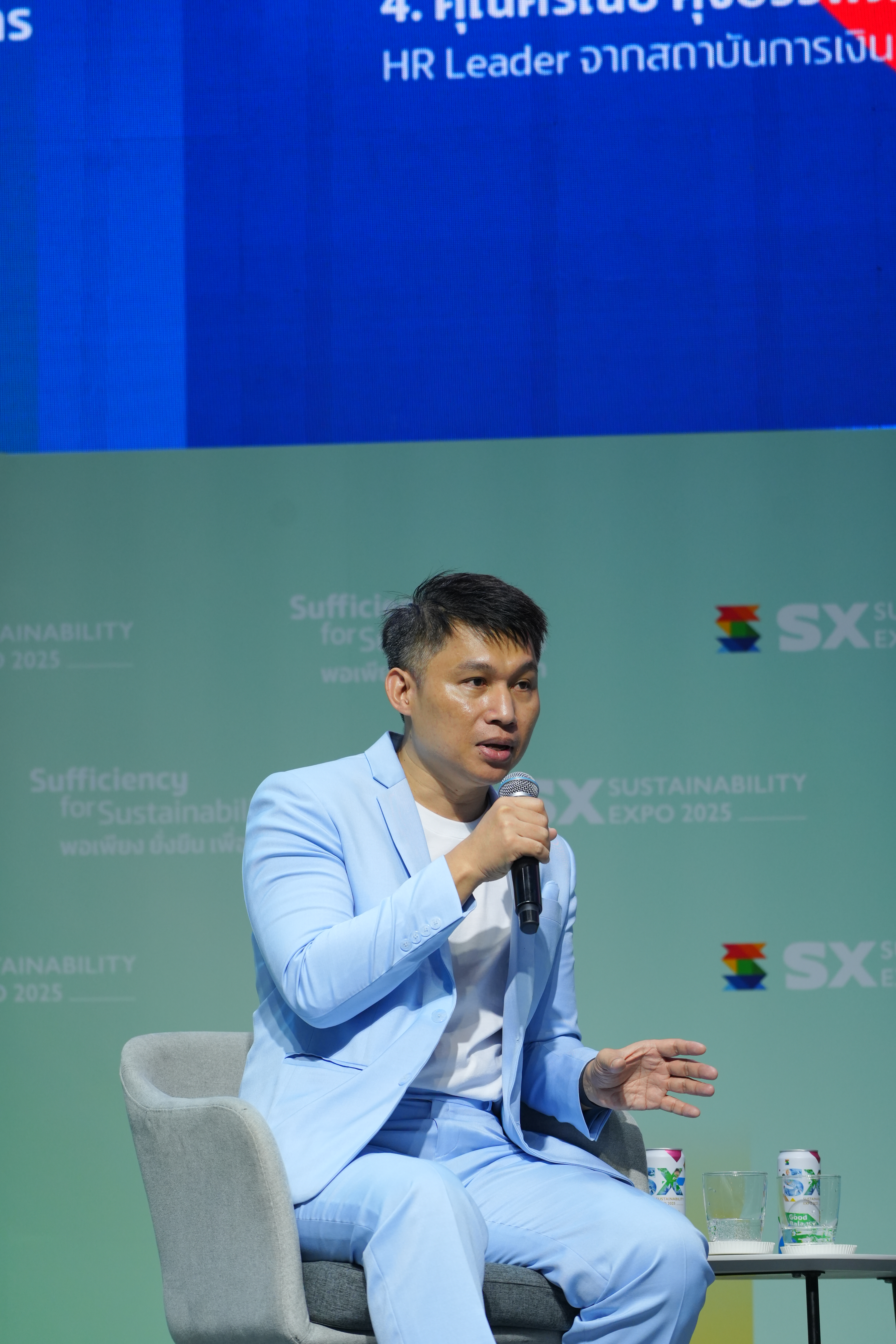
From an HR perspective, Mr. Sarun Koongbunpot stated that the reason many organizations remain "Strict" and rigid, failing to encourage employees to use AI or innovate, depends on "Top Management." Leaders who are strict and seek control will pass this DNA down, stifling innovation.
Mr. Sarun stressed that leaders must change their "Mindset" and create an environment where employees feel AI is not a danger coming to replace them, but a tool to improve their lives. This is done by showing employees "Success Cases" through real-world implementation and by building a new "Thought Ecosystem" (Ecosystem ทางความคิด) that makes using AI feel like a natural part of life.
Ultimately, the session sent a critical message to the 58% who have not yet adapted: Even as the old door closes, a new one is opening, just as 200-300 new job types emerged during the internet era. Therefore, instead of allowing themselves to be blocked, humans must pick up the "sword" and "wrench" of AI to build a new door for themselves—by holding fast to humanity, creativity, intention, and imagination to move forward defiantly alongside technology.