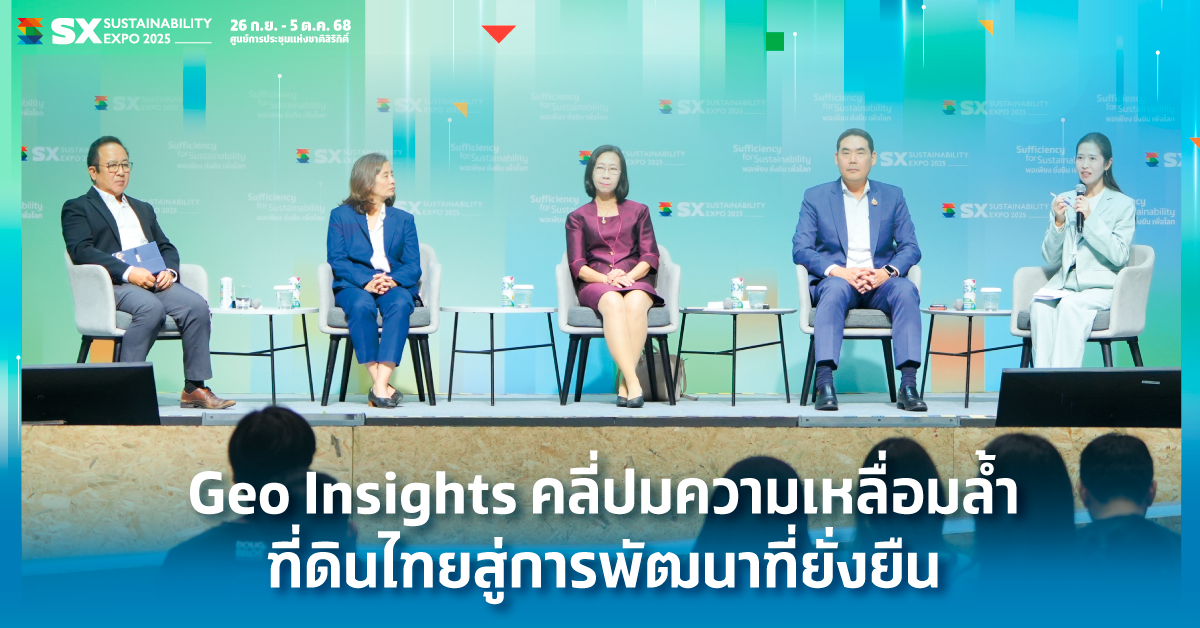
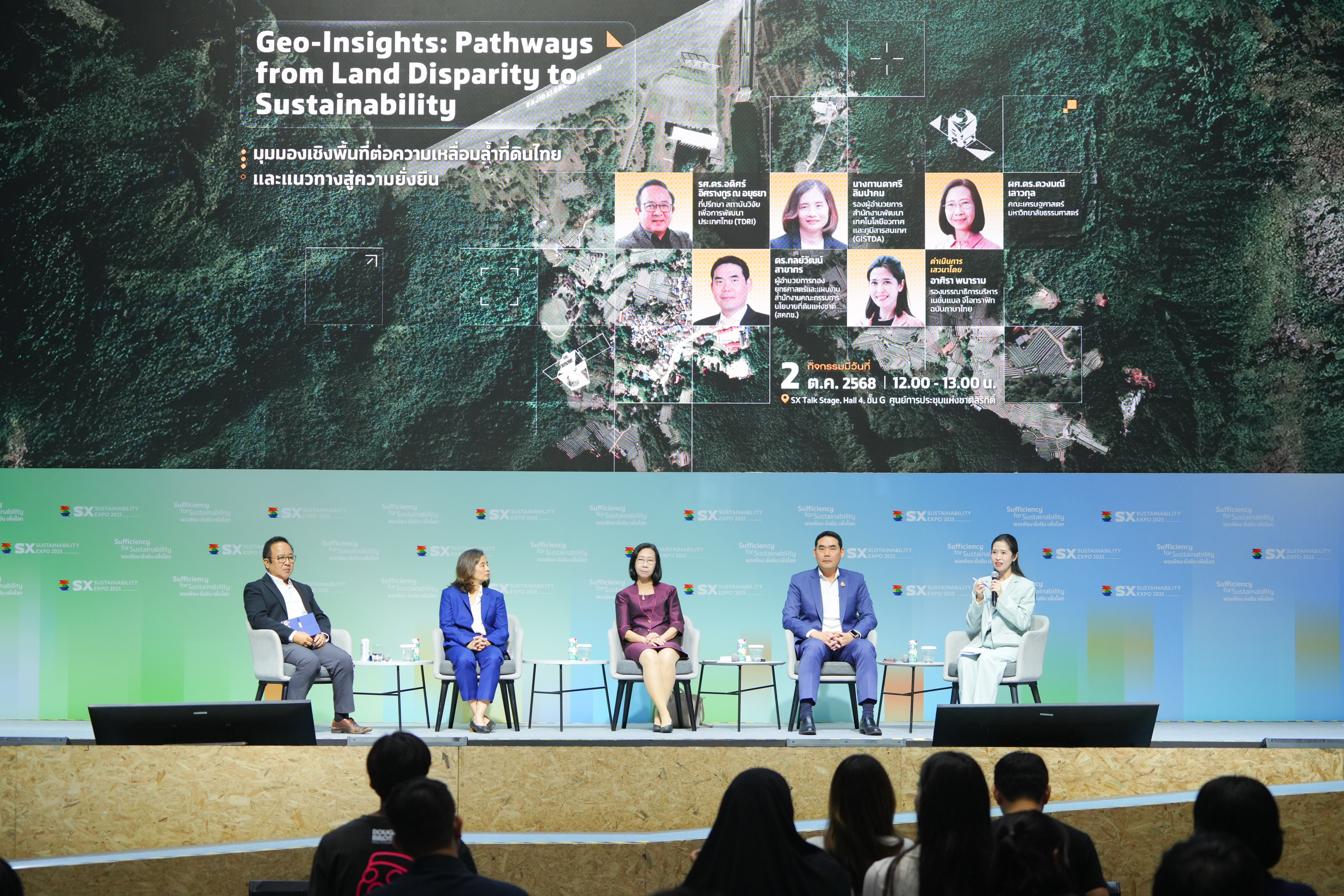
Within SUSTAINABILITY EXPO (SX2025), ASEAN's largest sustainability exposition, a discussion was held on the SX TALK STAGE, a platform for exchanging knowledge and sustainability experiences from leading global organizations. This compelling session was titled, "Geo-Insights: Pathways from Land Inequality to Thailand's Sustainability." It aimed to collectively open crucial perspectives on solving the inequality in land ownership and utilization through the presentation of spatial data, satellite imagery, and policy recommendations, all in search of a path toward fair and sustainable development.
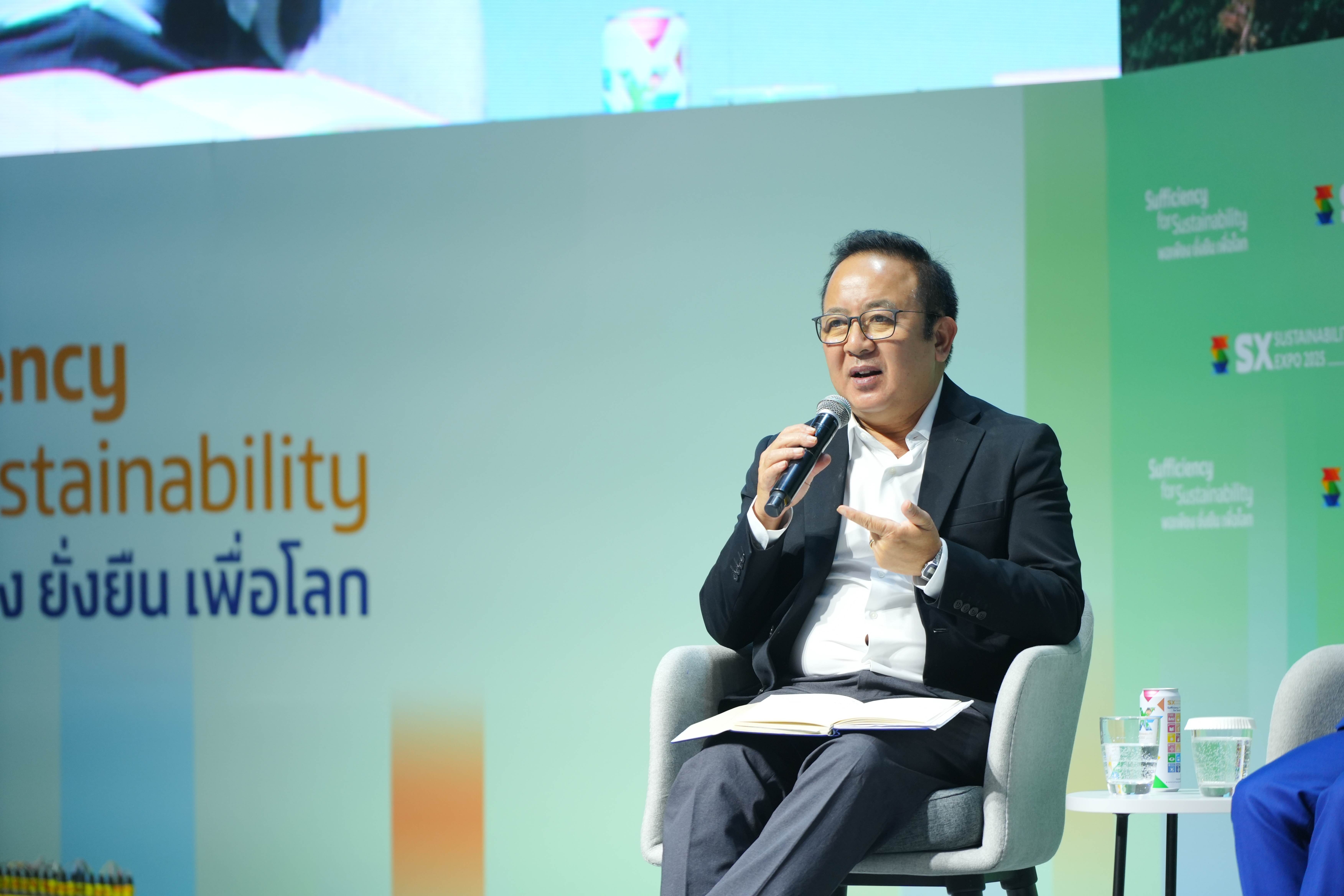
The stage was honored by distinguished experts from various sectors: Dr. Adis Israngkura Na Ayudhaya, Advisor to TDRI (Thailand Development Research Institute); Ms. Kandasri Limpakom, Deputy Executive Director of GISTDA (Geo-Informatics and Space Technology Development Agency); Asst. Prof. Dr. Duangmanee Laovakul from the Faculty of Economics, Thammasat University; and Dr. Konlawat Sakhakara, Director of the Strategy Division, ONLPC (Office of the National Land Policy Committee). The session was moderated by Ms. Asira Phanaram, Deputy Editor-in-Chief of National Geographic Thailand.
Using Technology as Empirical Evidence
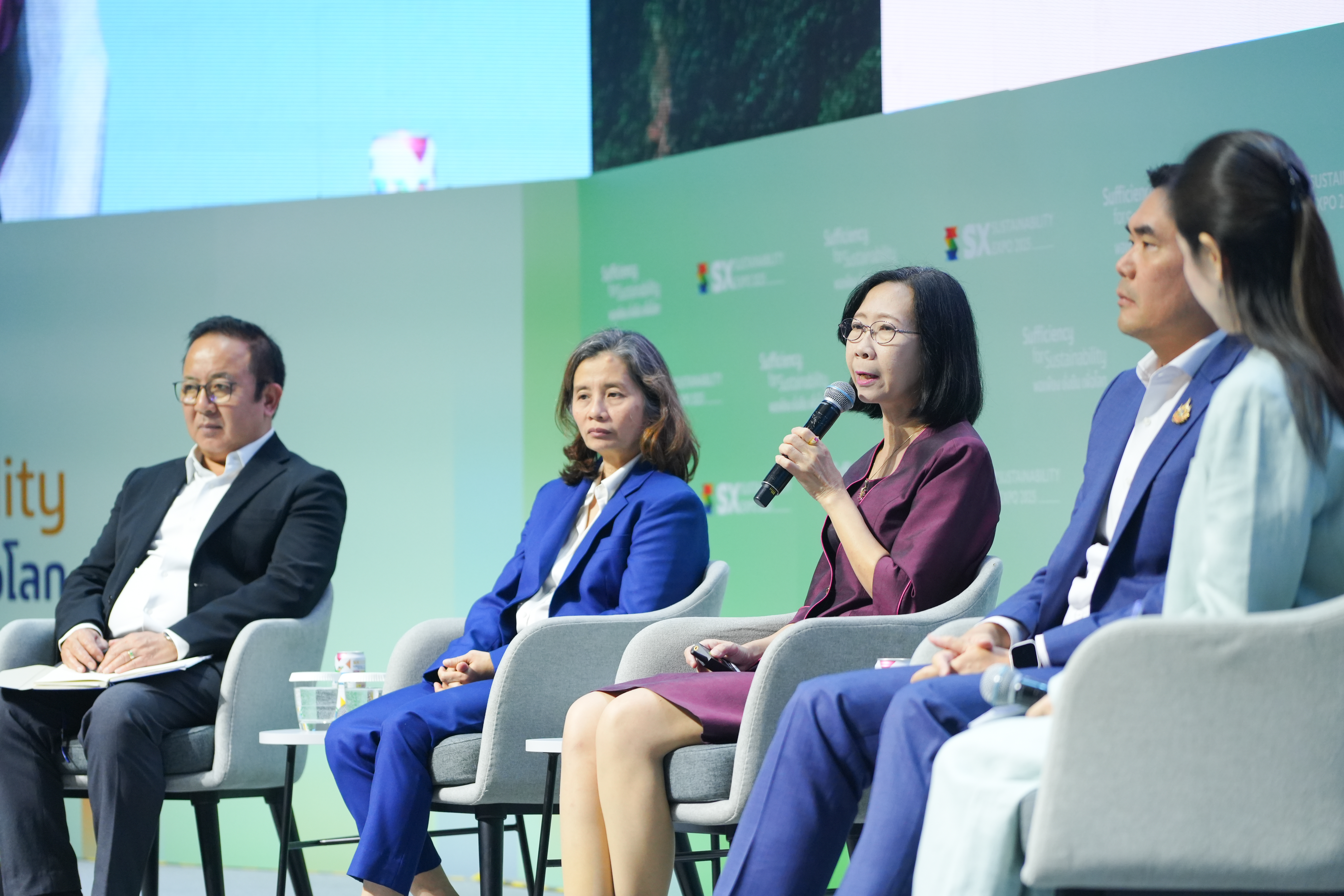
The discussion began by highlighting the shocking phenomenon of inequality. Ms. Kandasri Limpakom from GISTDA revealed that the majority of the country's land is possessed by just 10% of the population, while a large number of people still require access to land for living and livelihood.
GISTDA, the agency for space technology and geo-informatics, proposed that data from satellite imagery can serve as a "tool" for land management and support related policymaking. This geo-spatial data can help monitor the "health of the ecosystem," changes in land use, forest encroachment, and resource degradation.
Satellite surveys revealed that in 2024, Thailand has approximately 3 million rai of abandoned, unused land. This represents a national loss in failing to use land to its full potential. Simultaneously, satellite imagery continues to show persistent inequality, especially in remote areas like Kanchanaburi province, where some populations still cannot access basic utilities like water and electricity because they lack legal land rights.
The Economic Dimension: Inequality from Assets
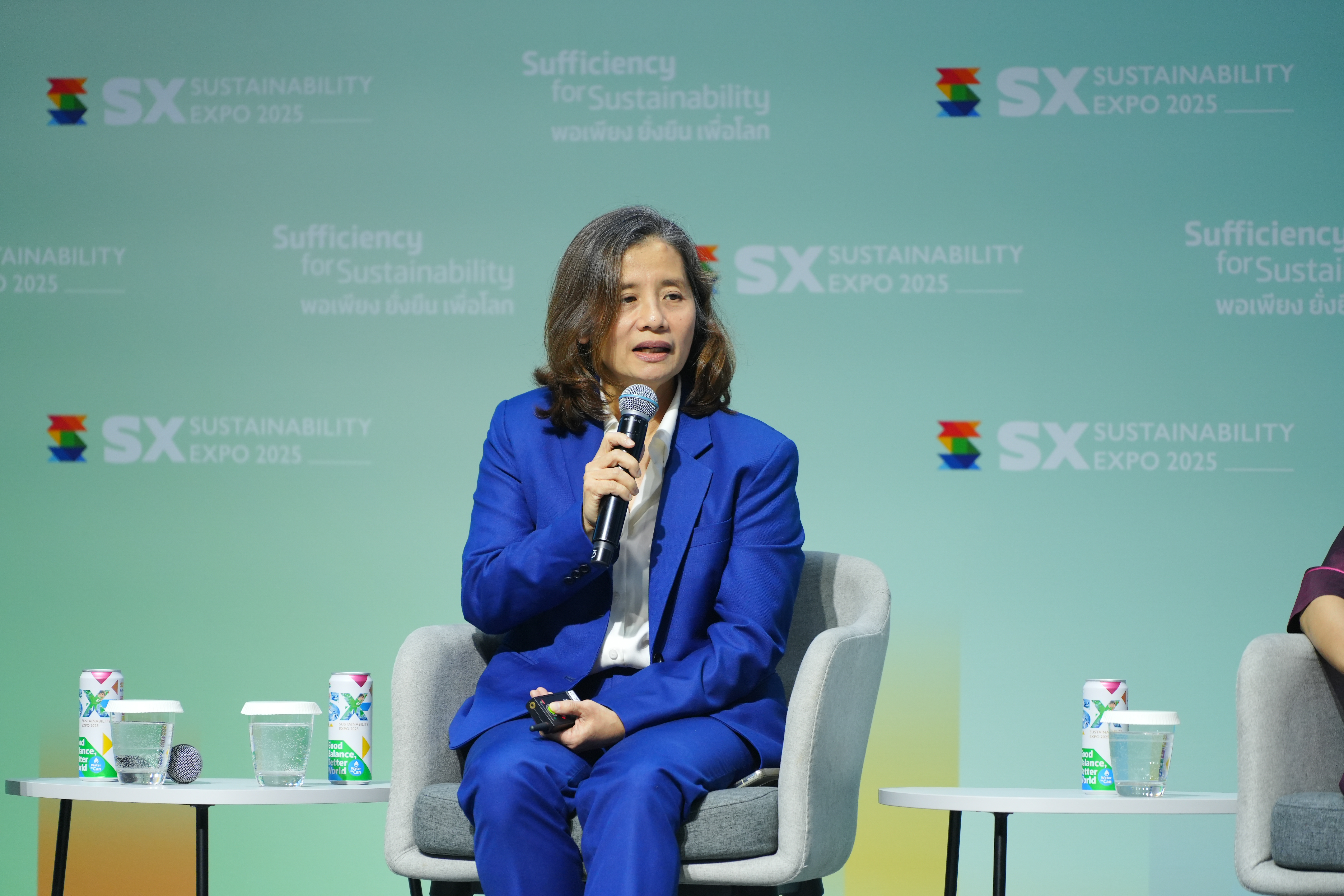
Asst. Prof. Dr. Duangmanee Laovakul presented economic insights, confirming that Thailand unequivocally has an inequality problem. When considering the asset index (excluding income and expenditure), asset inequality is found to be significantly higher than income inequality, with a Gini coefficient approaching 0.6.
Delving deeper into titled land deeds (95 million rai) in 2012, the inequality coefficient was as high as 0.89. The top 1% of owners held one-fourth of all titled land, and the top 10% held 61% of all titled land in the country.
One major cause of this concentration is that Thailand historically lacked a true property tax, which gave people a low cost of holding land and led to accumulative purchasing. Asst. Prof. Dr. Duangmanee thus proposed reform through a progressive land tax based on the size of holdings, or a "Consolidated Land Tax" (ภาษีที่ดินแปลงรวม) for those holding over 50 rai, to reduce concentration. She also suggested mechanisms like a Land Bank or community land titles to provide access for those without arable land.
The Conflict Between Utilization and Land Value
Dr. Adis Israngkura Na Ayudhaya invited the audience to consider the conflict between immediate land use and maximizing land value. He pointed out that the reason land is left abandoned is not always due to the owner's lack of desire to use it, but stems from several factors: basic infrastructure has not yet reached remote areas; unsuitable land plot shapes (e.g., triangular, landlocked); and investments in agricultural use may not be cost-effective.
Furthermore, legal issues are a significant obstacle, particularly laws that protect tenants or squatters more than landowners (e.g., adverse possession laws), which causes owners to prefer leaving the land empty rather than risking someone else using it and potentially not getting it back.
The Role of the State: Solving Towards Sustainability
Dr. Konlawat Sakhakara from the ONLPC (สคทช.) admitted that this inequality is a long-accumulated problem and a primary national issue. Currently, Thailand lacks unity in land management, as there are 84 state agencies across 16 ministries overseeing and applying different laws, which creates overlapping jurisdictions.
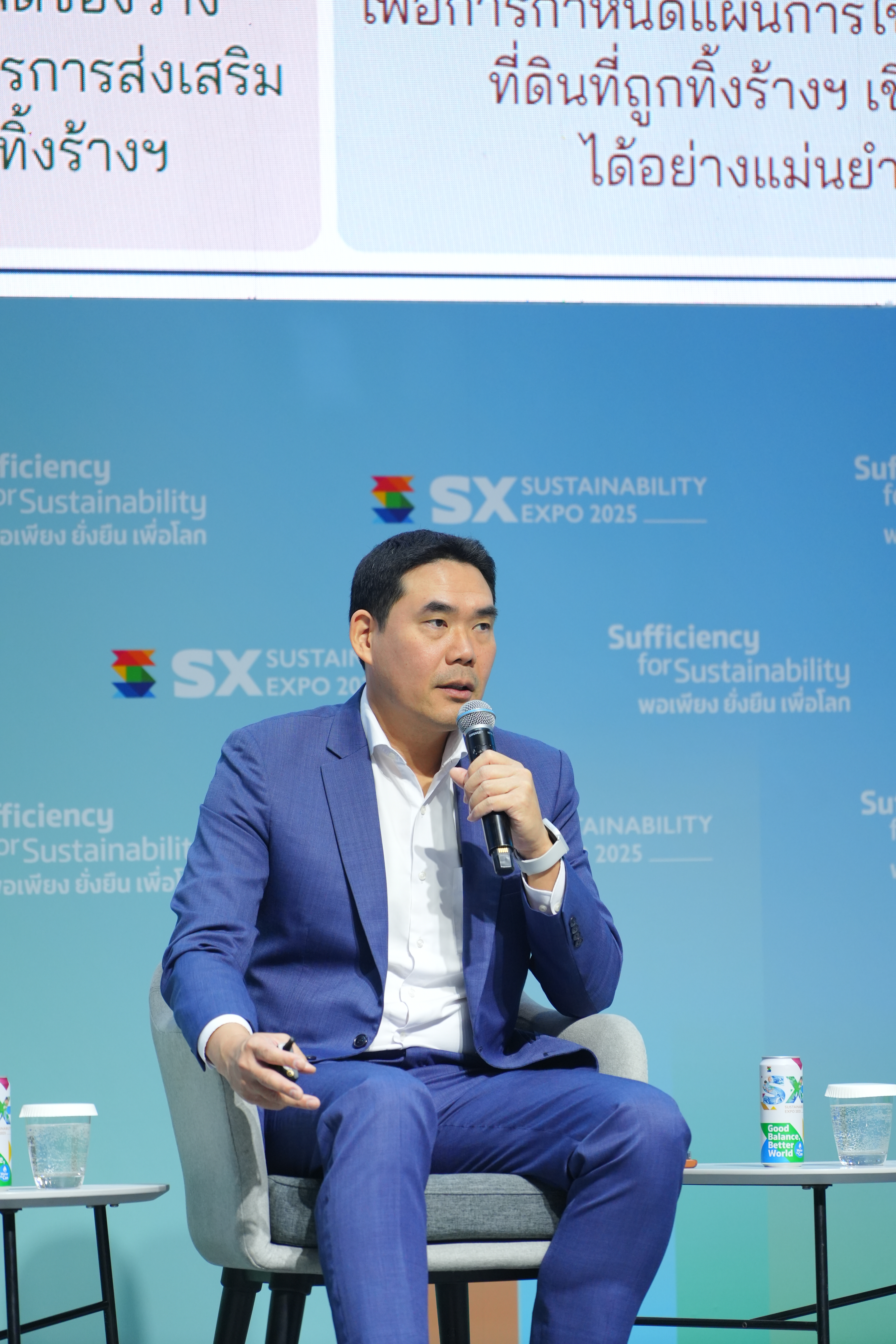
The ONLPC is responsible for creating policies and setting directions to unify the country's land management. It has four main missions, including the conservation and restoration of natural resources and the promotion of fair land distribution.
To solve the issue of arable land, the government uses the mechanism of the National Land Policy Committee (NCLP) (คทช.) to allocate degraded state land to low-income citizens. This is conditional: they can use it for a 30-year long term, it can be inherited by descendants, but it cannot be sold, and they must plant at least 10% perennial trees to care for the ecosystem.
Additionally, the ONLPC works with GISTDA to use satellite imagery to monitor land use in the NCLP areas, ensuring that vocational development and infrastructure planning are appropriately targeted. This system also helps support the certification of produce origins in response to international pressures, such as the EUDR (European Union Deforestation Free Regulation), which mandates that products exported to Europe must not come from deforested areas.
Dr. Konlawat also mentioned the concept of creating tax incentives for private public green spaces in urban areas. This would allow landowners who are speculating on land to turn vacant plots into public recreational areas, incurring a lower tax than leaving the land deserted or "pretending to plant lime trees."
This discussion unraveled the multifaceted problem of Thailand's land inequality—spanning spatial, economic, and social dimensions. It also presented the potential of geo-spatial technology and new policy measures. All parties agreed that solving the land issue is a long-term mission requiring multi-sectoral cooperation, expressing confidence that Thailand has the potential to reduce inequality and find new pathways toward balance and sustainability.