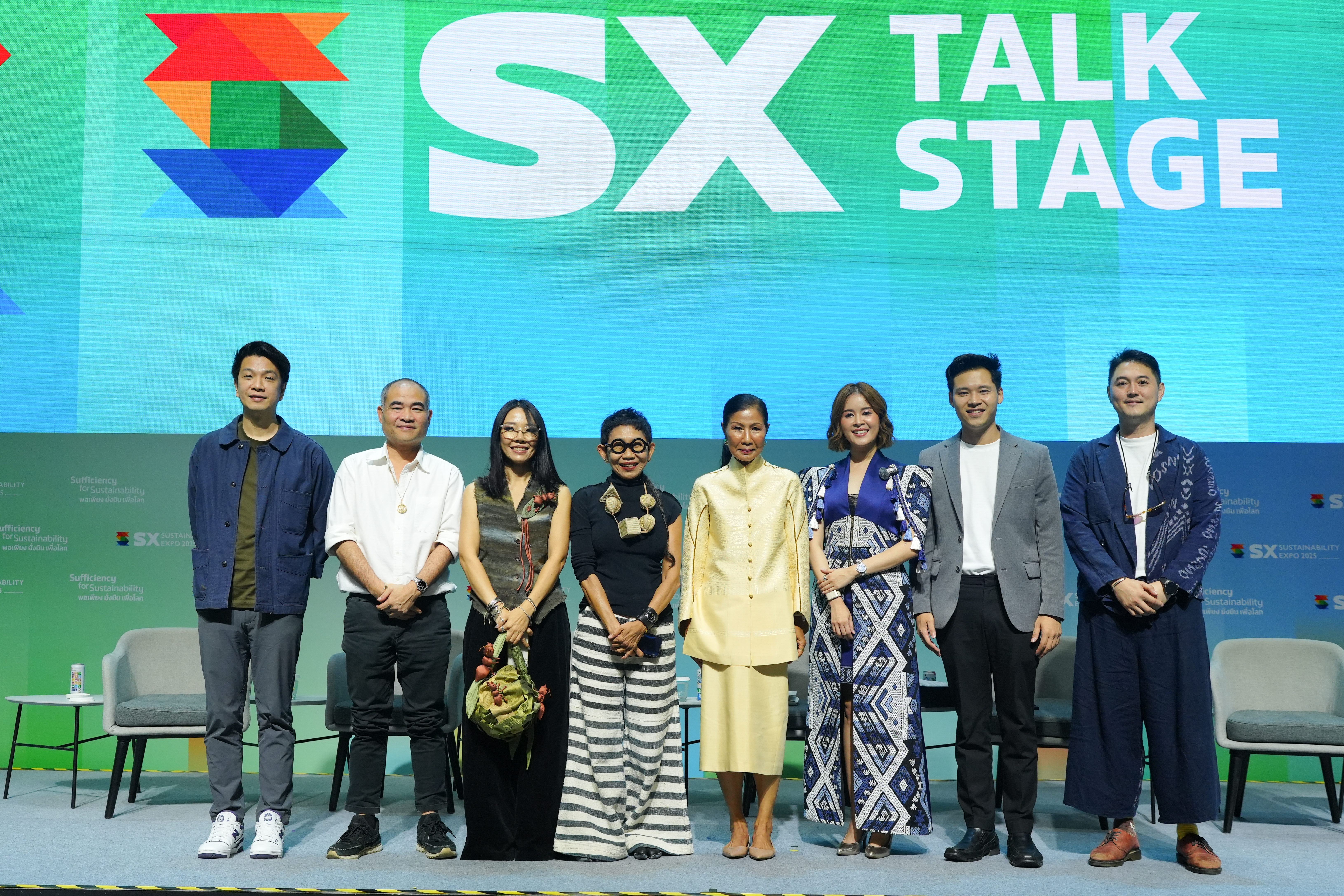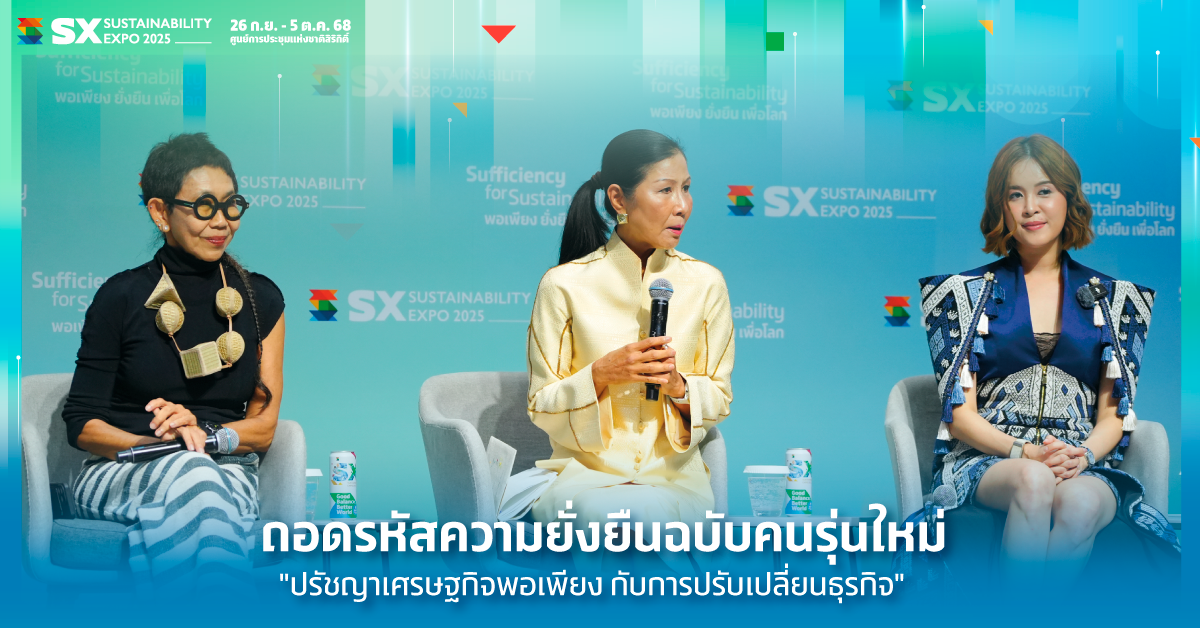
Amidst global economic challenges and crises, the SX TALK STAGE at SUSTAINABILITY EXPO (SX2025), ASEAN's largest sustainability exposition, has opened a new dimension for sustainable business. The discussion, titled "Adapt... Join the Change for a Better World," presented "living proof" of new-generation entrepreneurs who have embraced the Sufficiency Economy Philosophy (SEP) as a framework for adaptation and creating positive social impact.
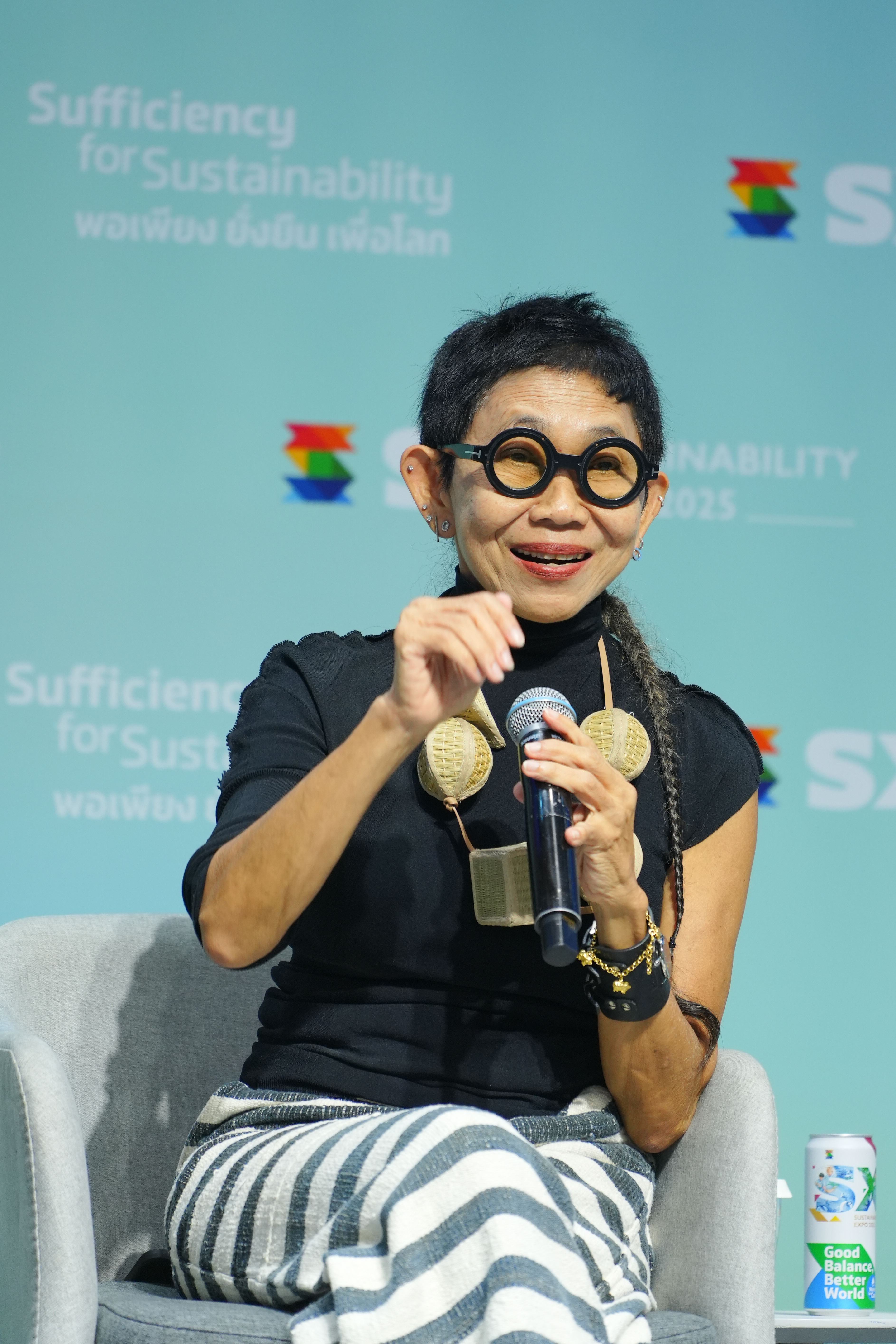
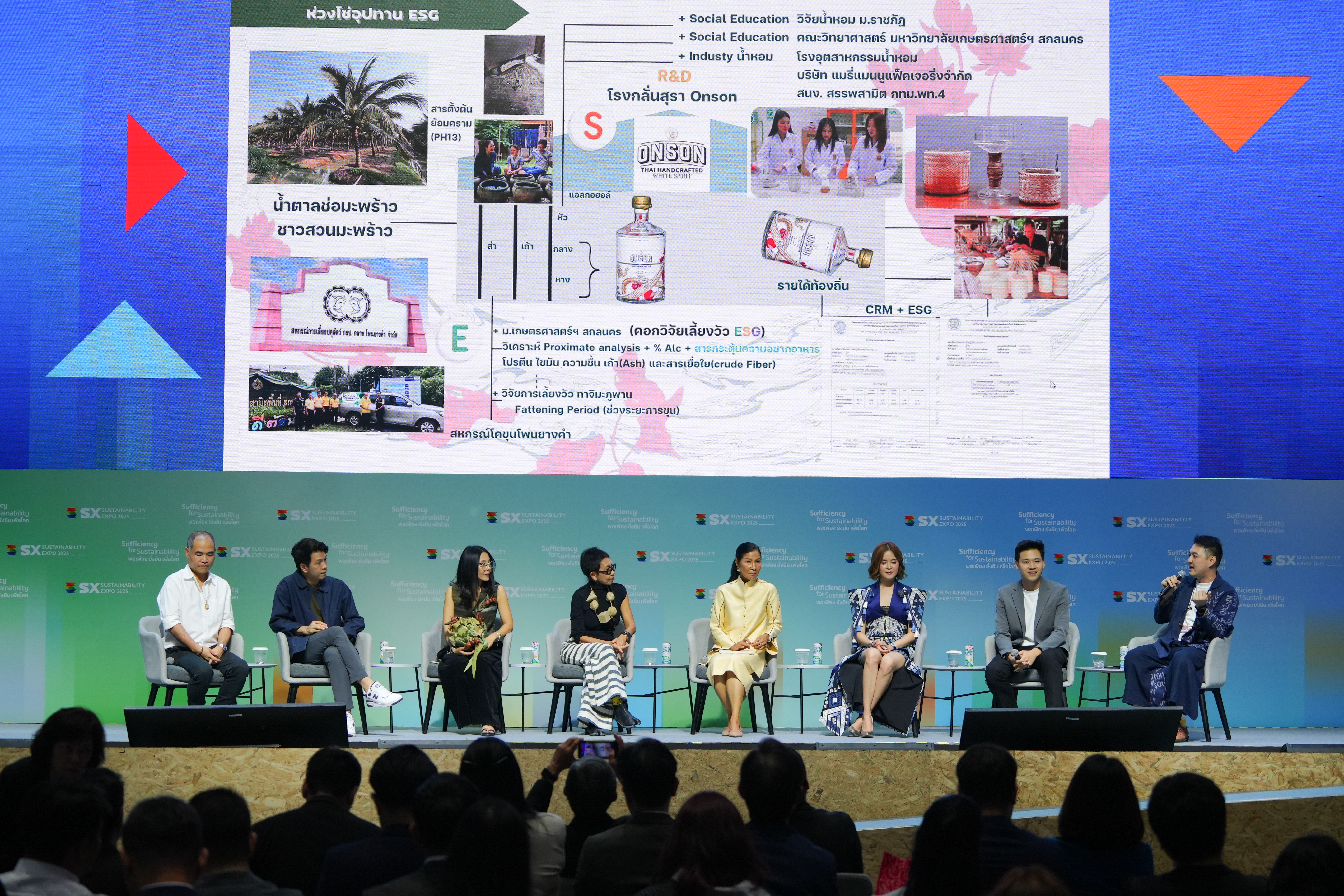
The session was honored by eight distinguished experts and successful entrepreneurs, including Khun Kobkarn Wattanavrangkul, Chairperson of the Sufficiency Economy Committee, Thai Chamber of Commerce; Dr. Sirikun Laokaikul, Director of the "Por Laew Dee" (Sufficiency is Good) Project; and various entrepreneurs from the project who are leading "transformation" across diverse industries.
Sufficiency Economy: A Modern and Universal Principle
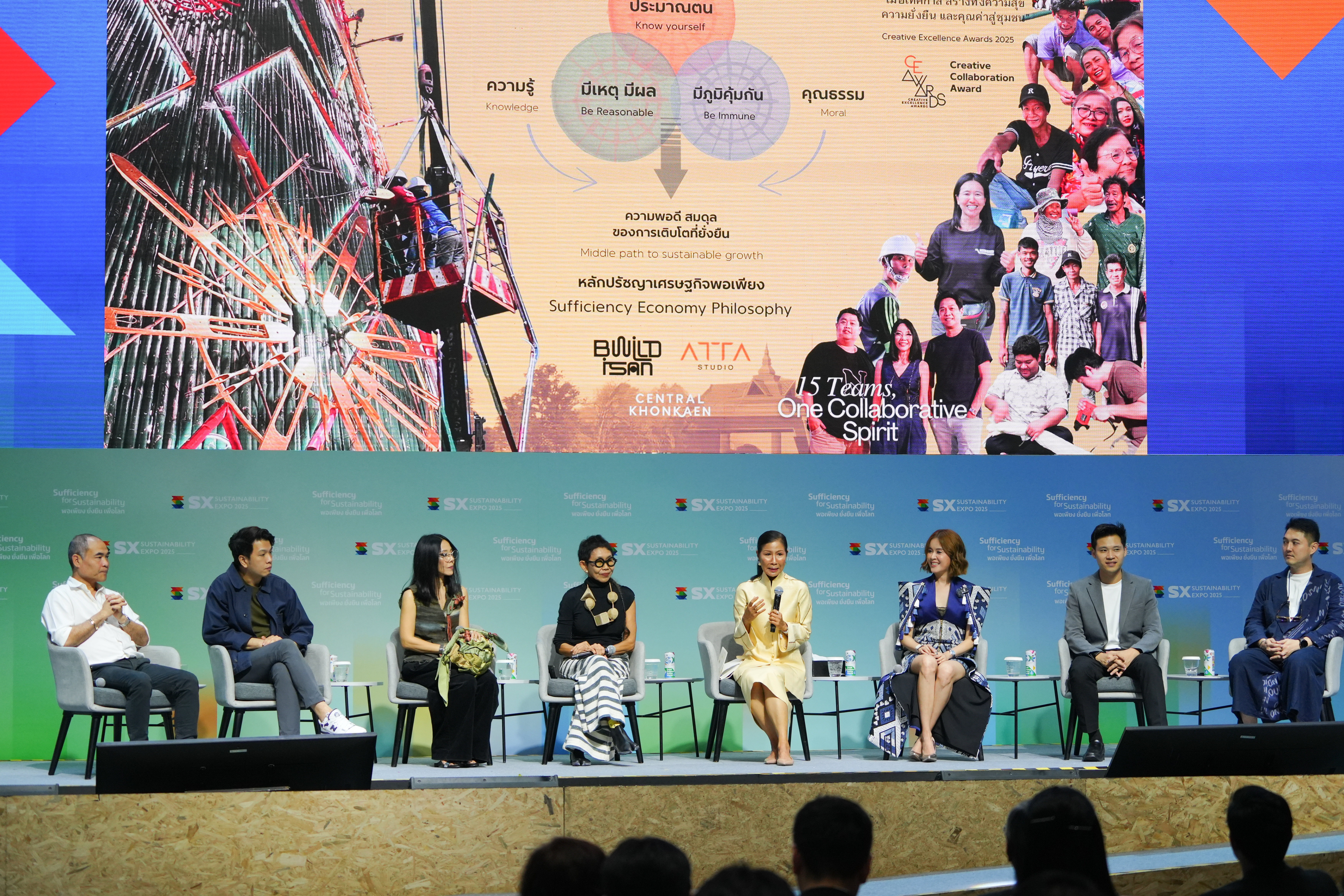
Khun Kobkarn Wattanavrangkul reaffirmed the Thai Chamber of Commerce's strong belief in the Sufficiency Economy Philosophy, stating that it is not outdated but "Timeless." It can be applied to the lives of all people, everywhere, and in every type of business. The philosophy acts as a "reminder," (เครื่องเตือนสติ) helping entrepreneurs proceed mindfully, grow sustainably, and build "immunity, reasonableness, and prudence" (ภูมิคุ้มกัน มีเหตุ มีผล) in their strategic planning. She also emphasized that integrity is paramount.
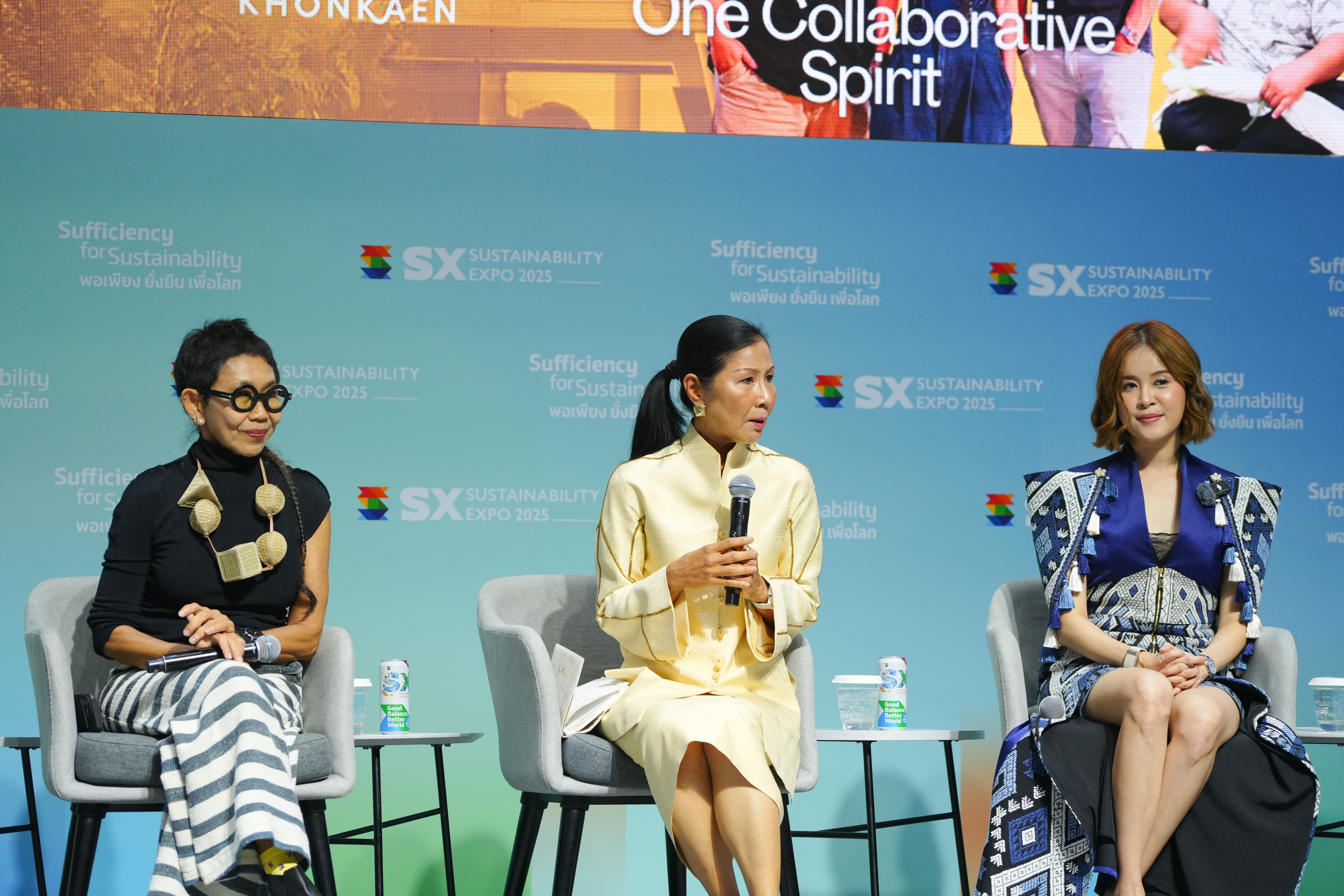
Dr. Sirikun Laokaikul, as the director of the "Por Laew Dee" (PD The Creator) project, expanded on this. She explained that the project uses SEP as a framework to develop "new-generation entrepreneurs," not limited to the agricultural sector. She debunked the misconception that sufficiency means giving up or is an excuse not to strive. In truth, SEP is both a "Mindset" that builds confidence in developing resilient businesses and a "Strategic Tool" that leaves no one behind.
Prototypes of "Transformative" Businesses for Sustainability
The panelists presented real examples of transforming their Business Models under the concept of "Adaptation," this year's main theme:
-
Khun Thanapong Wongchinsri (Penguin Eat Shabu): From Competitor to Network Khun Thanapong, or "Tor," shared his turning point from an entrepreneur who felt "the bigger I grew, the more lost I became" to discovering his true purpose. He developed a new business model under the name Penguin X, shifting from a restaurant focused on unlimited consumption (buffet) to the role of a "Connector." He links small (SME) restaurant businesses, turning competitors into a network, and co-created a "Restaurant MBA" with the Thai Chamber of Commerce, aiming for sustainable growth for all restaurants.
-
Khun Thamavith Limlertcharoenvanich (Onson Thai hand crafted white spirit): Sustainable Thai Spirits Khun Thamavith, or "Suea," demonstrated that even the alcoholic beverage industry can create a positive social impact. He started by sourcing local ingredients, specifically "coconut flower sugar," from the Amphawa community. Furthermore, Onson practices comprehensive waste management: the "distillery mash" (ส่าเหล้า) is used in trials to feed premium Pol-Yang-Kham cattle in Sakon Nakhon, and the "charcoal ash" (ขี้เถ้าถ่าน) from combustion is donated to local housewife groups as a binding agent for indigo dyeing.
-
Khun Chinsri Phul-oar (Khao Thammachad): Creating Security for Farmers Khun Chinsri, or "Big," spoke on the challenge of organic rice farming, where farmers cannot survive by selling only raw rice. The adaptation came through "Collaboration" with an external company (Pang Siam) to process brown rice into nutritious rice flour. The most significant success is that the business can now set a "pre-harvest purchase price" for farmers, something that had never happened before. He emphasized, "Sustainability cannot be achieved alone."
-
Khun Pawarit Raksasvopokin (Nutrinabiotech : Biovech): Developing Nan's Herbs for the Global Stage Khun Pawarit, or "Chay," returned to develop products from his local roots, discovering that herbs from Nan province were five times more potent than those from elsewhere. The shampoo brand Biovech began its rapid growth during COVID-19. A key challenge was finding the "right balance" (jud-por-dee) in working with villagers and community enterprises, who are not professional suppliers. However, by committing to caring for the community (People), Biovech now provides over 300 jobs and supports 200 families in Nan province.
-
Khun Thiparath Sitthimon-amnuai (Aqua-Tots Swim Schools): Expanding Impact through Education Khun Thiparath, or "Ja," who is in the education service business, chose a franchise model. Although it yields less profit than opening schools herself, franchising expands the "Impact," improving the lives of franchisees and their families, while children receive world-class learning skills close to home. The business also focuses on the Planet, using a Heat Pump system—the most energy-efficient technology for heated pools—and plans to build facilities based on Green and Circular Energy principles.
-
Khun Kanjana Chanatheparporn (BWILD ISAN): Fashion Driven by Situations and People Khun Kanjana, or "Chompoo," founder of the Isan fashion brand, explained that the brand wasn't born from a desire to be a designer, but from the "situation and the people in front of her" during COVID-19. Applying the SEP framework (the 3 loops and 2 conditions), she was not limited to fashion but became a collaborator. Recently, she worked with local Khon Kaen communities to create a "Christmas Tree," ensuring every single baht was distributed among 15 community teams, making the funds genuinely beneficial to the local people.

A Victory Not Based on Price
Khun Kobkarn and Dr. Sirikun concluded the session impressively, stressing the importance of "finding the fire within oneself" and believing in the dignity and unique goodness present in every province of Thailand.
Dr. Sirikun emphasized: "We will not win by competing on price; we will win through differentiation." She asserted that the Sufficiency Economy Philosophy (the King's Philosophy) is a world-class concept that helps Thailand overcome crises and advance with dignity in the global market. The most crucial element is "shared responsibility" to achieve true balance and sustainability.