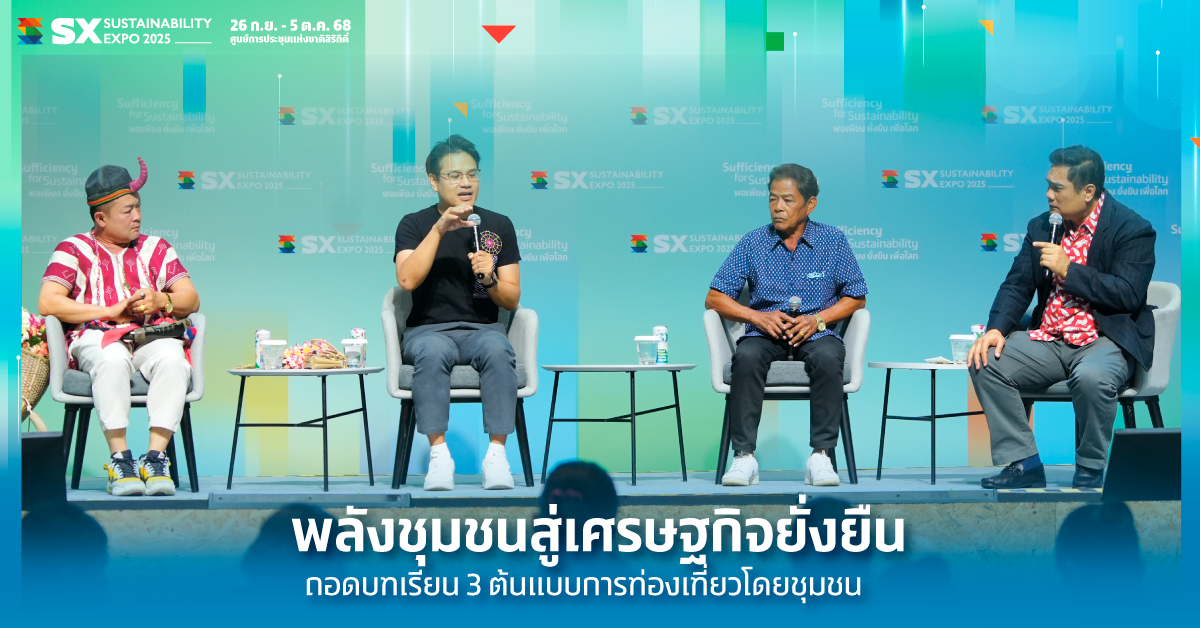
At SUSTAINABILITY EXPO (SX2025), ASEAN's largest sustainability exposition, a pivotal seminar was held to highlight the success of sustainable development. The core focus was on "Community-Based Tourism (CBT)" as a key mechanism for driving the grassroots economy while concurrently conserving culture and the environment. By consolidating lessons from three prototype models across the nation, the discussion revealed the innovation, collaboration, and management leading to true sustainability.
Community-Based Tourism, known as CBT, is a concept that prioritizes the participation of everyone in the community, focusing on three core components: the economy, society, and the environment. This is the story behind the success of communities that have transformed their way of life into a world-class source of income.
Model 1: "Wani Craft Stay" (Phatthalung): From Local Wisdom to International Value Creation
Wani Craft Stay in Phatthalung province is lauded as a prototype for elevating traditional wisdom into sustainable, nature-based tourism. Ajarn Nut Manaspong Senghuad, who transitioned from being an art and design lecturer to developing his hometown, transformed "Krajood" (sedge), once seen as a mere weed or cheap product, into an item of immense value.
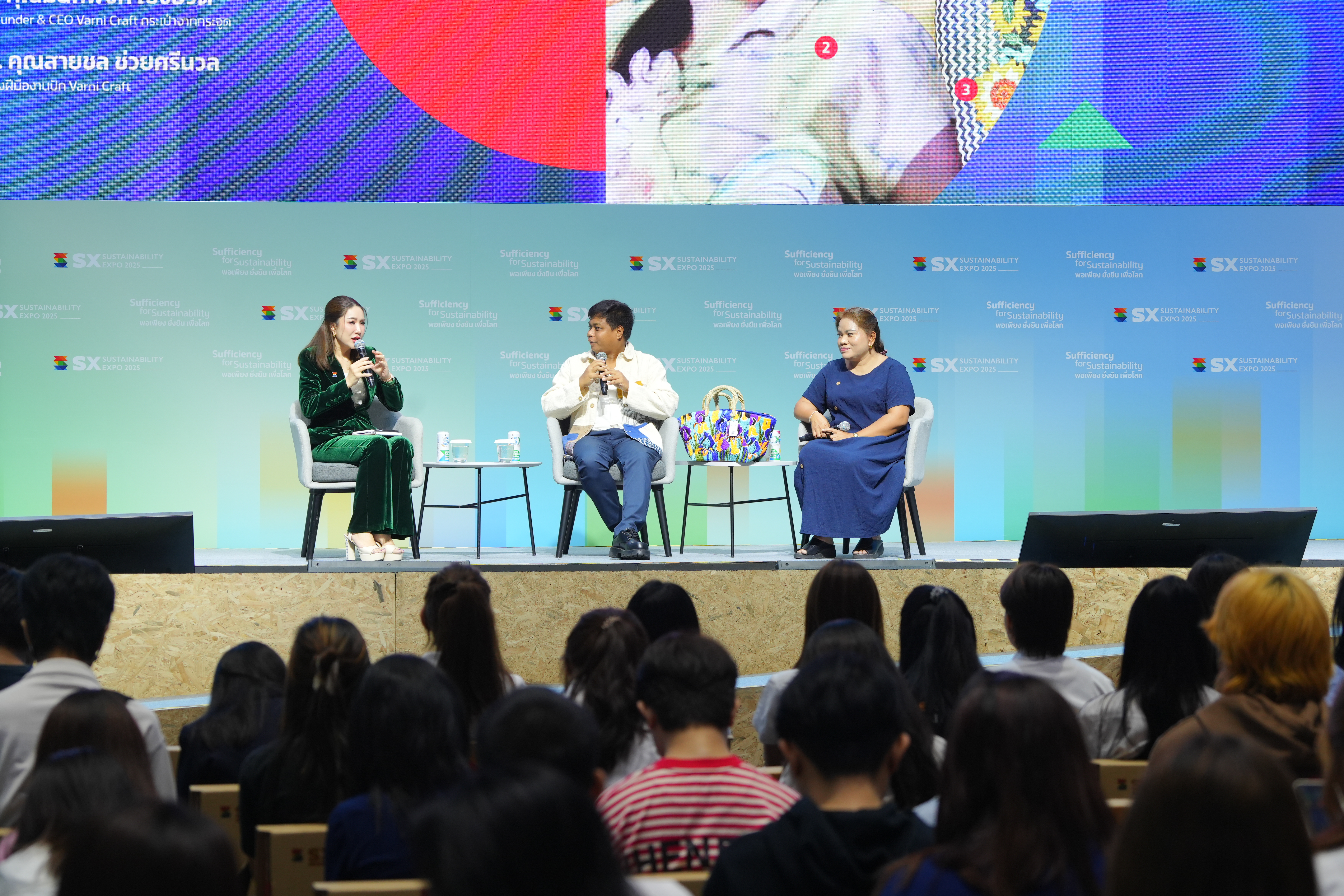
Originally, traditional Krajood mats sold for only 100 THB per piece. However, by infusing design and craft skills—particularly a "walking stitch" embroidery technique (known as Pak Rod Line)—new products, such as bags, were created with values as high as 7,900 THB, a multi-thousand-fold increase in value. These crafts are created by groups of housewives and seniors in the community, with Khun Sai-chon Chuaysrinuon (P' Sao), the head of the embroidery group and a Silpacheep (Royal Folk Arts and Crafts) master craftswoman, overseeing the work. Seniors aged 70 to 85 are able to work and earn a stable income.
Ajarn Nut expanded from products to a tourism destination (Wani Craft Stay) to reduce the expense of traveling to urban markets. He adapted a standard home into a learning center and a 12-room homestay, with interiors fully decorated with Krajood products. Tourists, especially foreigners, frequent the stay to join workshops, such as weaving and embroidering their own bags, creating a highly impressive experience. As a result of this Circular Economy management, Wani Craft Stay received the Kinnaree Award (Thailand Tourism Award 2025) as a community-based tourism destination.
Model 2: Oh Poi and Tham Suea: The Power of Strong Community Management
The discussion also presented two community markets that succeeded through participatory self-management: Oh Poi Market in Ratchaburi and Chamchuri Market (Baan Tham Suea) in Phetchaburi. Although they began by imitating positive community concepts, they successfully forged their own strong identities.
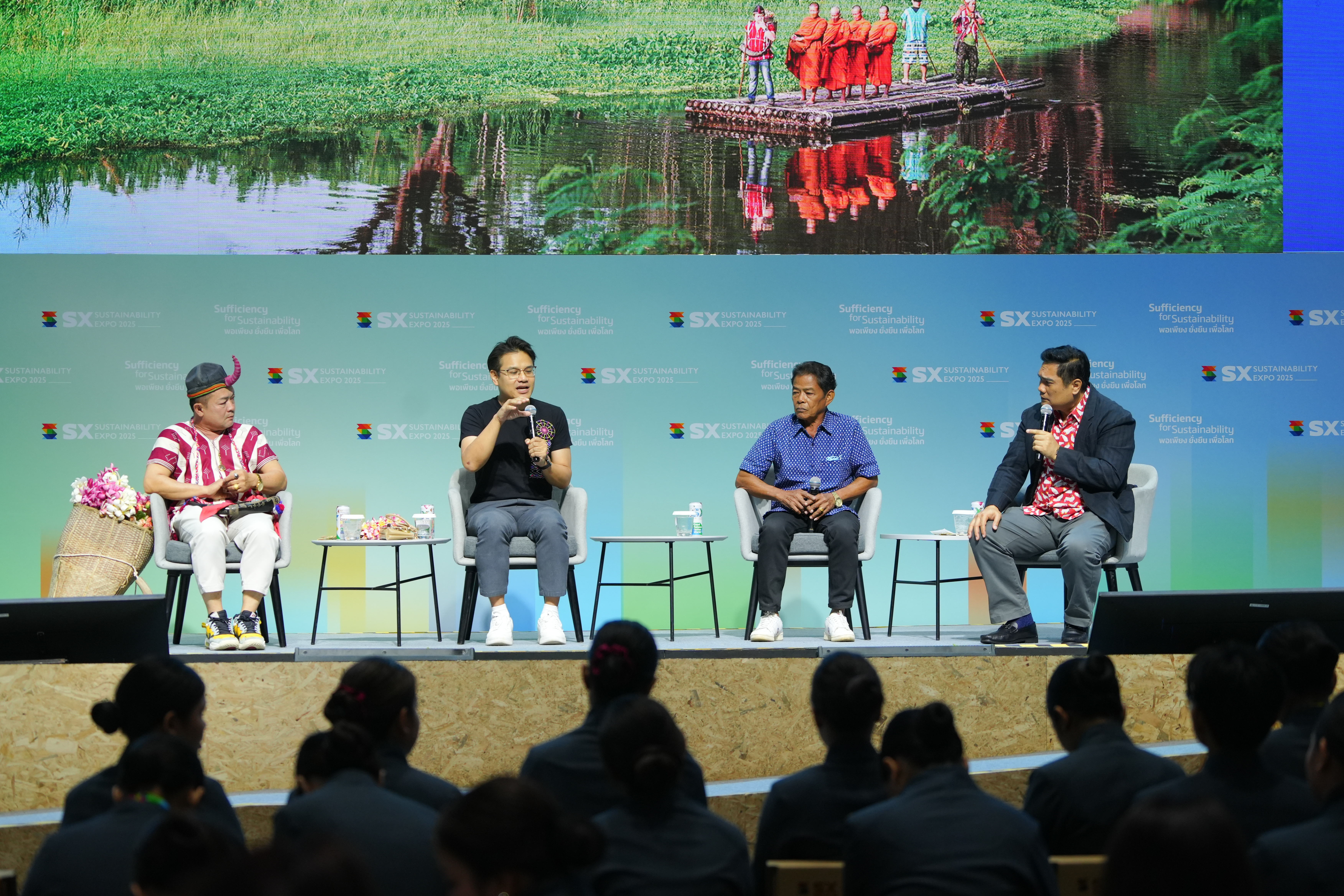
Oh Poi Market (Ratchaburi) Oh Poi Market, meaning "to rest" in the Karen language, is led by Village Headman Pattarapong Wongkasem (Phu Yai Bee). It established its distinction by reviving Karen identity and wisdom. The famous highlight is the "Offering of alms to monks on rafts" (Tak Bat Phra Rong Phae), for which Phu Yai Bee personally paddles the raft every Saturday and Sunday morning when the market is open.
The sustainability of Oh Poi stems from strong organization and a focus on human development. It operates under a strict central "Charter" (Thammanoon Klang) and emphasizes income generation in a way that tourists do not feel exploited. The market's fund (derived from minimal shop rents and community product sales) is used for central management, such as cleaning and security, and even for upgrading personnel—for example, taking market members on study trips to 5-star hotels to broaden their service perspectives. Furthermore, the market is an environmental model focused on being a "Love Earth Market" (Zero Waste). This success has encouraged younger generations who had left for work elsewhere to return and open businesses in the village.
Chamchuri Market (Baan Tham Suea, Phetchaburi) Khun Suthep Pimsiri (Pho Noi), the pioneer of Chamchuri Market, was inspired by Oh Poi but focused intensely on environmental management. The market emphasizes comprehensive organic waste management, turning food scraps and leaves into compost given to tourists instead of sending them to landfills, thereby reducing the burden on society. In the first year, stall space was free to test member readiness. Subsequently, the vendors themselves requested to contribute 20 THB each for central management, reflecting a sense of shared responsibility. Pho Noi emphasized that unity and open dialogue are essential for reducing inequality and tension within the community.
Both markets emphasize creating "Successors" by drawing the new generation back home, and both have also received sustainability accolades from the Kinnaree Awards.
Model 3: Khlong 3 Community (Pathum Thani): Merging Academics with Sufficiency Economy
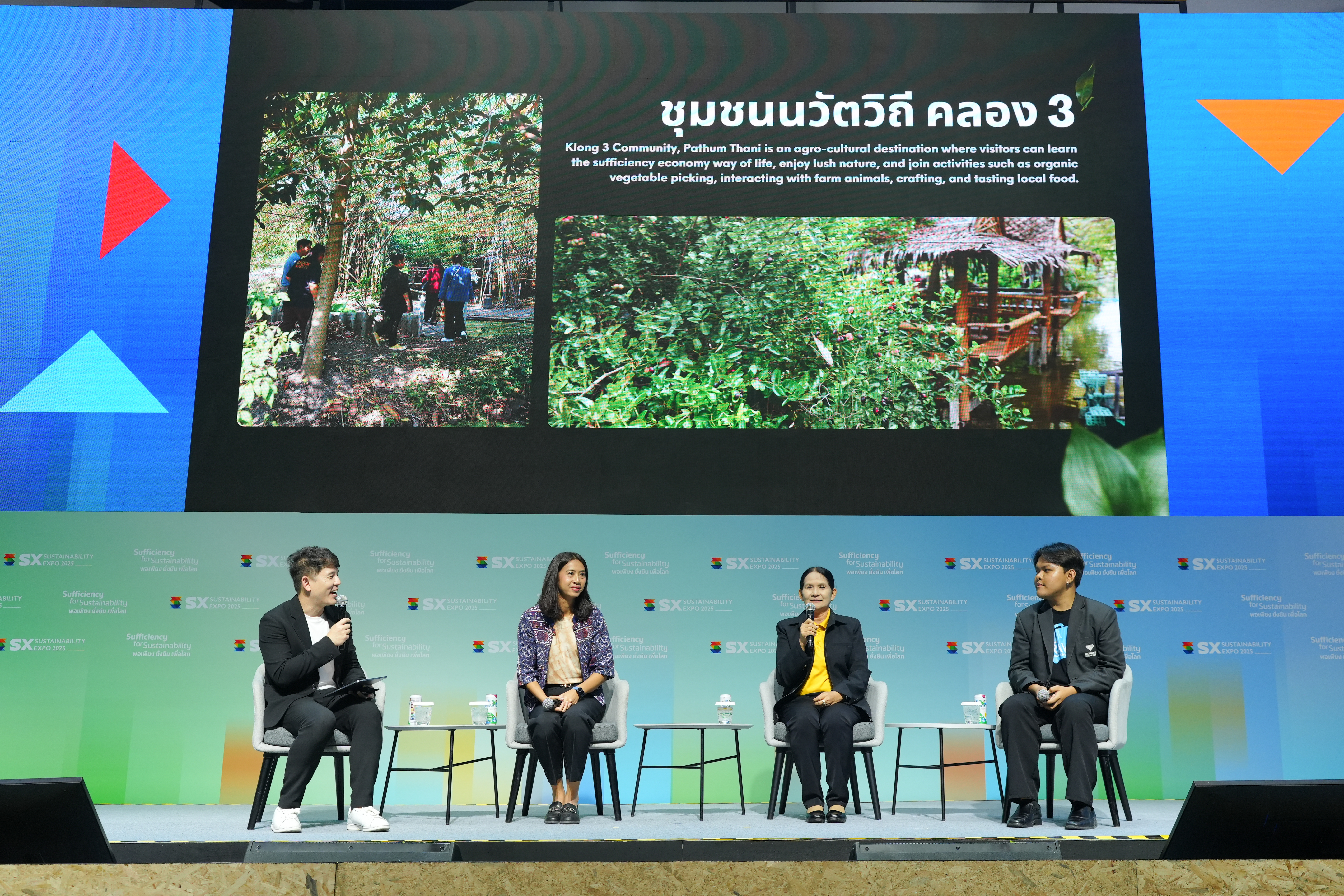
The Khlong 3 Community in Pathum Thani presented a model of augmenting existing community assets with modern knowledge. Kamnan Nok (Rungnapa Kaewtham) explained that the community is a Sufficiency Economy Learning Center focused on organic agriculture (chemical-free vegetables) and possesses diverse local wisdom.
Bangkok University (lecturers and students from the Faculty of Tourism Management) collaborated with the community, focusing on creating Storytelling and designing One-Day Trip programs that showcase local identity. Activities include Decoupage on miniature fans ("the only fan of its kind in the world"), natural-dyed fabrics, and making banana crisps.
Ajarn Atchara Srirachai explained that the academic sector assisted with knowledge transfer, marketing (especially social media driven by Gen Z students), and training in necessary skills, such as simple English to accommodate tourists.
The most significant success of this model is the Empowerment of the villagers, inspiring them to "dare to think and dare to act," enabling them to become truly self-reliant in hosting guests and managing operations without supervision. This is the definition of true sustainability: the community is strong and can survive on its own.
Conclusion on Sustainability: The Heart is "People" and "Collaboration"
Although all three models differ based on local resources, experts concurred on the universal success factors for community-based tourism:
-
Discovering and Highlighting Identity: The community must find its unique selling point—be it lifestyle, wisdom, or products.
-
Human Development: Building the potential of community members, providing knowledge in management, service, and marketing, and especially fostering a strong organizational culture and active participation.
-
Self-Reliance: When income is widely distributed throughout the community, it incentivizes environmental conservation and creates economic opportunities for the next generation to return home.
This SX2025 seminar thus serves as proof that Thailand's sustainable tourism is not limited to "Mass Tourism" destinations. It has taken deep root at the community level, creating models that can be scaled up nationwide, all sharing the same goal: preserving the environment, protecting culture, and building long-term economic resilience.