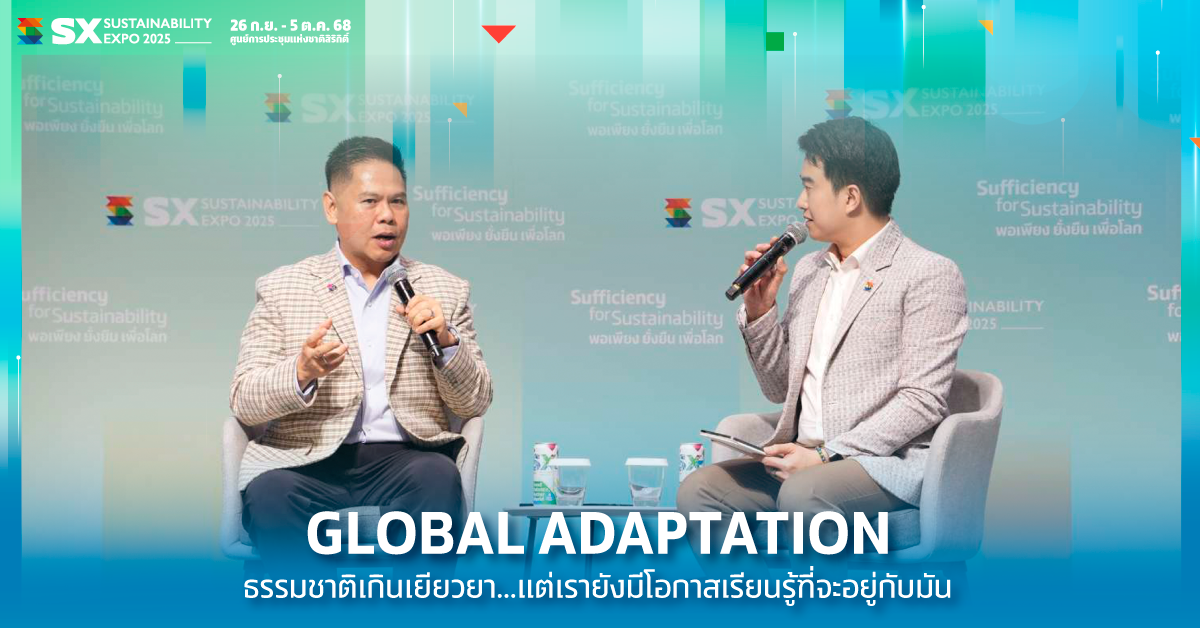
"Today, we must ask ourselves: will we fight against nature, or will we learn to live with it? I have yet to see any person or any country conquer nature. The only viable path is to learn to live with it and adapt to the changes," stated Mr. Varawut Silpa-archa, leader of the Chartthaipattana Party and former Minister of Natural Resources and Environment, as well as former Minister of Social Development and Human Security. He set the stage for a critical discussion on "Global Adaptation"—humanity's adjustment to a climate crisis of escalating severity—at the SX Talk Stage during the Sustainability Expo 2025 (SX 2025).
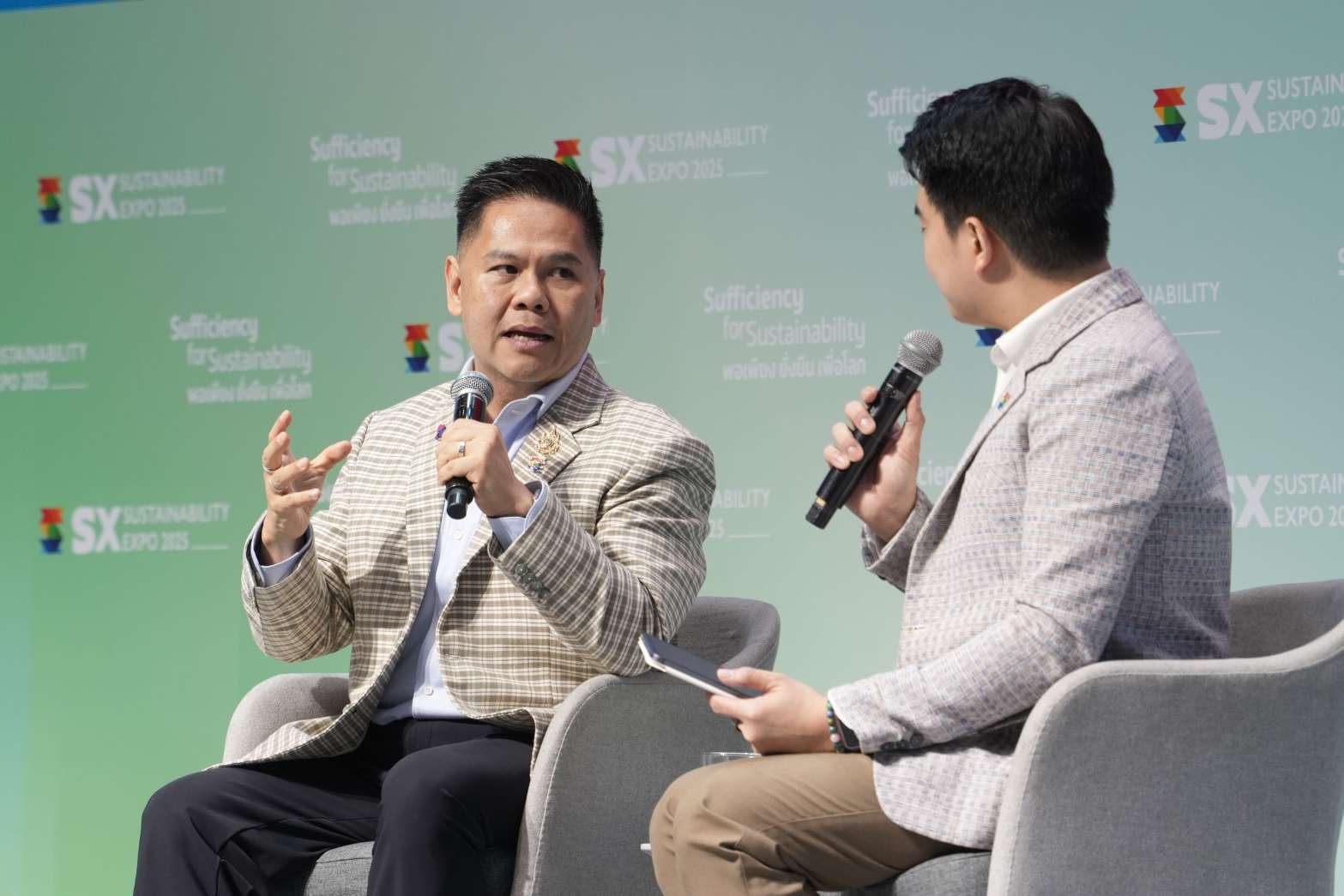
Adaptation: As Critical as Mitigation
Nature's warning bells and the impacts of climate change are urging humanity to adapt—and fast. "So why do many countries still prioritize 'Mitigation'—efforts like reducing carbon footprints and air pollution—which addresses only one side of the climate change coin?" Mr. Varawut questioned, acknowledging that "Adaptation" remains a less-discussed topic in Thailand and globally.
In the grand scheme of adaptation, the groups most in need of support are often the least prepared: the "vulnerable populations," including the elderly, young children, people with disabilities, and low-income individuals. These groups often live within infrastructure ill-equipped to handle the climate crisis. Therefore, drawing on his experience as the former Minister of Social Development, Mr. Varawut emphasized that the government's role should extend beyond mere handouts. Instead of simply giving aid, the state must "empower them," providing knowledge on why and how to adapt to the challenges ahead, enabling them to survive through their own capabilities.
Thai Roots: A Foundation for Modern Adaptation
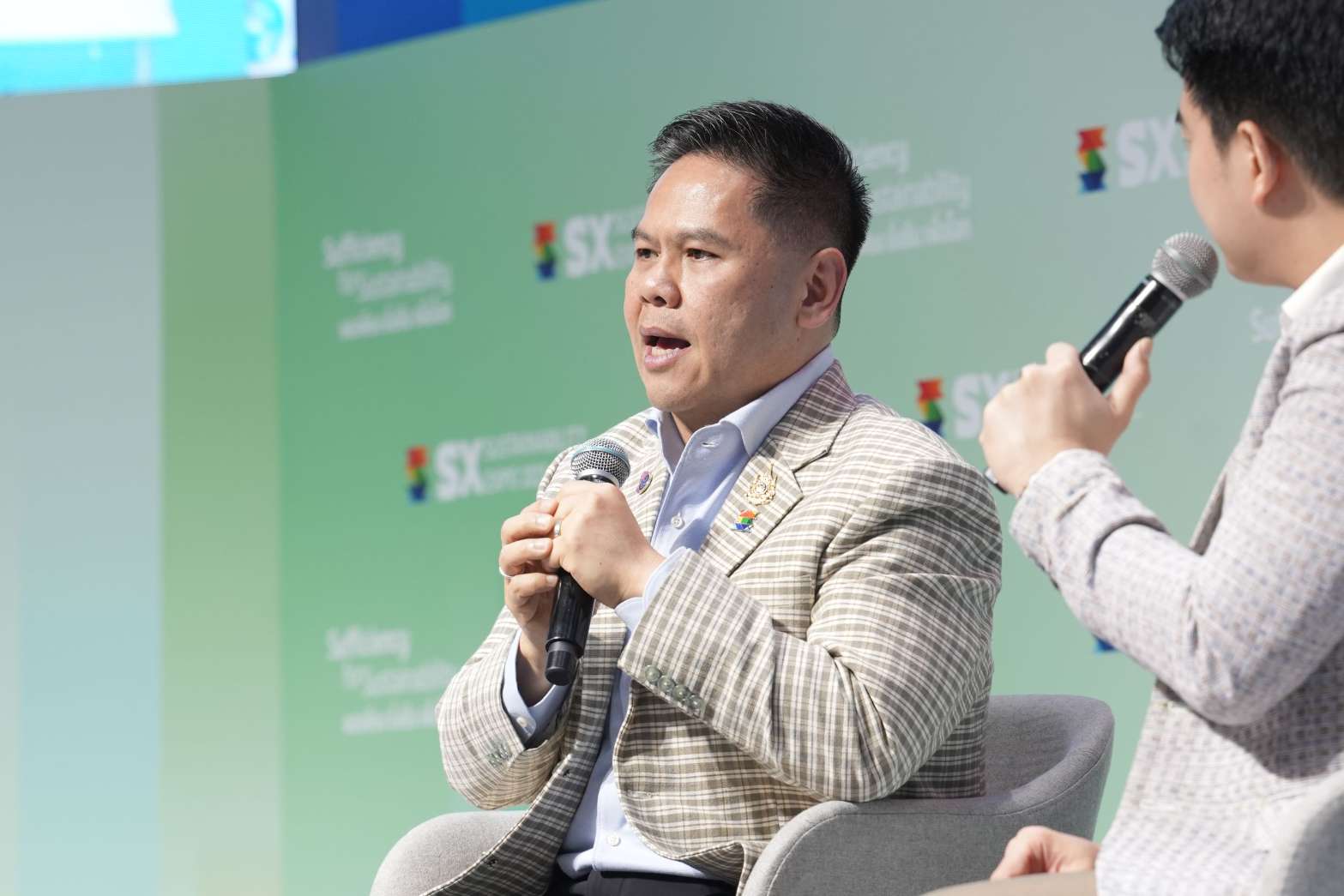
Amid these new challenges, a path forward may lie in looking back. Mr. Varawut highlighted how traditional Thai houses built on high stilts, roofs thatched with natural materials, and the use of banana leaves instead of plastic bags all reflect an innate Thai wisdom of living sustainably with nature. "These are not outdated relics," he argued, "but a body of knowledge the modern world should learn from." As global temperatures rise and metal roofs absorb more heat, innovations inspired by traditional roofing could be the answer. When heavy rains cause water levels to surge, the climate-resilient principle of an elevated home might be the key to survival.
Beyond adaptation, "Resilience"—the capacity to recover and remain flexible amidst change—is another crucial element. Thailand, he noted, already possesses great potential in this area, rooted in its strong local communities and ancestral knowledge.
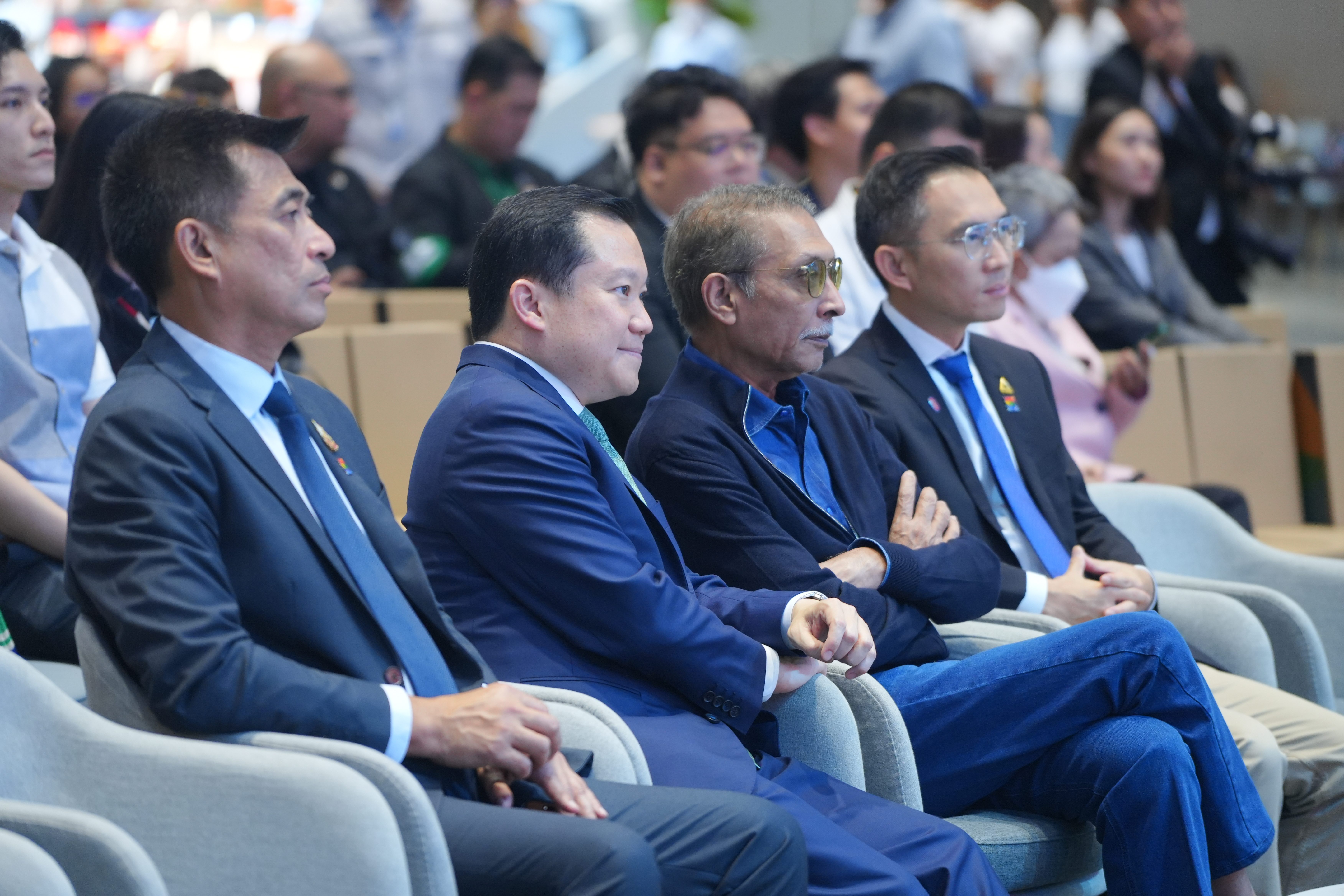
"I believe that for Thailand to survive in the future, we certainly need new knowledge. At the same time, we must not forget the accumulated wisdom of previous generations," Mr. Varawut stated. "I have always emphasized that Thailand cannot move forward relying on just one generation. We have reached this point thanks to the contributions of the Silent Generation, Baby Boomers, and Gen X. But without Gen Y, Gen Z, and Gen Alpha, Thailand cannot progress. Therefore, all groups must walk forward together, leaving no one behind."

In closing, Mr. Varawut praised the Sustainability Expo 2025 (SX 2025), organized by the ThaiBev group and its partners. He thanked all participating organizations for creating a vital platform for social learning, allowing the public sector, private companies, youth, and local communities to share ideas, showcase innovations, and exchange real-world experiences in sustainable coexistence with nature.
The survival of our planet and the future of our children rest in our hands. Understanding, adapting, and taking action today are the keys to sustainability. There is no time like the present to begin—Never too late to begin.