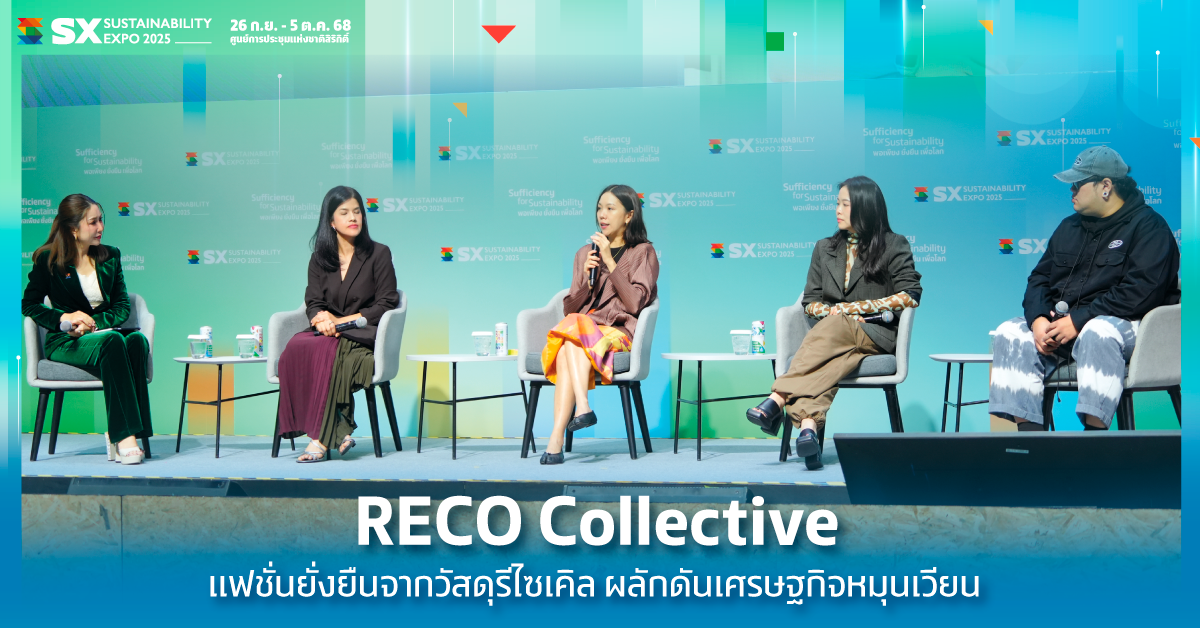
The RECO Collective 2025 Project by Indorama Ventures Public Company Limited, a global leader in the chemical industry committed to sustainable business, is driven by the mission to position sustainability as a competitive advantage. The initiative emphasizes leveraging the potential of sustainable materials—from the design stage all the way through the business value chain. On September 30, at the SX TALK STAGE during SUSTAINABILITY EXPO 2025, a panel discussion titled “RECO Collective: Empowering Thai Designers & SMEs through Creative Circularity” brought together experts and designers engaged in sustainability within the fashion industry under the RECO Collective 2025. The session explored ways to create value from recycled materials and circular economy concepts, while inspiring and raising awareness of the vital role every sector plays in collaborating for a sustainable future.
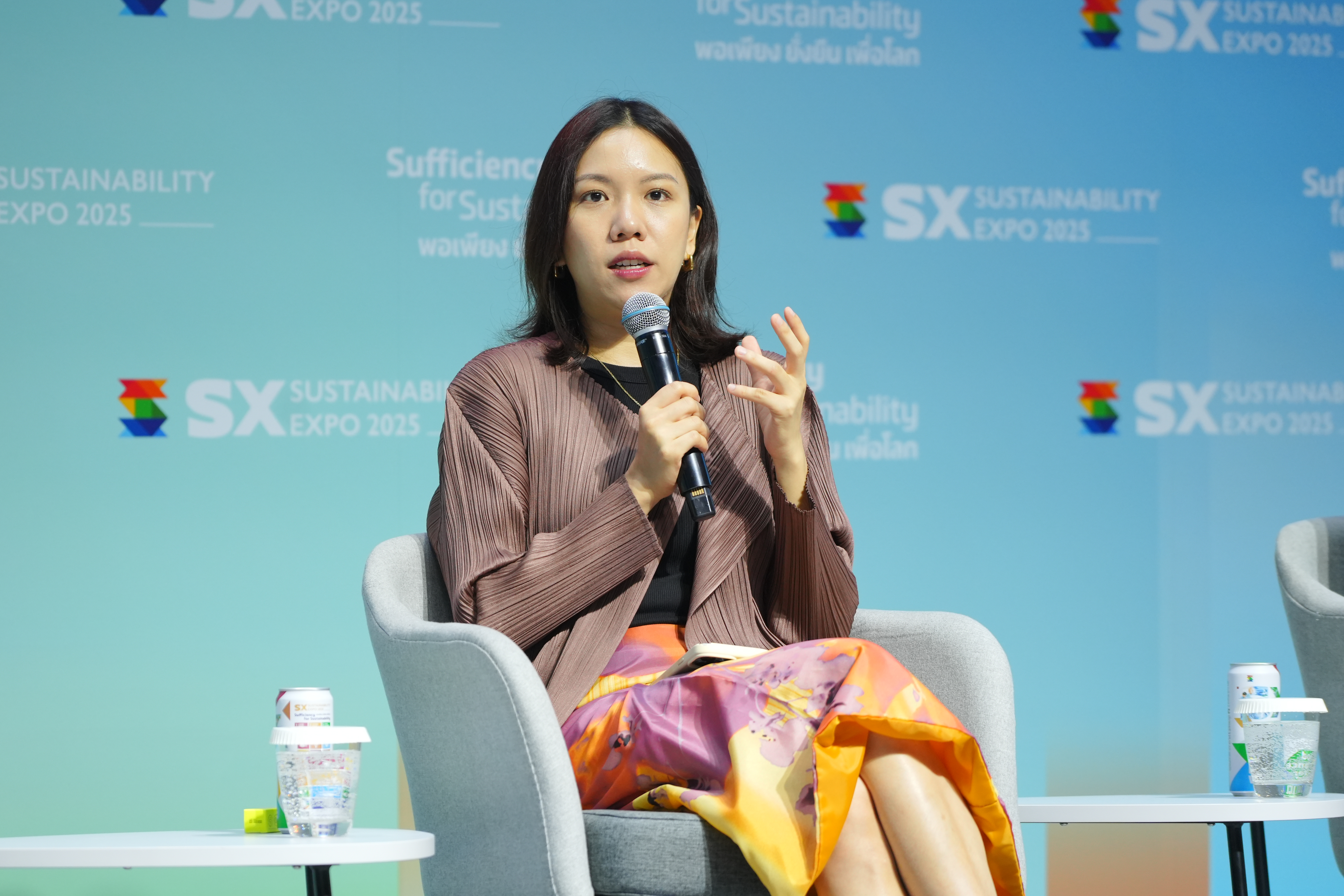
Naveensuda Krabuanrat, Vice President, Corporate Social Responsibility, Indorama Ventures Co., Ltd, introduced the RECO Collective project by highlighting its origins: recognizing the potential of PET as a recyclable material. She emphasized that the initiative’s goals extend far beyond environmental concerns, aiming to create social value and benefits by linking the concept of the Circular Economy with recycling. Launched in 2011 as a design competition, RECO invited designers to transform PET, once seen as waste into innovative new design concepts, while engaging partners across the value chain. The aim is to ensure sustainability becomes a priority for every sector in the future.
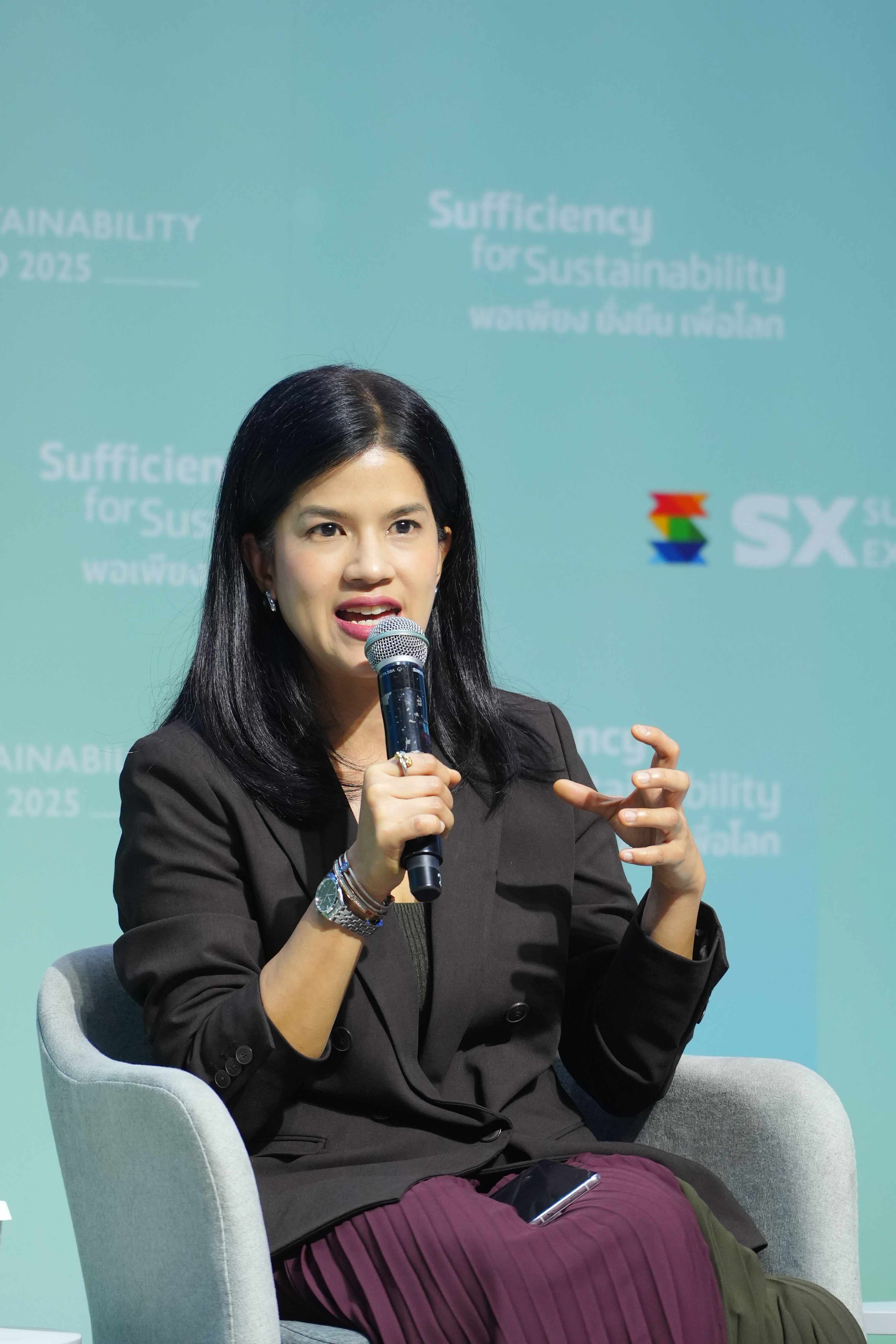
Kamonnart Ongwandee, Course Director, RECO Incubation Lab and the program’s curriculum designer, explained that the Lab focuses on tackling problems at their source through circular design thinking. The approach encourages designers to consider sustainability from the outset—integrating materials science and suitable business models. She cited successful cases such as using new fabric-printing techniques that reduce chemical dyes, and R&D initiatives that enable smaller businesses to access recycled materials.
Napat Tansuwan, Founder, KH EDITIONS and Participant, RECO Collective 2025, shared his journey from entering the original RECO design competition to developing his brand and joining the Incubation Lab. His brand now combines craftsmanship, industry, and sustainability in a unique way. He noted that the platform helped him overcome key pain points, such as experimenting with new industrial materials in craftwork and developing sustainable brand-building strategies.

Amporn Phutham, Merchandise Department Manager, Discovery Retail Holding Co., Ltd, explained from the retail perspective, emphasizing the role of intermediaries who bring designers’ products to consumers. She noted that while circular design products may come with higher price tags, customers increasingly value environmental and sustainable qualities they can see and feel. She offered an important reminder for entrepreneurs: “Don’t view sustainability as an added cost—see it as a way to build brand value.”
The Future of Fashion Industry Transformation
The RECO Collective 2025 discussion highlighted not only innovation and sustainable design, but also the inspiration that circular economy offers as a shared opportunity across sectors. Designers, entrepreneurs, and consumers alike all have a role in creating real change. Naveensuda reiterated that RECO is more than just a project—it is a platform connecting the entire value chain to drive Thai fashion onto the global stage. She concluded: “Everyone has a role to play in driving the Circular Economy to create sustainable business models together.” While Kamonnart Ongwandee and Napat Tansuwan affirmed that collaboration, openness to innovation, and the courage to step outside one’s comfort zone are at the heart of building sustainable businesses and design practices. Ultimately, RECO Collective 2025 served as both a stage and a catalyst, calling on all stakeholders to cooperate, adapt, and drive the circular economy toward a truly sustainable future.