Many shy away from conversations about death. But what if our final departure could become one last chance to do good for the world? The idea of “Return to Earth” offers exactly that—an alternative to polluting cremation by transforming our remains into fertile soil that nourishes the environment and cycles back into nature.
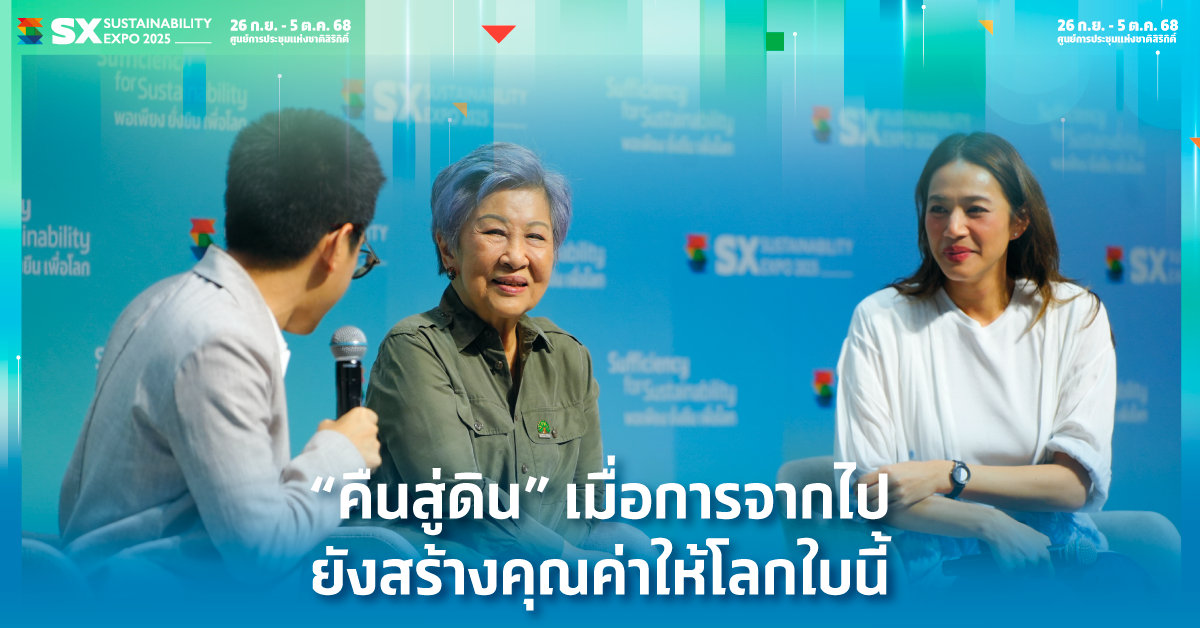
This concept took center stage at Sustainability Expo 2025 (SX2025), ASEAN’s largest sustainability platform, held at Queen Sirikit National Convention Center on September 28, 2025. On the SX Talk Stage, the session “Return to Earth” featured inspiring speakers: Khunying Chamnongsri Hanchanlash, Founder and Honorary Advisor of Cheevamitr Social Enterprise, and Siraphun “Noon” Wattanajinda, Actress and Co-Founder of KidKid Co. Ltd. Social Enterprise. The discussion was moderated by Dr. Deephrom Thephasadin Na Ayutthaya, communication scholar and Founder of KidWise Studios, a sustainability-focused media innovation hub.
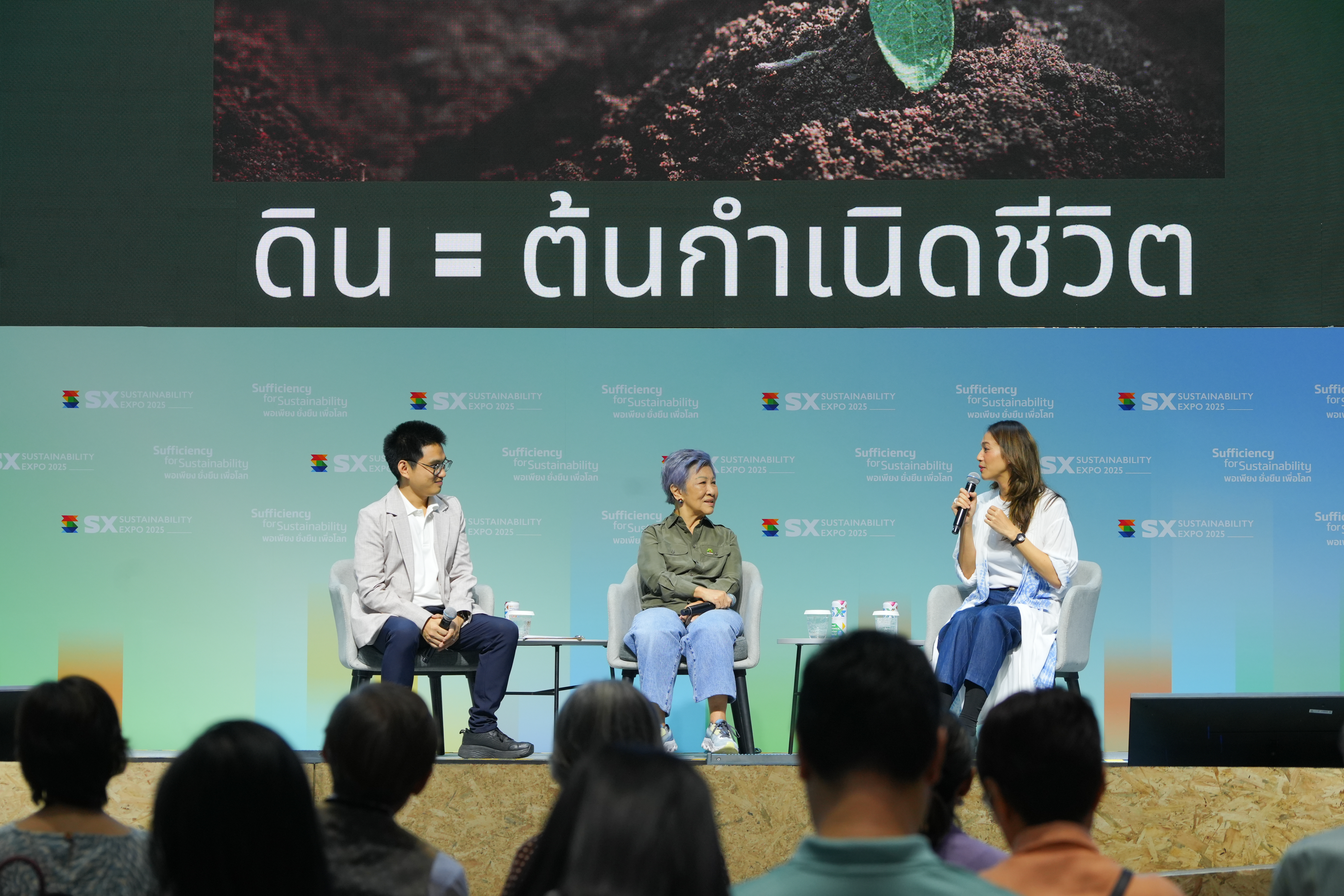
Khunying Chamnongsri shared that death is closer to us than we often realize—our very lives are sustained by death, as all the food we eat was once alive. Plants and animals come from the soil, reminding us that life and nature are inseparable. Leaves fall, decompose, and enrich the earth, feeding animals and sustaining the ecosystem. Death, in this sense, is part of the natural life cycle.
She explained that the “Return to Earth” idea is an extension of Cheevamitr’s founding mission to promote understanding of “a good death.” In Thailand, the prolonging of terminal patients’ lives often arises from fear of sin, social judgment, or difficulty in letting go. For years, Cheevamitr has worked to build awareness around palliative care and dignified dying.
Today, this vision goes further—toward reducing the environmental impact of death. Traditional cremation produces vast amounts of pollution, contributes to greenhouse gases, and worsens PM 2.5, which can lead to cancer and dementia. Around the world, eco-friendly alternatives are emerging: green burials (simple shrouds and tree planting instead of caskets), alkaline hydrolysis (dissolving remains with water and alkali into minerals and clean water), and recomposition, which uses natural materials like wood chips, straw, and fungi to turn a body into nutrient-rich soil in just five weeks.

Cheevamitr also envisions integrating these approaches into land management in Thailand—for example, turning unused land into “forest cemeteries” or serene memorial gardens, where the departed return to earth while creating spaces of renewal for the living.
Siraphun “Noon” Wattanajinda reflected on her personal journey: once believing life and nature were separate, she came to realize they are one and the same. “If we are kind to nature, it will be kind to us. But if we harm it, it will harm us.” Alongside her husband, who shares her passion, Noon has worked for more than 15 years in social enterprise, starting with eco-friendly products, then expanding into education for organizations and youth. Their work has reached wide audiences, developing apps to encourage sustainable behavior and partnering with over 100 universities to meaningfully engage the next generation.

For Noon and her husband, sustainability is not only professional but deeply personal. They have chosen not to have children, focusing instead on shared values, a life philosophy of contribution, and a plan for retirement that minimizes burden on others. For them, “Return to Earth” represents not just an ecological choice, but a way to leave behind lasting meaning.