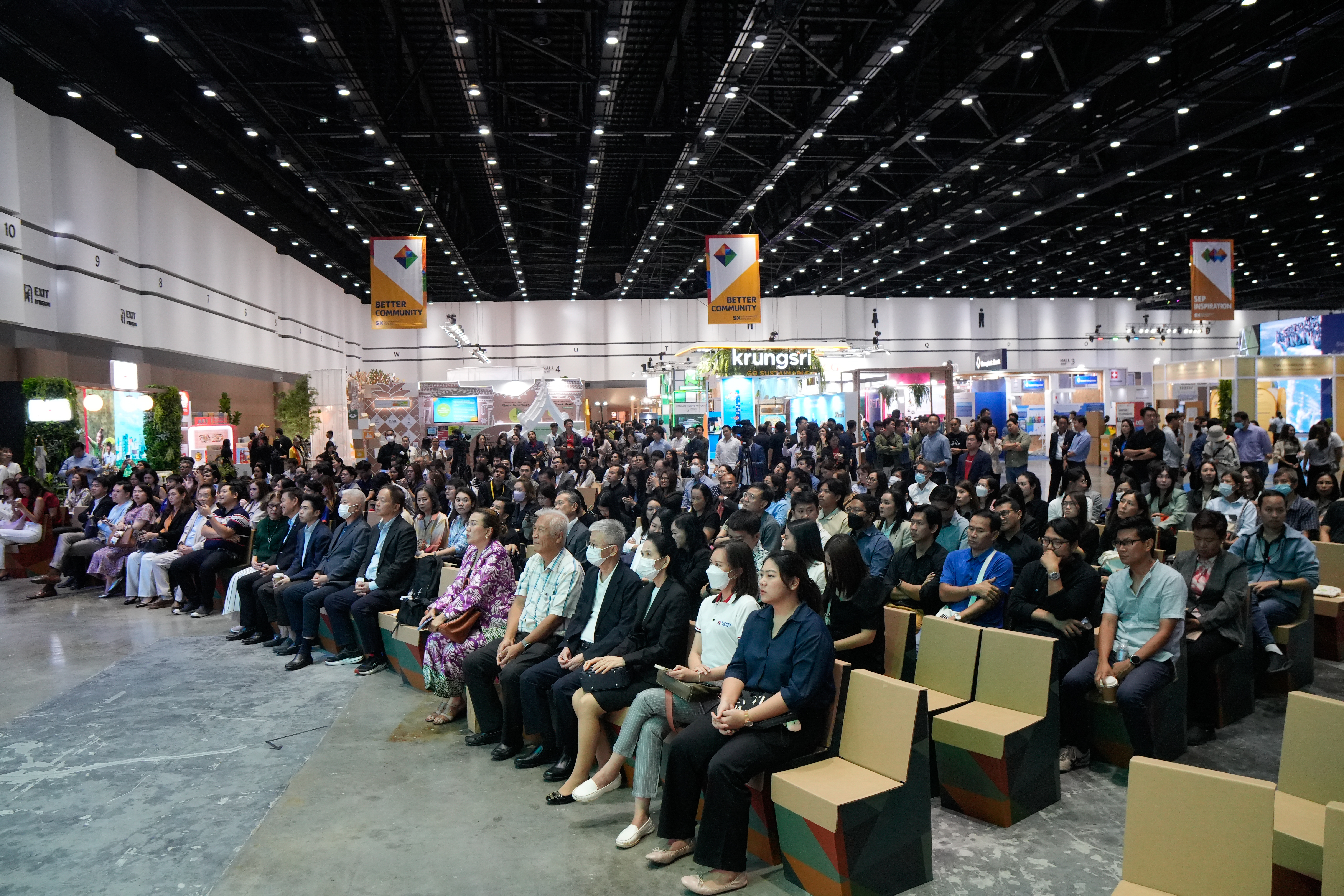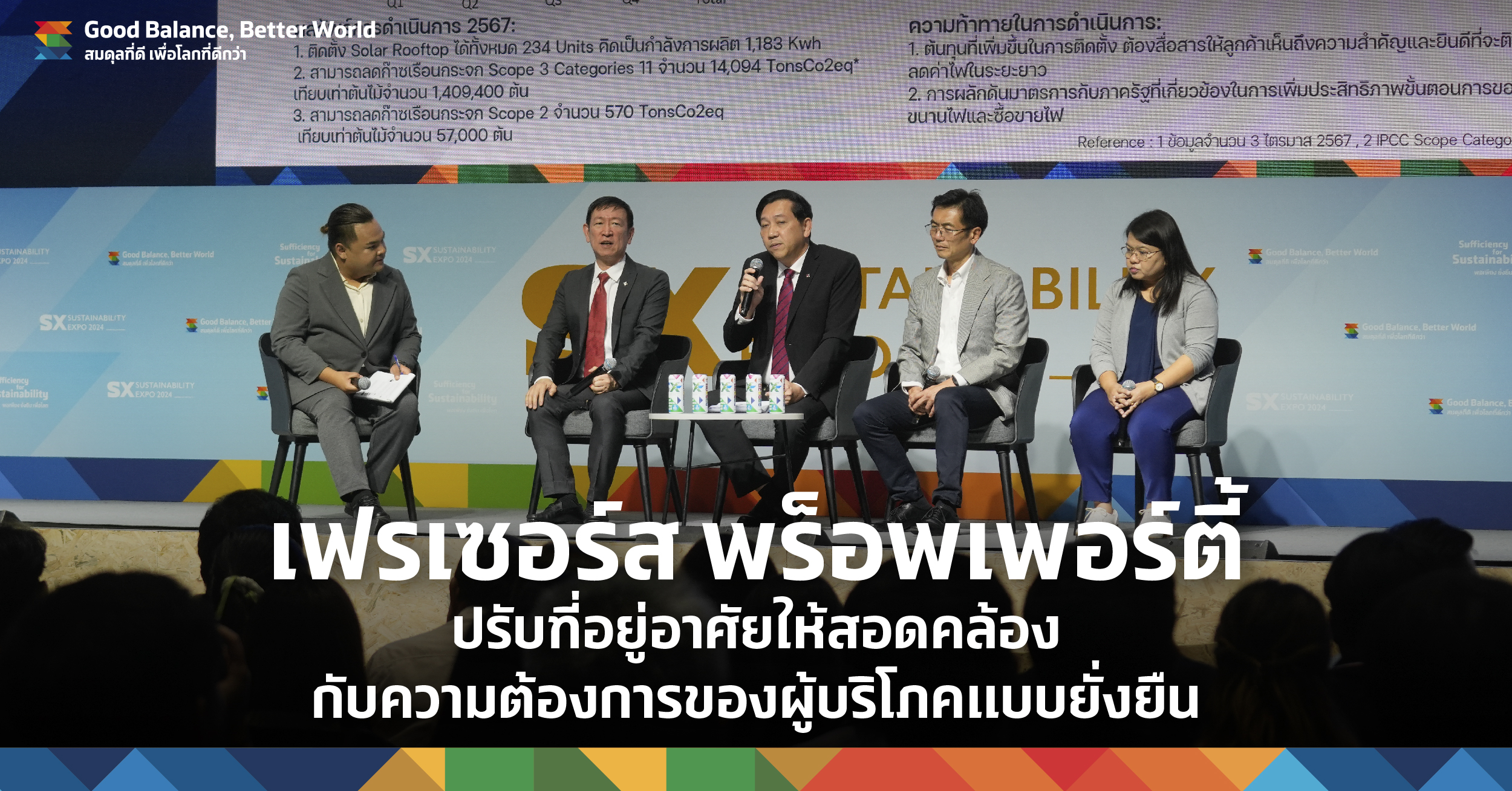
Frasers Property (Thailand) Public Company Limited is advancing sustainable living by partnering with key stakeholders to adapt its residential projects to meet evolving environmental and consumer needs — seamlessly integrating sustainability across the entire development process
Real Estate's Carbon Footprint and the Rise of Green Consumer Awareness
With approximately 40% of global carbon emissions originating from the real estate sector—primarily during construction—consumers are becoming increasingly aware of the environmental implications of housing. This shift in awareness has led to a growing demand for environmentally responsible homes that consider eco-friendly materials, sustainable construction, efficient utilities, and supportive green surroundings.
Sustainability Expo 2024: Insights from Industry Leaders
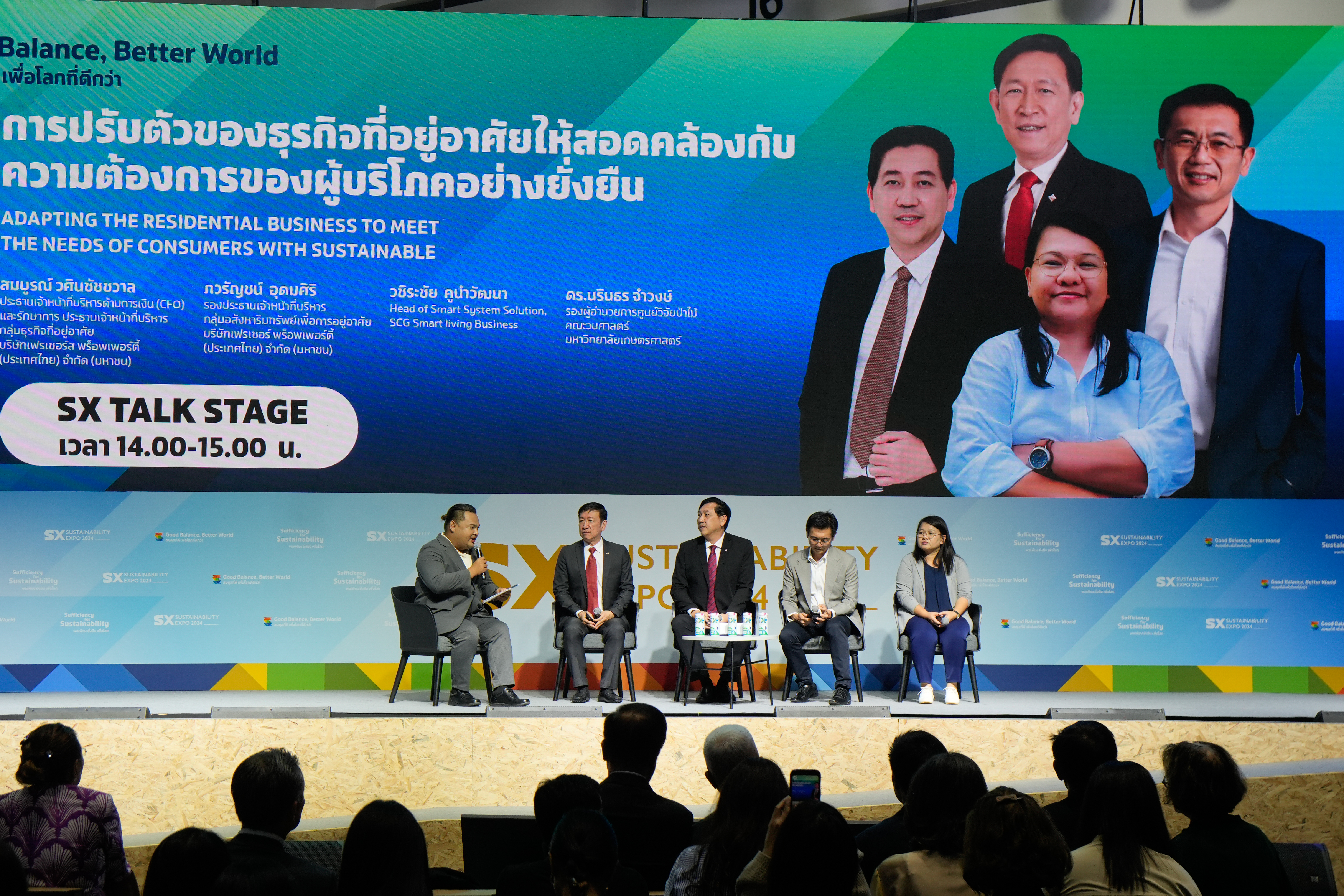
At the recent Sustainability Expo 2024, a panel discussion titled “Adapting Residential Businesses to Meet Sustainable Consumer Needs” featured the perspectives of:
-
Mr. Sombhoon Wasinchatjaval, Chief Financial Officer and Acting CEO of Residential Property Group, Frasers Property (Thailand) PCL
-
Ms. Pawarun Udomsiri, Deputy CEO of Residential Property Group, Frasers Property (Thailand) PCL
-
Mr. Watcharachai Koonamwattana, Head of Smart System Solution, SCG Smart Living Business
-
Dr. Narintorn Jamwong, Deputy Director of the Forest Research Center, Faculty of Forestry, Kasetsart University
Understanding Consumer Behavior Across Generations
Mr. Sombhoon emphasized Frasers Property’s commitment to sustainability across its 78 residential projects and over 25,000 delivered homes nationwide. Drawing from a research sample of 2,000 consumer groups, the company identified nuanced environmental priorities across generations:
-
Baby Boomers value wellness and healthy living.
-
Gen X prefers open, airy homes with natural ventilation and green space.
-
Gen Y, the current core customer base, is deeply concerned about climate change and prioritizes low-carbon, environmentally conscious living.
-
Gen Z, digital natives, value connectivity and access to public transportation, preferring locations with easy access to mass transit to reduce commuting emissions.

These insights are now central to how Frasers Property designs its homes and neighborhoods.
From Passive to Active Design: Building for Sustainability
The company is evolving from passive to active design strategies—focusing not only on orientation and ventilation but ensuring that incoming air is clean and free from pollutants like PM2.5. Moreover, environmentally friendly construction materials and low-carbon processes are being prioritized.
Additionally, labor welfare during construction has become a priority. Ensuring hygienic facilities and improved living conditions for workers enhances both quality of life and output—ultimately resulting in higher-quality homes for customers.
Carbon Emission Reduction Targets and Initiatives
Frasers Property has pledged to reduce its carbon emissions by 42% by 2030. Construction remains the primary challenge, but initiatives like installing solar panels and using green materials are already underway. Customers are also engaged in this effort through energy-saving practices—making it a joint mission between company and residents.
Renewable Energy in Action
According to Ms. Pawarun Udomsiri, the company’s renewable energy drive saw tangible results in 2024. Solar rooftops were installed in 234 units, generating 1,183 kilowatts of power and reducing 14,094 tons of CO₂ emissions—equivalent to planting 1.4 million trees. Importantly, these installations were provided at no additional cost to homeowners, underlining the company's environmental commitment.
Frasers also collaborates with construction material manufacturers to use low-carbon steel, concrete, and paint—saving 1,000 tons of CO₂ emissions, or the equivalent of planting 100,000 trees.
National Energy Efficiency Standards
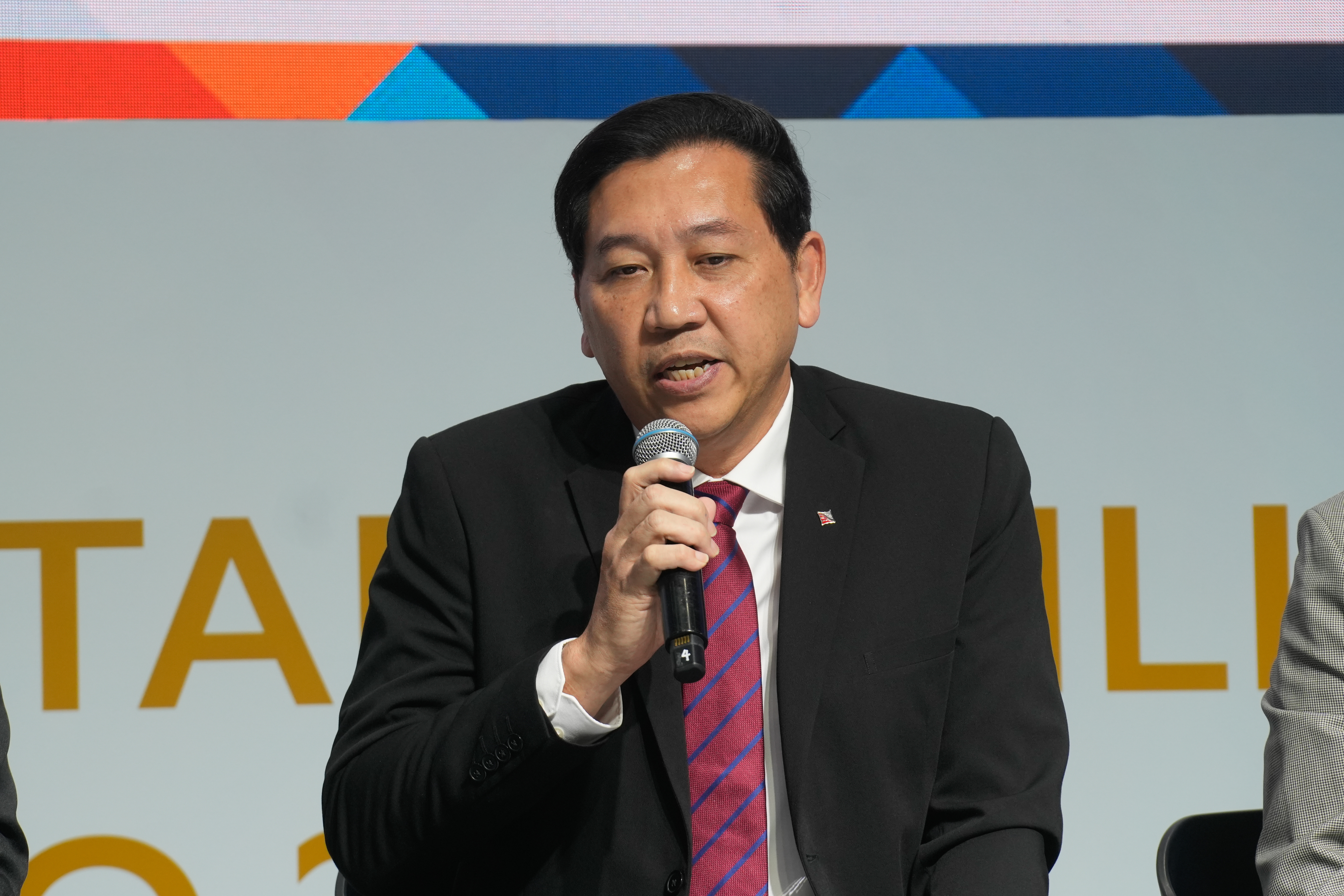
Homes are also being built to meet the EGAT energy efficiency standards with features such as solar panels, heat insulation, and reflective paint. The company has earned Level 5 (highest) certification in every evaluated category. Their next goal: achieving global energy efficiency certification for residential projects—a first in Thailand’s housing sector.

SCG’s Green Collaboration
Mr. Watcharachai Koonamwattana of SCG Smart Living Business expressed optimism about the industry’s shift toward sustainability. SCG offers “Green Choice” eco-products that promote low-carbon usage, resource conservation, and hygiene. Notably, SCG is also acting as a “green building consultant”, a service traditionally reserved for high-rises but now being applied to housing, including through partnerships with Frasers Property.

Comprehensive Carbon Reduction: From Design to Post-Occupancy
SCG addresses two core emission types: embodied carbon (within construction materials) and operational carbon (post-occupancy). Their support includes facilitating global sustainability certifications, solar integration, and adoption of low-carbon materials—ensuring the housing sector aligns with Thailand’s and global sustainability goals.
Forestry-Based Carbon Offsetting with Kasetsart University
Dr. Narintorn Jamwong elaborated on Thailand’s voluntary carbon credit programs, such as T-VER (Thailand Voluntary Emission Reduction Program) and LESS (Low Emission Support Scheme), managed by the Thailand Greenhouse Gas Management Organization (TGO). These programs promote measurable, verifiable, and permanent carbon reduction initiatives within Thailand.
Kasetsart University is working with Frasers Property to implement the LESS framework by evaluating carbon sequestration from trees planted in residential developments. To qualify, projects must demonstrate emissions reductions from activities conducted for at least 90 days, with specific tree measurement criteria. In the past year, three Frasers projects were assessed, resulting in 73 tons of carbon sequestration—a promising model for future initiatives.

Frasers’ Long-Term Commitment to Sustainable Housing
Mr. Sombhoon concluded that while real estate development inherently generates carbon, Frasers Property is committed to mitigating this impact across design, construction, and post-sale phases. This includes increasing green space, building energy-efficient homes, and supporting environmental stewardship across its operations.
Ultimately, Frasers Property (Thailand) PCL and its partners have demonstrated an unwavering dedication to sustainable housing, integrating consumer insights, rigorous construction standards, and low-carbon strategies to deliver homes that are not only safe and efficient, but built to endure — for both people and planet.
Stay connected with SX for more inspiration and real-world solutions via Facebook: Sustainability Expo or add us on LINE @sxofficial.
Don’t miss SX2025, returning even bigger from September 26 – October 5, 2025, at the Queen Sirikit National Convention Center.