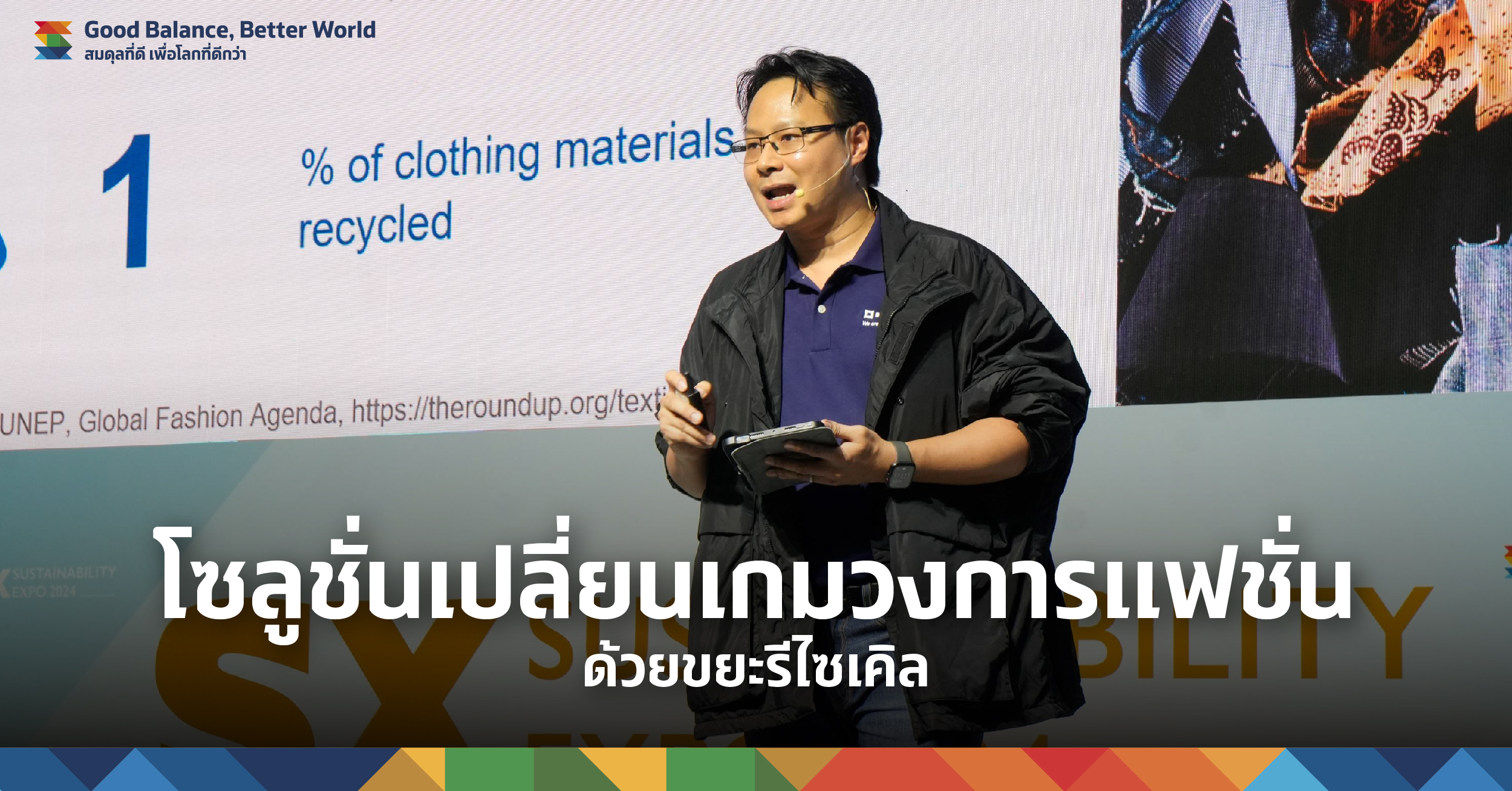
From now on, expect to see a growing number of garments made from recycled waste. Thanks to rapid advancements in technology and innovation, these recycled textiles are now on par with new materials in terms of quality. This shift is also driven by tightening international regulations—particularly from the European Union—as well as consumer trends that increasingly prioritize environmental responsibility.
What many may not realize is that the global textile and apparel industry is responsible for up to 10% of total annual carbon emissions, which is more than the combined emissions from aviation and maritime transport. Even more alarming: only 1% of the 92 million tons of textile waste generated annually—whether from production leftovers or discarded clothing—is recycled. The rest is either landfilled or incinerated. In Thailand, about 300,000 tons of textile waste is produced each year, but only 24% is recycled.
This is why the idea of a circular textile economy—where materials are reused and reintegrated into production—has gained significant traction over the past four to five years.
A New Era for Circular Fashion
At the recent SUSTAINABILITY EXPO 2024 (SX2024), we visited the booth of BASF, the global chemical giant from Germany, which showcased sustainable innovations embedded in everyday products—from morning to night. One of the event’s key highlights was a talk by Sirichai Piriyasilpaphan, Senior Business Manager, Monomers Division at BASF (Thailand) Ltd., under the topic:
"From Waste to Wear: A Breakthrough for Sustainable Fashion with Recycling Textile Waste."
His insights revealed a paradigm shift underway in the textile industry—one rooted in the principles of the circular economy that is set to revolutionize fashion globally.
From Polyester Dominance to Microfiber Challenges
Sirichai noted that by 2030, synthetic fibers will account for two-thirds of all fiber use in textiles, with 85% being polyester. These fibers are lightweight, easily dyed, and offer customizable strength—attributes that make them preferable over natural fibers. However, they come at a cost: the microfibers released during washing contribute up to 500,000 tons per year of plastic pollution in oceans.
“Recycling textile waste into new fibers is a major challenge. Yet it’s a crucial part of reducing both plastic and carbon footprints,” said Sirichai.
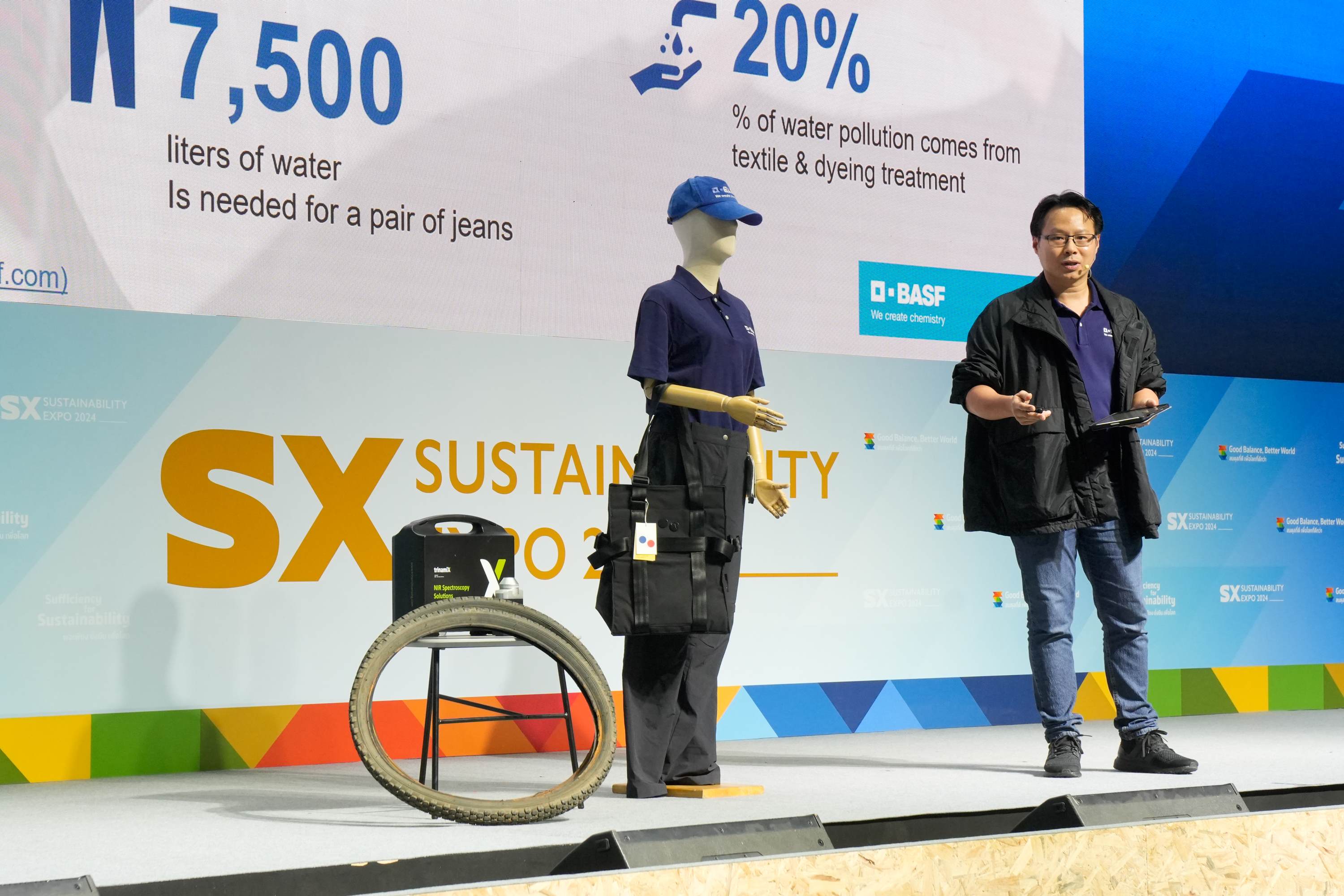
In addition, the industry consumes an enormous volume of water—expected to reach 170 billion cubic meters by 2025. Around 20% of global water pollution originates from textile production processes like dyeing and washing. For example, producing one pair of jeans requires up to 7,500 liters of water.
In Thailand, the Industrial Environment Institute of the Federation of Thai Industries reports that the local textile sector uses 145 million cubic meters of water per year and releases 64 million cubic meters of wastewater—often containing chemical contaminants—into natural waterways.
Global Innovation for a Circular Future
Encouragingly, cutting-edge innovations are accelerating the shift toward sustainability. At the Techtextil 2024 fair in Frankfurt, Germany—one of the world’s premier exhibitions for sustainable textile technology—several breakthrough solutions were unveiled, underscoring the industry's transformation.
Among them was Loopamid, BASF’s flagship innovation designed specifically for circular fashion. Loopamid is the world’s first 100% textile-to-textile chemical recycling solution that recovers Polyamide 6 (nylon) from post-consumer textile waste. The result is a brand-new nylon polymer with properties identical to virgin material.
“This is a milestone for BASF in making nylon circular and reintroducing it into fashion production without compromising quality,” Sirichai explained.
As an upstream materials provider, BASF collaborates with stakeholders across the entire textile value chain—from raw material suppliers and chemical producers to fiber makers, textile manufacturers, fashion brands, and consumers.
Circular Fashion Goes Commercial
Earlier this year, BASF partnered with Inditex, the Spanish fashion powerhouse behind brands like Zara, Pull&Bear, and Massimo Dutti, to launch "Loopamid x ZARA"—a capsule collection of jackets made entirely from recycled textile waste. Every element—from fabric and thread to zippers, linings, buttons, and even the label—was recycled. The collection sold out completely.
Zara plans to release more Loopamid collections, while BASF continues to expand Loopamid collaborations in Asia. This innovation reduces carbon emissions by up to 70% compared to fossil fuel–based production.
Beyond Clothing: Old Tires Become Outdoor Gear
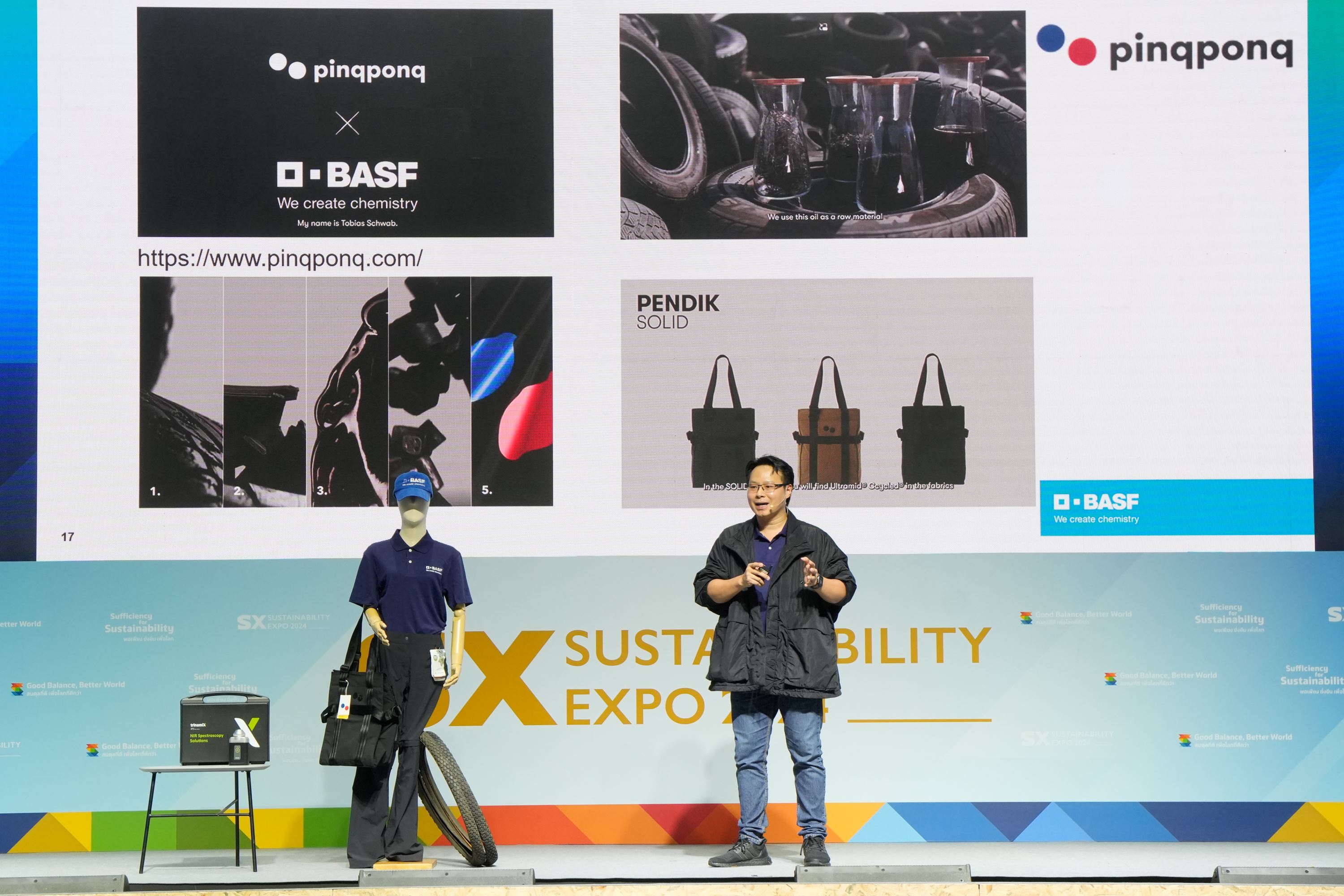
BASF also developed Ultramid® Ccycled, which uses chemically recycled materials from used tires to produce high-performance nylon. Collaborations with Vaude, a German outdoor fashion brand, and Pingpongq, an Italian bag company, led to collections that reuse tire-derived materials—offering a scalable solution to the over 1 billion used tires discarded globally each year.
Smarter Sorting: The Hidden Key to Textile Recycling
Before recycling can even begin, textile waste must be sorted—a task far more complex than it sounds. Many garments contain blended fibers like cotton mixed with polyester, nylon, or spandex, making manual sorting nearly impossible.
To address this, BASF partnered with a startup to develop TrinamiX Mobile NIR Spectroscopy. This portable device can accurately identify over 15 textile types on the spot, replacing time-consuming lab analysis. The system syncs with a smartphone or tablet app, allowing quick, field-ready diagnostics that improve the quality of recycled fibers.
Last year, Boer Group, an international textile recycling company, integrated this technology at its sorting facility in the Netherlands, where it processes over 400,000 kilograms of textile waste daily across more than 100 countries.
Today, BASF is expanding partnerships across countries—including Thailand—to deploy TrinamiX for textile and general plastic waste sorting, driving global efficiency in waste management.
Follow SX updates and events on the Sustainability Expo Facebook Page or add Line ID: @sxofficial Get ready for SX2025, returning grander than ever from September 26 to October 5, 2025, at the Queen Sirikit National Convention Center (QSNCC)