Listening to Nature Through Precision Farming Technology
While businesses across sectors are racing toward digital transformation, one vital foundation of Thailand’s economy remains largely underdeveloped—the agricultural sector. Despite comprising nearly 40% of the population and covering over 6 million households, Thai agriculture has seen declining growth over the past two decades, now contributing just 8–9% of national GDP. Adding to the challenge is its vulnerability, especially to the worsening effects of climate change. This begs the urgent question: How can Thai agriculture adapt and survive into the future?
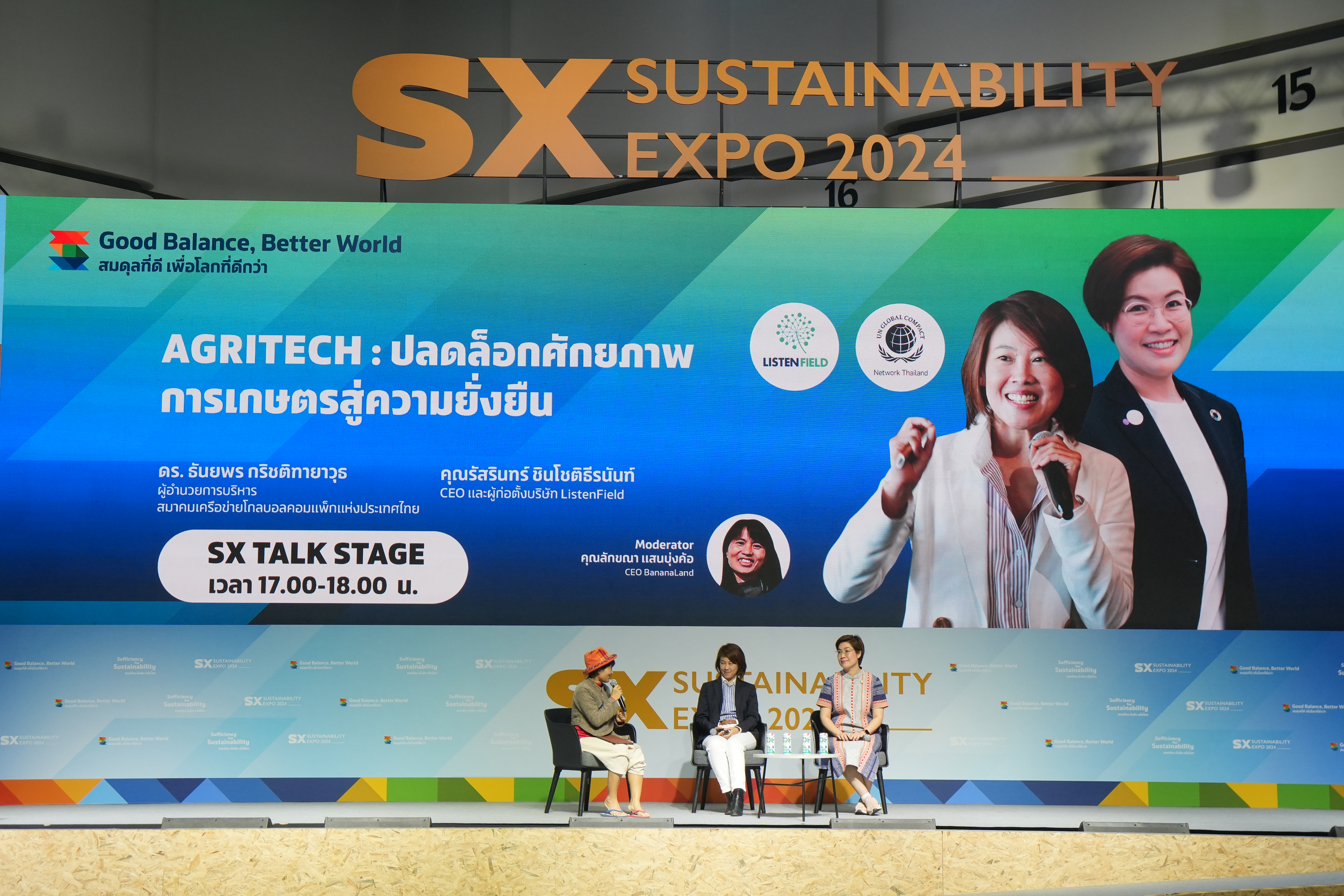
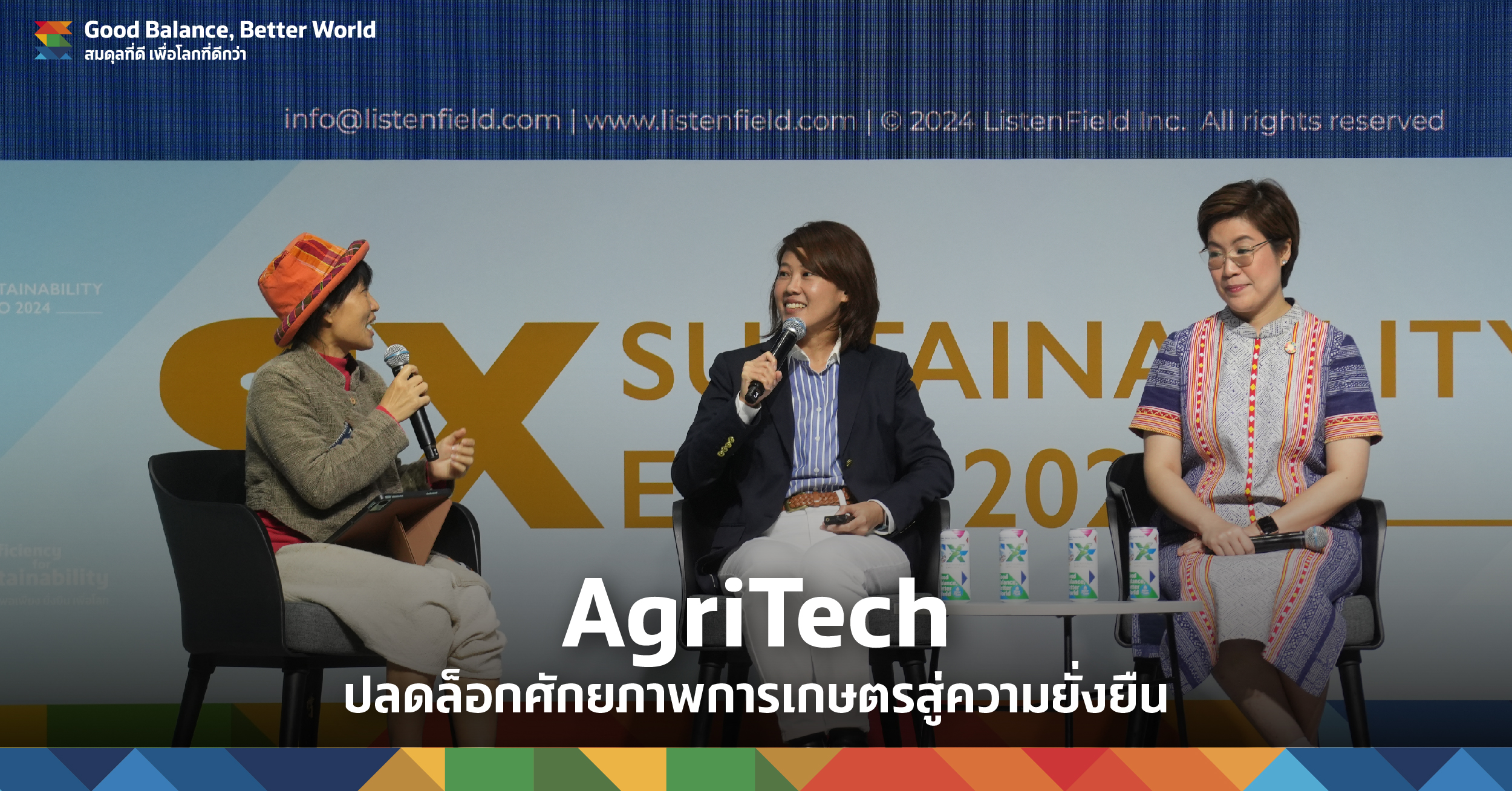
At SUSTAINABILITY EXPO 2024 (SX2024), that question took center stage in a panel discussion titled
“AgriTech: Unlocking the Agricultural Sector’s Potential for Sustainability.”
The keynote speaker was Dr. Russarin Chinchotithiranan, also known as “Noon”, CEO and Founder of ListenField—a pioneering startup offering Integrated Predictive Agronomic Platforms that harness technology and innovation to empower modern agriculture. ListenField recently earned the 2024 National Innovation Award for outstanding agricultural sustainability technologies from the National Innovation Agency of Thailand.
“Start by Listening to Nature”
Dr. Russarin believes effective agriculture begins with understanding nature. Farmers must learn to interpret the signals from soil, water, and climate—what is nature telling us?
“Traditional farming can no longer sustain us,” she said.
“We need technologies that help us analyze and process precise, in-depth data so that farmers can adapt and plan effectively.”
Today, climate variability—in temperature, rainfall, and natural rhythms—presents major obstacles for farmers. Meanwhile, agricultural soil quality continues to deteriorate from overuse and poor land management.
In response, Dr. Russarin advocates for a transition toward sustainable agriculture and regenerative farming systems. These systems use technology not only to restore soil health and environmental balance but also to improve yields and overall farm productivity.
A Bigger Picture Requires Policy Direction
Dr. Russarin emphasized the need for national direction. While consumer food preferences are shifting globally—from volume-based farming to demand-driven production—Thailand’s agricultural system still lacks alignment between government policy and global consumption trends.
“We must move beyond just growing more,” she noted.
“We need to understand supply and demand and tailor production accordingly.”
But Can Farmers Afford the Technology?
A recurring question from farmers is:
"How can we afford to invest in new technologies?"
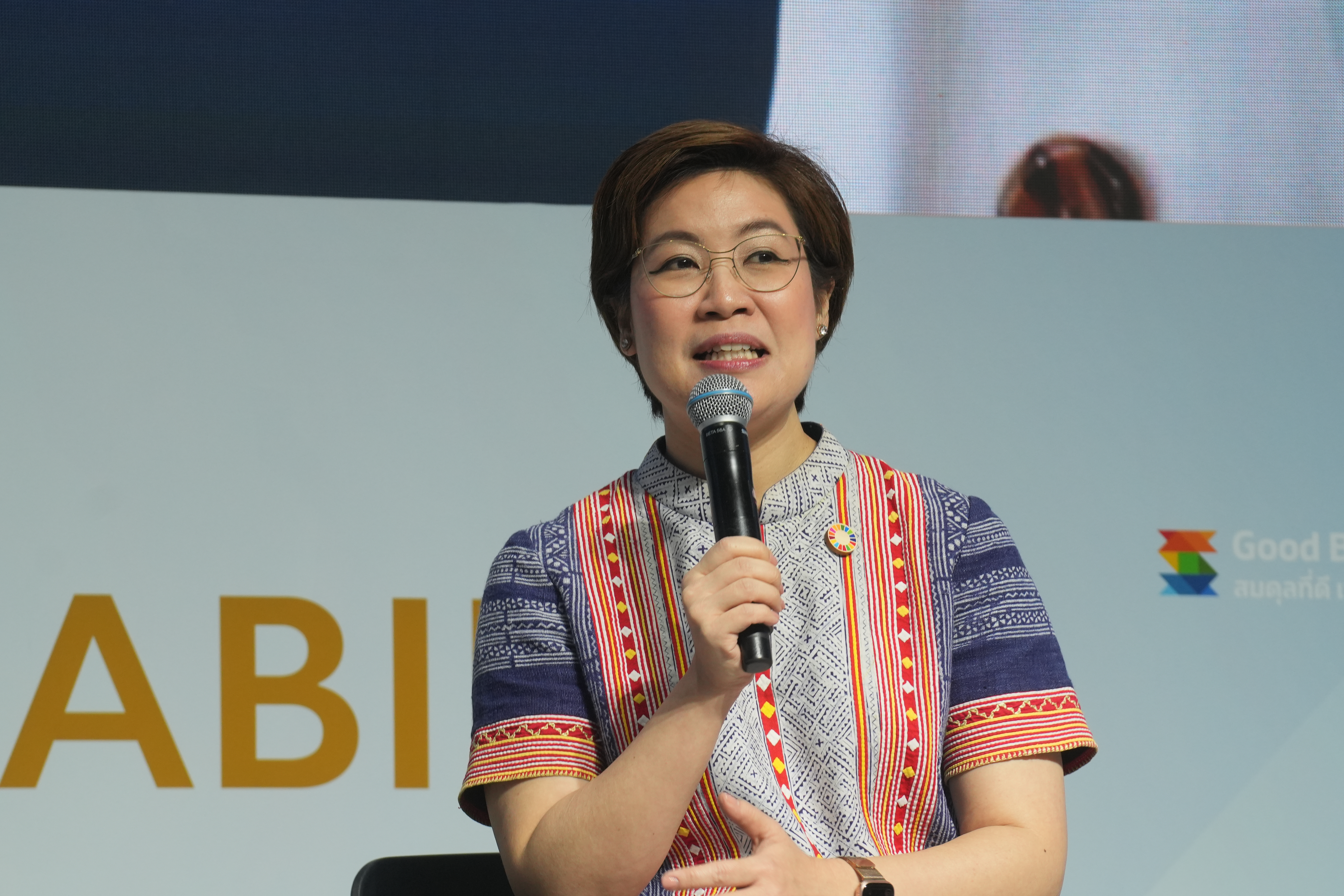
From over seven years of working directly with smallholder farmers, Dr. Russarin has learned that these farmers cannot shoulder the cost alone—especially at the beginning.
“We need to build an agricultural innovation ecosystem that outlines how every stakeholder—farmers, communities, local and provincial agricultural departments, and funding agencies—benefits from technology adoption,” she explained.
Dr. Russarin underscored that the government must play a leading role in providing financial support and infrastructure for agricultural tech implementation. Only then can we begin to see measurable results and calculate return on investment (ROI).
A Case Study: Sustainable Highland Agriculture
Dr. Russarin shared a real-world project:
a sustainable farming initiative in the highlands of Na Noi District, Nan Province, where ListenField worked with the Essen Plantors Nan—a community enterprise cultivating medicinal herbs for aromatherapy production. The project was supported by the Asian Development Bank (ADB).
“We didn’t start by introducing technology,” she said.
“We started by understanding the farmers' real pain points. From there, we brought in appropriate tools—not to impose, but to empower.”
She stressed the importance of shifting the mindset away from “giving help” toward enabling change that originates from the farmers themselves.
For older generations who may find technology intimidating, ListenField doesn’t expect direct adoption. Instead, they focus on training second- and third-generation farmers to apply modern tools and methods.
Ensuring Continuity and Practical Innovation
Technology is still unfamiliar to many in agriculture. That’s why Dr. Russarin insists that all players must genuinely collaborate. ListenField, as a solution provider, isn’t physically based in every farming community—so planning for long-term technology usage is key.
Their approach is to develop practical, scalable, and impactful technologies. From soil analysis to harvesting, every solution is aimed at driving real transformation. And more importantly, ensuring that farmers can use these tools effectively and sustainably.
Data-Driven Agriculture: Precision from the Ground Up
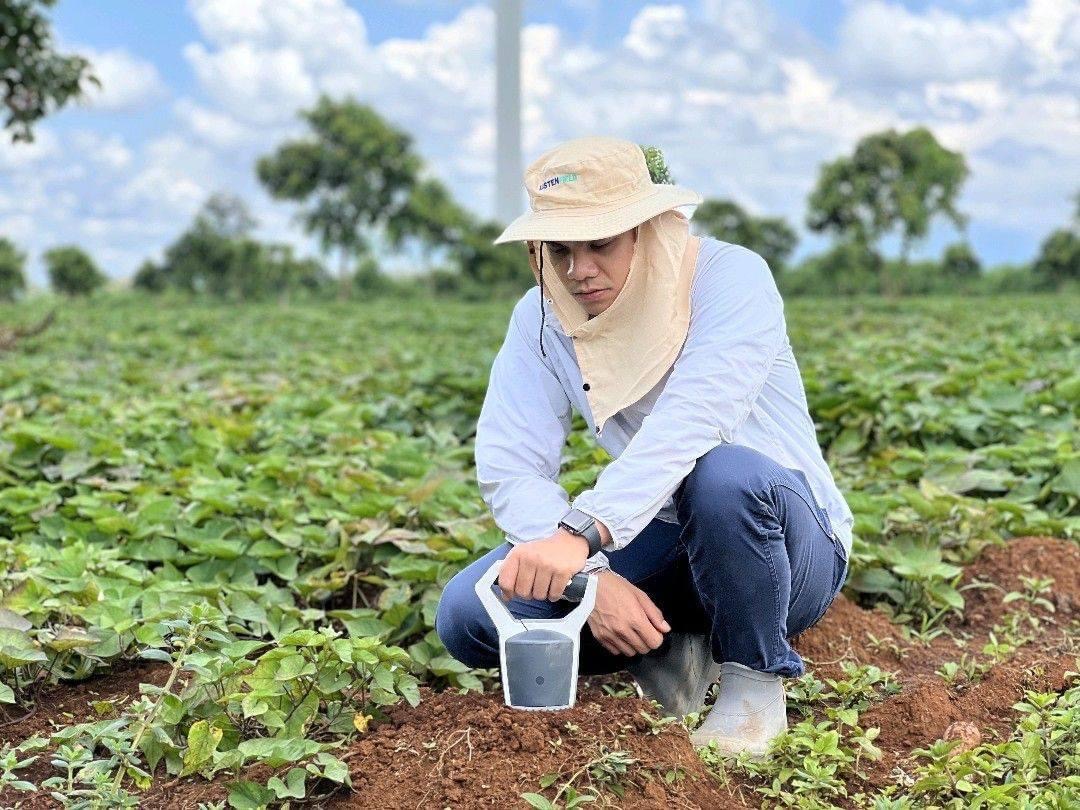
One of ListenField’s innovations is a soil analytics model accessible via API (Application Programming Interface). This integrates satellite technology to identify issues like drought stress and crop growth patterns, turning satellite maps into “remote sensors” that x-ray crop health far beyond what the human eye can see.
Farmers gain deep insights into how crops respond to current environmental conditions, allowing for smarter decisions in resource allocation, crop planning, and yield optimization.
The company also offers traceability technology, a vital tool for future agricultural exports. Additionally, ListenField enables plot-level carbon emission assessments, supporting the push for low-carbon farming.
A Mindset Shift Is Just as Critical
In the same panel discussion, Dr. Thanyaporn Kritthitayawut, Executive Director of the UN Global Compact Network Thailand, emphasized that despite using massive labor, land, and water resources, agriculture contributes less than 10% to GDP. This discrepancy reveals the urgent need for a mindset shift.
“The old ways no longer work,” she stated.
“Climate change is hitting us hard—droughts, floods, shifting seasons. Some areas will need to switch to integrated farming, new crop varieties, or more efficient, low-water cultivation methods—even agritourism.”
Dr. Thanyaporn believes that future food systems must prioritize safe, sustainable, and eco-friendly production. This includes plant- and insect-based protein alternatives, aligned with global consumer trends.
But technology alone won’t suffice. The true innovation lies in how we think. She calls for a fusion of modern agricultural technology and local wisdom, supported by policies that enable renewable energy usage and low-carbon farming practices.
Toward Net-Zero Agriculture
The recent UN Global Compact Leaders Summit 2024, held in late September, addressed new finance-for-sustainability measures aimed at accelerating progress toward net-zero carbon emissions. Formal announcements are expected soon.
Dr. Thanyaporn also cautioned against farmers overextending themselves financially, driven by the desire to maximize income through repeated crop cycles. This increases debt risk.
“Many farmers are knowledgeable but lack caution,” she warned.
“We urge them to embrace the King’s Philosophy of a Sufficiency Economy—a model that supports both survival and long-term sustainability.”