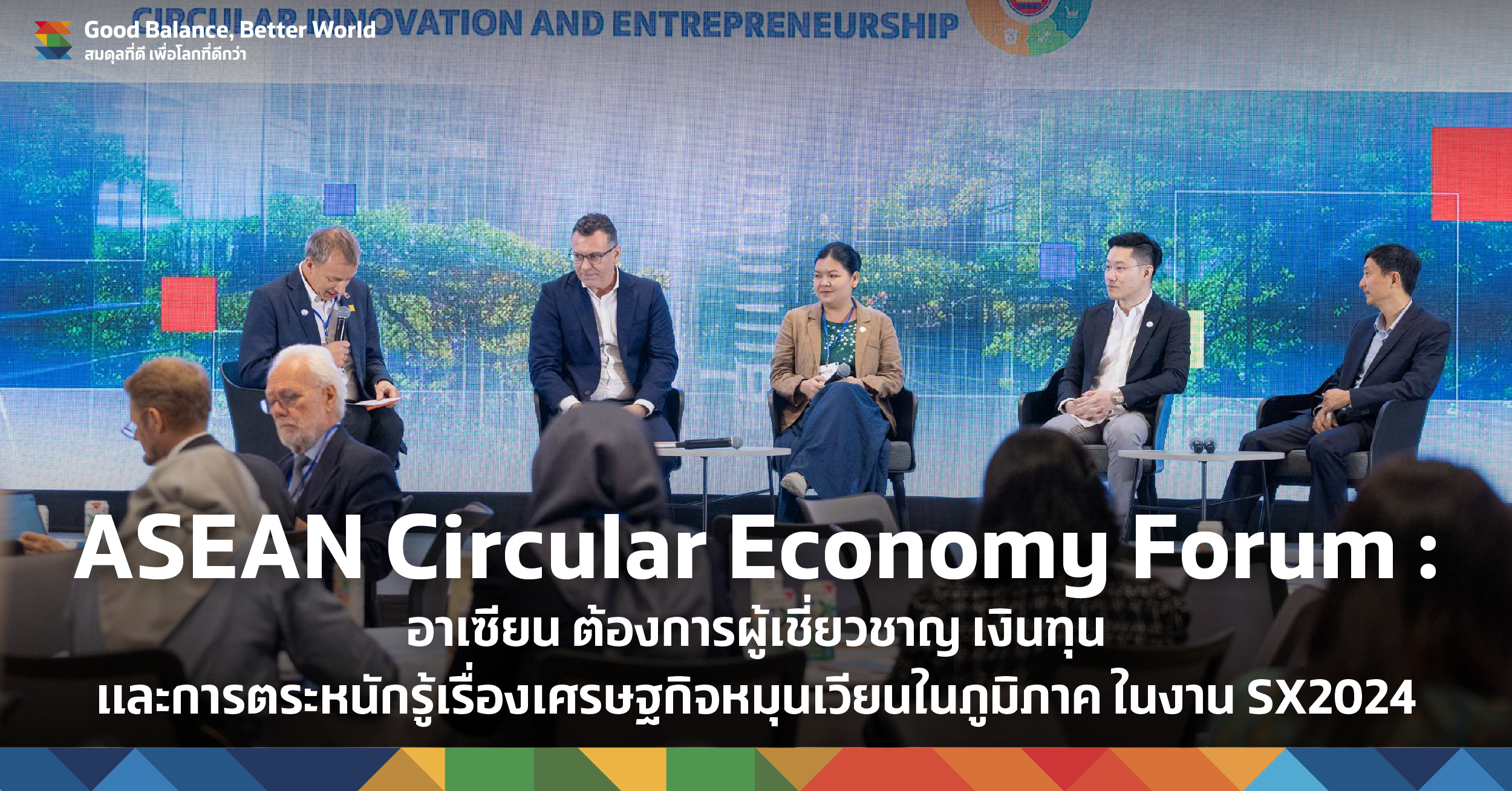
“There are many ideas and efforts relating to the circular economy, but they remain largely fragmented—operating at the local level or within specific industries. At the regional level, we still lack a clear and coherent framework for the private sector. Numerous initiatives are now working to shift behaviors, raise awareness, and educate. This forum serves as a platform to refine and clarify the ASEAN Circular Economy Framework that has been set,” said Ms. Latifahida Latif, Assistant Director of the Finance, Economy, and Social Monitoring Division at the ASEAN Secretariat, during the ASEAN Circular Economy Forum held at Sustainability Expo 2024 at the Queen Sirikit National Convention Center, from 27 September to 6 October 2024.
Latifahida outlined five strategic pillars seen as the starting point for businesses—especially micro, small, and medium enterprises (MSMEs)—across the region:
-
Harmonization of national standards
-
Promoting open trade in circular products and services
-
Advancing innovation
-
Supporting sustainable finance and impact investment
-
Promoting efficient use of energy and resources
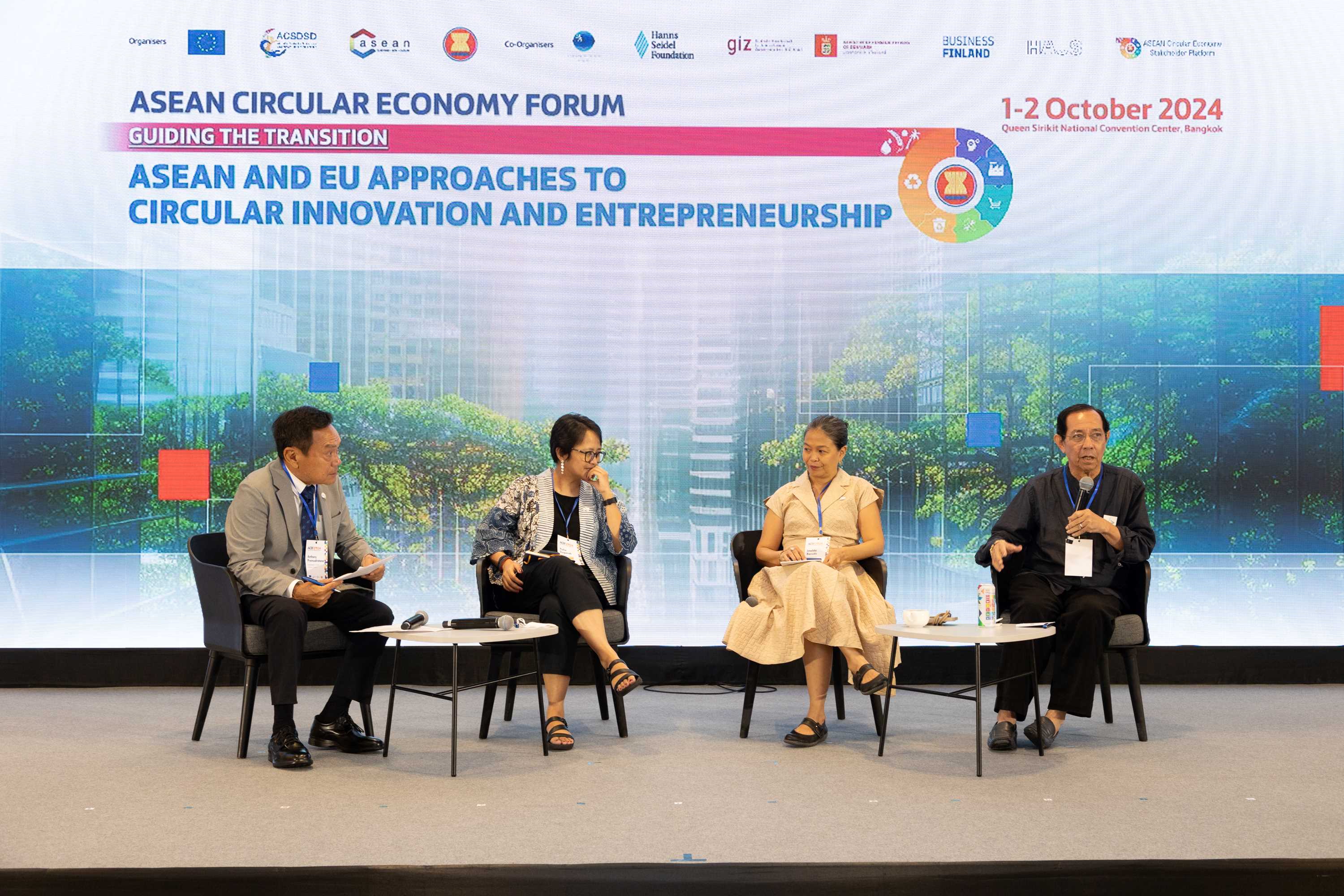
When asked whether businesses should understand the circular economy policies of neighboring countries, she emphasized that knowing the relevant rules and regulations elsewhere would enable more efficient exports.
“We need to consider financial technology access and energy efficiency to align the private sector with regional plans... If producers must meet differing standards in each country, this adds to their cost burden. That's why we’re working toward harmonized standards, so one product can be distributed across all ASEAN members with mutual understanding,” she explained.
Rethinking Circularity
Latifahida pointed out a critical challenge: the lack of experts and capital in the region hampers large-scale circular transformation and awareness-building.
“I think many people misunderstand the circular economy as simply about waste management. But it goes far beyond that—it starts upstream, at the product design phase. Raising awareness about this holistic concept is essential,” she added.
Her perspective aligns with that of Dr. Vichuda Daud, Director of the Advanced Polymer Technology Research Group at the National Metal and Materials Technology Center (MTEC), who emphasized the need to rethink how we value resources.
Dr. Vichuda noted that not everyone shares the same understanding of what constitutes “waste.” In Thai, the word often translates simply to “garbage,” whereas in the context of circular economy, it refers to anything no longer usable.
“That’s the problem. We need to shift our mindset—we're talking about resources. We must ask: if I can't use it, could someone else? Does it still have value?” she said.
From Waste Utilization to True Circular Design
Dr. Vichuda's work involves developing strategies to enhance circularity for various businesses in Thailand. While specific strategies may vary by business or product type, the core principle remains the efficient and sustainable use of resources.
A major challenge, she noted, is that most people focus only on the end of the product lifecycle—what to do with waste or leftover materials—and rarely consider the full product journey.
“We must ask: after we produce this item, who uses it? What happens after use? We need to understand our ecosystem—who's involved, where the pressure points are, and where we can intervene. We can't solve everything alone,” she explained.
Dr. Vichuda gave an example of a furniture company that joined an MTEC program. The company initially focused on repurposing leftover materials. But after working with MTEC, they realized this was only waste utilization, not circular design.
“We asked: have you considered what happens when your furniture reaches the end of its use? Circular design starts before production, not after. Reusing scrap materials is helpful, but it’s not a circular strategy.”
The company ultimately redesigned their outdoor chairs and picnic tables, which were previously assembled as single pieces using adhesives. This made disassembly and reuse difficult. With MTEC’s support, they replaced glues with bolts and optimized structural strength through product design—making it easier to recycle or repurpose the items in future.
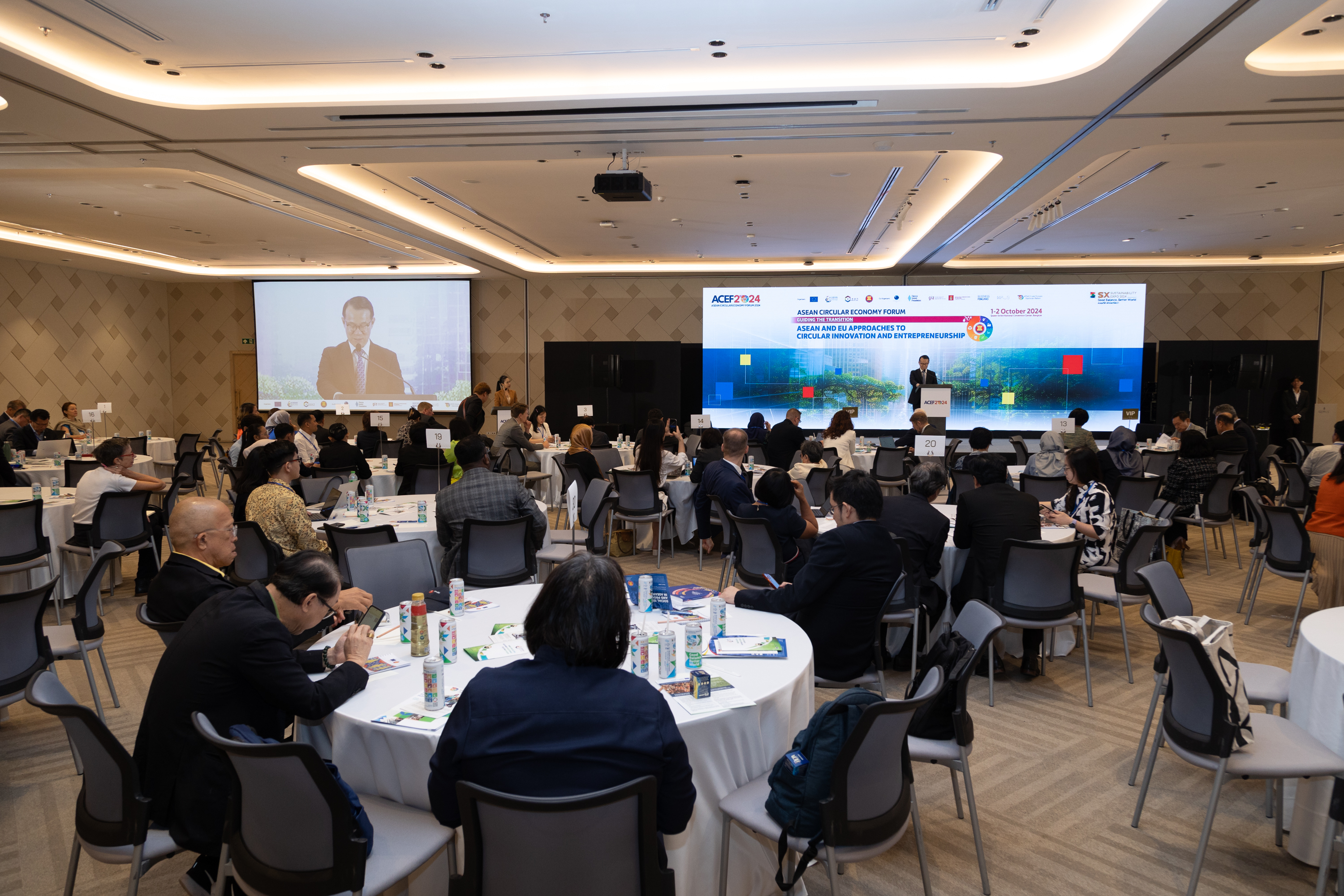
Challenges in Scaling the Circular Economy
Beyond mindset shifts and redefining “waste,” Dr. Vichuda identified other barriers, such as businesses giving up too soon:
“Many stop before seeing results. It’s challenging to get businesses to consider a product’s full lifecycle and what comes next. Can manufacturers design with that end in mind?”
She noted a key misconception: many companies think they must transform entirely on their own.
“Everyone thinks they have to do it all themselves. But in truth, they don’t. What’s limiting innovation is this very assumption. Businesses from different industries could—and should—collaborate to create circular systems.”
Communication is another major hurdle. Valuable data and insights are often not shared widely. New products or solutions—like washable ink, for example—go unnoticed because no one knows they exist.
“Say there’s a company producing washable ink. Who knows about it? Who are they telling? Who’s the intended audience?”
Ultimately, while ASEAN nations share a common vision for sustainability, truly advancing the circular economy will require deeper cross-border collaboration. The challenge lies in connecting data, resources, and leadership across countries—and in creating communication mechanisms that allow these elements to align and move forward together.
Follow SX updates and events on the Sustainability Expo Facebook Page or add Line ID: @sxofficial Get ready for SX2025, returning grander than ever from September 26 to October 5, 2025, at the Queen Sirikit National Convention Center (QSNCC)