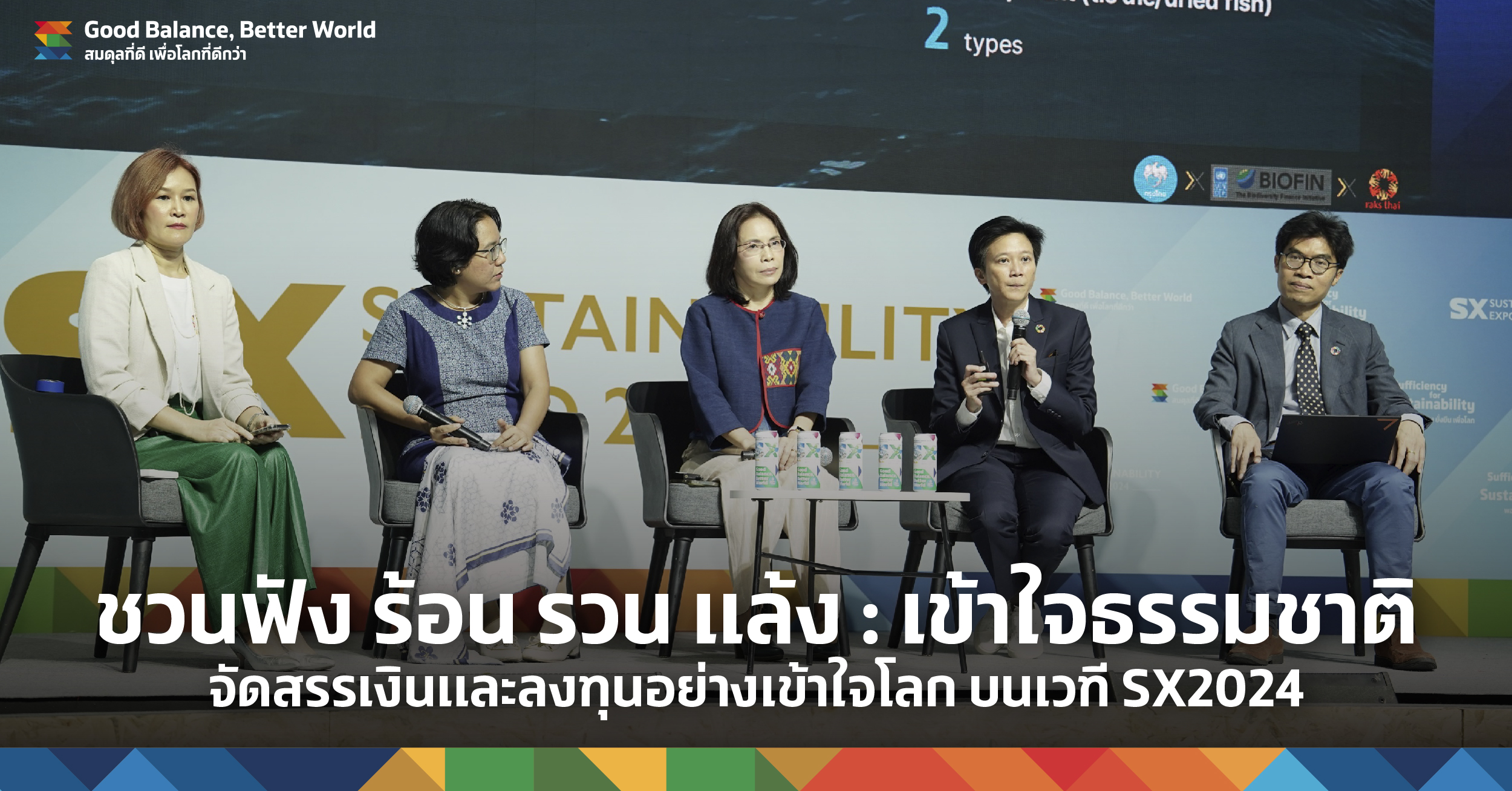
SX2024 Invites You to the Talk: "Hot, Chaotic, Dry
Understanding Nature to Guide Finance and Investment for a Sustainable World"
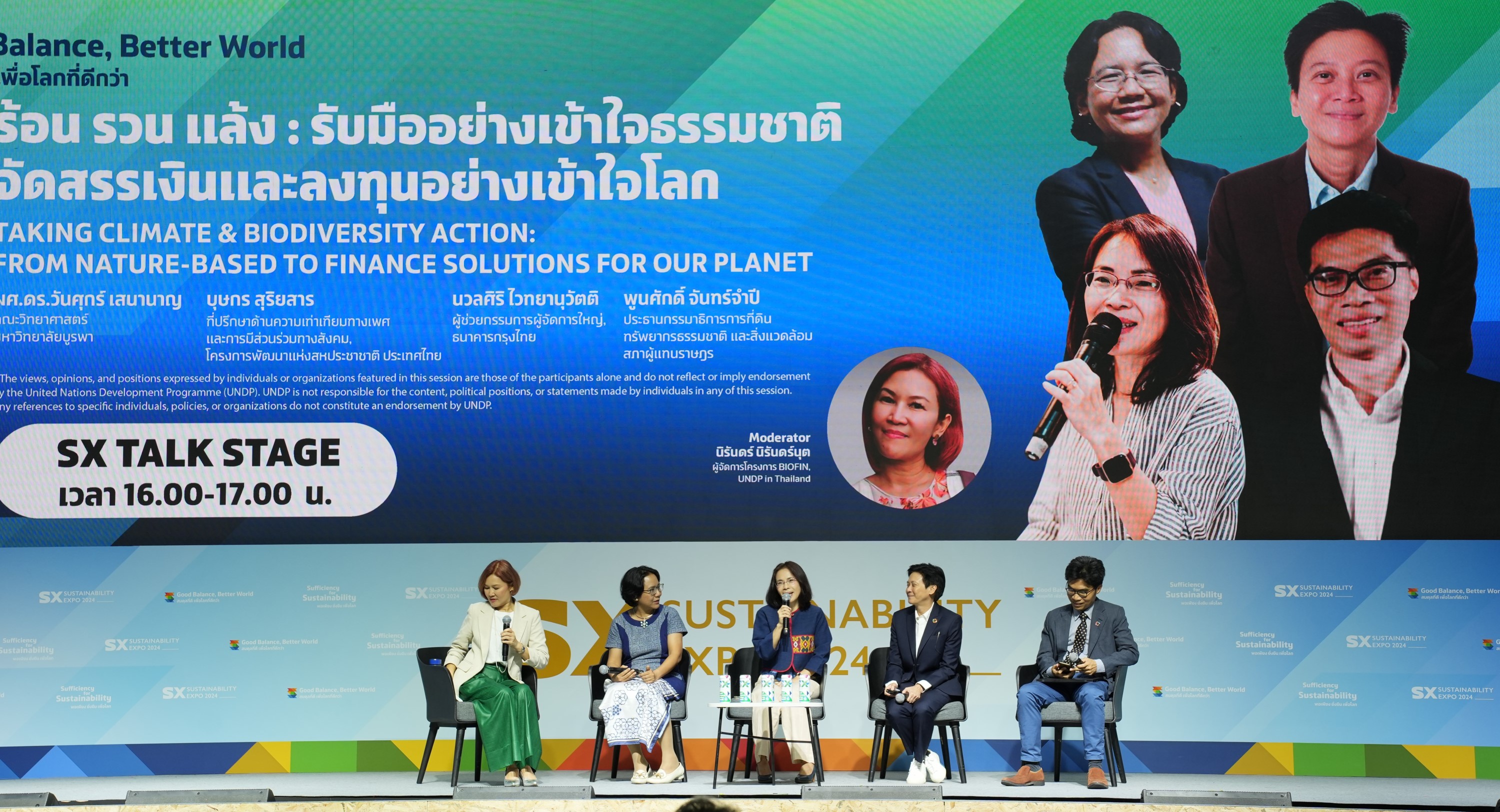
Just like in business and everyday life, building sustainability requires strategic investment. However, achieving tangible outcomes demands more than just economic considerations — it requires a deep understanding of nature and the planet. In response, the United Nations Development Programme (UNDP) Thailand brought together representatives from academia, the private sector, and legislative bodies to exchange insights on how finance and investment play a pivotal role in driving systemic change toward sustainability. The discussion, titled “Hot, Chaotic, Dry — Understanding Nature to Guide Finance and Investment for a Sustainable World,” took place at the Sustainability Expo 2024 (SX2024), ASEAN’s largest sustainability exhibition.
“Without Budget Allocation, Change Will Never Come”
Poonsak Janjumpee, Chairman of the Standing Committee on Land, Natural Resources, and Environment of the House of Representatives, opened the dialogue with a strong message:
“If we don't allocate the budget wisely, we will never be able to transform this country.”
Previously a professor focused on waste management, Poonsak voiced concern over Thailand’s sustainability trajectory. Although the national development plan aspires for Thailand to rank among the top 40 countries in achieving the UN Sustainable Development Goals (SDGs) by 2027, the nation’s ranking has dropped from 40th in 2018 to 45th today.
“Why have we slipped in the rankings? Because our environmental sustainability budget accounts for only 0.9% of the national budget. That number speaks for itself — we’re not prioritizing sustainability as we claim,” he emphasized.
Even more troubling, he noted that part of this limited budget has been allocated to projects that contradict sustainability goals, such as clearing biodiverse wetlands to build weirs. Meanwhile, the private sector and academic institutions, with greater agility, have begun investing in localized sustainable development initiatives that are already yielding results.
Local Solutions, Lasting Impact
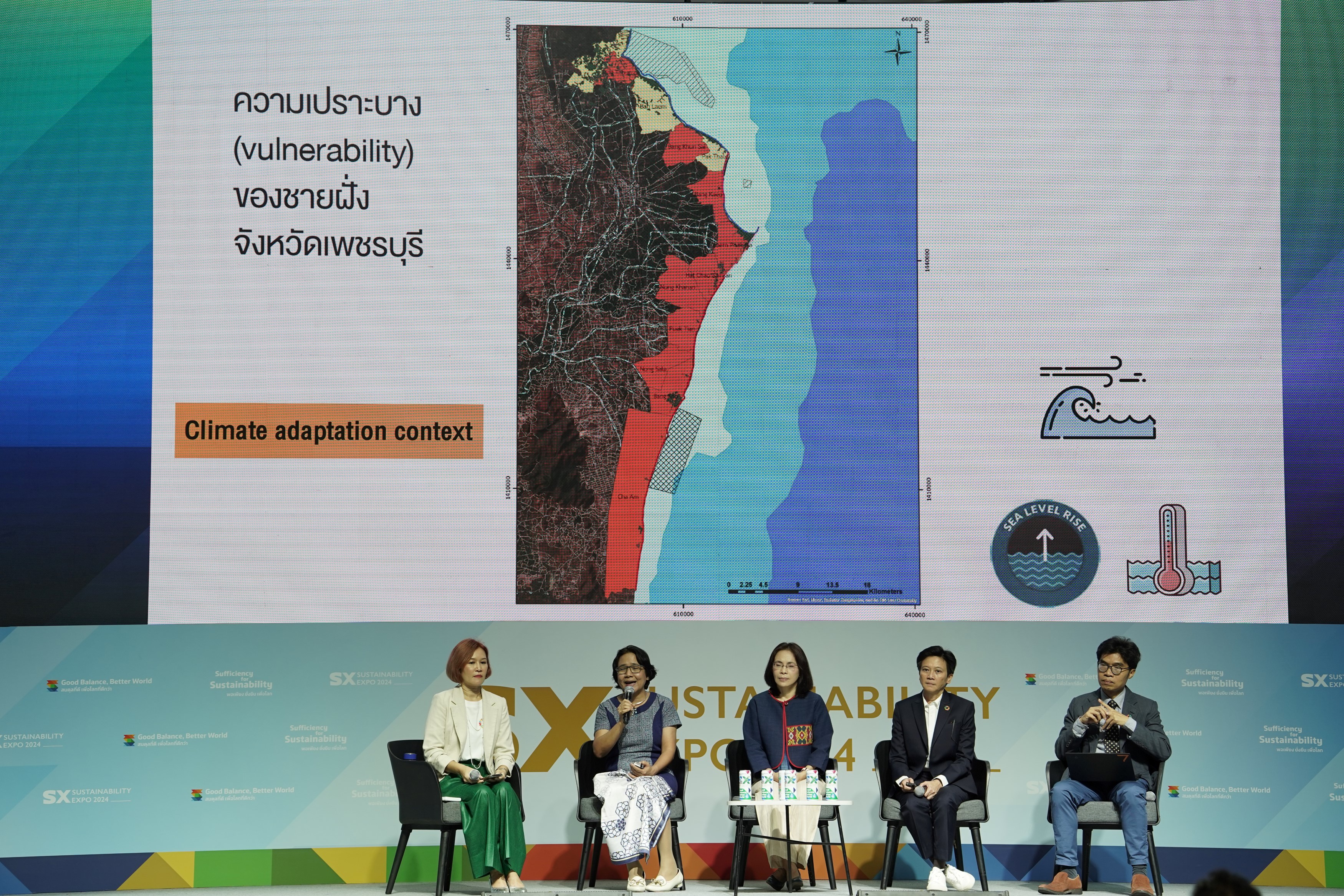
Asst. Prof. Dr. Wansuk Senanan from the Faculty of Science, Burapha University, shared examples of successful environmental projects in Rayong and Phetchaburi provinces. These include:
-
Sand Fences: Natural barriers made from nipa palm and coconut leaves to reduce coastal erosion.
-
Crab Seed Banks: Hatchery programs that breed and release blue swimming crabs into the wild. These projects not only help restore marine ecosystems but also generate food and income for coastal communities — empowering them to be more self-reliant both economically and environmentally.

When Sustainable Finance Revives a Tourism Economy
Krungthai Bank highlighted the success of its initiative to revive Koh Tao, a tourist-reliant island devastated by the COVID-19 lockdowns.
Nuansiri Vaitayanunwat, Executive Vice President of Krungthai Bank, recalled:
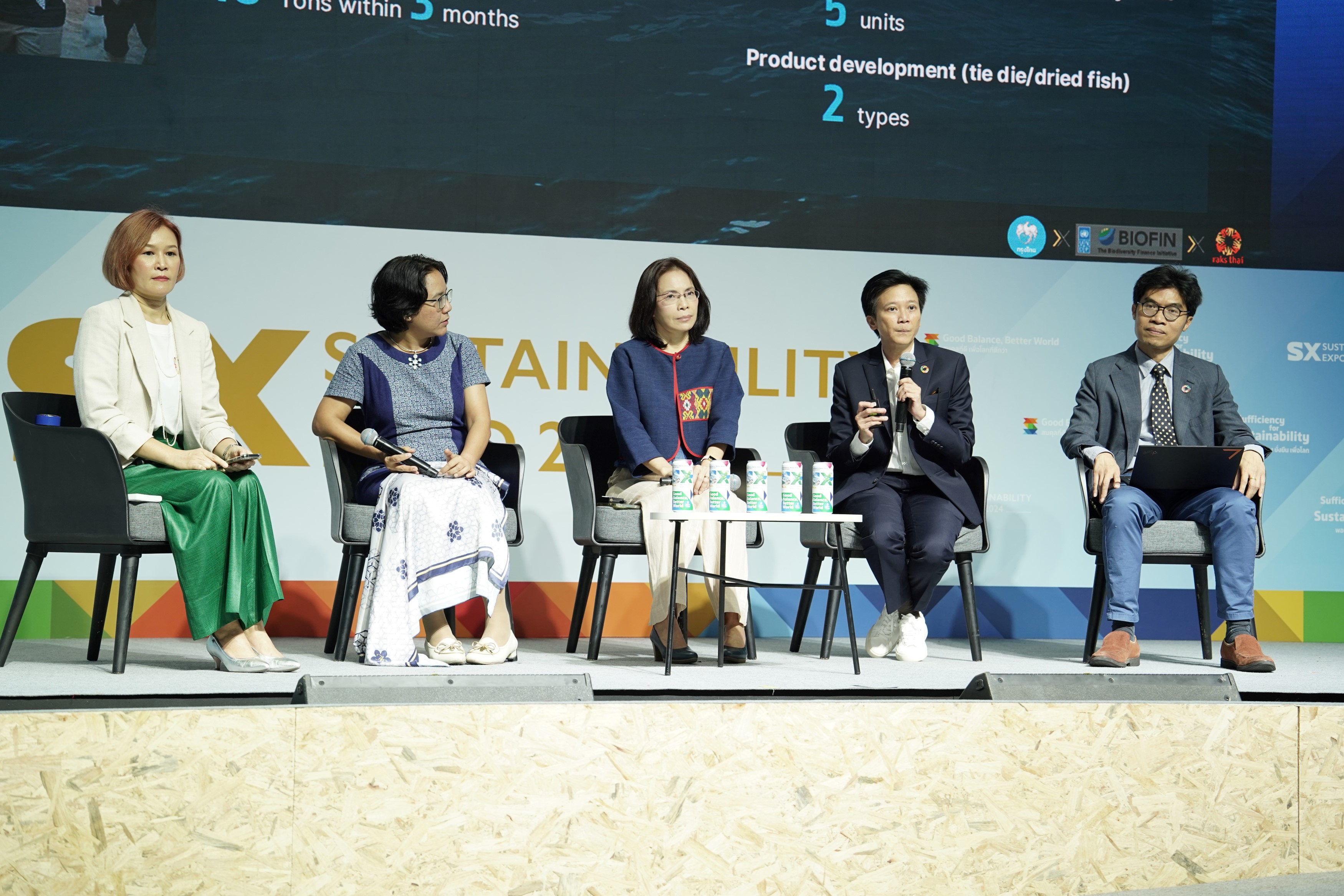
“Tourism collapsed during the pandemic, so we partnered with UNDP to raise funds via crowdfunding. We allocated 2.75 million baht to clean up the environment when there were no tourists — hiring local fishing boats to collect ocean waste, paying families monthly wages. In just three months, over 4 tons of marine debris were cleared.”
To help the community become self-sufficient, Krungthai Bank and its partners then supported eco-tourism revenue streams. Locals began charging visitors an island entrance fee, which was pooled into an environmental conservation fund. That fund financed marine surveys and the installation of artificial reefs, which boosted fish populations significantly.
“There used to be tension between fishers and tour operators. Fishers wanted to catch fish, while tour operators wanted to preserve them for tourists. But now, everyone knows where fishing is allowed and where marine life is to be observed. Everyone benefits. Within just six months, fishers saw their daily income rise to 7,000–8,000 baht.”
As the local economy recovered, Krungthai provided financial literacy training — including fund management, job creation, and sustainable resource planning. One example: establishing a “taxi boat fund” where members collectively decide how to manage finances, including setting aside a portion for social welfare.
Inclusive Development Must Start With People
Busakorn Suriyasarn, Gender Equality and Social Inclusion Advisor at UNDP, emphasized that private-sector projects offering access to vulnerable groups and unlocking community potential are crucial to sustainable transformation. She stressed the disconnect between top-down policies and real-world community needs, explaining:
“We’ve become disconnected from nature. We build cities but ignore the environment. Most policies fail to engage people, even though they’re the ones most affected. Decentralization isn’t hitting the mark. We need to recognize and harness local wisdom and ensure no one is left behind.”
Follow SX updates and events on the Sustainability Expo Facebook Page or add Line ID: @sxofficial Get ready for SX2025, returning grander than ever from September 26 to October 5, 2025, at the Queen Sirikit National Convention Center (QSNCC)
Gallery