Create Naturally Dyed Textiles with the “ECO PRINT: Nature-Inspired Fabric Workshop” at SX2024
Driven by a mission to nurture socially conscious and community-minded individuals, Mechai Pattana School, located in Buriram Province, Thailand, continues to innovate education through experiential learning. Here, students don’t pay tuition with money. Instead, they contribute 400 hours of community service and plant 400 trees annually—a unique model that fosters environmental stewardship and collaborative land use with local communities.
The school’s vision goes even further: to shape young social entrepreneurs who are not only skilled but also compassionate, generous, and committed to rural development.
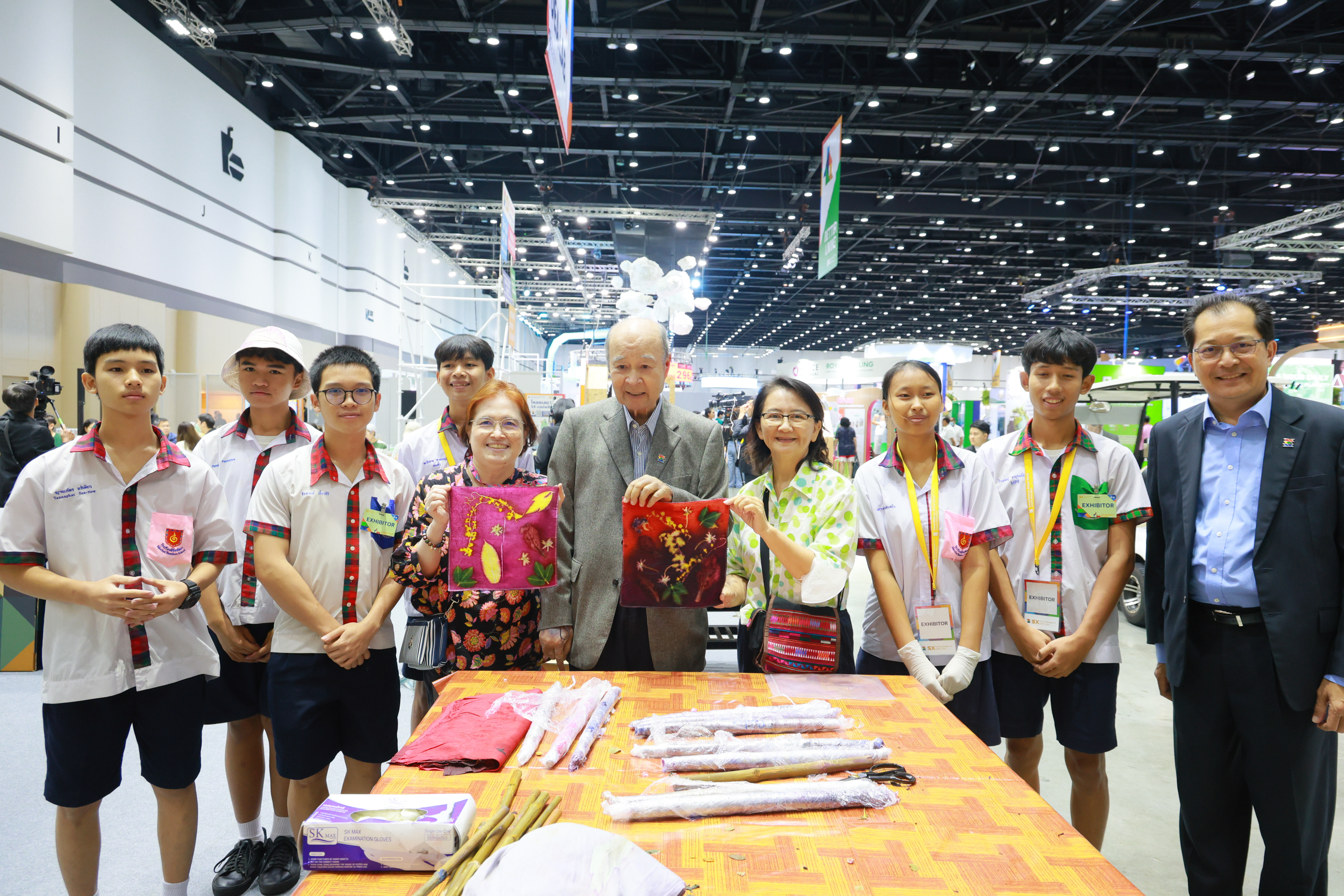
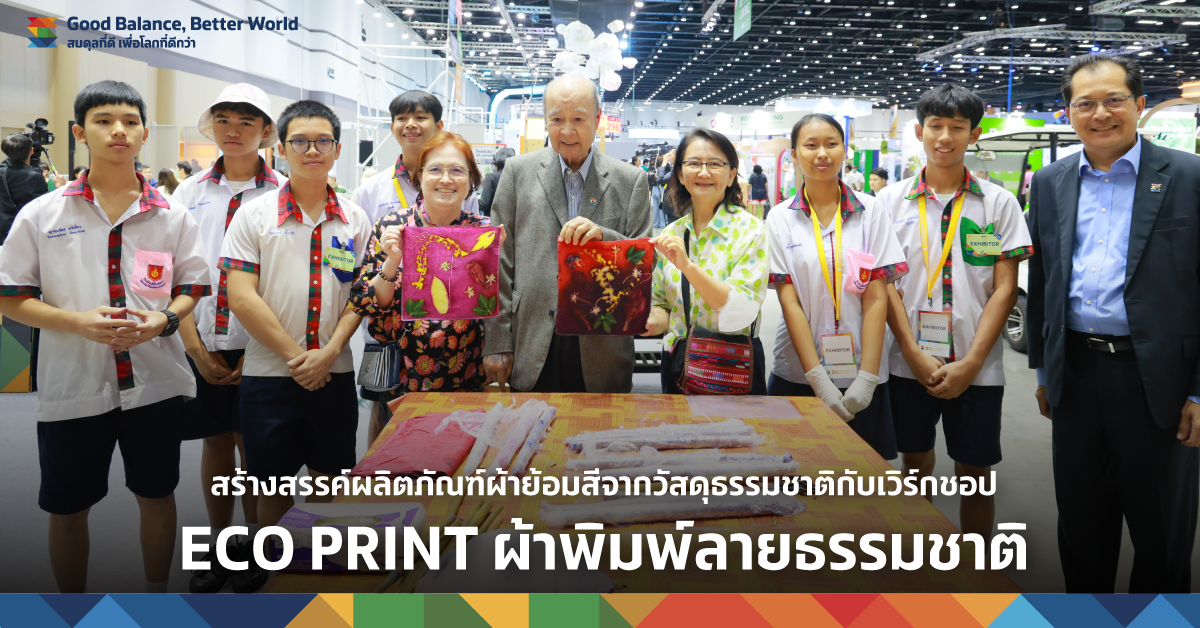
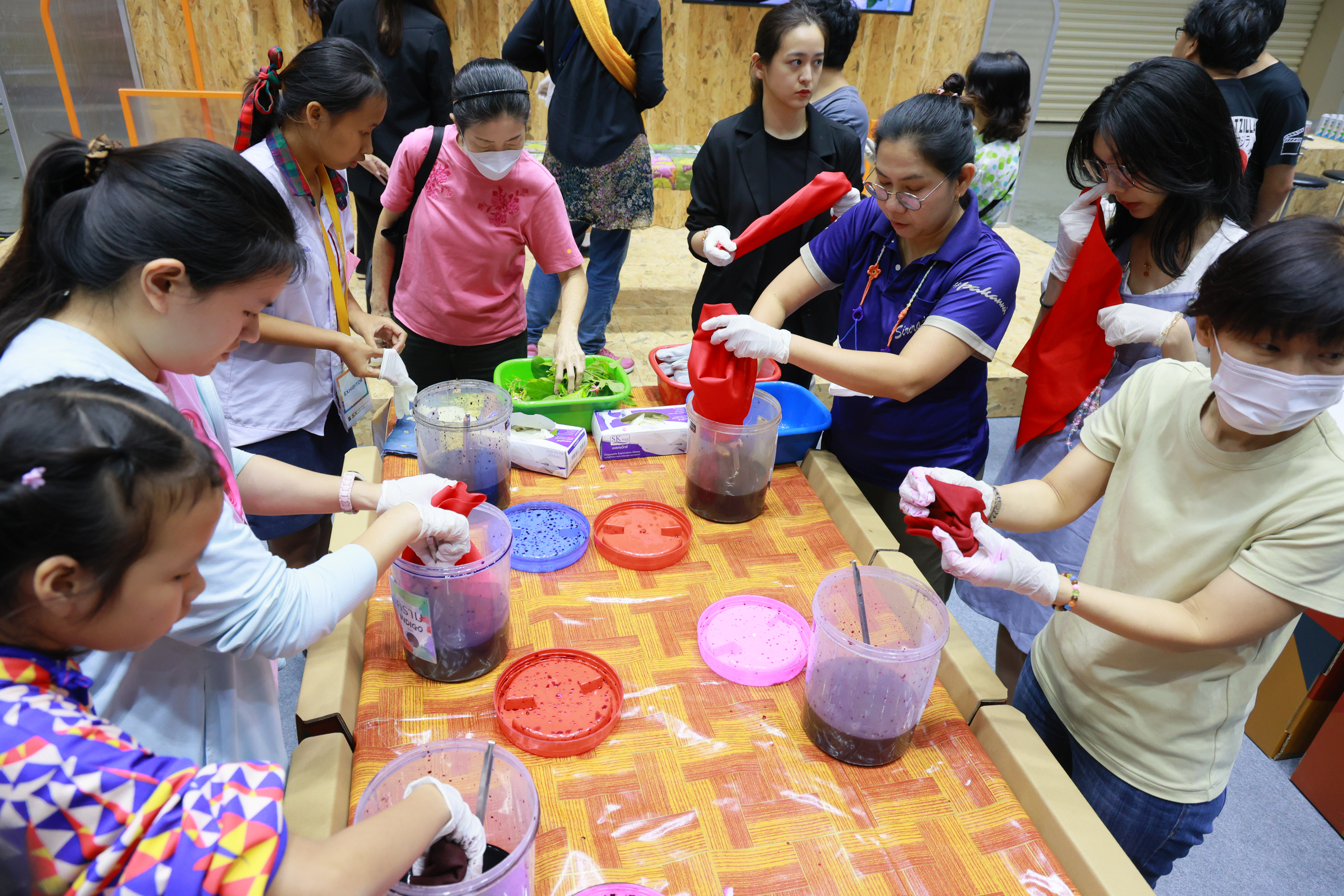
Teacher Jenwat Poonsri from Mechai Pattana School led an inspiring ECO PRINT workshop on September 29, 2024, at the Idea Lab zone of Sustainability Expo 2024 (SX2024). This hands-on activity introduced participants to the beauty and practicality of using natural materials—leaves and flowers—to create botanical prints on fabric. The goal is not only artistic expression, but also instilling a deep appreciation for nature’s resources and exploring pathways to income generation and community sharing.
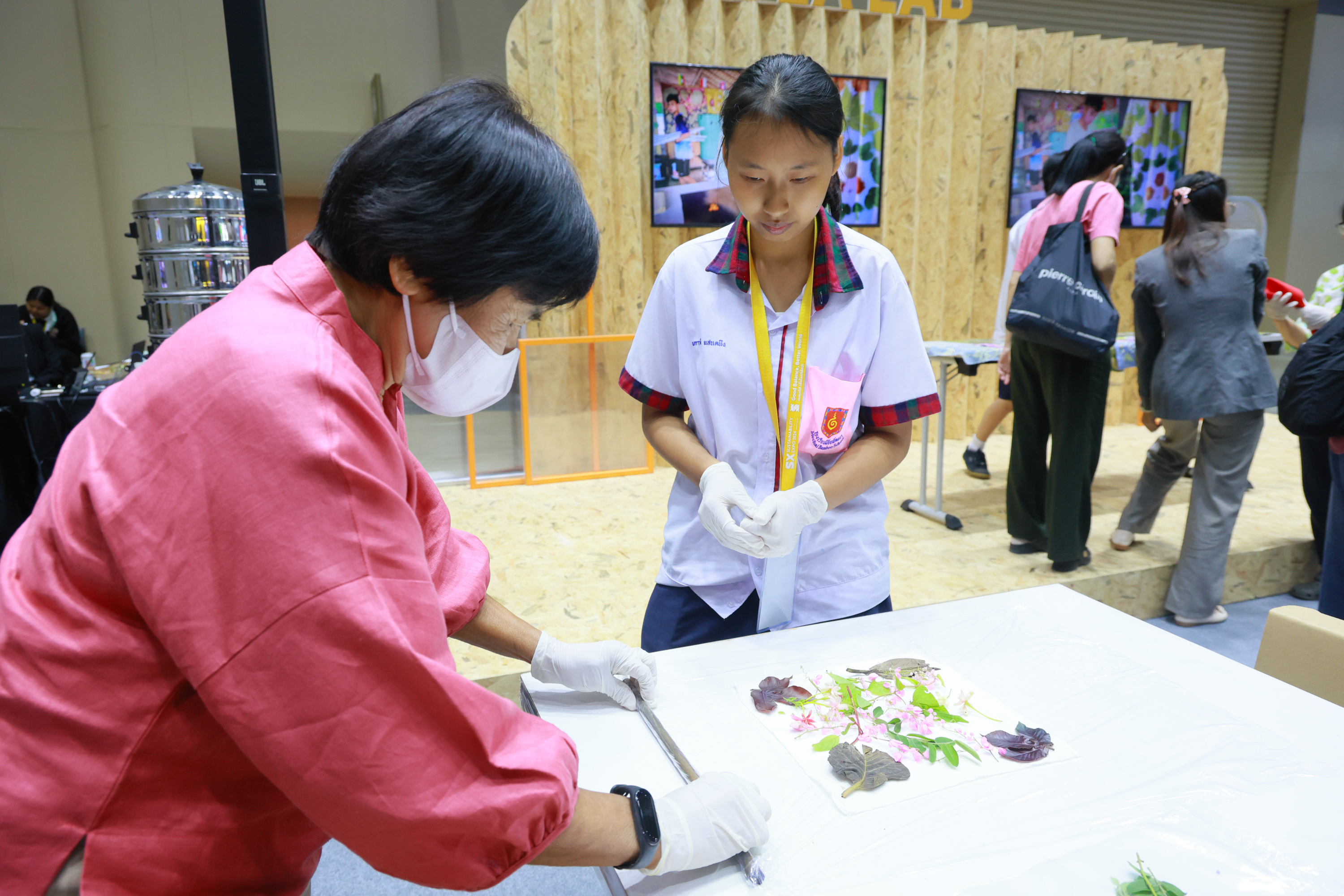
“At our school, students are encouraged to exchange their tuition for acts of service that benefit both society and the environment. We teach them the value of sharing, sustainable resource use, and community-based living. ECO PRINT is just one way of integrating those values into creative learning,” said Teacher Jenwat.
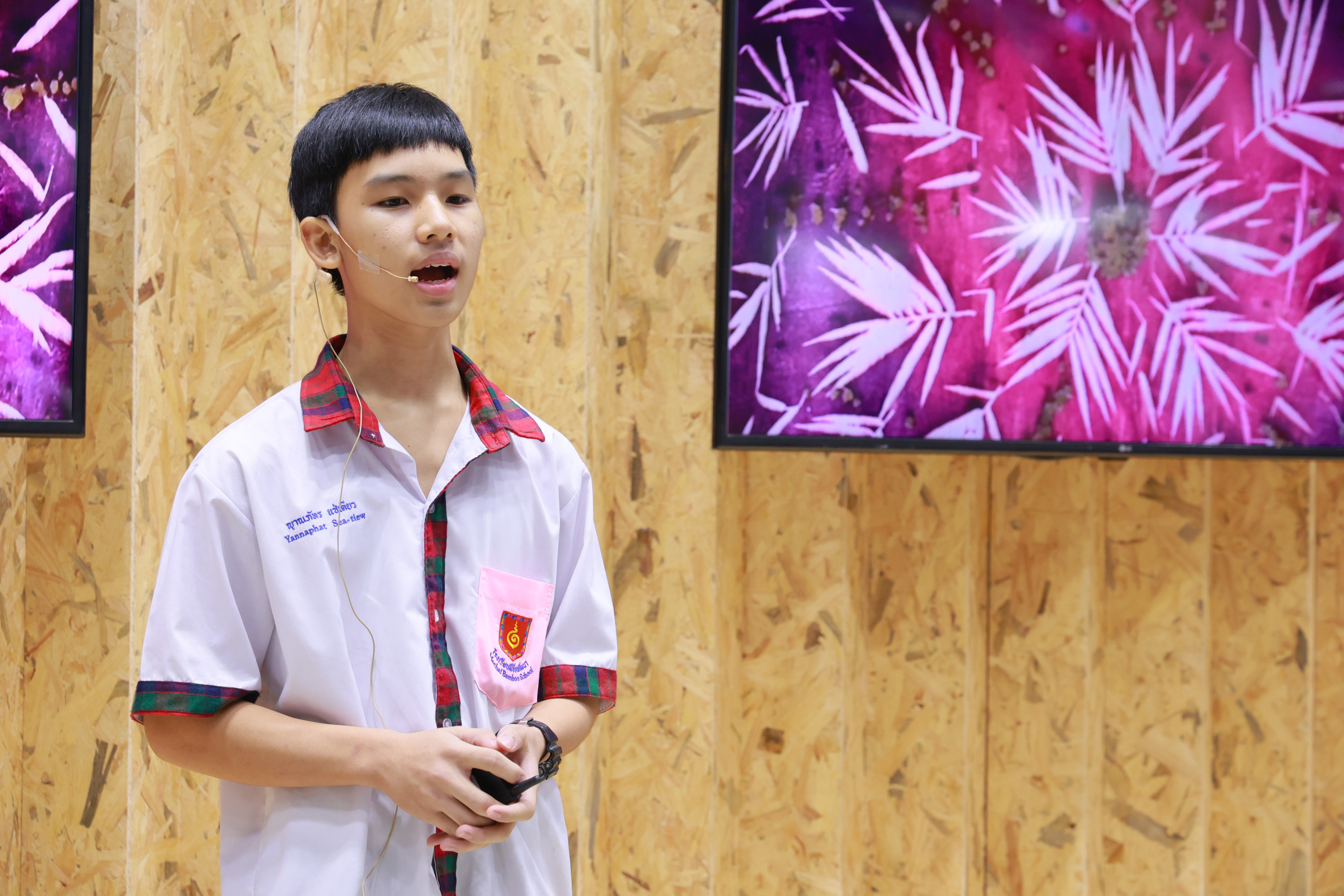
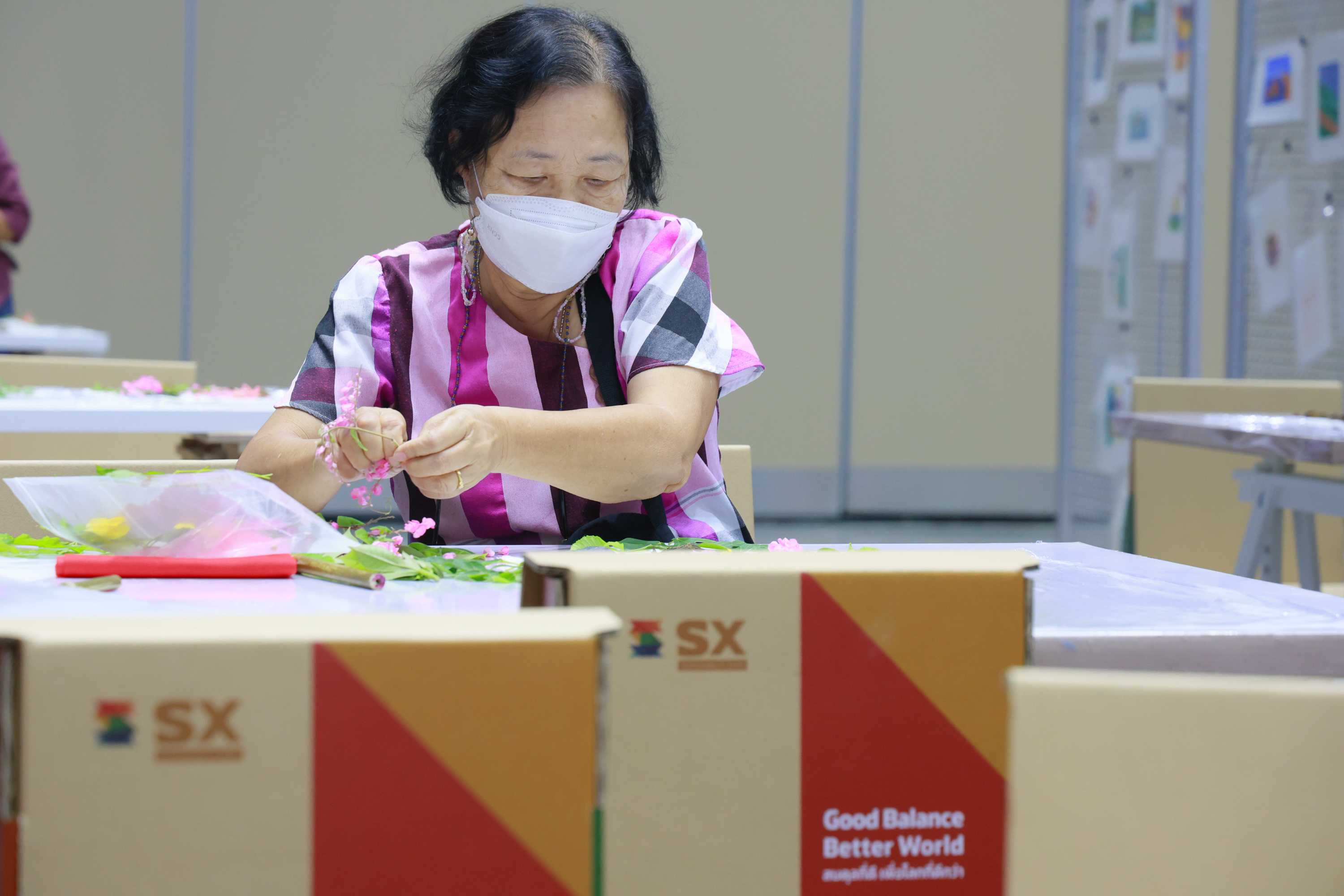
The dyeing technique used in this workshop is heat steaming, a method that draws out pigments from natural materials. Mechai Pattana students explained that different leaves and flowers yield varying colors—and not always predictably. For example, red-tinted leaves may release green tones when steamed, making experimentation essential to achieving the desired palette.
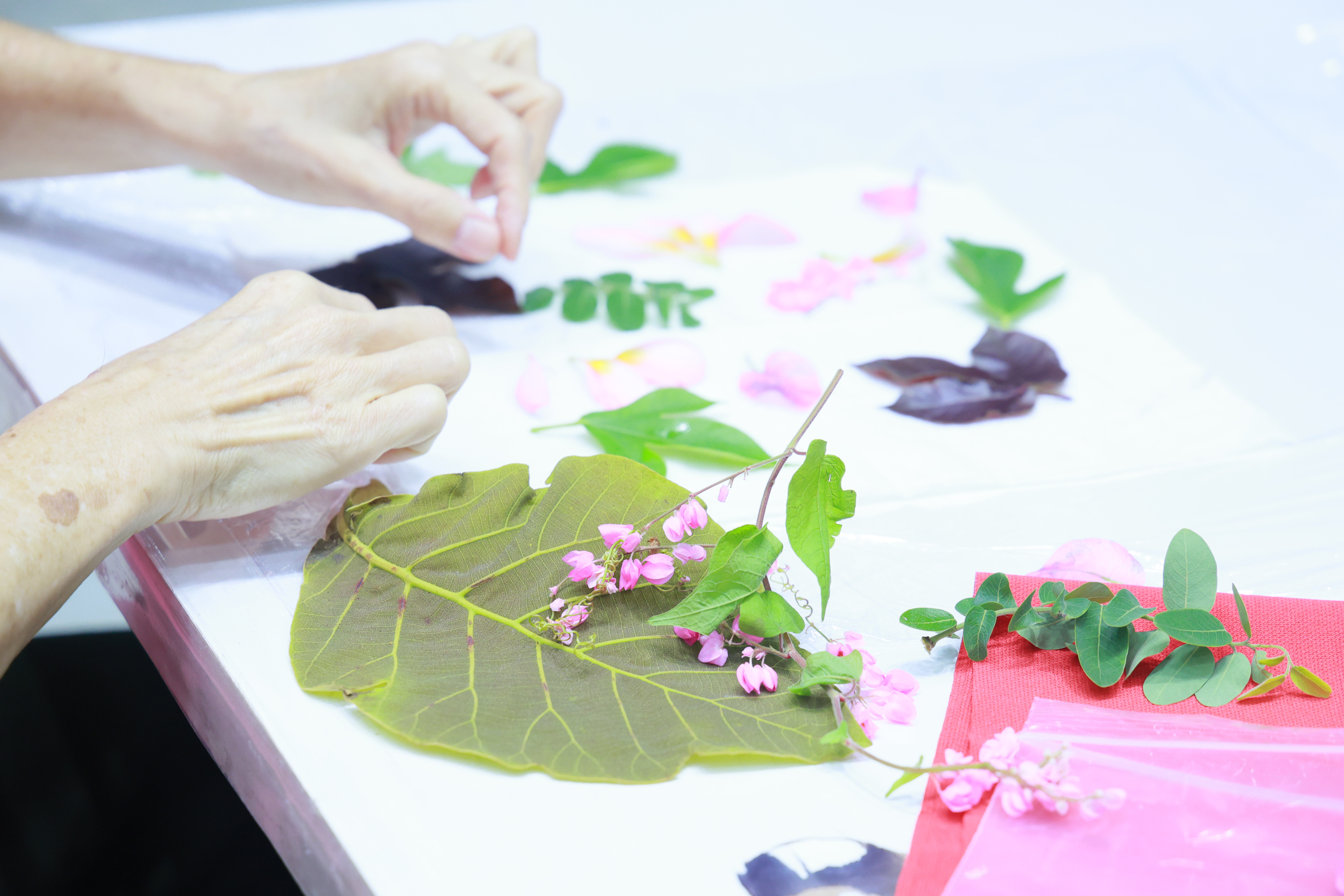
Some of the natural materials used in this session included:
-
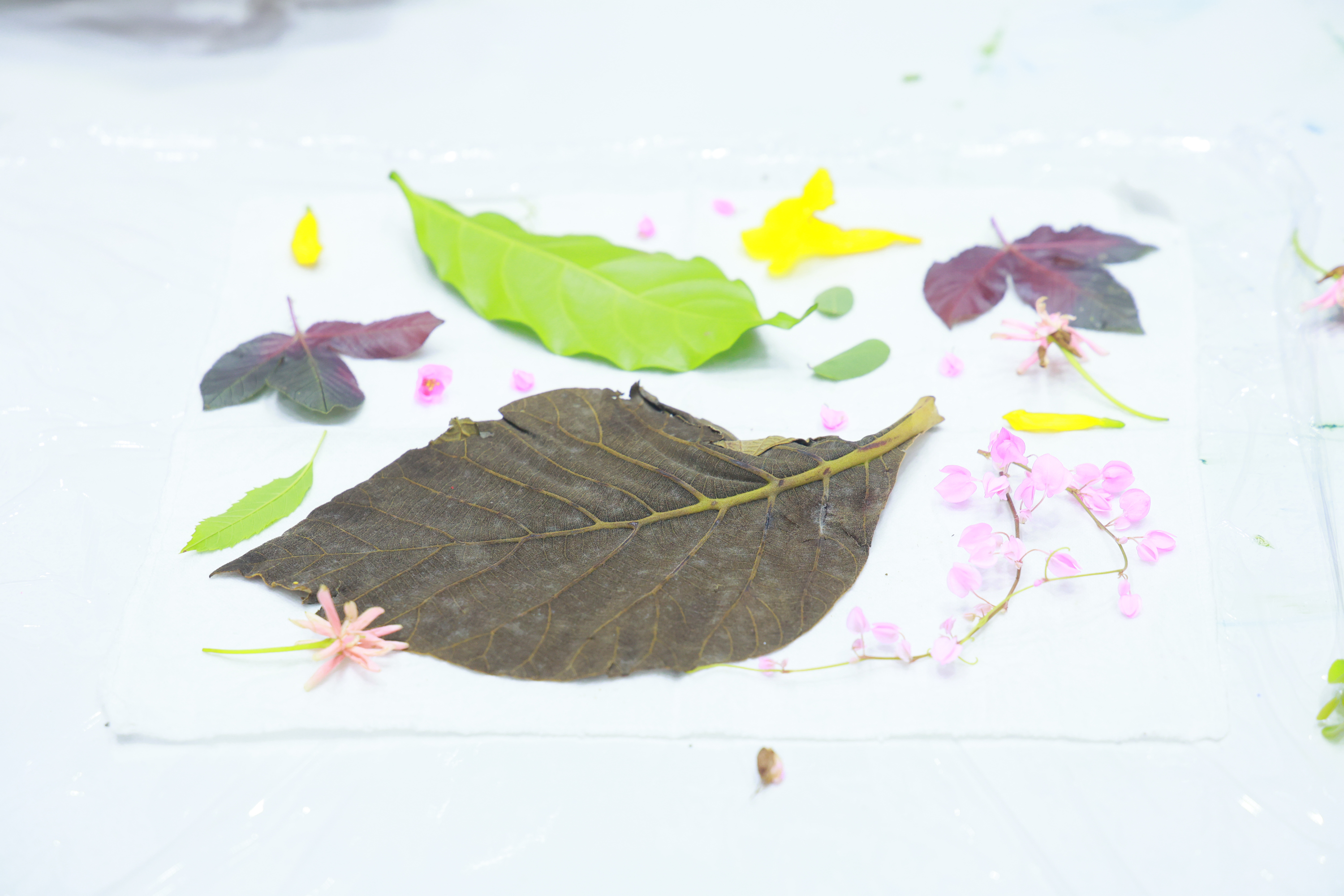
Coral vine flowers (Antigonon leptopus) – producing yellow and golden hues
-
Blood soap leaves – red in appearance, but yielding green and yellow when steamed
-
Teak leaves – offering soft pinks, reds, yellows, and oranges
-
Other leaves may not contribute vivid colors but leave behind elegant impressions and textures on the fabric
Essential tools for the process include stretch wrap film, natural fiber fabrics, mordant solution (to fix the dyes), a steam pot, and round wooden rods for rolling the fabric.
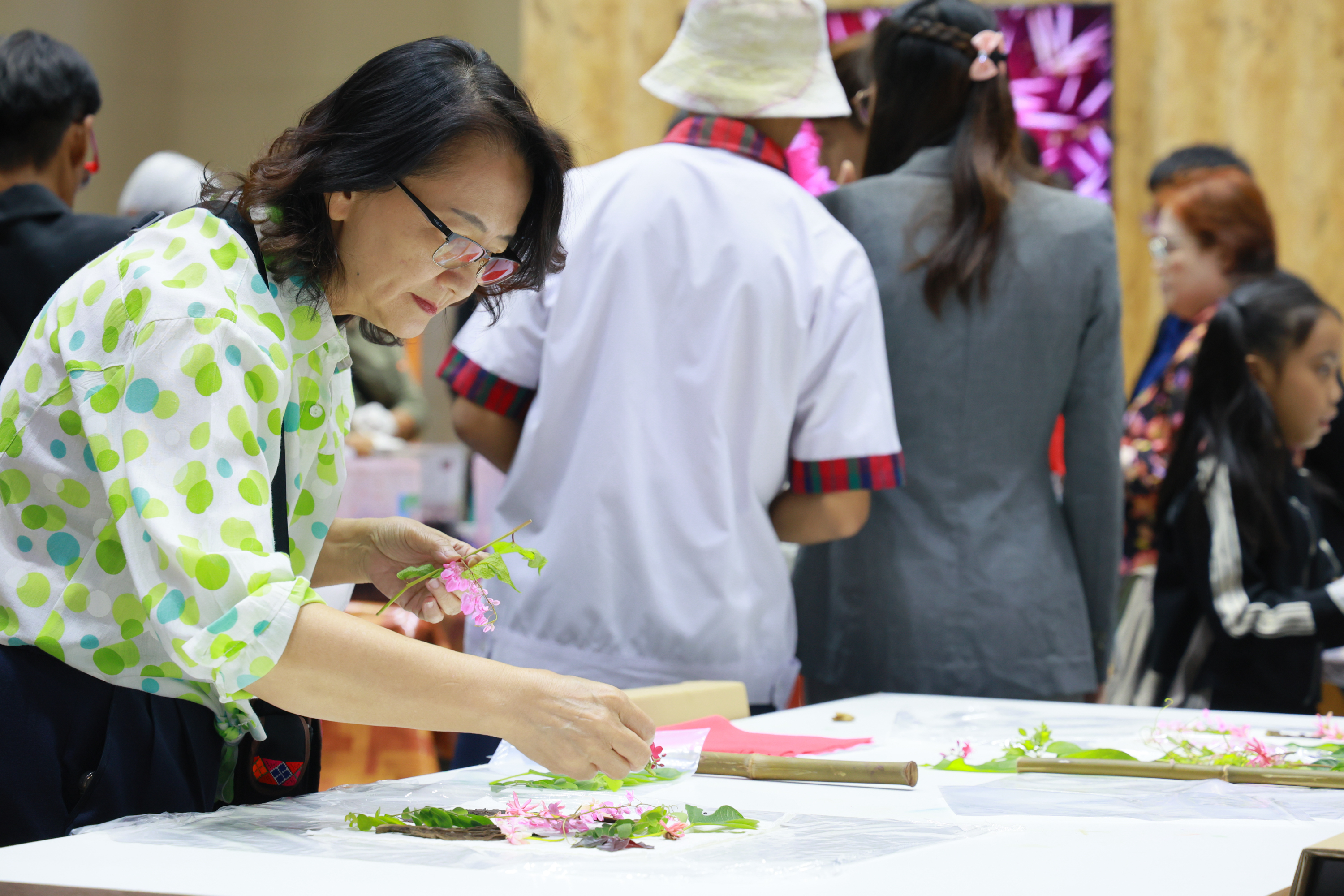
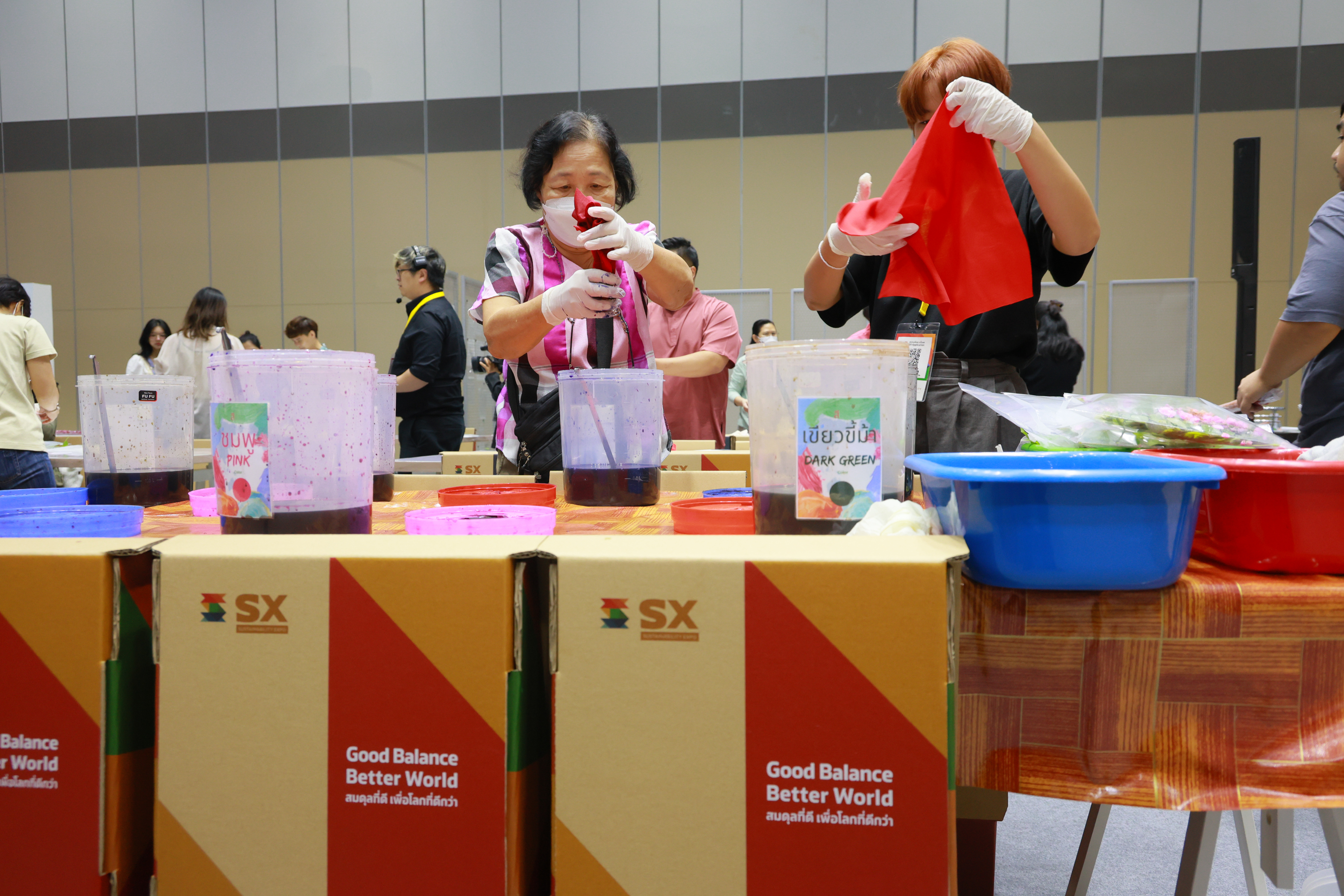
To streamline the workshop, students pre-soaked handkerchief-sized fabrics in mordant solution. Participants were then invited to choose and arrange their favorite leaves and flowers onto the fabric, creating patterns or storytelling compositions. A second piece of cloth, dipped in color, was placed over the top layer. Together, the two fabrics were wrapped around a wooden rod and sealed with plastic film before being steamed for approximately 20 minutes—allowing the colors and patterns to imprint beautifully onto the textile.
In a touching moment of community spirit, some participants even brought flowers from home to share with others. The workshop became more than just a creative activity—it was a lesson in generosity, collaboration, and mutual respect. Through shared learning and shared materials, attendees experienced firsthand how sustainable living and artistic innovation can go hand in hand.
Gallery