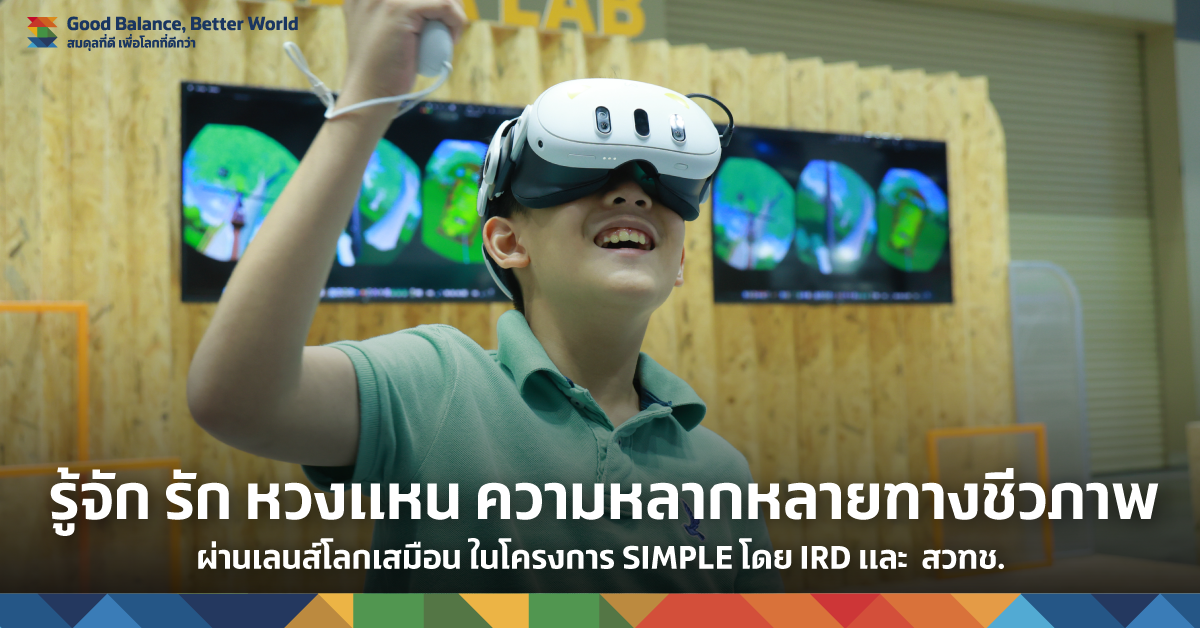
“Know, Love, and Protect Biodiversity” through a Virtual Lens in the SIMPLE Project by IRD and NSTDA
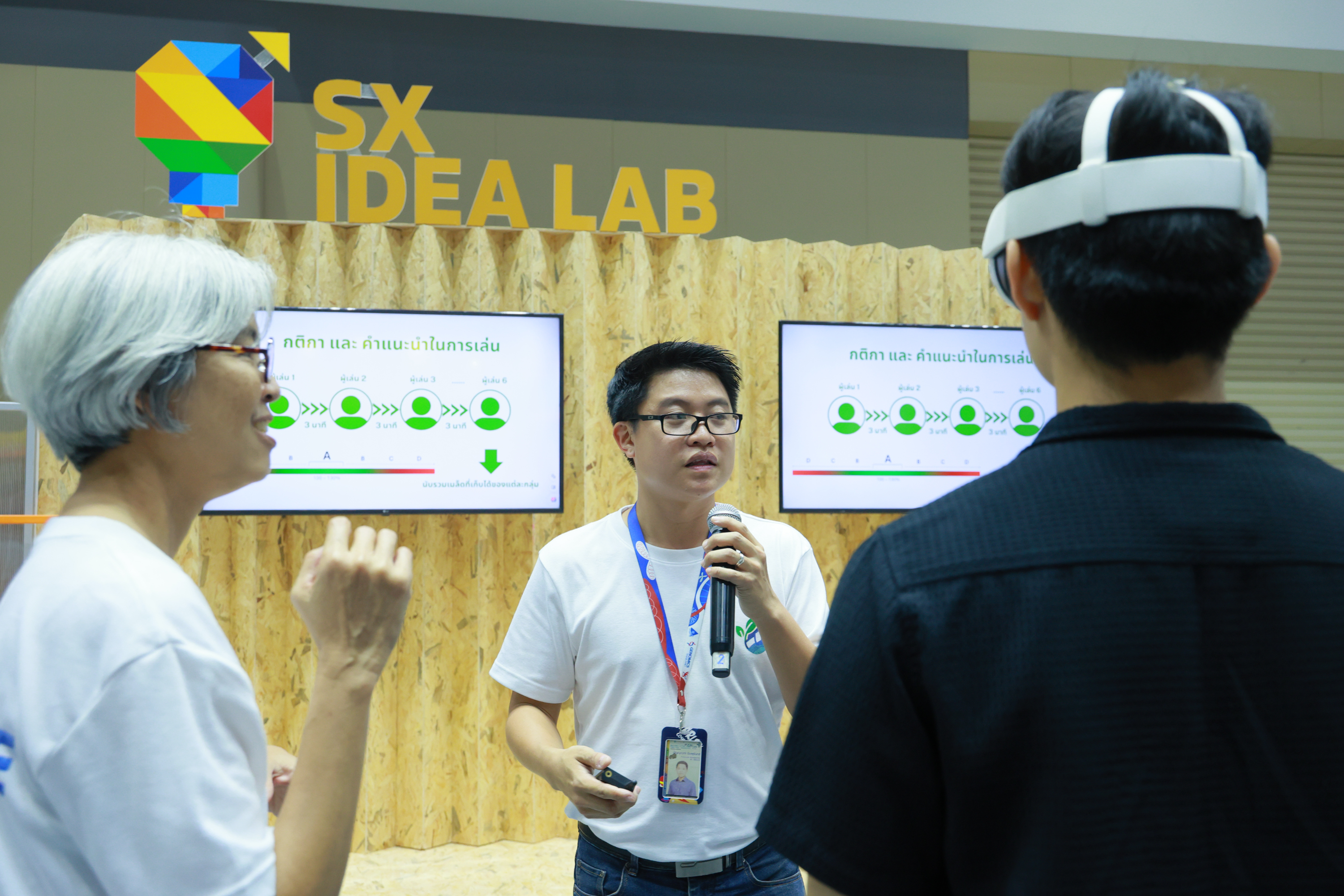
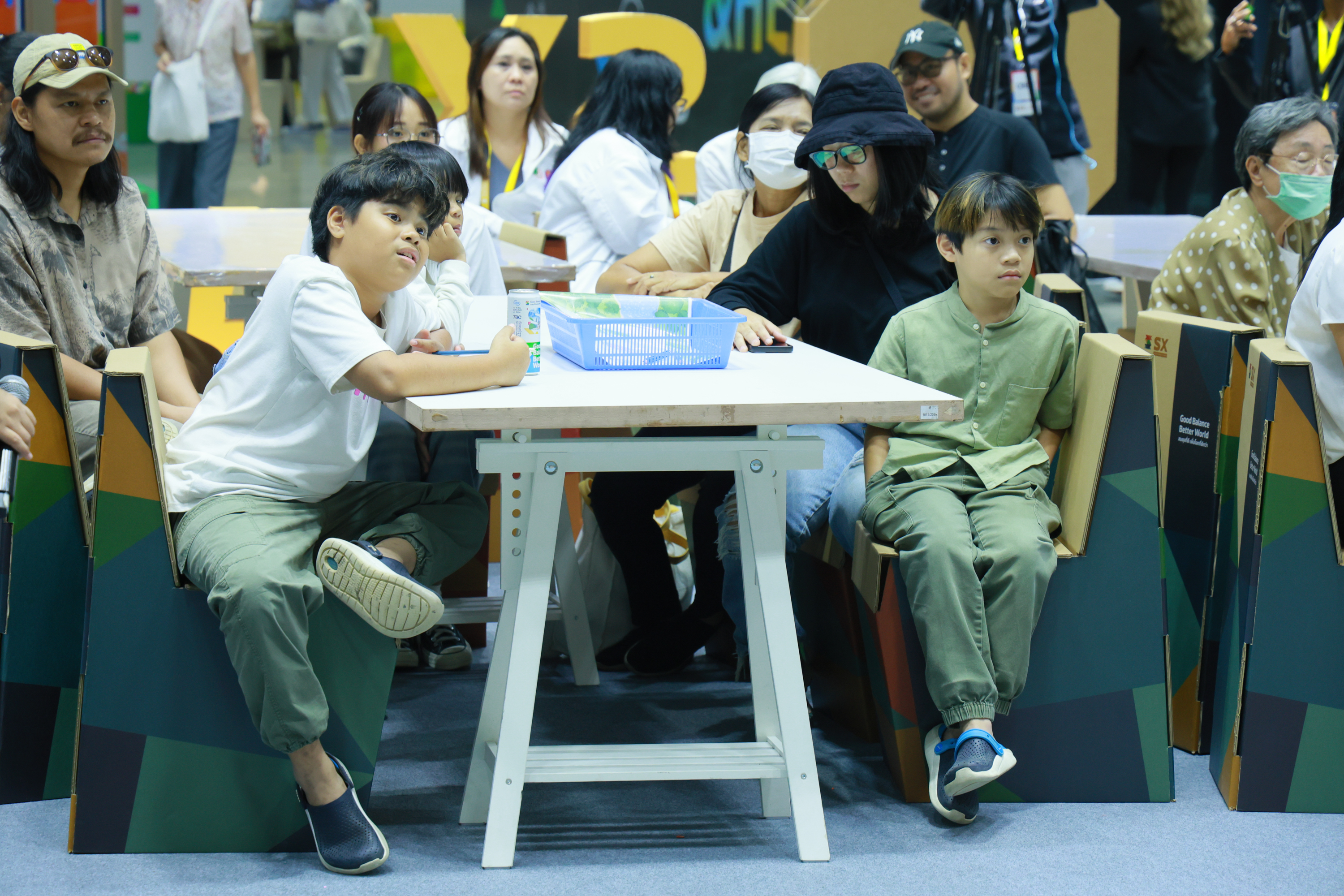
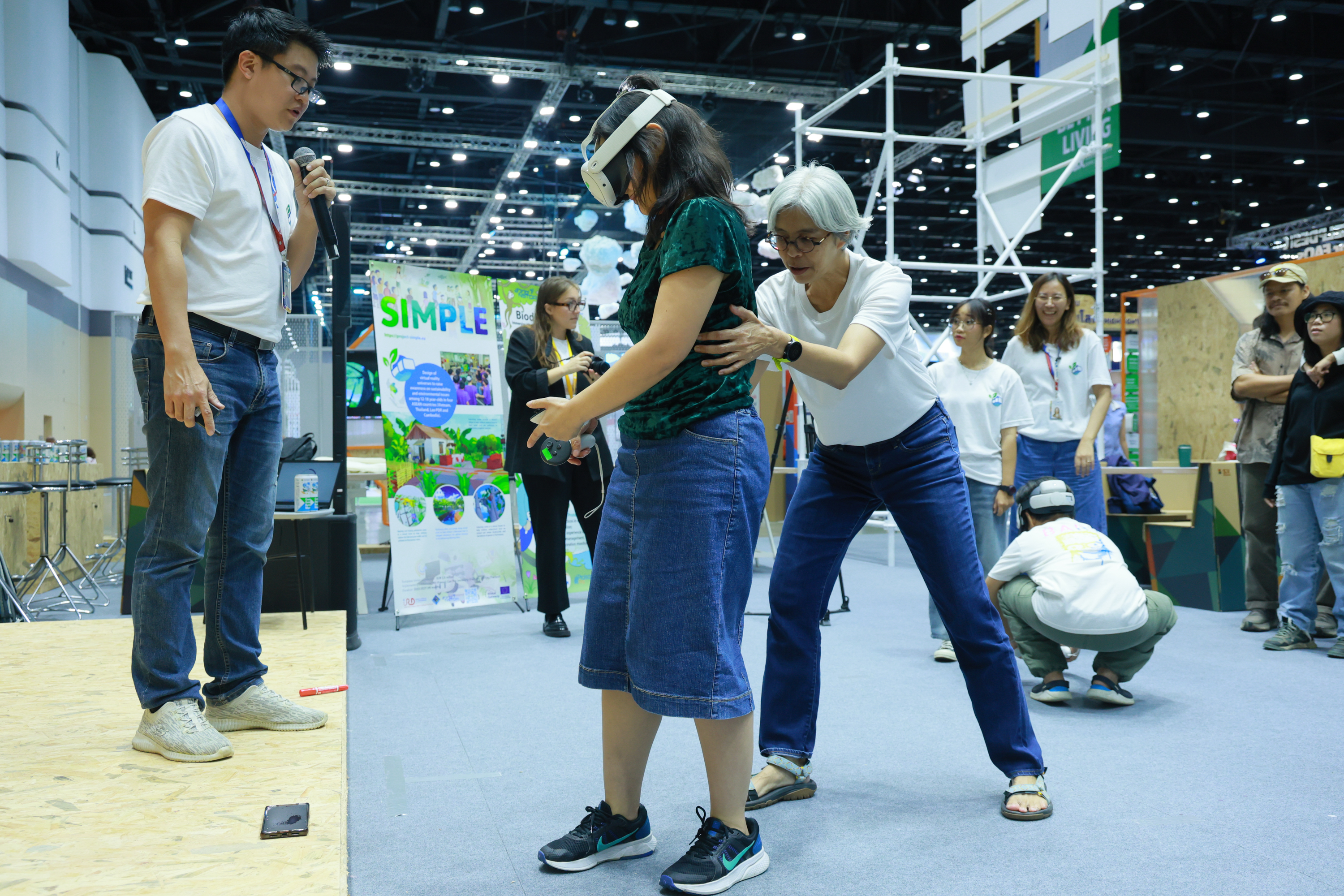
Nature’s rich biodiversity is in crisis—and it's a challenge that demands urgent, collective attention. To help raise awareness and inspire action, the workshop “BiodiVRestorer Immersive VR Experience for Biodiversity Restoration” was held at the Idea Lab during Sustainability Expo 2024, on September 28, 2024. Open to all ages, the session used Augmented Reality (AR) and Virtual Reality (VR) to vividly demonstrate the impacts of biodiversity loss and the importance of ecological restoration.
Dr. Panyawut Ampuchin from Thailand’s National Science and Technology Development Agency (NSTDA) used a simple yet powerful example: bees. Though small, bees are indispensable to ecosystems as pollinators. Without them, plants would fail to reproduce, triggering a cascade of consequences—diminished plant diversity, disrupted food chains, and loss of animal and insect habitats. “The world has reached a tipping point,” Dr. Panyawut noted. “We must choose our direction. Everyone needs to recognize the urgency of conservation and shift toward more sustainable production and consumption, to ensure that our resources are used wisely and responsibly.”
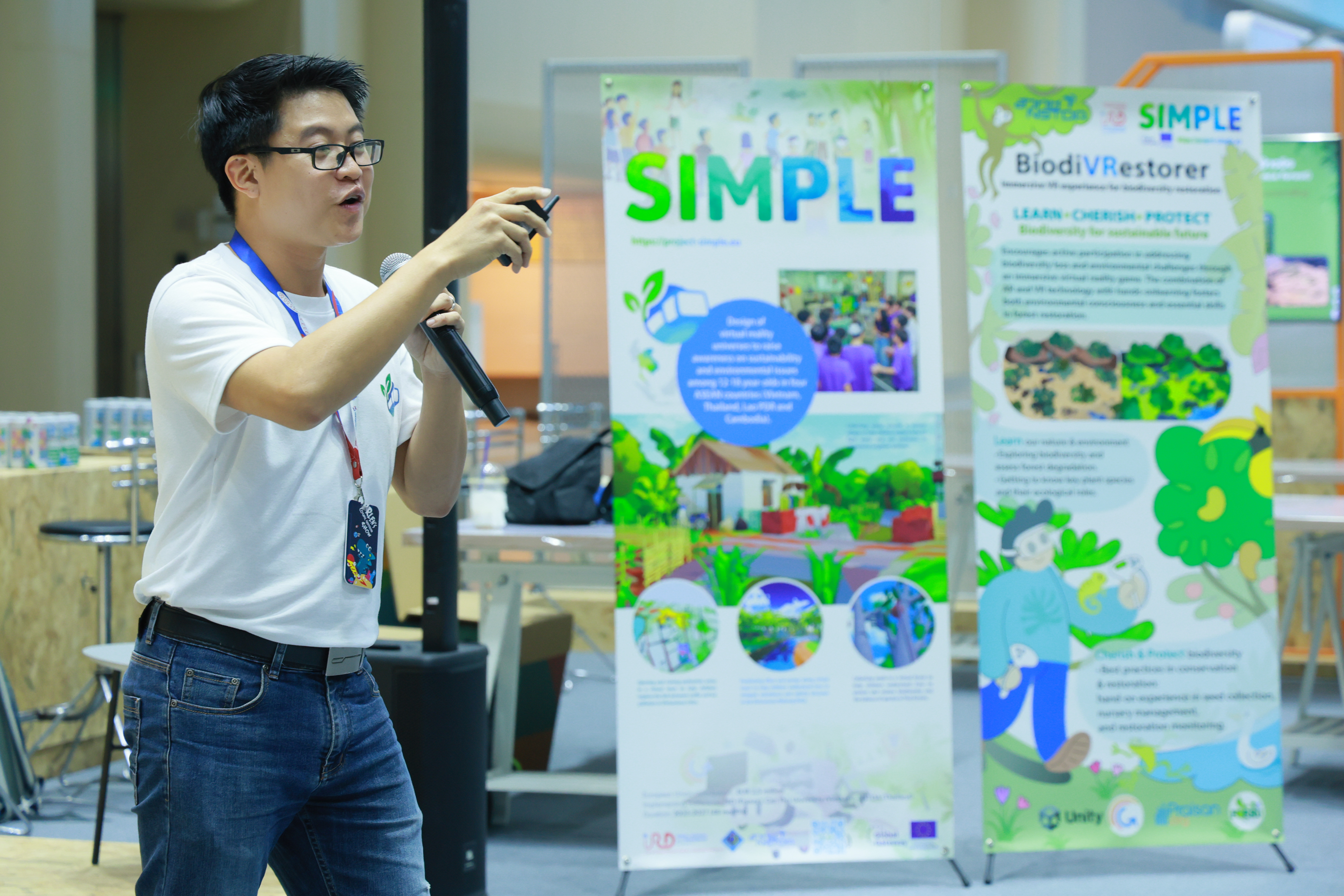
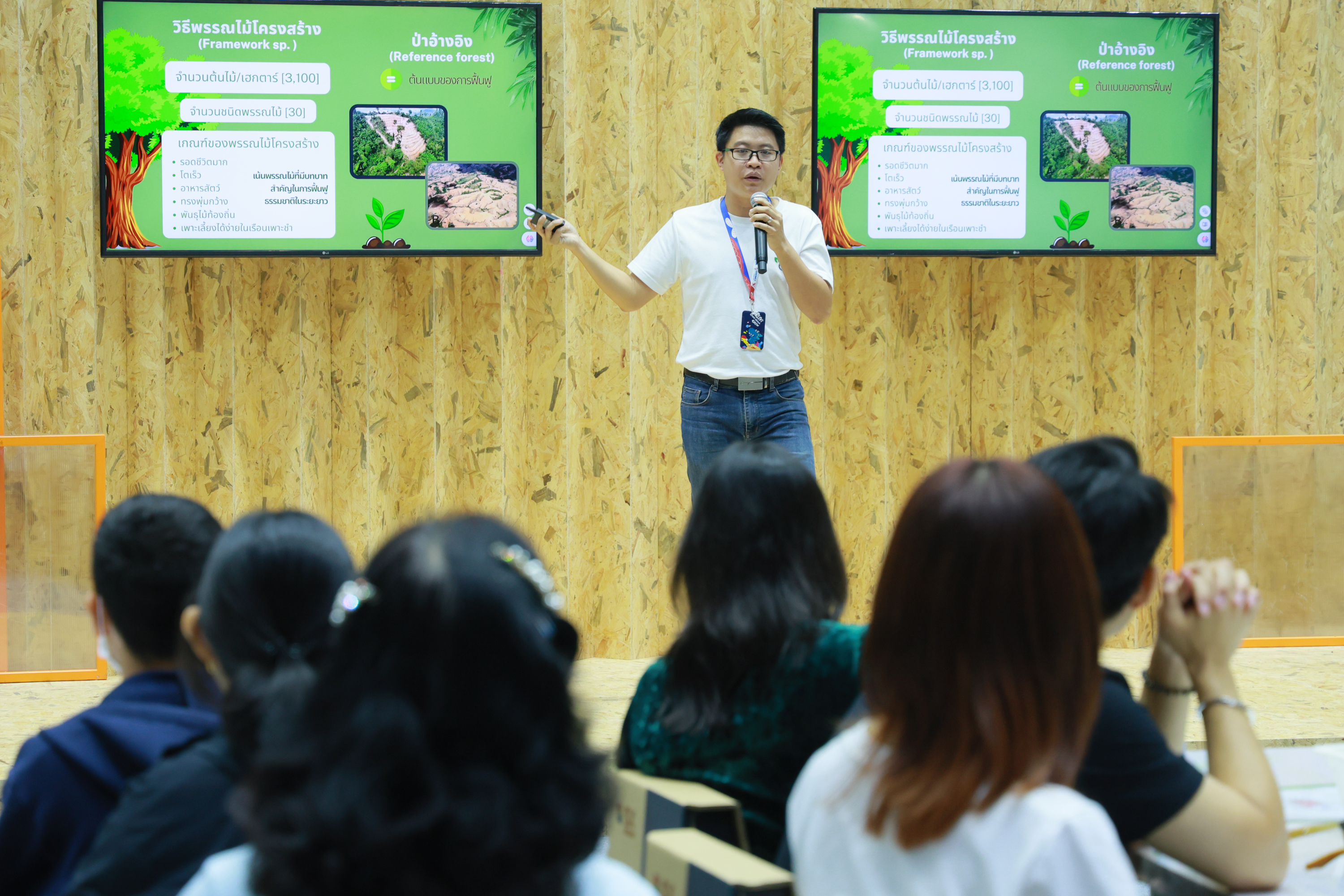
When it comes to environmental preservation, tree planting is often touted as a solution. However, forests planted without ecological planning frequently lack species diversity, making them unsuitable habitats for wildlife—and thereby contributing to further biodiversity loss. According to Dr. Panyawut, successful reforestation requires thoughtful planning. For example, a one-hectare plot (around 1,000 square meters) should ideally include 3,100 trees spanning at least 30 native species, chosen based on local forest ecosystems. A helpful tool in this process is the Reference Forest model—using similar or nearby ecosystems as blueprints for biodiversity-based reforestation.
To make this complex planning process more accessible—especially for younger audiences—Dr. Panyawut introduced Augmented Reality (AR) to teach the concept of “structural plant guilds.” The workshop walked participants through three interactive AR and VR activities, designed to simulate the biodiversity restoration process in a clear, engaging way:
-
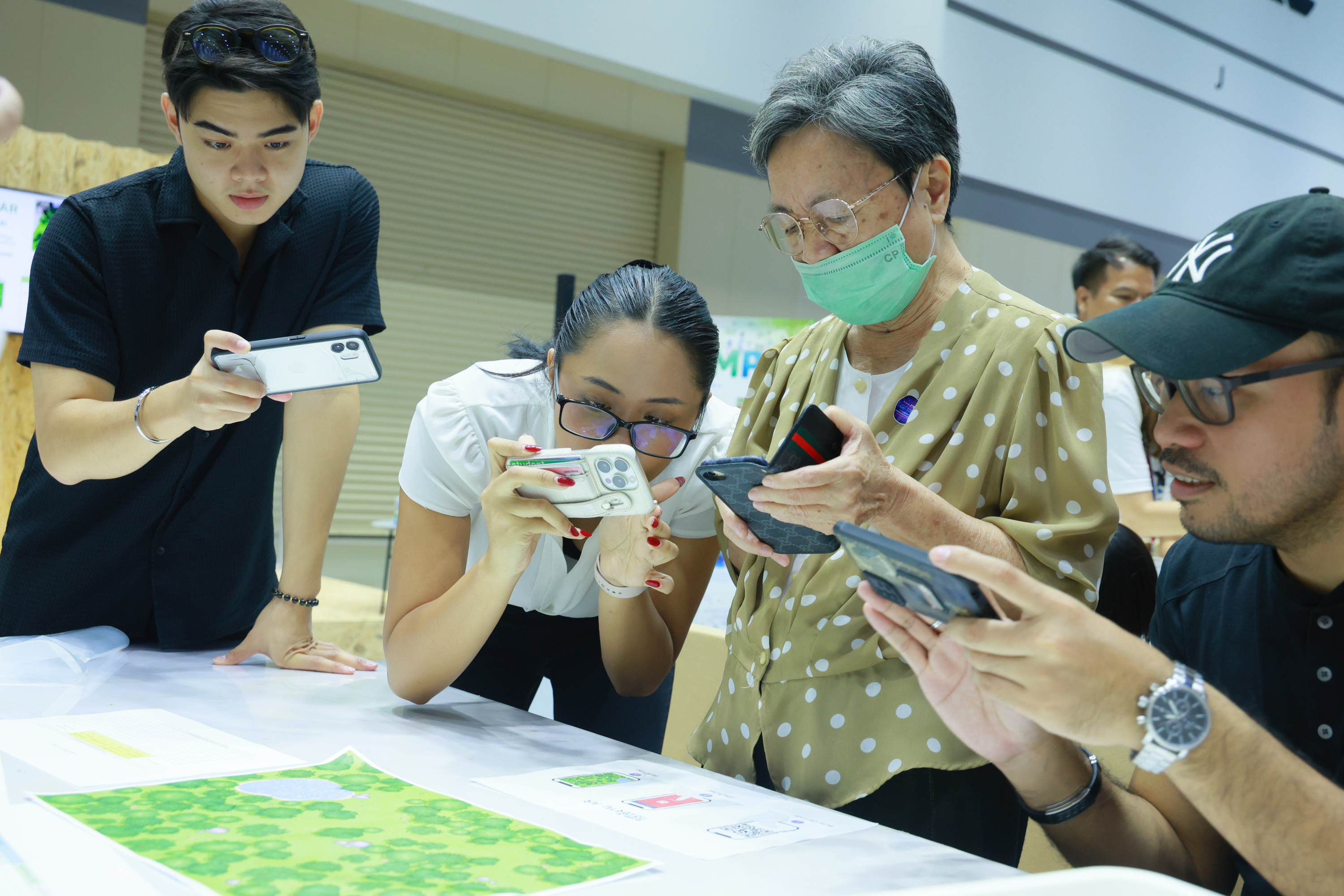
Forest Exploration (Rapid Site Assessment – RSA)
Participants scanned a forest map with a smartphone to collect basic ecological data and determine whether a site should be actively restored or left to recover naturally. -
Forest Restoration Planning
In this stage, participants learned about the life traits of different tree species—such as germination rate, growth patterns, seed collection times, and planting conditions—to assess their suitability for reforestation. -
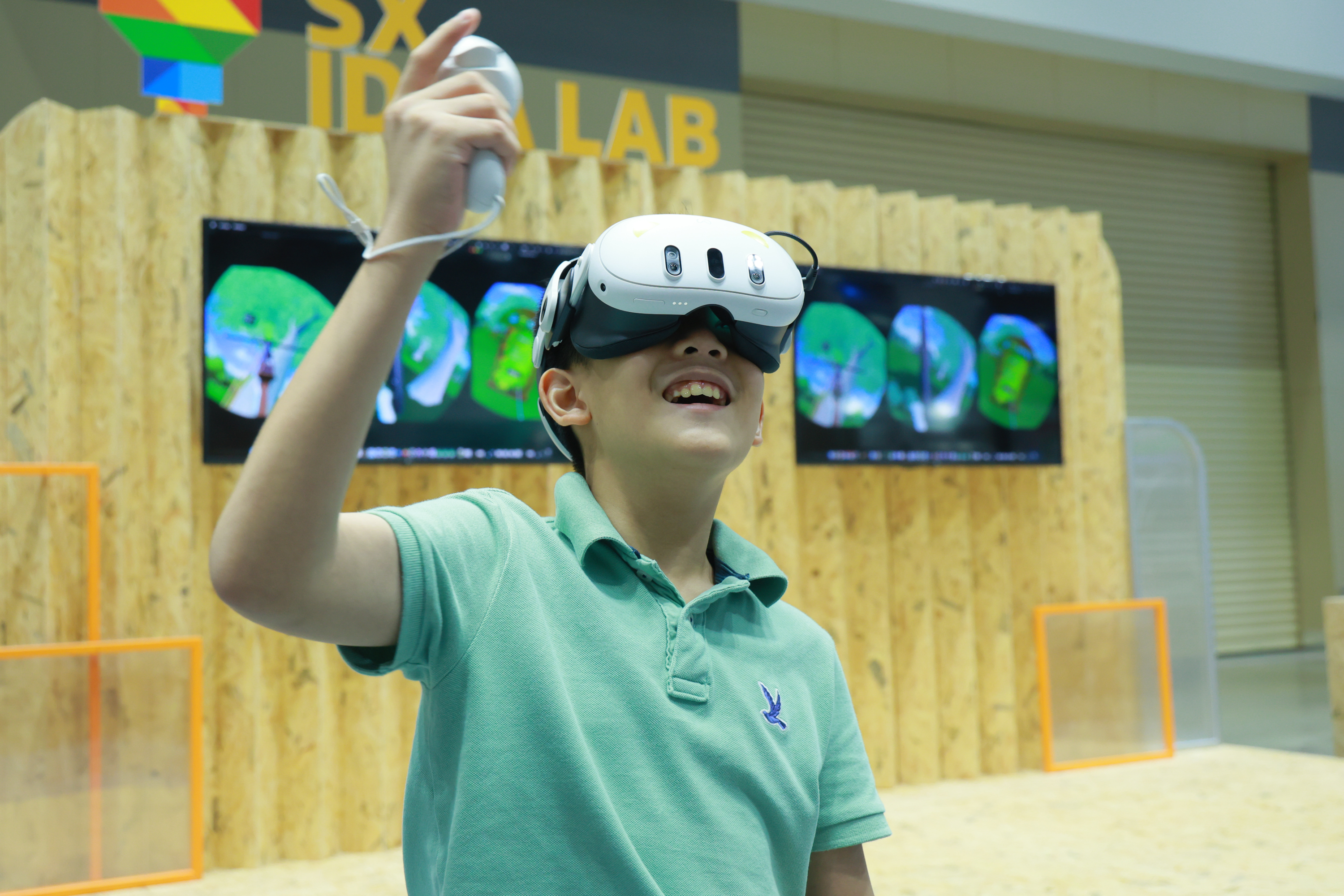
Biodiversity Guardian
Using VR Quest 3 headsets, participants explored a virtual forest, collected seasonal fruits, and simulated the process of nursery propagation and replanting—experiencing the entire life cycle of ecological restoration firsthand.
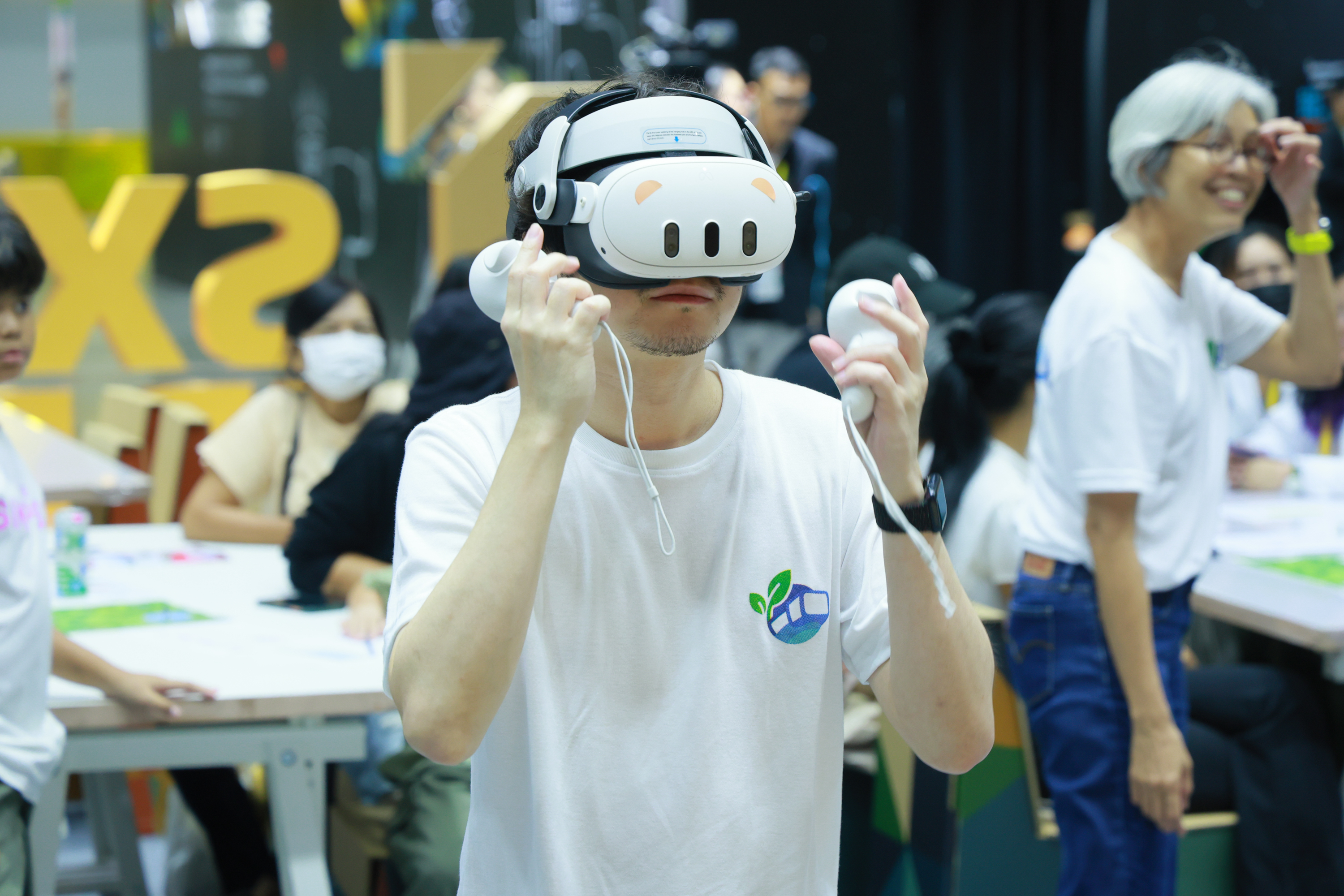
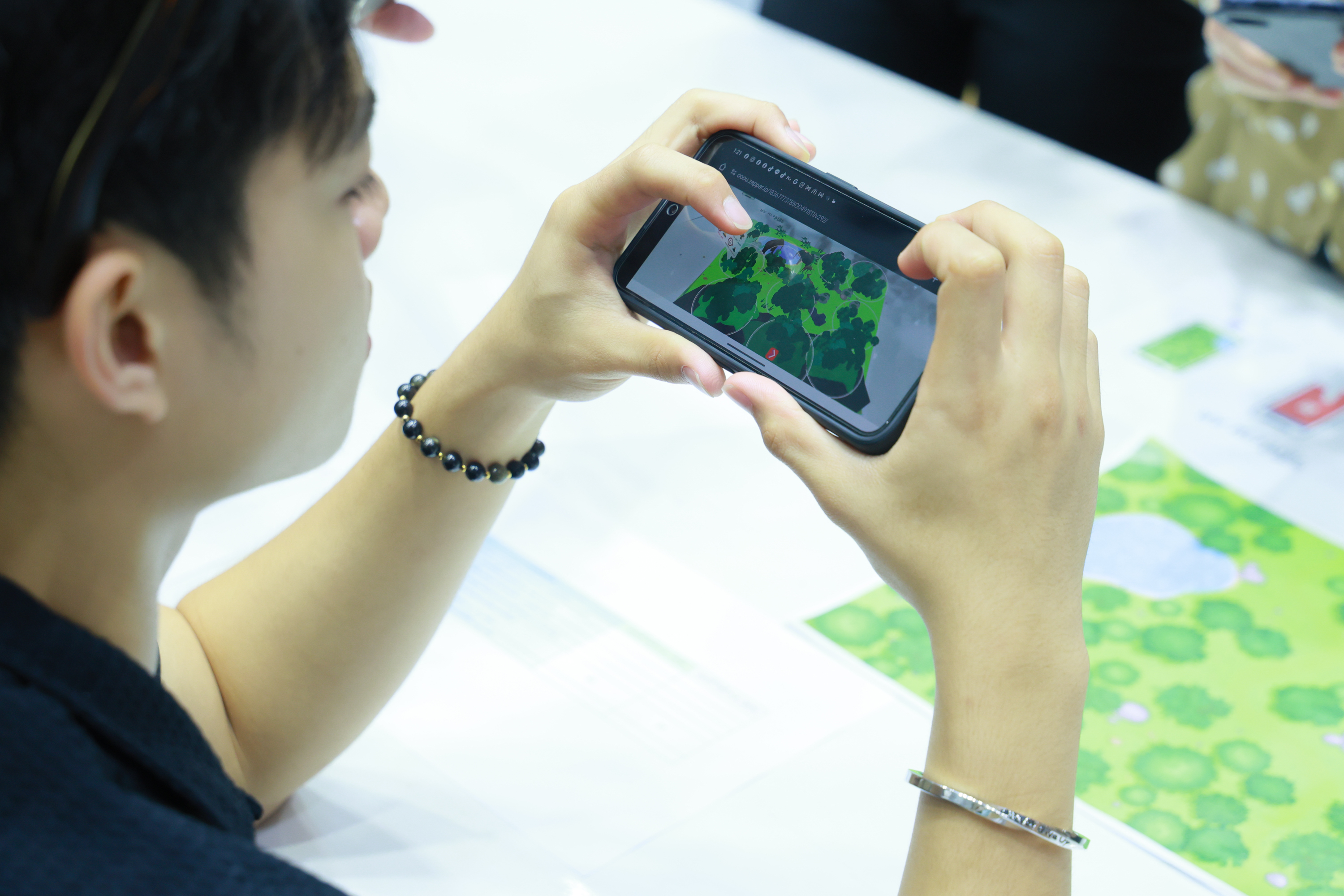
These activities are part of SIMPLE—a collaborative project spearheaded by France’s Institut de Recherche pour le Développement (IRD) and several Southeast Asian countries. Working alongside scientists from NSTDA, the team developed immersive Virtual Universes to help youth understand and visualize biodiversity loss. By engaging directly in virtual restoration work, participants can better appreciate the real-world consequences of human actions—and be empowered to become stewards of the planet.
The project specifically targets young people aged 12 to 18 across Vietnam, Thailand, Laos, and Cambodia, aiming to make science-driven environmental education both accessible and compelling.
In closing, Dr. Panyawut reminded attendees:
“Global crises like COVID-19 may last only a few years, but the effects of climate change and biodiversity loss will impact generations to come. If we begin to change our lifestyles today, we can start to see nature’s diversity return—one step at a time.”
To follow the progress of the SIMPLE project, visit: https://project-simple.eu
Gallery