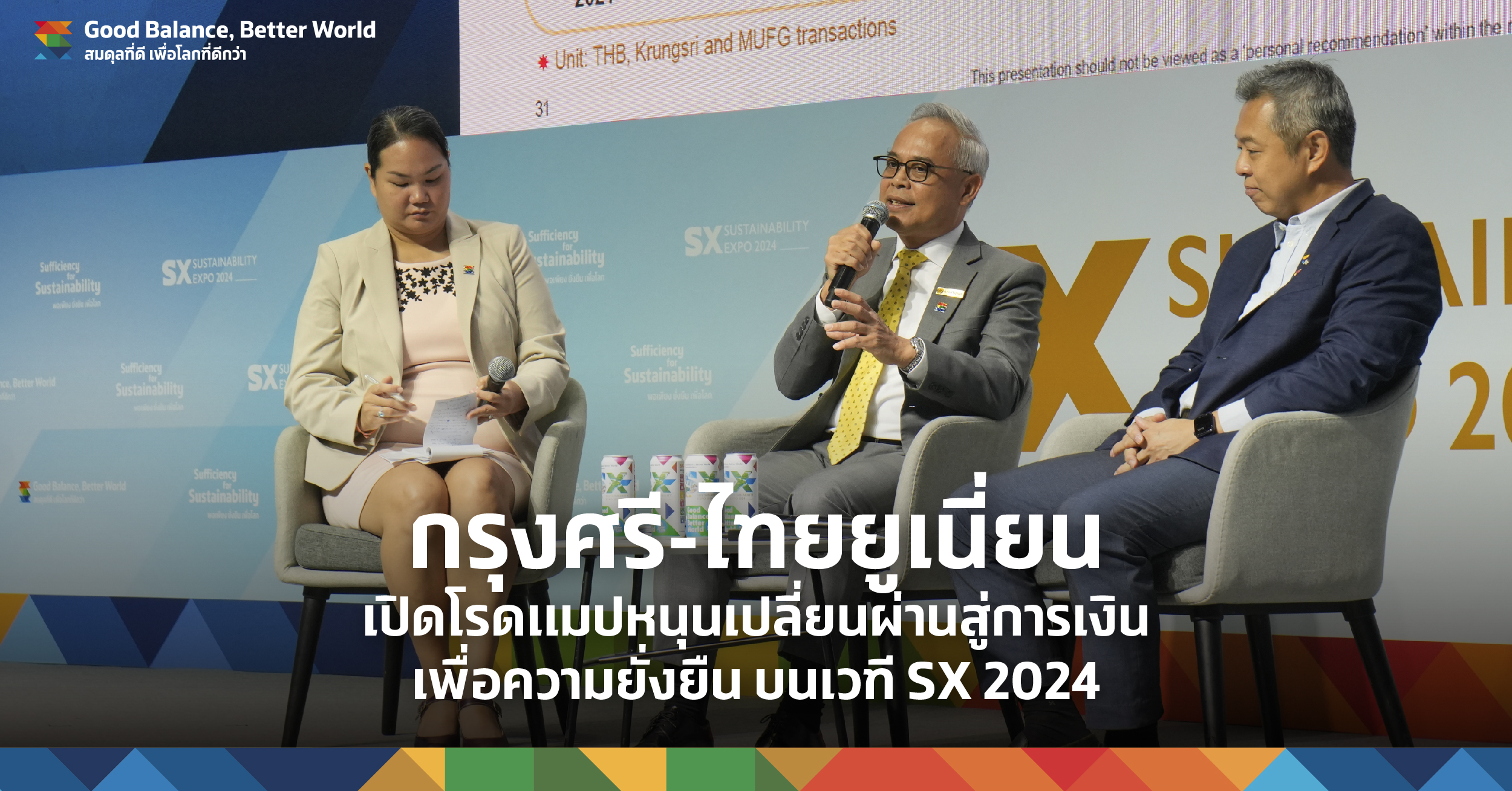
As more businesses embrace Environmental, Social, and Governance (ESG) principles, sustainable finance is emerging as a vital tool in supporting the transition toward more responsible and environmentally-conscious operations—commonly referred to as “Financing the Transition.”
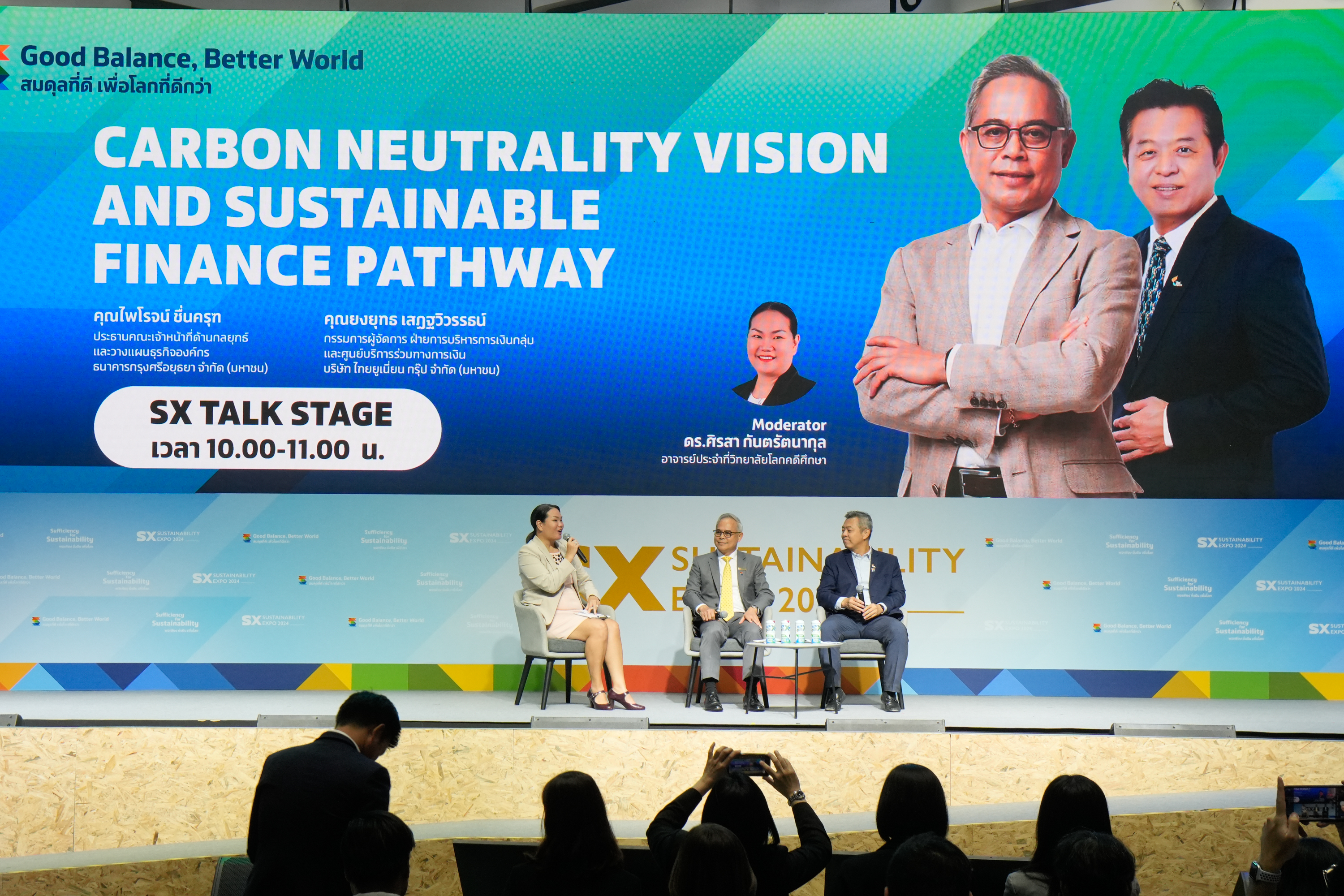
At the "Carbon Neutrality Vision and Sustainable Finance Pathway" panel held during the SUSTAINABILITY EXPO 2024 (SX2024), two key industry leaders—Mr. Phairot Chuenkruth, Chief Strategy and Business Development Officer at Krungsri Bank, and Mr. Yongyut Sedtawiwat, Managing Director of Group Finance and Shared Financial Services at Thai Union Group PCL—shared their insights on how sustainable finance plays a crucial role in achieving carbon neutrality goals.
Transitioning Through Targeted Finance
Mr. Phairot stated, “Krungsri Bank is currently developing a Transition Plan for two major industries with significant sustainability impacts—the energy sector and the transport sector—with the aim of completion by the end of next year. The goal is to embed ESG finance solutions to support both existing and new clients in these industries as they shift toward sustainable investments.”
To this end, the bank has recently established an ESG Finance Department to build a supportive ecosystem that accelerates clients’ sustainability transitions with greater efficiency. This includes offering expert guidance and matching clients with strategic partners across industries, both locally and globally—including technology firms and leveraging the ESG expertise of MUFG Bank, Krungsri’s parent company and Japan’s largest bank.
“We have developed an ESG Finance Roadmap with a strong focus on Green Finance, and have set a target to issue THB 100 billion in ESG financing between 2021 and 2030 to help the business sector reach net-zero greenhouse gas emissions by 2050,” he said.
Pioneering Sustainable Finance Products
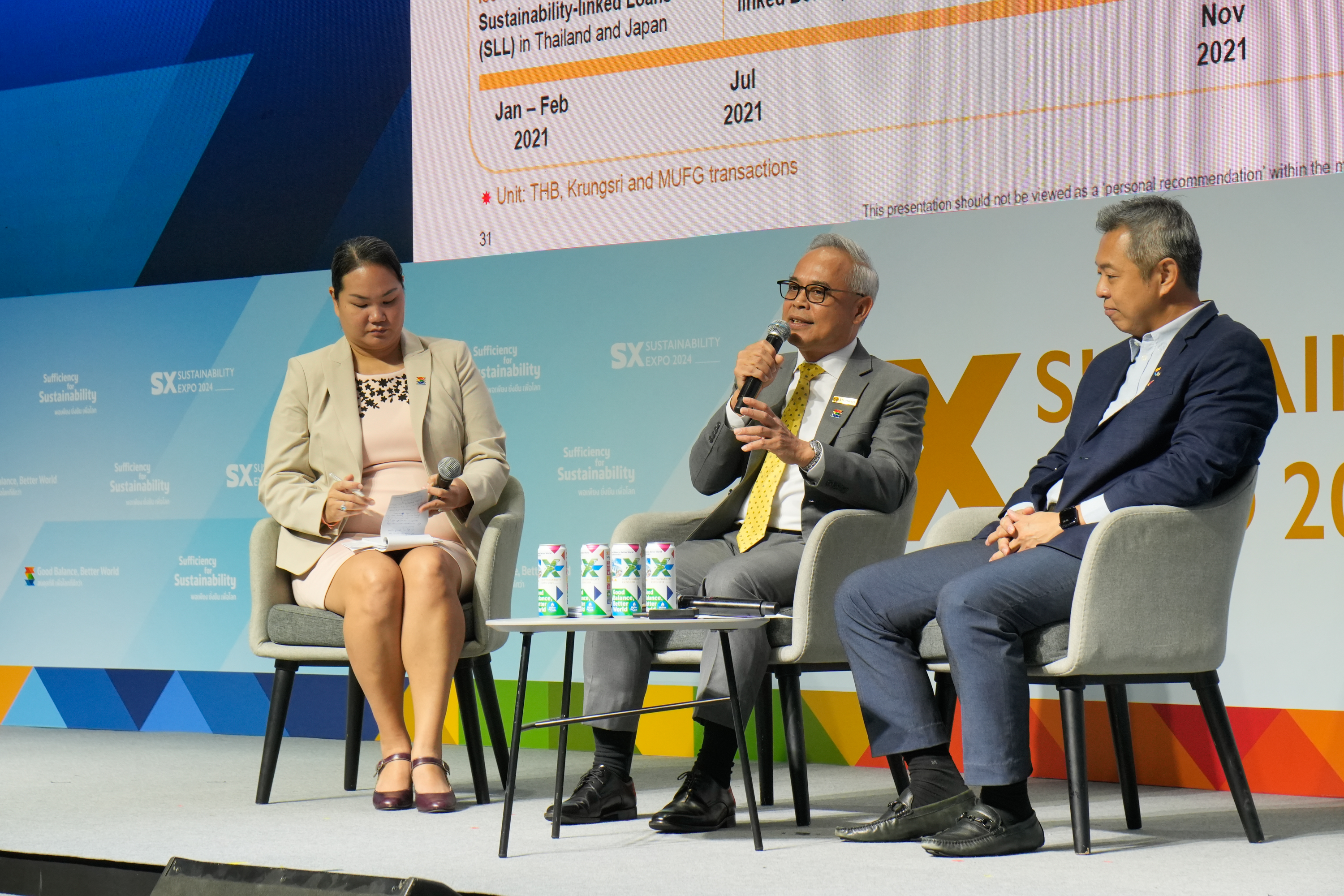
Krungsri was also the first in Thailand to collaborate with Thai Union in launching Sustainability-Linked Loans (SLL) and Sustainability-Linked Bonds (SLB). These financial products are tied to the borrower’s sustainability performance. The two companies are currently developing additional instruments, such as Sustainable Link Deleverage, to further enhance Thai Union’s ESG initiatives.
The bank also launched initiatives such as the ESG Academy, ESG Awards, and, starting this year, the ESG Symposium. Moreover, Krungsri has worked closely with the Thai Bankers’ Association and the Bank of Thailand, alongside Kasikornbank, to co-sponsor and lead the development of an Industry ESG Finance Handbook—a practical guide for banks supporting ESG finance in both business and consumer sectors.
Four-Level Sustainable Lending Criteria
Mr. Phairot explained Krungsri’s four-tier framework for sustainable lending, which serves as a policy guide in determining financial support:
-
Excluded Activities: Businesses with severe environmental impacts, such as the production or sale of radioactive substances or coal-fired power plants without carbon-reduction plans. Krungsri aims to completely phase out financing for coal-fired power by 2030.
-
High-Risk Activities: Projects requiring extensive environmental risk assessments, such as dam construction.
-
Monitored Activities: Operations requiring close oversight—e.g., businesses handling hazardous materials or engaging in recycling.
-
Supported Activities: Businesses aligned with Krungsri’s sustainability mission and actively undergoing ESG transformation.
Thai Union’s SeaChange 2030 and Scope 3 Challenges
Mr. Yongyut shared that Thai Union Group has prioritized sustainability since 2016, initially focusing on tuna sustainability, climate change, and labor practices. In 2023, the company launched SeaChange 2030, a comprehensive strategy that expands sustainability across the entire supply chain (Scope 3)—including other species and aquaculture, especially shrimp farming.
This year, the company introduced the low-carbon shrimp project, designed to build confidence among global markets that exported shrimp is produced using low-emission practices. Thai Union is working with shrimp farmers to adopt renewable energy sources, such as solar power, and improve energy efficiency through better technologies.
Thai Union has committed to reducing CO₂ emissions by 42% by 2030 (based on a 2021 baseline), and to achieve net-zero carbon emissions by 2050. As of last year, the company had already achieved a 15% reduction in Scope 1 and 2 emissions, but only a 2% reduction in Scope 3, which accounts for 90% of its total supply chain emissions—a result deemed insufficient.
Making Sustainable Finance Accessible to the Supply Chain
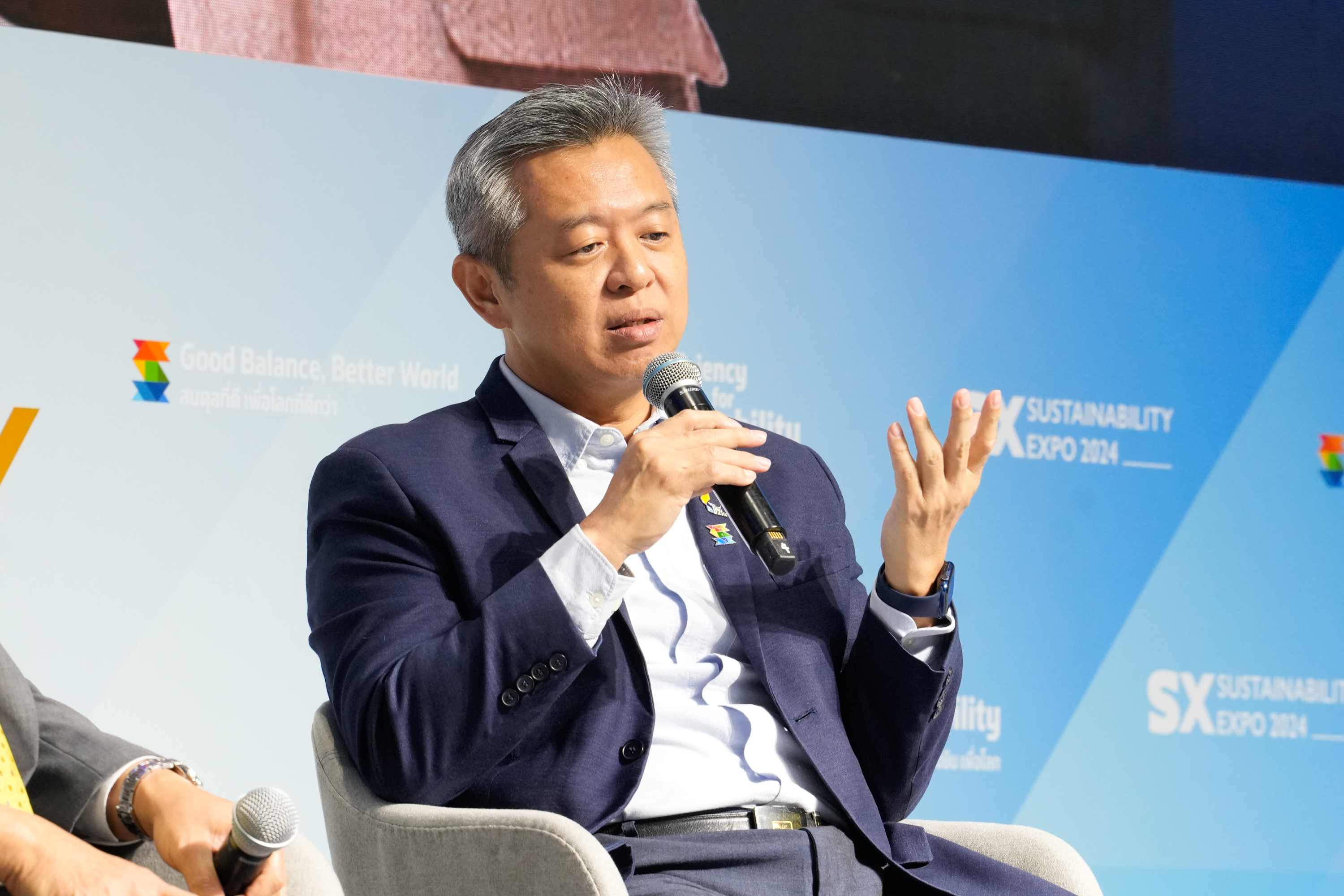
“Transitioning to sustainability requires investment. The challenge now is to ensure that farmers and supply chain stakeholders can access sustainable finance,” said Mr. Yongyut. He emphasized the need for collaboration among regulators and multi-sector stakeholders to build trust and enable financing for small producers. “We must develop viable solutions within the next 1–2 years.”
He added, “Sustainable finance will become a key driver forcing businesses to accelerate their ESG efforts. Organizations that delay ESG integration will face increased difficulty in accessing capital.” Thai Union has allocated USD 200 million (approximately THB 7 billion) in sustainability investments between 2022 and 2030.
Internal Carbon Pricing Starts in 2025
Thai Union is also preparing to launch an Internal Carbon Fee system in 2025, assigning each production facility an emissions quota. Facilities that exceed their targets will be penalized, while those that meet or outperform their goals will be rewarded.
Currently, Thai Union operates 17 production and R&D facilities globally, employing over 40,000 people.