
"Flowers growing in Antarctica are no longer just about beauty or normalcy — they represent an emergency that everyone needs to recognize and that calls for us to change or revolutionize ourselves for the sustainability of the planet."
This powerful phrase was shared by Maxine Intiporn Taemsookin, a storyteller passionate about making health care simple and accessible. She spoke on the panel titled “Eat Green Green: The Secret Recipe for the Healthy Lifestyle the World Needs”, part of the SUSTAINABILITY EXPO 2024. Joining her was Nippon Navanan Bamrungpruek, a renowned news anchor and host who temporarily stepped away from journalism to share her health experiences.
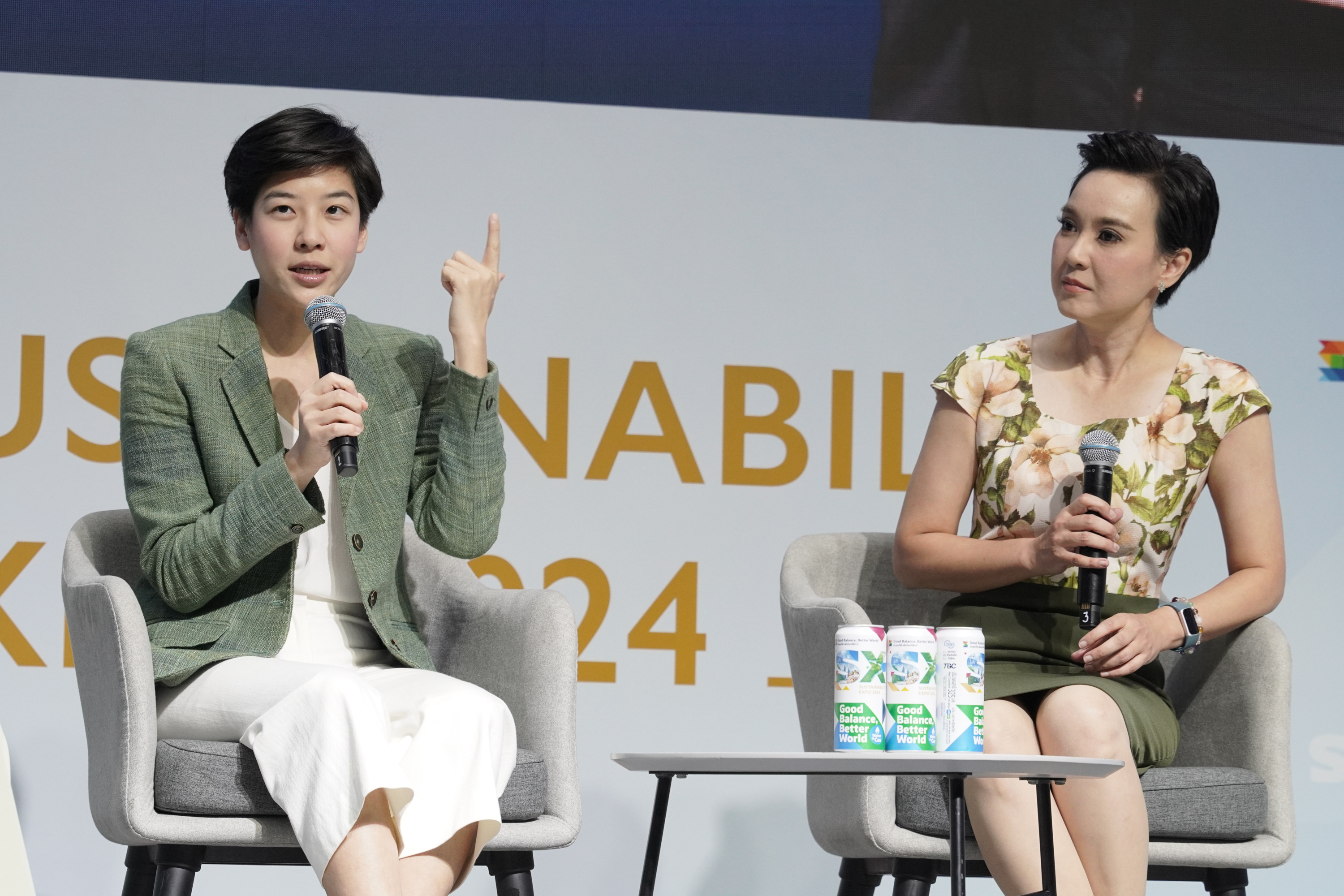
What Does Eating Green Green Mean to You?
Nippon shared:
“I wouldn’t say I eat ‘clean’ or ‘green’ 100% perfectly, but I do focus on eating good, healthy food while caring for my wellbeing. Many people assume eating clean or green automatically leads to health or weight loss and they chase diets like keto or low-carb. But really, eating clean or green means finding what works for you, what you can do without stress, balancing it so your body and mind aren’t under pressure. If you force yourself to cut out all sugar or only eat 0% sugar, only vegetables, forbidding this and that, your body will get stressed. Instead of benefiting, it harms you. So, my definition of eating green green is consuming nutritious food that balances both body and mind.”
Maxine reflected on her own experience from six years ago, explaining she strictly ate clean—steamed vegetables, steamed chicken breast, zero sugar, no fat, eating the same food repeatedly. This rigidity caused severe stress on her body, leading to illness. Despite feeling she ate healthy, medical tests showed her biological age and Growth Hormone levels were comparable to an 80-year-old, making recovery nearly impossible. She suffered from diseases including psoriasis, hives, insomnia, and her menstrual cycle slowed to once a year.
Thus, Maxine agrees with Nippon’s definition: balance is key. Health has no one-size-fits-all formula. We must listen to our bodies, which will tell us what we want or don’t want, what we like or dislike. Clean eating isn’t just about what goes into the mouth — it also involves having a clean gut, healthy digestion, and clear skin. These factors show whether the body is balanced or needs adjustment.

The Beginning of Eating Green Green
Both women agreed that the journey often starts with wanting to be slim or beautiful. Many begin health care with these goals, but also due to health warnings as they fall ill.
Nippon described her lifestyle: working 7 days a week, no weekends or holidays, no exercise, coming home exhausted, eating then sleeping, eventually falling ill. Despite appearing physically healthy, doctors told her she was close to a serious illness. This prompted her to start making changes, initially the wrong way, overwhelmed by information from being a journalist. Eventually, medical advice helped her focus on basics:
“Eat well, sleep well, move occasionally... these three things seem basic but are actually hard to do. Ask yourself: how many hours do you sleep? Do you wake up refreshed? Do you eat nutritious food from all 5 food groups? Do you exercise? These answers show it’s easier said than done.”
Maxine added:
“Besides diet, mental health is critical, especially stress. Emotional baggage from work, family, and unrelieved worries accumulates as ‘emotional trash.’ Alongside clean eating, clean your mind too. Just try breathing deeply for three minutes — inhale deeply, exhale slowly — when you wake up or before bed. That simple act can greatly improve mental wellbeing.”


Too Strict... Not Sustainable
A common misunderstanding about clean eating is that you must only eat leafy greens and avoid fatty meats. Nippon, who once made these mistakes, says extreme restriction stresses the body, making it unsustainable and leading to failure. To eat clean effectively, one must enjoy the process, challenge oneself, and find inspiration to create delicious healthy dishes to avoid boredom.
For busy lifestyles, Nippon shared her favorite quick green green meal: Overnight Oatmeal — simple-looking but highly nutritious, tasty, gut-friendly, filling, and easy to customize. It saves time and fits modern life. She also recommends morning walks before eating to burn fat, boost energy, and engage socially — benefits for both body and mind.
Adjusting Eating Habits for Sustainability Goals
“True sustainability isn’t just about the planet; we must love ourselves too. Sometimes we choose healthy or clean foods but use foam or plastic containers, unknowingly accumulating microplastics or harmful chemicals. Small changes like this benefit both our health and the planet,” Nippon warns.
Finally, Nippon urges attention to product origins: whenever possible, choose items produced with minimal fertilizers or chemicals to lessen environmental impact. Also consider packaging and take responsibility — order just enough, finish your plate, and think about food waste disposal. SX2024 offers many ideas and examples, including food waste digesters turning scraps into compost or soil conditioners. Most importantly, listen to your body and the planet. The world is crying from the severity of global warming. If we adjust small daily habits — what we eat, use, and how we dispose of things — and donate unused items to SX REPARTMENT STORE for others’ benefit, we’ll bring happiness to ourselves and the planet alike.
Come join us in making this world a sustainable, livable place. Discover answers and activities at SUSTAINABILITY EXPO 2024: GOOD BALANCE, BETTER WORLD, now through October 6, 2024, 10:00 AM – 8:00 PM at Queen Sirikit National Convention Center (QSNCC), main exhibition zone Floor G, along with SX FOOD FESTIVAL, SX MARKETPLACE, and SX KIDS ZONE on Floor LG. Admission is free!
Special! Download the SX Application, register, check-in, and participate in activities to collect points and receive free souvenirs.