While people worldwide worry about the mounting waste crisis, designers and upcycle trendsetters see things differently — they find that there isn’t enough waste to meet the demand for creating practical items and artworks.
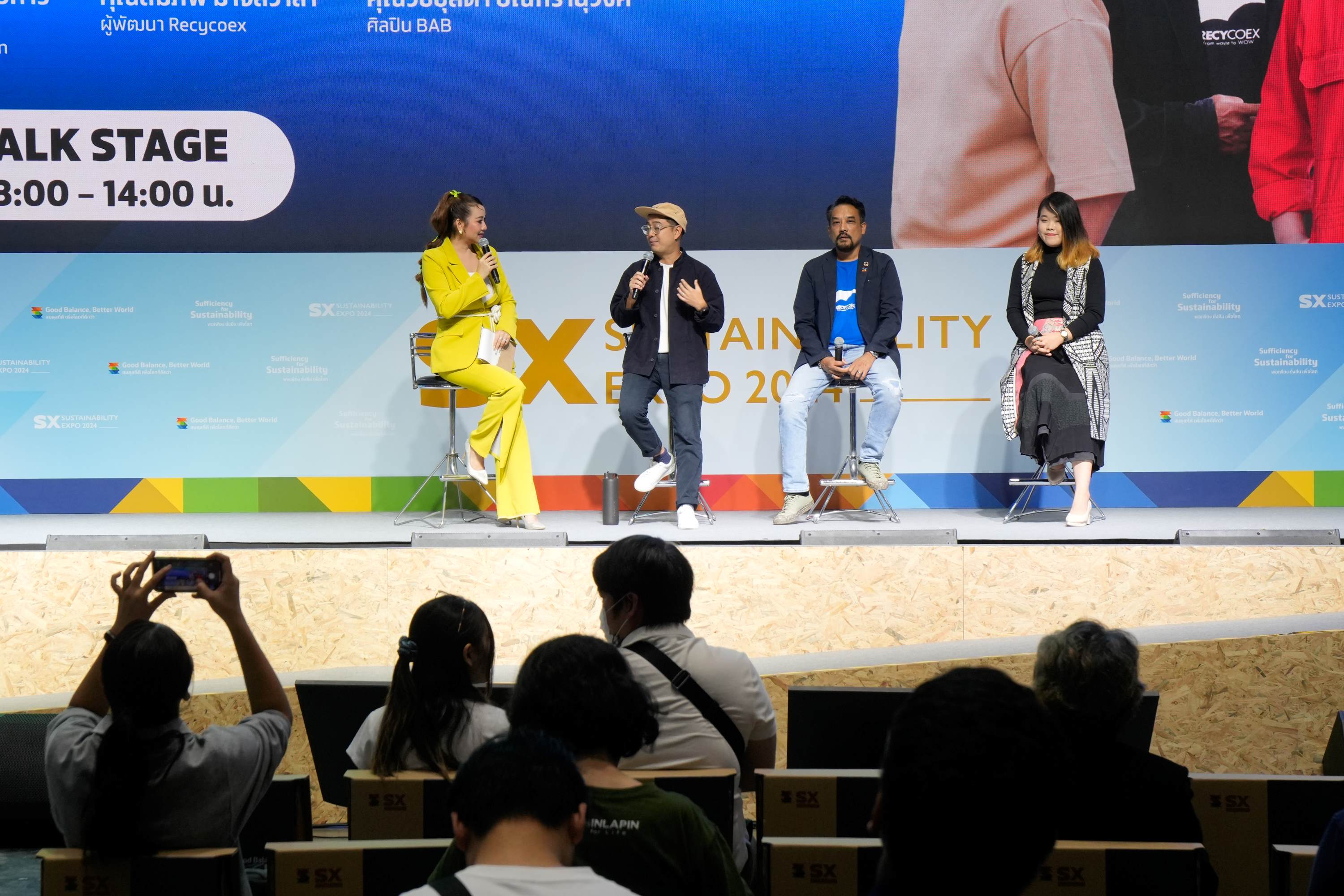
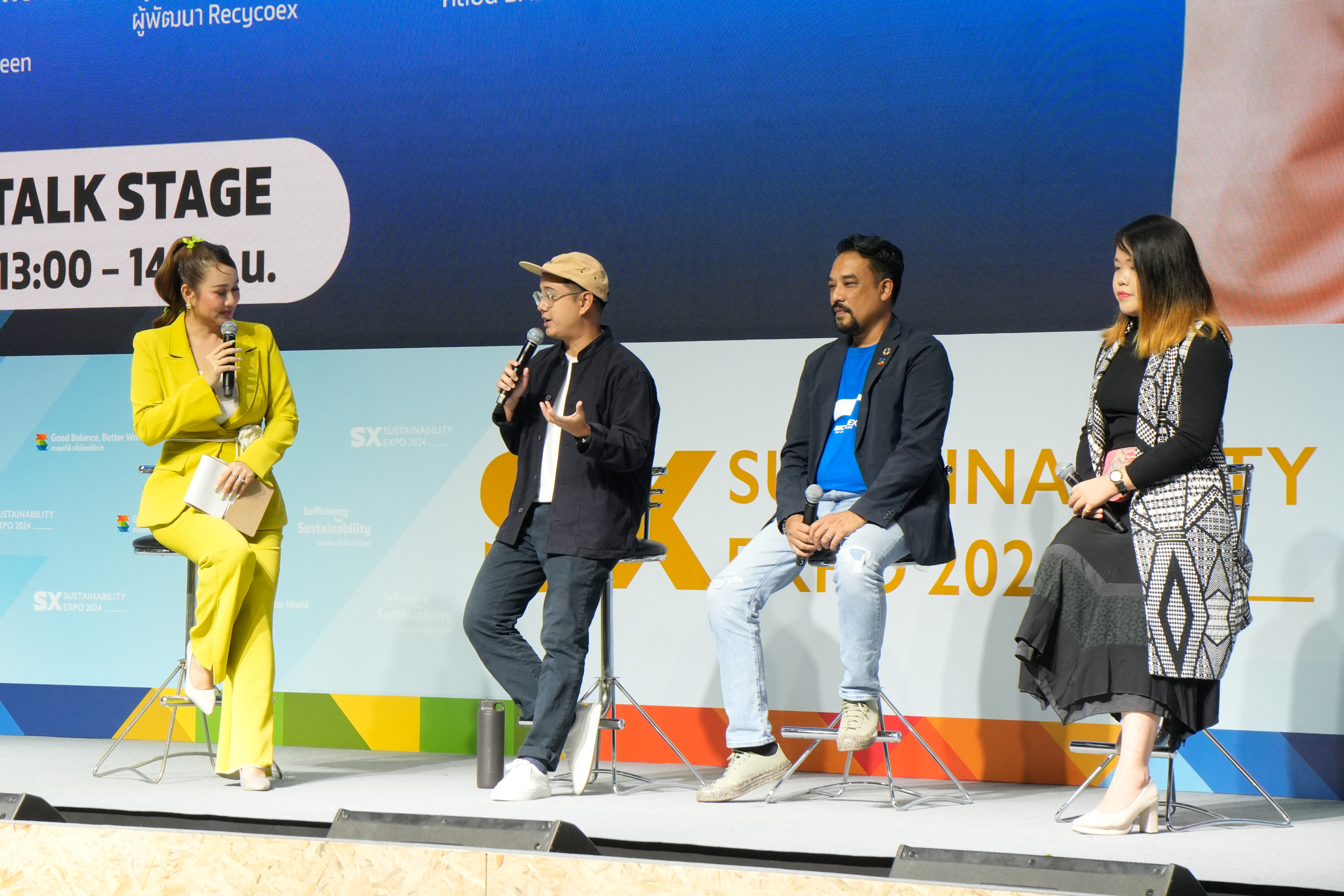
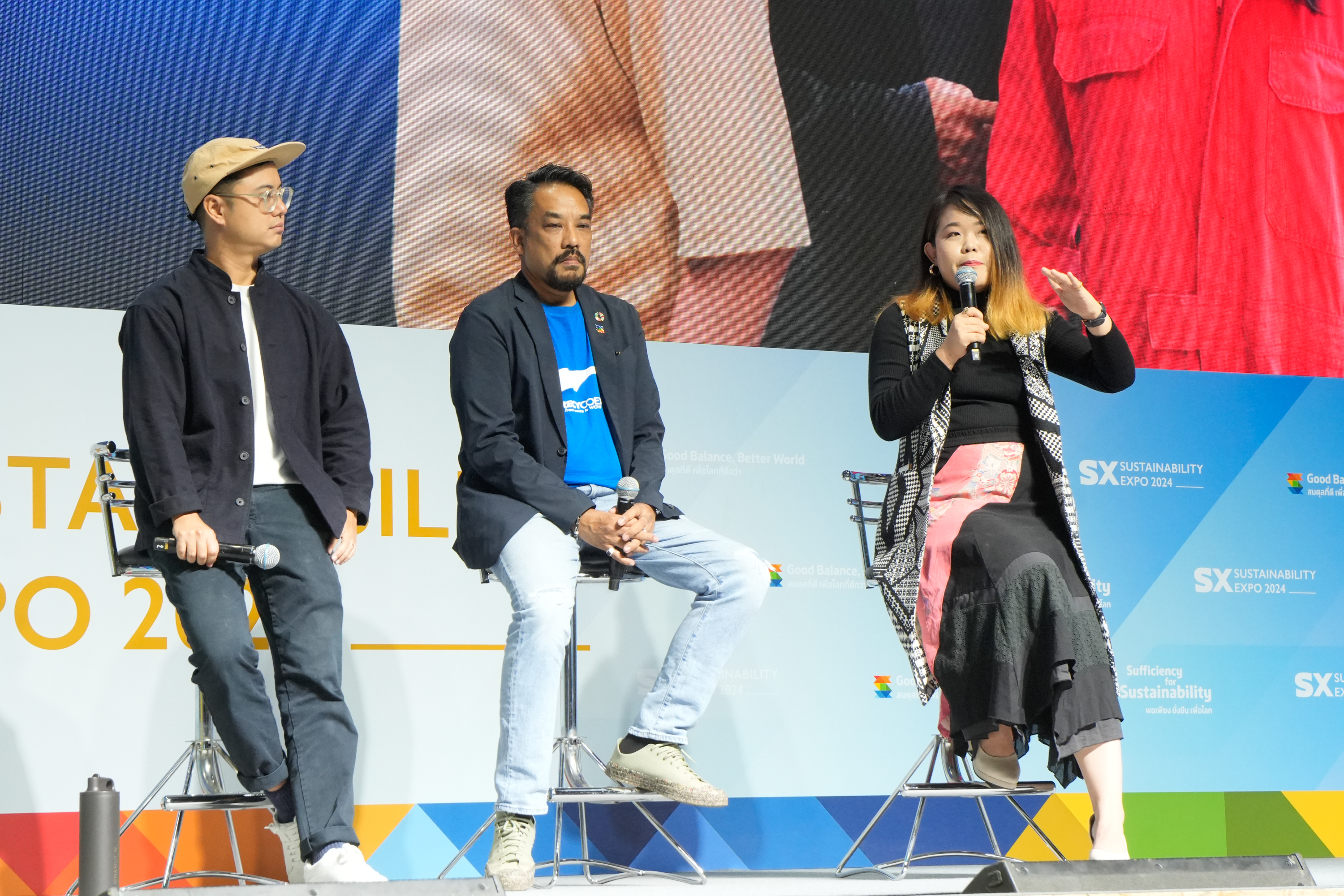
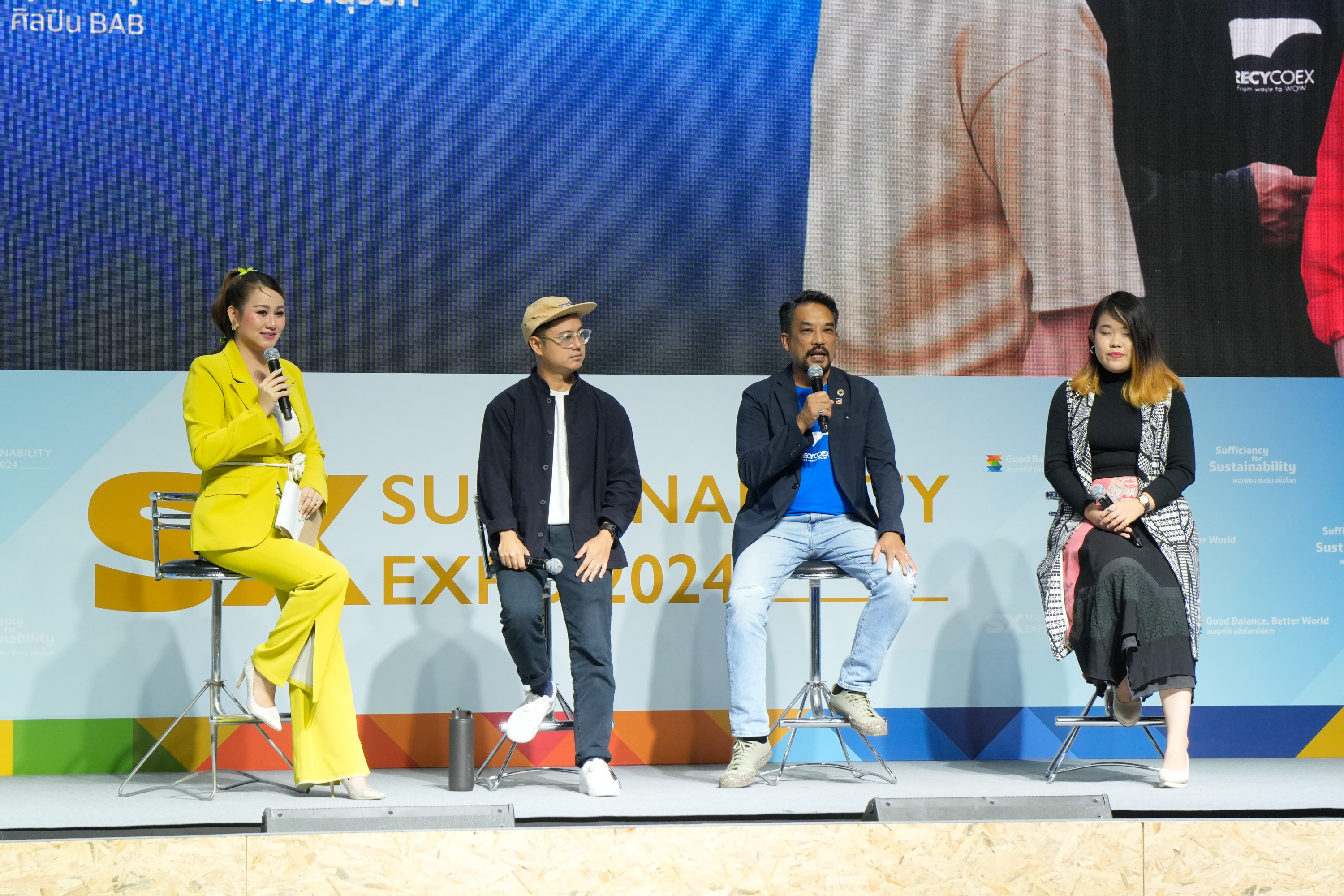
This perspective comes from three young leaders of the upcycling movement who recognize the value in “waste”: Ae-Witchulada Pandaranuwong, artist of BAB2024 known for crafting art and fashion from leftover materials; Chanat Wuttivikayakarn, aka Kong Green Green, a prominent green influencer; and Sompop Majiswala from Recycoex, Thailand’s first online waste trading platform. They gathered to discuss “Upcycling Waste: Reviving Trash, Changing the World” on the Sustainability Expo 2024 stage.
What Is Waste?
Kong Green Green views it as:
“I don’t want to call it ‘waste.’ It’s a resource that’s misplaced or improperly stored, or hasn’t been fully utilized. It might be trash to some, but valuable to others — some materials can even be reused 100%.”
Ae Witchulada agrees:
“In truth, there’s no such thing as waste on this planet. There are only excess items, leftovers, or things not yet used that can be revalued and given new life.”
Overflowing Waste... Or Too Little?
With such views, for upcyclers, almost everything has value. However, the “waste” from others that serves as raw material for creative reuse is often not in a condition suitable for further use.
Kong Green Green shared that what we commonly call a landfill is more like a mountain of trash — mixed with all kinds of waste: food scraps, paper, plastic, glass, hazardous materials — all jumbled together. Across Thailand, there are over 2,000 such waste mountains. Bangkok alone spends over 7 billion baht annually on waste management — a budget that could comfortably build a state-of-the-art international airport.
“If you want to reuse waste, it must be thoroughly cleaned first to be recyclable,” Ae Witchulada said.
Sompop, an architect who transforms leftover materials into construction products like paving blocks and the founder of a waste-buying app, added:
“The problem now is competition for waste. Everyone involved in recycling or upcycling wants more waste.
We produce building materials from plastic bottles and have a high demand for them, but the supply isn’t enough. We need to increase the flow of waste into the system.”
Proper Waste Separation Increases Raw Material for New Creations
Waste suitable for reuse must be properly sorted. Simply separating food scraps can greatly ease managing the remaining waste. Although sorting requires considerable knowledge due to the variety of materials, even separating clear plastic, milky white plastic, and aluminum helps a lot.
The key is fostering everyone’s awareness to separate waste. Fortunately, Thailand has over 300,000 waste pickers nationwide who collect and help sort waste directly from homes. But in the future, fewer people will do this job, so each consumer must help separate waste correctly at the source to improve waste management efficiency and increase the input for upcycling into other products.
Reviving Waste
Artist Witchulada said that upcycling what others call waste is not difficult — it’s about regeneration:
“You don’t have to be a designer. Just manage things with your passion, and new things will emerge. More importantly, we must be mindful consumers — consider everything from upstream to midstream to downstream and how to use resources most effectively.”
How to Solve the Waste Problem
Sompop emphasized that improving laws to facilitate proper waste sorting and management is crucial. Consumer awareness and responsibility are also important.
“Every item we use took millions of years for the Earth to form resources, crude oil that we extract and refine into petroleum, then make plastic pellets for products like plastic bags — yet we might use those products for just 2–3 minutes before throwing them away,” Sompop said.
A Unified Call for Change
The three trendsetters agree that everyone must recognize that waste solutions start at the source. Producers should consider the end-of-life management of their products. For example, buying a cup of coffee generates at least three pieces of waste: the cup, lid, and straw — some stores even add a plastic bag, increasing waste by one more piece.
“Before talking about the 3Rs — Reduce, Reuse, Recycle — we should begin with Refuse: refuse to use or consume unnecessarily. We must think before we use a product. Don’t just claim it’s your ‘right’ to use it, but use your right to refuse what you don’t need to help reduce waste,” concluded Kong Green Green.
“Because sustainability is everyone ,” join us to transform this world into a livable and sustainable place through numerous activities. Exchange innovative ideas with renowned speakers, artists, and idols from various fields. Get inspired by groundbreaking innovations to save the planet and learn how to adapt your daily life in this era of global crisis with balance at Sustainability Expo (SX2024), from now until October 6, 2024, 10:00–20:00 at Queen Sirikit National Convention Center (QSNCC).
Follow SX news and activities via Facebook: Sustainability Expo and Line: @sxofficial. Prepare to be inspired by insightful perspectives and sustainable social change role models, and join many activities for the planet at Sustainability Expo 2024: Good Balance, Better World #goodbalancebetterworld
Gallery